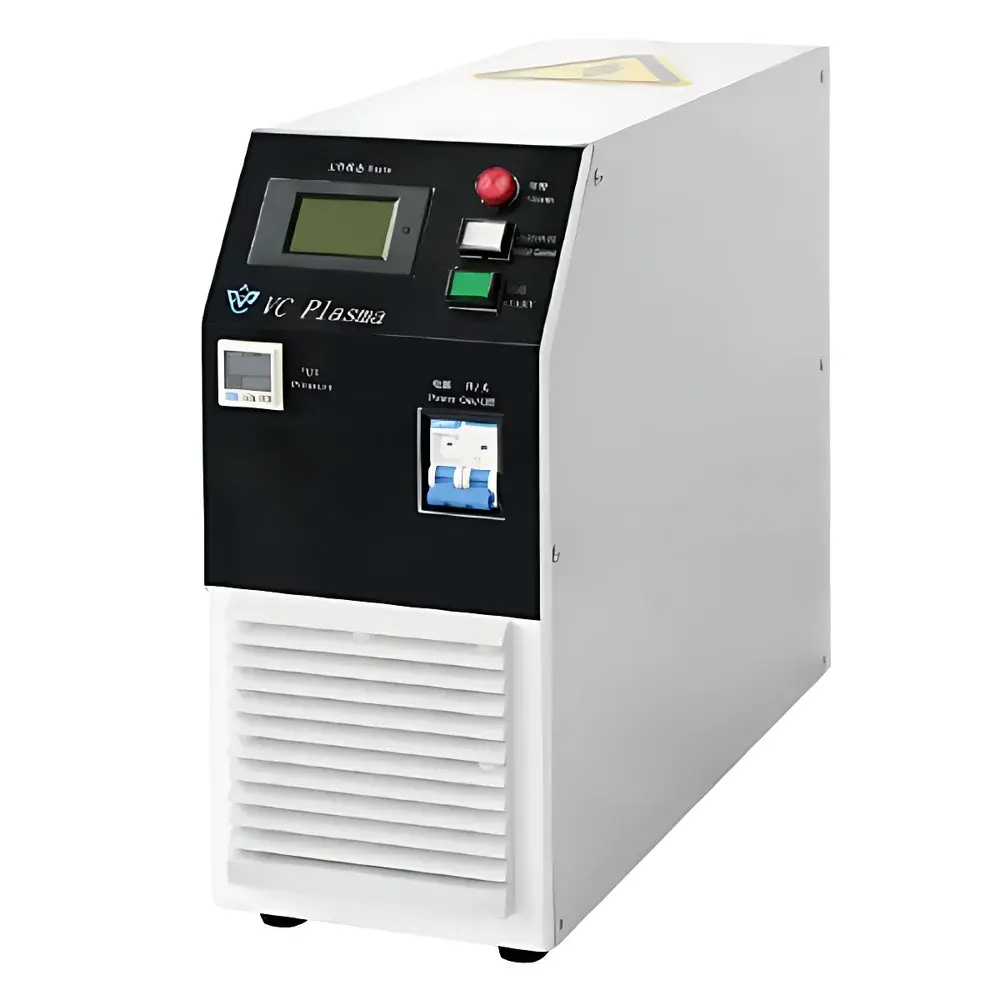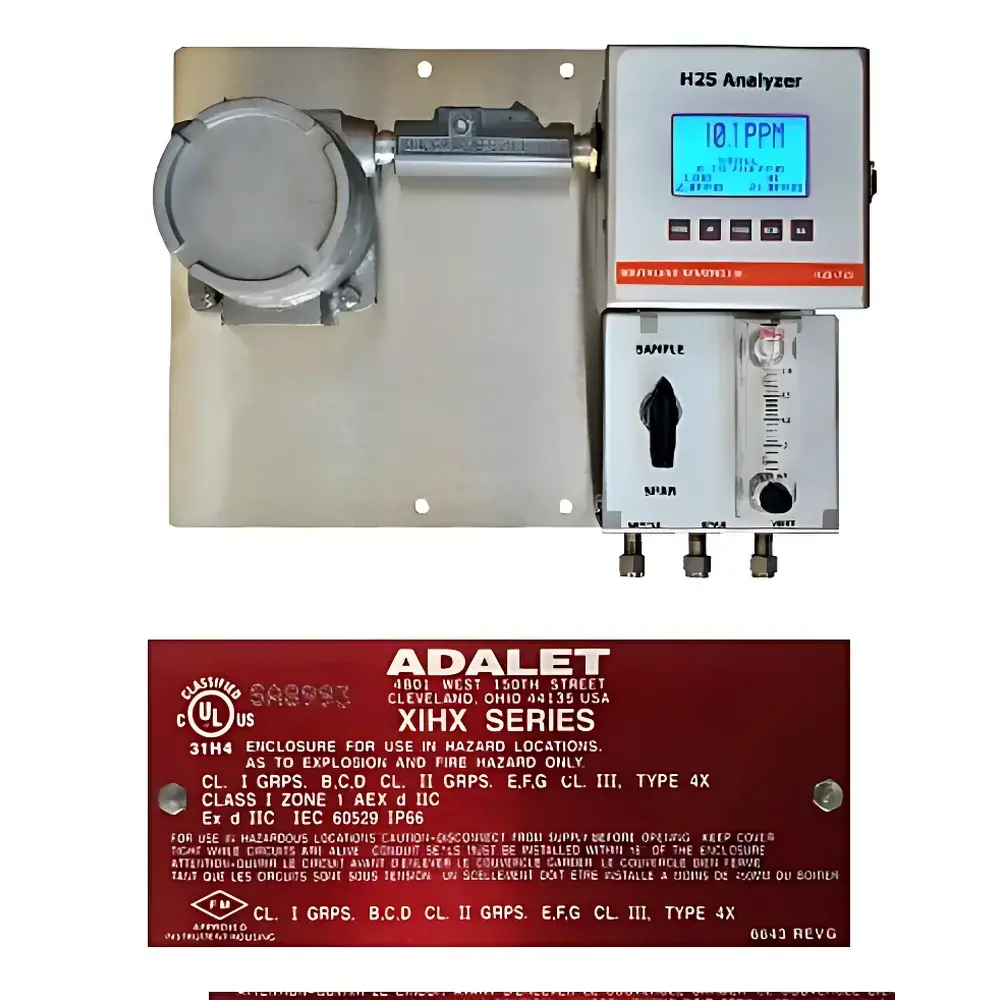
Southland Sensing H2S-725 Electrochemical Hydrogen Sulfide Analyzer
| Origin | USA |
|---|---|
| Manufacturer Type | Authorized Distributor |
| Product Origin | Imported |
| Model | H2S-725 |
| Measurement Ranges | 0–10, 0–50, 0–100, 0–200, 0–500, 0–1000, 0–2000 ppm (selectable, auto/manual switching) |
| Accuracy | < ±2% FS |
| Certifications | CE, UL Class I, Div 1, Groups B, C, D |
| Operating Temperature | −10 to +50 °C |
| Sensor Type | Micro-fuel-cell electrochemical H₂S sensor |
| Warm-up Time | < 60 s |
| Response Time (T90) | < 30 s |
| Output Signals | 4–20 mA, 0–10 VDC, MODBUS RTU over RS485 (ASCII bi-directional) |
| Power Supply | 12–24 VDC, 25 mA typical |
| Sample Flow Rate | 230–2500 mL/min (with integrated 4-way valve, bypass, needle valve & rotameter) |
| Dimensions | 241 × 165 × 96 mm |
| Temperature Compensation | Built-in |
| Warranty | 12 months |
| Sample Media | Natural gas, biogas, sour gas streams in upstream & midstream processing |
Overview
The Southland Sensing H2S-725 is a fixed-mount, intrinsically safe electrochemical hydrogen sulfide (H₂S) analyzer engineered for continuous, real-time monitoring in hazardous industrial environments. It employs a micro-fuel-cell electrochemical sensing principle—where H₂S undergoes controlled oxidation at the working electrode, generating a current linearly proportional to gas concentration. This transduction mechanism delivers stable baseline performance, high selectivity against common interferents (e.g., CO, SO₂, NO₂), and minimal drift over extended deployment cycles. Designed specifically for natural gas transmission, biogas upgrading, and sour gas treatment applications, the H2S-725 complies with UL Class I, Division 1, Groups B, C, and D—certifying its suitability for installation in Zone 1/Class I hazardous locations where flammable gases may be present under normal operating conditions. Its compact form factor and low-power 12–24 VDC architecture enable integration into remote skids, compressor stations, and pipeline pigging launch/receive facilities without requiring explosion-proof enclosures.
Key Features
- Intrinsically safe design certified to UL Class I, Div 1, Groups B, C, D—no external barrier required for field installation in hazardous areas
- Seven programmable measurement ranges: 0–10, 0–50, 0–100, 0–200, 0–500, 0–1000, and 0–2000 ppm—switchable automatically based on process excursion or manually via front-panel interface
- Micro-fuel-cell electrochemical sensor with built-in temperature compensation and zero-stability optimization—eliminates routine calibration drift and reduces maintenance intervals
- Large backlit LCD display with intuitive menu navigation, real-time concentration readout, alarm status indicators, and diagnostic codes
- Dual-stage relay outputs configurable for high/low concentration alarms—programmable setpoints with hysteresis to prevent chatter in fluctuating gas streams
- Integrated sample conditioning system: precision 4-way valve manifold, adjustable needle valve, calibrated rotameter, and dedicated bypass path—ensuring consistent flow control across variable pressure conditions
- Multi-protocol digital output: MODBUS RTU over RS485 (ASCII bi-directional) for PLC/DCS integration, plus isolated analog outputs (4–20 mA and 0–10 VDC)
Sample Compatibility & Compliance
The H2S-725 is validated for use with natural gas, landfill gas, amine-treated sweetened gas, and raw sour gas containing up to 2000 ppm H₂S. It maintains accuracy and sensor longevity when exposed to typical hydrocarbon matrices, moderate moisture levels (< 80% RH), and non-condensing particulates. The analyzer meets CE marking requirements for electromagnetic compatibility (EMC Directive 2014/30/EU) and low-voltage safety (LVD Directive 2014/35/EU). Its Class I, Div 1 certification aligns with NFPA 70 (NEC) and CSA C22.2 No. 213 standards. While not explicitly FDA 21 CFR Part 11 compliant out-of-the-box, audit-ready data logging (via MODBUS polling) supports GLP/GMP-aligned recordkeeping when paired with validated SCADA or historian systems.
Software & Data Management
Configuration and diagnostics are performed locally via the front-panel keypad and LCD interface—no proprietary software required. For centralized deployment, the MODBUS RTU protocol enables seamless integration into existing industrial automation infrastructures (e.g., Siemens SIMATIC, Rockwell ControlLogix, Emerson DeltaV). All analog and digital outputs support full-scale range mapping and linear scaling. Event logs—including alarm triggers, sensor fault codes, and power-on resets—are timestamped and accessible via MODBUS register reads. Optional third-party SCADA platforms can archive trend data, generate automated reports, and trigger maintenance workflows based on cumulative sensor exposure hours or deviation thresholds.
Applications
- Natural gas gathering and transmission: real-time H₂S monitoring pre- and post-amine scrubbing, dehydration, and sulfur recovery units
- Biogas upgrading plants: verification of H₂S removal efficiency in pressure swing adsorption (PSA) and iron sponge beds
- Landfill gas-to-energy facilities: compliance monitoring per EPA 40 CFR Part 60 Subpart WWW and EU Landfill Directive 1999/31/EC
- Refinery fuel gas headers: safeguarding combustion equipment from catalyst poisoning and corrosion
- Offshore platform gas handling systems: compact, low-maintenance detection where access and logistics constrain service frequency
- Research laboratories studying H₂S kinetics in catalytic desulfurization processes
FAQ
What is the recommended calibration interval for the H2S-725?
Southland Sensing recommends functional verification using traceable NIST-certified H₂S span gas every 3–6 months, depending on exposure severity and regulatory requirements. Zero checks with certified nitrogen or clean air should be performed daily or per shift in critical applications.
Can the H2S-725 operate in high-humidity or condensing environments?
The analyzer is rated for operation up to 80% relative humidity at 40 °C. For applications involving saturated gas or potential condensate formation, an inline coalescing filter and heated sample line are strongly advised to protect the electrochemical cell.
Is the sensor replaceable in the field?
Yes—the micro-fuel-cell sensor module is user-replaceable without soldering or firmware reconfiguration. Replacement sensors ship pre-conditioned and require only a 30-minute stabilization period before resuming measurement.
Does the H2S-725 support HART communication?
No—HART is not supported. Communication is limited to MODBUS RTU over RS485 and analog 4–20 mA / 0–10 VDC outputs.
What is the expected service life of the electrochemical sensor?
Under typical natural gas service conditions (≤ 50 ppm average H₂S, no heavy hydrocarbons or siloxanes), the sensor exhibits a nominal operational life of 24–36 months. Exposure to sustained concentrations >1000 ppm or corrosive contaminants (e.g., mercaptans, elemental sulfur) will reduce lifespan accordingly.