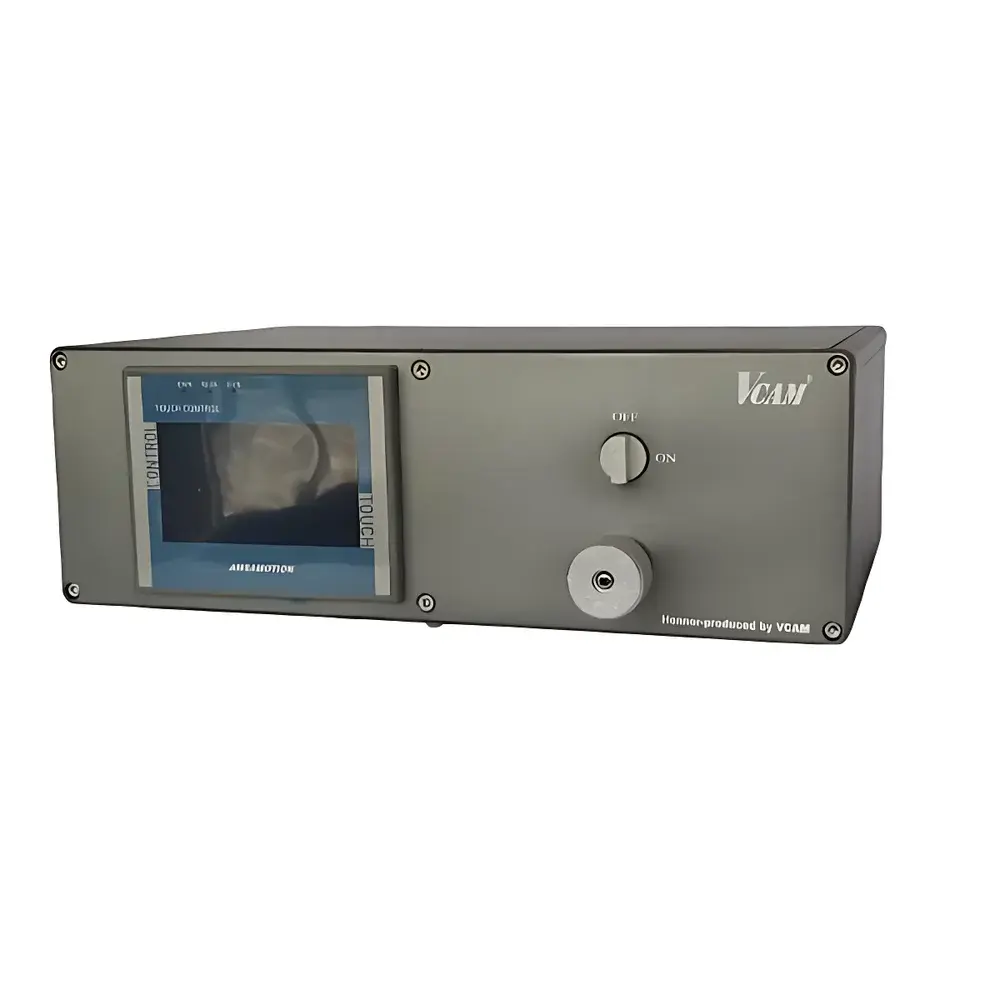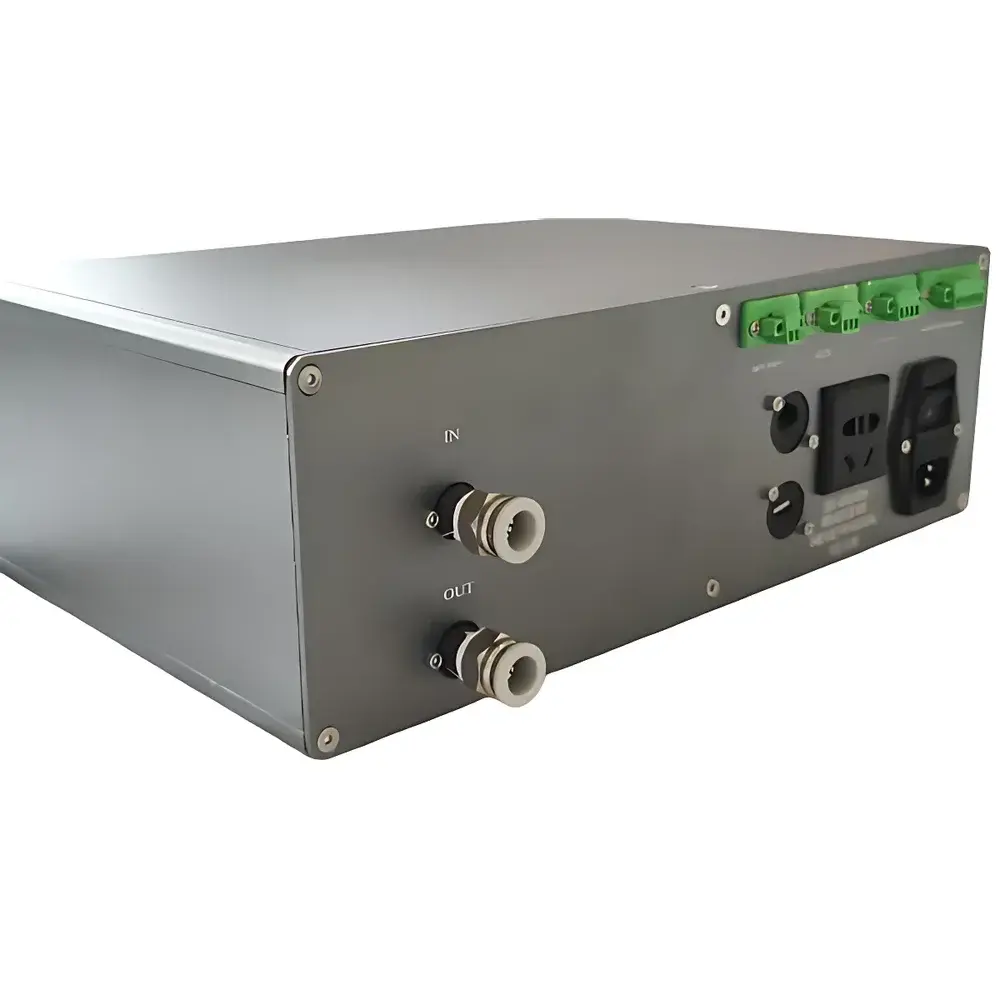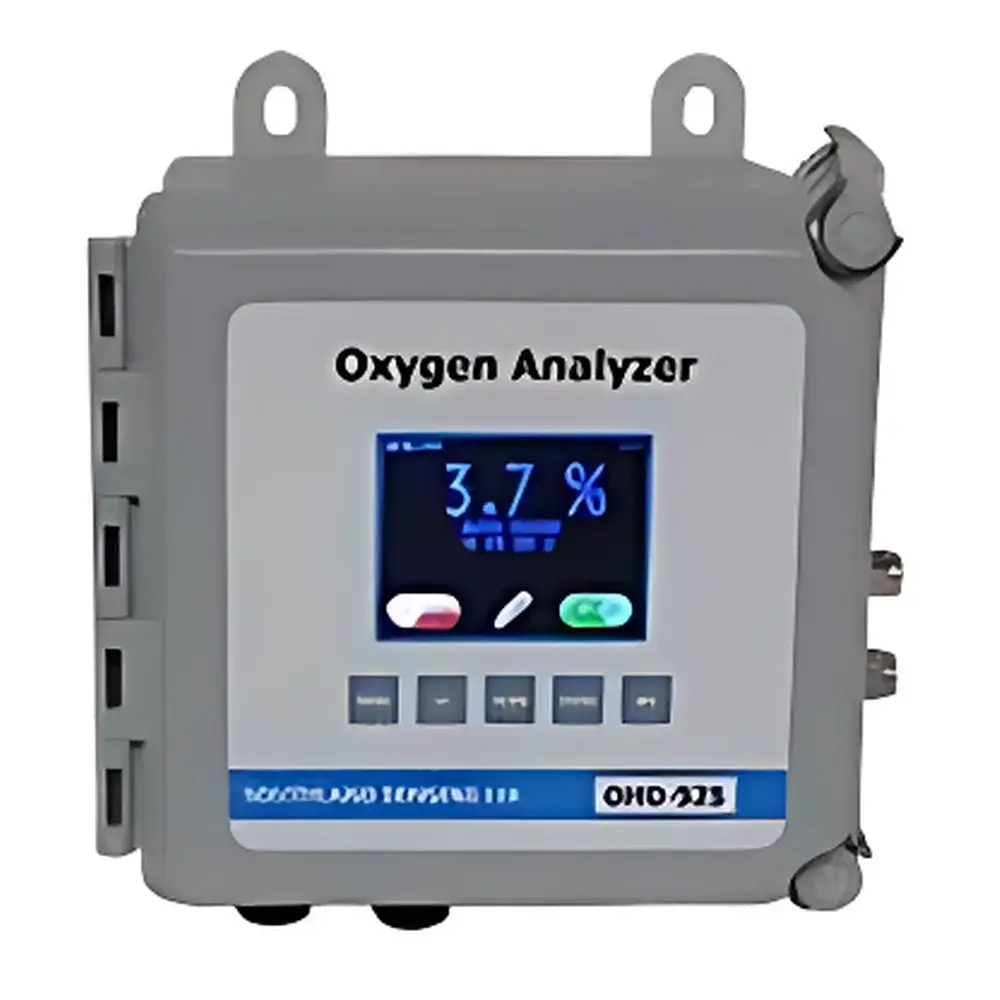
Southland Sensing OMD-525 Online Trace Oxygen Analyzer
| Origin | USA |
|---|---|
| Manufacturer Type | Authorized Distributor |
| Origin Category | Imported |
| Model | OMD-525 |
| Price Range | USD 1,400 – 4,200 (FOB) |
| Measurement Principle | Electrochemical Fuel Cell (Micro-Fuel Cell) |
| Range Options | 0–10 ppm / 0–100 ppm / 0–1,000 ppm / 0–1% / 0–25% O₂ |
| Accuracy | < ±1% FS |
| Temperature Compensation | Integrated |
| Operating Temp. | −10 to +50 °C |
| Enclosure Dimensions | 241 × 165 × 96 mm |
| Power Supply | 12–24 VDC |
| Current Draw | 25 mA |
| Output Signals | 4–20 mA, 0–10 VDC, MODBUS RS485 (ASCII, bi-directional) |
| Sample Flow Rate | 230–2500 mL/min |
| Sensor Lifetime | >24 months (typical, under specified conditions) |
| Certifications | CE, RoHS |
| Sensor Compatibility | Standard fuel cell |
| Compatible Carrier Gases | N₂, Ar, He, H₂, hydrocarbon streams (non-corrosive, non-oxidizing) |
| Warranty | 12 months from shipment |
Overview
The Southland Sensing OMD-525 Online Trace Oxygen Analyzer is a compact, field-deployable electrochemical analyzer engineered for continuous, real-time measurement of dissolved or gaseous oxygen at trace and percent-level concentrations in inert, reducing, and process-compatible gas streams. Utilizing a proprietary micro-fuel cell sensor architecture, the OMD-525 operates on the principle of galvanic oxygen reduction—where molecular oxygen diffuses through a selective membrane and undergoes a stoichiometric electrochemical reaction at the cathode, generating a current linearly proportional to partial pressure. This zero-power-consumption sensing mechanism ensures intrinsic safety, long-term baseline stability, and immunity to flow rate fluctuations within its specified sample flow window (230–2500 mL/min). Designed for integration into closed-loop control systems and critical purity monitoring applications, the analyzer delivers high reproducibility (< ±1% full-scale accuracy) across five user-selectable ranges—from ultra-trace 0–10 ppm up to 0–25% O₂—without hardware modification. Its robust aluminum enclosure (IP65-rated when properly installed), integrated temperature compensation circuitry, and wide operating temperature range (−10 to +50 °C) support reliable deployment in demanding industrial environments including nitrogen generation skids, semiconductor purge lines, and metallurgical off-gas ducts.
Key Features
- Micro-fuel cell sensor with proven longevity (>24 months typical service life under recommended operating conditions)
- Five factory-configurable measurement ranges: 0–10 ppm, 0–100 ppm, 0–1,000 ppm, 0–1%, and 0–25% O₂
- Integrated temperature compensation and digital signal conditioning for enhanced long-term drift stability
- Dual analog outputs (4–20 mA and 0–10 VDC) plus bidirectional MODBUS RTU/ASCII over RS485 for PLC/DCS interoperability
- Optional acid-resistant sensor variant certified for continuous exposure to CO₂, H₂S, and SO₂ up to 1,000 ppm
- Low power consumption (25 mA @ 24 VDC) enabling operation from standard industrial DC supplies or uninterruptible backup sources
- Compact form factor (241 × 165 × 96 mm) compatible with panel mounting, DIN rail adapters (optional), or direct inline installation via H1 flow cell or KF-40 flange interface
Sample Compatibility & Compliance
The OMD-525 is validated for use with non-corrosive, non-oxidizing background gases including nitrogen, argon, helium, hydrogen, and saturated hydrocarbon streams. It is explicitly rated for operation in reducing atmospheres where traditional zirconia or paramagnetic analyzers may exhibit cross-sensitivity or accelerated degradation. When deployed with the optional acid-resistant sensor module, the analyzer maintains metrological integrity in gas matrices containing up to 1,000 ppm CO₂, 50 ppm H₂S, or 20 ppm SO₂—enabling deployment in syngas cleanup, biogas upgrading, and sour natural gas conditioning loops. All units comply with CE marking requirements under Directive 2014/30/EU (EMC) and 2014/35/EU (LVD), and conform to RoHS 2011/65/EU substance restrictions. While not intrinsically safe per IEC 60079-0, the device may be installed in Zone 2 hazardous locations when used with approved barriers and documented in accordance with local ATEX or IECEx risk assessments.
Software & Data Management
The OMD-525 operates as a standalone transmitter with no embedded firmware update requirement during normal service life. Configuration—including range selection, output scaling, damping time (0–32 s), and MODBUS slave ID—is performed locally via DIP switches or remotely via ASCII command set over RS485. No proprietary software is required; standard terminal emulators (e.g., PuTTY, Tera Term) suffice for commissioning and diagnostics. All analog outputs are fully isolated and calibrated to NIST-traceable standards prior to shipment. The device supports audit-ready operation: output signals retain calibration integrity across power cycles, and MODBUS registers provide real-time access to raw mV output, temperature-compensated value, sensor status flags (e.g., low voltage, sensor fault), and cumulative operational hours. For GLP/GMP-regulated environments, users may log MODBUS data via third-party SCADA platforms compliant with FDA 21 CFR Part 11 (electronic records/signatures) when paired with appropriate validation protocols and audit trail configuration.
Applications
- Ultra-high-purity nitrogen and argon blanketing in semiconductor fabrication gloveboxes and deposition chambers
- Real-time verification of oxygen breakthrough in pressure swing adsorption (PSA) and membrane-based nitrogen generators
- Monitoring residual O₂ in hydrogen reformate streams prior to PEM fuel cell feed conditioning
- Quality assurance of inert gas blankets in pharmaceutical lyophilization and API crystallization vessels
- In-process control of deoxidation reactions in vacuum induction melting (VIM) and electroslag remelting (ESR) furnaces
- Leak detection and integrity verification in sealed packaging lines for oxygen-sensitive food and medical devices
FAQ
What is the expected lifetime of the micro-fuel cell sensor under continuous operation?
Typical service life exceeds 24 months when operated within specified temperature, humidity, and gas composition limits. Sensor replacement is a field-serviceable procedure requiring no recalibration of the electronics module.
Can the OMD-525 measure oxygen in hydrogen-rich streams without interference?
Yes—the fuel cell design is inherently selective for O₂ and exhibits negligible cross-sensitivity to H₂, CH₄, or CO when used with standard or acid-resistant sensor variants.
Is temperature compensation automatic or manual?
Fully automatic: an integrated Pt100 RTD monitors sensor block temperature and applies real-time correction using a stored polynomial algorithm.
Does the analyzer require zero or span calibration during routine operation?
No routine calibration is required. The sensor is factory-calibrated against NIST-traceable standards; only periodic verification (e.g., annually or after sensor replacement) is recommended per ISO/IEC 17025 quality systems.
What flow cell options are supported for inline installation?
The OMD-525 is compatible with both the H1 stainless-steel flow-through cell (for pressurized sampling) and the KF-40 vacuum-compatible flange mount (for low-pressure or evacuated systems).
Related Products