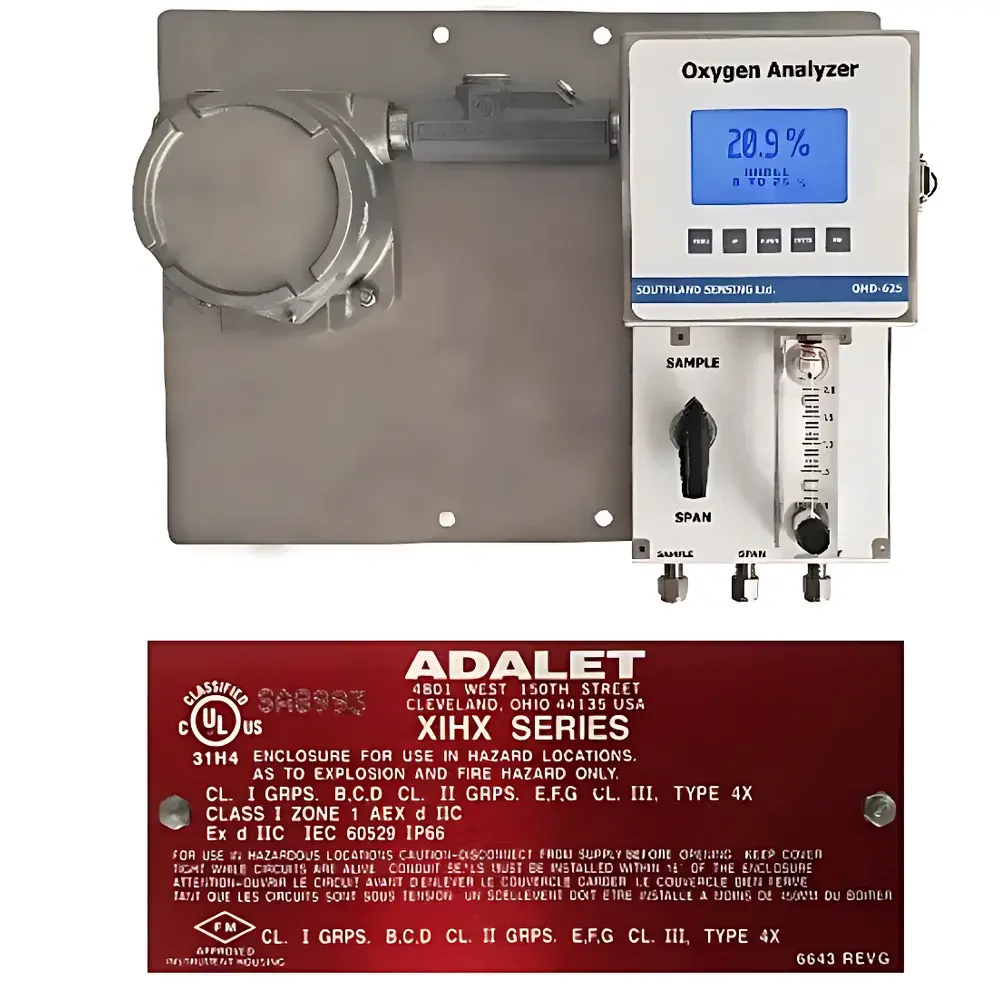
Southland Sensing OMD-625-M Intrinsically Safe Trace Oxygen Analyzer
| Origin | USA |
|---|---|
| Manufacturer Type | Authorized Distributor |
| Origin Category | Imported |
| Model | OMD-625-M |
| Price Range | USD 4,200 – 7,000 |
Overview
The Southland Sensing OMD-625-M is an intrinsically safe, electrochemical trace oxygen analyzer engineered for continuous, high-stability measurement of oxygen concentration in inert, reducing, or hydrocarbon-rich process streams. It employs a proprietary miniature fuel cell sensor — a galvanic electrochemical cell that generates a current proportional to the partial pressure of O₂ — delivering inherently stable zero and span characteristics without external power required at the sensing element. Designed specifically for hazardous locations classified under NEC Class I, Division 2, Groups B, C, and D, the OMD-625-M meets stringent safety requirements for deployment in gloveboxes, nitrogen/hydrogen purge systems, semiconductor fab ambient monitoring, natural gas transmission lines, and high-temperature furnace off-gas applications where explosive atmospheres may be present. Its architecture eliminates reliance on optical components or heated zirconia elements, ensuring long-term drift-free performance in low-oxygen environments (down to 0–10 ppm) while maintaining full functionality across extended ranges up to 25% O₂.
Key Features
- Intrinsically safe design certified for Class I, Div 2, Groups B, C, D — no explosion-proof enclosures required
- Miniature fuel cell oxygen sensor with >24-month typical service life and <1% FS full-scale accuracy
- Multi-range capability: selectable spans of 0–10 ppm, 0–100 ppm, 0–1000 ppm, 0–1% (10,000 ppm), and 0–25% O₂
- Integrated temperature compensation and auto-zero stabilization circuitry for consistent output across –10 to +50°C ambient
- Low-power operation: 12–24 VDC input, <25 mA draw — suitable for battery-backed or remote industrial control cabinets
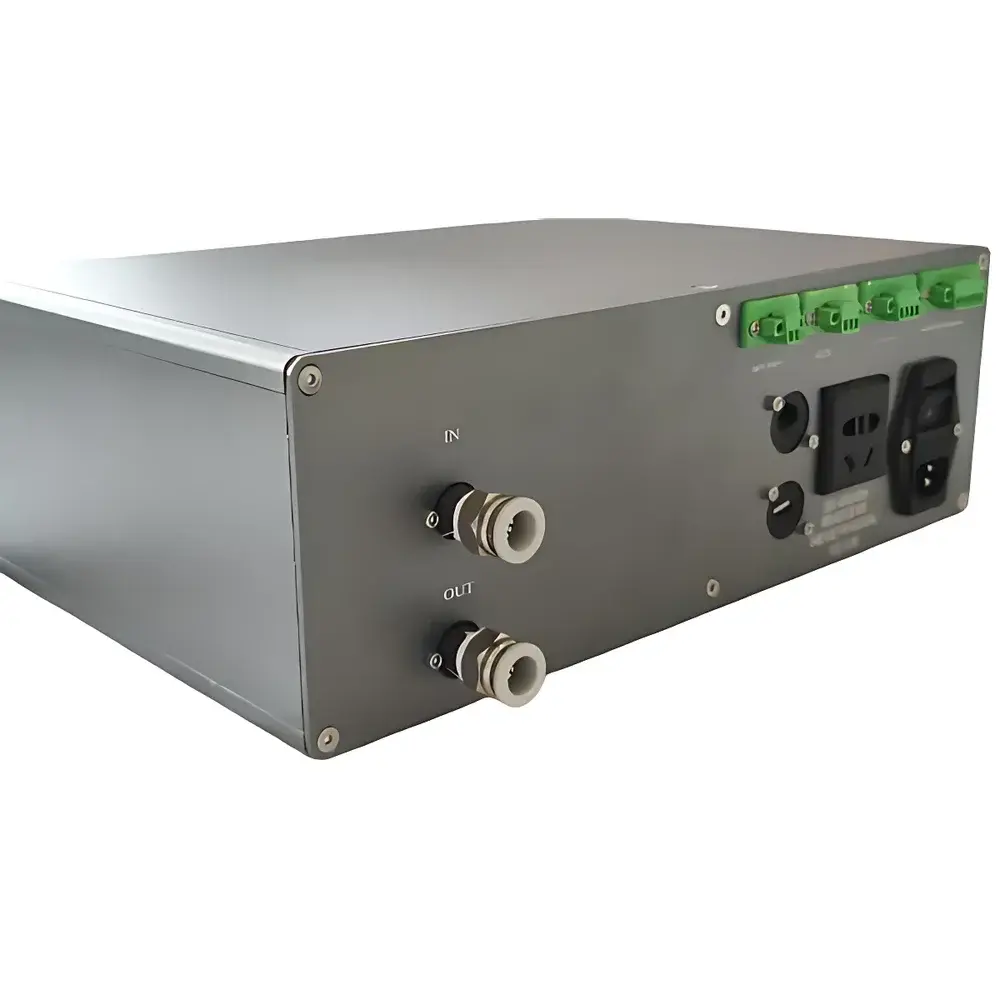
- Configurable analog outputs: isolated 4–20 mA and/or 0–10 VDC, plus bidirectional MODBUS RTU over RS-485 (ASCII protocol)
- Optional acid-resistant sensor variant available for sampling streams containing CO₂, H₂S, SO₂, or other acidic contaminants
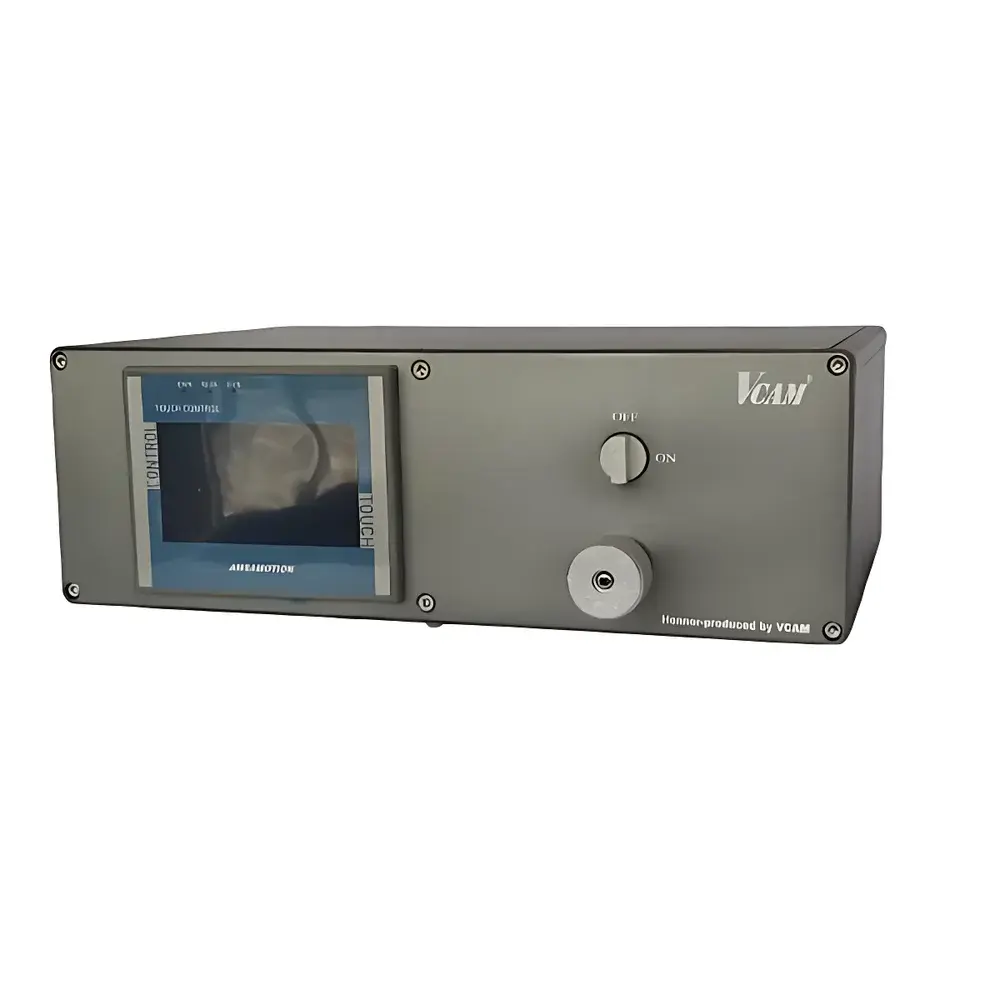
- Compact housing (241 × 165 × 96 mm) with IP65-rated front panel and NEMA 4X-compatible mounting options
Sample Compatibility & Compliance
The OMD-625-M is validated for use with non-corrosive, non-condensing sample gases including nitrogen, argon, helium, hydrogen, methane, ethane, and other saturated hydrocarbons. When equipped with the optional acid-resistant sensor module, it maintains reliable performance in the presence of up to 1,000 ppm CO₂ or 50 ppm H₂S. The analyzer complies with CE marking directives (EMC 2014/30/EU, RoHS 2011/65/EU) and conforms to ANSI/ISA-12.12.01 for non-incendive electrical equipment. It supports GLP/GMP-aligned data integrity when integrated with SCADA or DCS platforms via MODBUS, and its analog outputs are compatible with legacy PLC-based alarm and control systems. While not FDA 21 CFR Part 11-certified as a standalone unit, audit-trail-capable data logging can be implemented at the host system level per ISO 17025 and ASTM D6299 guidelines.
Software & Data Management
The OMD-625-M operates as a field-deployed, firmware-based instrument with no embedded operating system or user-accessible software interface. Configuration and calibration are performed via handheld HART communicator or MODBUS master device using standard ASCII command sets. All operational parameters — including range selection, damping time, linearization mode, and output scaling — are stored in non-volatile memory. The MODBUS register map supports real-time reading of measured O₂ value, sensor status flags (e.g., low voltage, sensor saturation, temperature fault), and diagnostic counters (e.g., total operating hours, calibration due date). For enterprise-level integration, third-party SCADA packages (e.g., Ignition, Siemens Desigo, Emerson DeltaV) can poll the device at configurable intervals (1–30 sec) and log timestamped values with millisecond-precision synchronization when deployed on IEEE 1588-enabled networks.
Applications
- Glovebox atmosphere monitoring for lithium-ion battery manufacturing and air-sensitive chemistry synthesis
- Quality assurance in on-site nitrogen generation systems (PSA/VSA) for food packaging and pharmaceutical inerting
- O₂ leak detection in hydrogen distribution pipelines and electrolyzer purge loops
- Process gas purity verification in semiconductor CVD/PVD tool chambers and annealing furnaces
- Off-gas analysis in catalytic reforming units and syngas purification trains
- Residual oxygen quantification in cryogenic liquid storage tanks and LNG vaporizers
FAQ
What safety certifications does the OMD-625-M hold?
It is certified for Class I, Division 2, Groups B, C, and D per UL 1604 and CSA C22.2 No. 213, permitting installation in hazardous areas where flammable gases may be present under abnormal conditions.
Can the OMD-625-M measure oxygen in hydrogen-rich streams?
Yes — the standard fuel cell sensor is compatible with H₂ concentrations up to 100%, provided no acidic contaminants (e.g., H₂S, SO₂) are present; otherwise, the acid-resistant sensor option must be specified.
Is temperature compensation automatic?
Yes — internal thermistor-based compensation is applied continuously across the full operating range (–10 to +50°C), eliminating need for external cold-junction reference or manual correction tables.
What is the recommended sample flow rate?
230–2500 mL/min; optimal stability is achieved at 500–1000 mL/min with laminar flow and minimal pressure fluctuation.
Does the unit require periodic recalibration?
Annual calibration is recommended per ISO/IEC 17025 practice; however, the fuel cell’s inherent stability often extends calibration intervals to 18 months in controlled environments with stable gas composition.