Specialized System Light Source Development and Customization Service
| Brand | CEL |
|---|---|
| Origin | Beijing, China |
| Manufacturer Type | OEM/ODM Manufacturer |
| Origin Category | Domestic (PRC) |
| Model | Custom Light Source System Engineering Service |
| Price Range | USD 0 – 7,000 |
Overview
The CEL Custom Light Source System Engineering Service is a turnkey solution for research laboratories, industrial R&D centers, and academic institutions requiring precisely engineered optical excitation sources beyond off-the-shelf commercial availability. Unlike standardized lamps or LED modules, this service applies rigorous photonic system design principles—including spectral matching, radiometric calibration, thermal management, beam homogenization, and temporal pulse shaping—to deliver application-specific illumination platforms. The core methodology integrates optical modeling (e.g., Zemax or LightTools simulations), component-level traceable metrology (NIST-traceable spectroradiometry and irradiance mapping), and mechanical integration engineering to ensure compatibility with existing optical benches, vacuum chambers, or reaction reactors. Designed for use in photochemical synthesis, accelerated aging testing, photocatalytic efficiency evaluation, and optoelectronic device characterization, each system undergoes functional validation against user-defined performance criteria prior to delivery.
Key Features
- OEM/ODM engineering support from concept through prototype validation and documentation handover
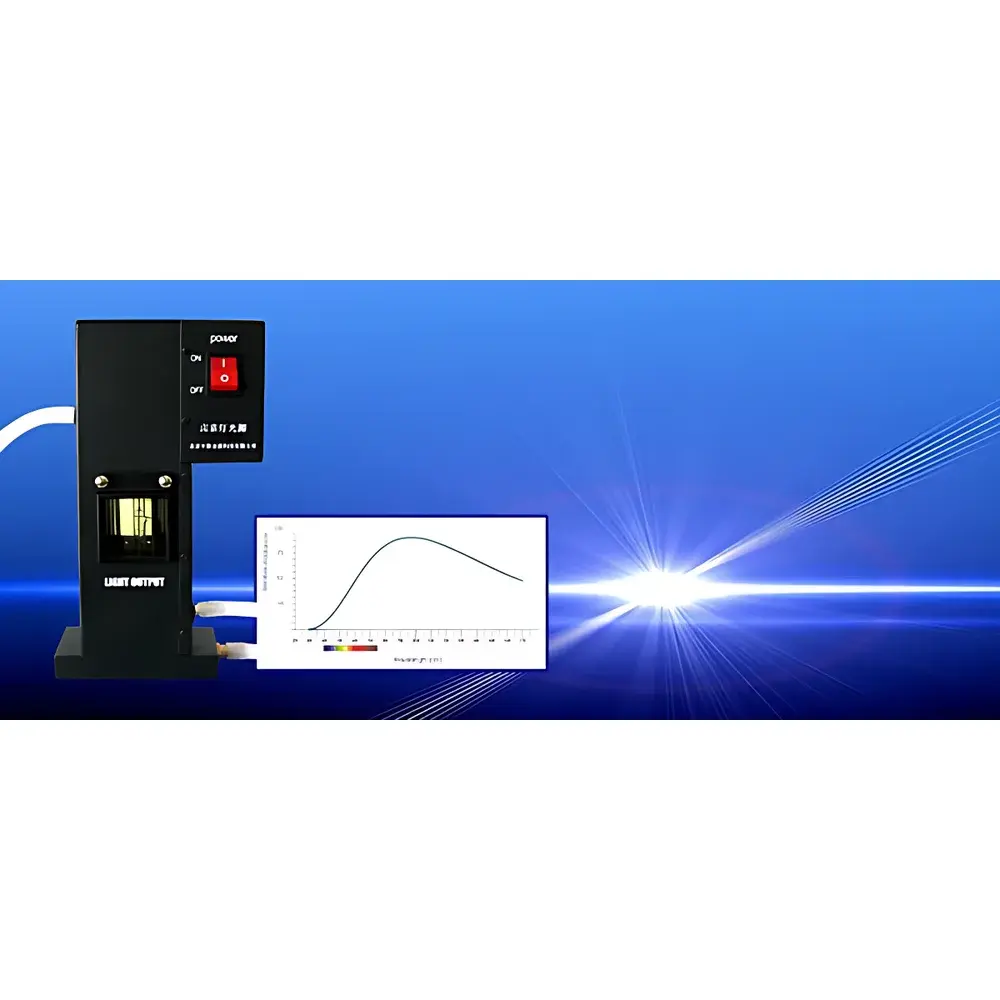
- Spectral customization across UV–Vis–NIR (200–1600 nm), including narrowband LED arrays, filtered arc lamps, tunable monochromator-coupled sources, and pulsed laser diode systems
- Radiometric traceability to national standards via calibrated spectroradiometers (e.g., Bentham DMc300 or AVANTES AvaSpec-ULS2048CL-EVO)
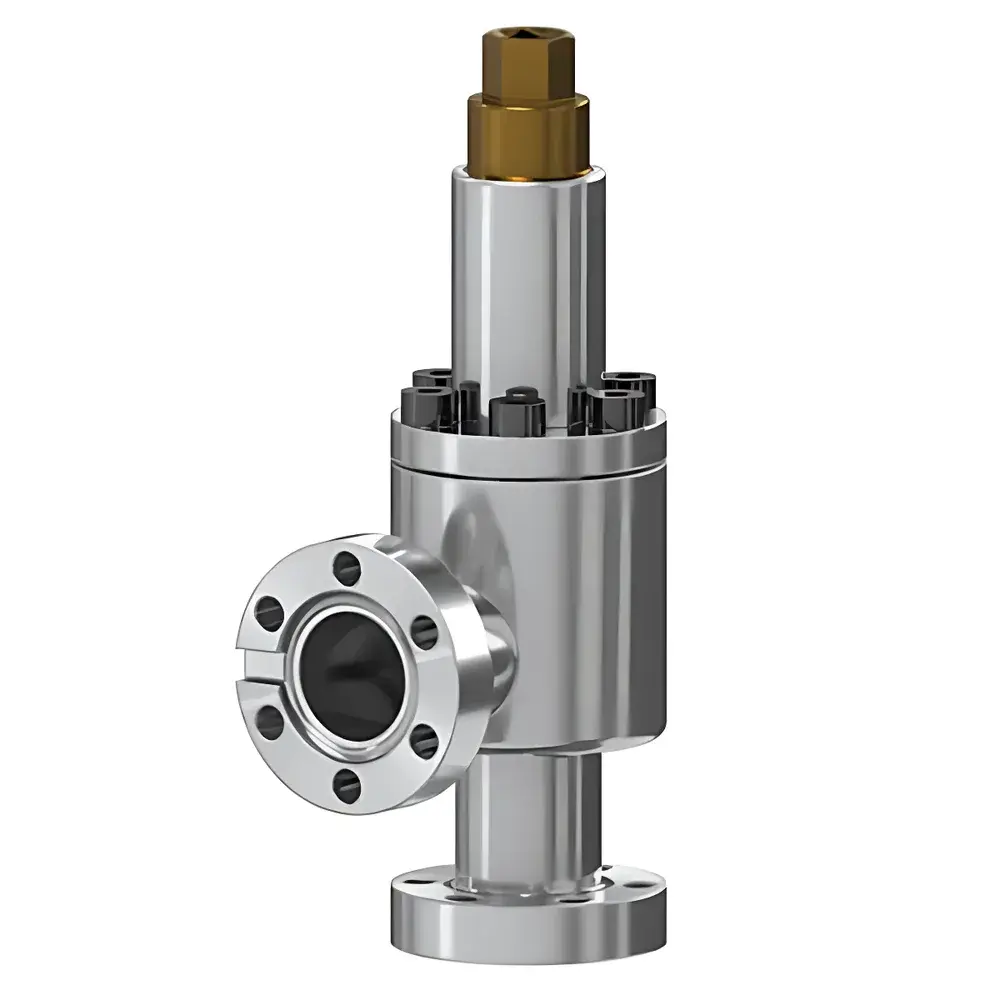
- Thermal and mechanical integration packages compatible with ISO-standard optical rails (e.g., Thorlabs 30 mm cage systems), flange-mounted vacuum interfaces (CF-35/CF-63), or custom enclosure designs
- Compliance-ready documentation including IEC 62471 photobiological safety reports, CE marking support, and RoHS-conformant material declarations
- Optional integration with programmable controllers (LabVIEW, Python API, or Modbus TCP) for automated irradiance ramping, duty-cycle modulation, or synchronized triggering with detectors
Sample Compatibility & Compliance
This service supports illumination of diverse sample formats—solid-state photocatalysts on quartz substrates, liquid-phase reaction mixtures in thermostatted cuvettes or flow cells, thin-film semiconductor devices under ambient or controlled atmosphere, and biological specimens in Petri dishes or microfluidic chips. All custom systems are engineered to meet applicable international standards, including ISO 17025 requirements for measurement uncertainty reporting, ASTM G154/G155 for accelerated weathering irradiance uniformity, and IEC 61215 for PV module light soaking test conditions. For regulated environments (e.g., pharmaceutical photostability studies per ICH Q1B), documentation packages may include IQ/OQ protocols and 21 CFR Part 11–compliant audit trails upon request.
Software & Data Management
Each delivered system includes configuration files, calibration certificates, and spectral irradiance maps in standard formats (CSV, HDF5, or XML). Optional software integration enables real-time monitoring of source stability (±0.5% RMS over 8 h), spectral drift compensation, and automated logging of operating parameters (current, temperature, pulse width, accumulated exposure dose). Data export conforms to FAIR principles (Findable, Accessible, Interoperable, Reusable), supporting direct ingestion into ELN platforms such as LabArchives or Benchling. For GLP/GMP workflows, optional features include electronic signatures, role-based access control, and revision-controlled firmware updates with full change history.
Applications
- Photocatalytic hydrogen evolution and CO₂ reduction reactor illumination with spatially uniform, wavelength-resolved irradiation
- Accelerated degradation testing of polymers, coatings, and OLED materials under controlled UV-A/UV-B spectra per ISO 4892-3
- Time-resolved photoluminescence excitation (PLE) mapping using nanosecond-pulsed sources synchronized with TCSPC detectors
- Calibration reference sources for hyperspectral imaging systems and satellite sensor ground validation
- Custom excitation engines for optogenetics rigs requiring precise 470 nm/590 nm dual-wavelength pulsing with μs-scale jitter
- Photoelectrochemical cell testing under AM1.5G-simulated spectra with adjustable intensity (10–200 mW/cm²) and spectral mismatch correction
FAQ
What information is required to initiate a custom light source project?
A completed technical inquiry form specifying target spectrum (wavelength range, FWHM, irradiance level), spatial requirements (beam size, uniformity, divergence), temporal profile (CW, pulsed, modulation frequency), environmental constraints (vacuum, temperature, EMI), and integration interface (mechanical mounting, electrical connectors, control protocol).
Do you provide photometric or radiometric calibration certificates?
Yes—each system includes a NIST-traceable spectroradiometric calibration report covering spectral irradiance (W/m²/nm), total radiant flux (W), and spatial uniformity (±3% over defined area), issued by an ILAC-accredited laboratory.
Can the system be upgraded post-delivery?
Modular architecture allows field-upgradable components including spectral filters, driver electronics, cooling subsystems, and control firmware—subject to mechanical and thermal compatibility review.
What is the typical lead time for a custom design?
Standard development cycle is 12–16 weeks from signed specification agreement to FAT (Factory Acceptance Test); expedited timelines (8 weeks) available for projects with pre-validated optical designs.
Is remote commissioning supported?
Yes—full remote commissioning is offered via secure TeamViewer session with real-time spectral verification using customer-provided spectrometer, followed by joint operational qualification under witnessed test conditions.