
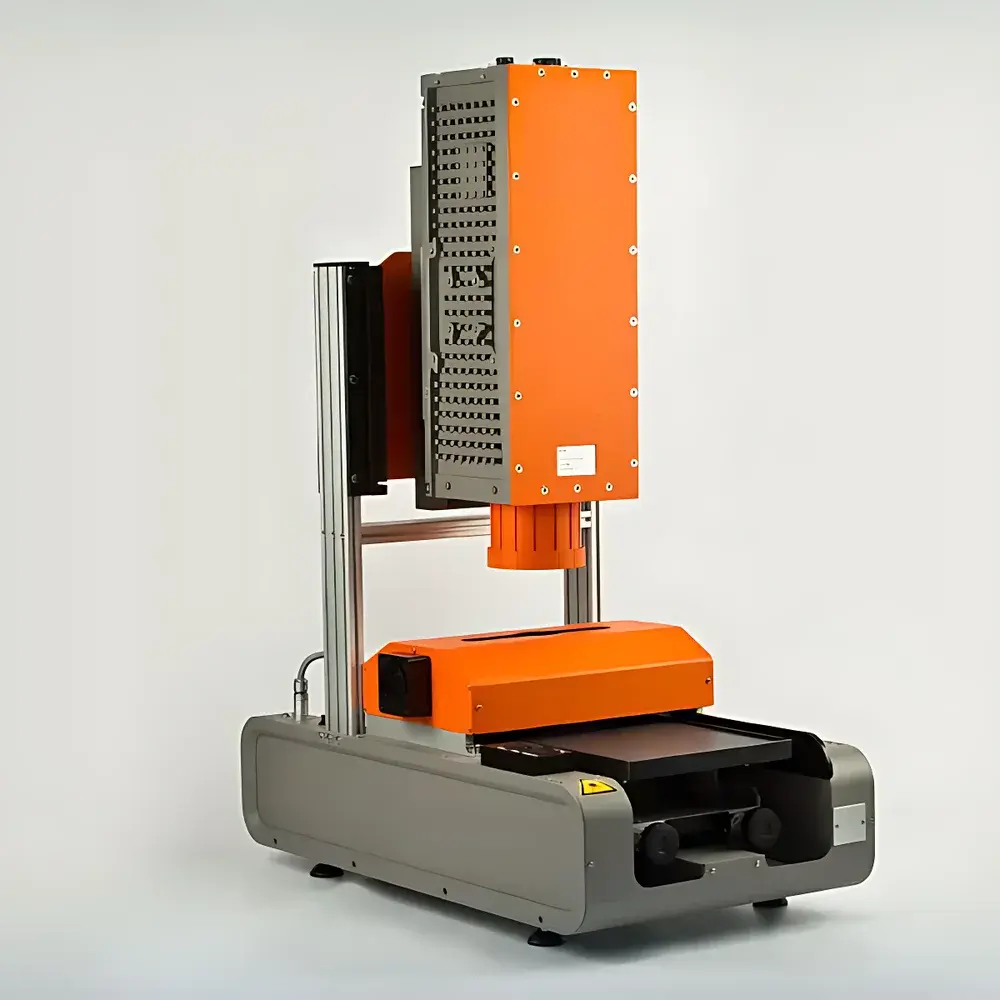
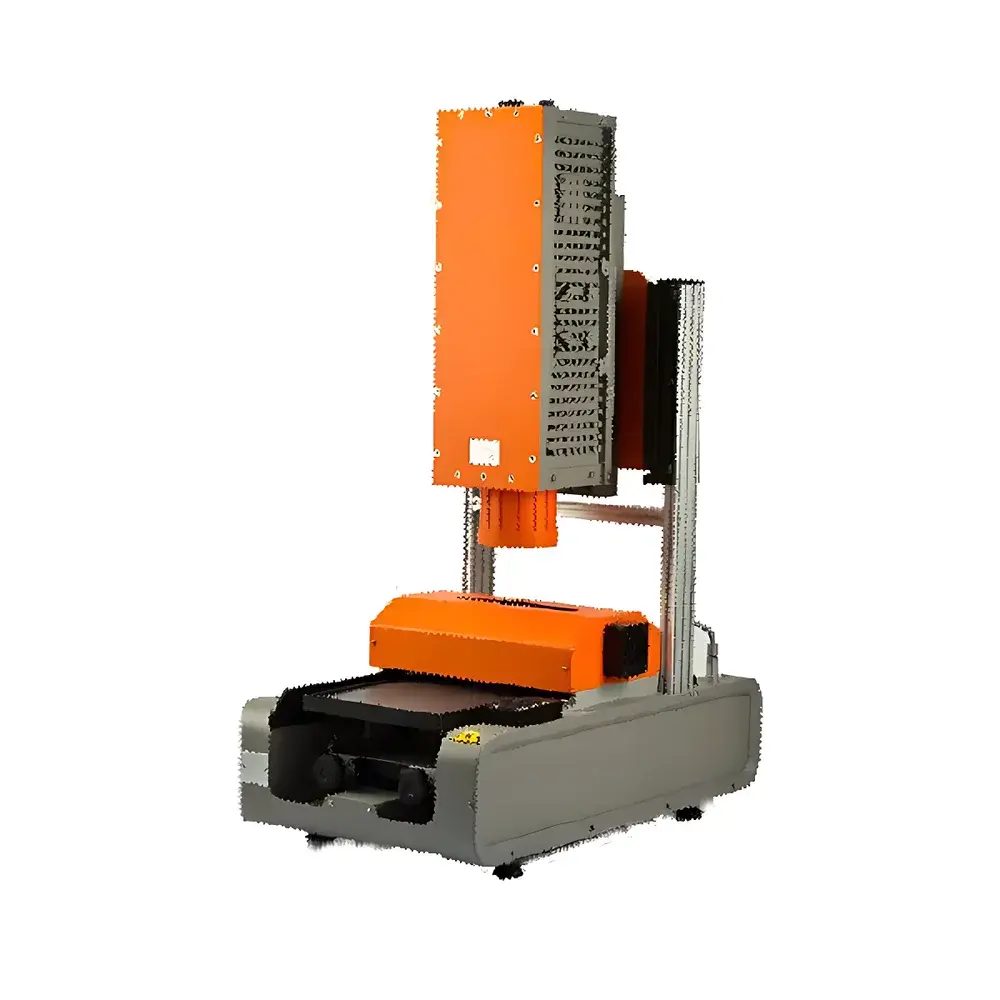
SPECIM SisuCHEMA Hyperspectral Chemical Imaging Workstation
| Brand | SPECIM |
|---|---|
| Origin | Finland |
| Model | SisuCHEMA |
| Imaging Principle | Pushbroom |
| Imaging Method | Dispersive |
| Operational Mode | Ground-based |
| Spectral Ranges | 400–1000 nm, 900–1700 nm, 1000–2500 nm |
| Spectral Resolution | ≥1 nm |
| Spatial Resolution Options | 1024 × n, 2048 × n pixels |
| Field of View (TFOV) | 23°, 32°, 40° |
| Instantaneous Field of View (IFOV) | Configurable per lens (e.g., 0.1–0.5 mrad) |
| Frame Rate | >100 fps |
Overview
The SPECIM SisuCHEMA Hyperspectral Chemical Imaging Workstation is a turnkey, laboratory- and near-line-ready platform engineered for quantitative spatial-spectral analysis of solid and semi-solid samples. Built upon pushbroom (line-scanning) dispersive spectroscopy, the system acquires full hyperspectral datacubes—each pixel containing a complete reflectance or transmittance spectrum—without mechanical scanning or spectral interpolation. This architecture enables high-fidelity chemical mapping at production-relevant speeds, supporting seamless technology transfer from lab-scale method development to inline process monitoring. The SisuCHEMA integrates three interchangeable spectral modules covering visible–NIR (400–1000 nm), short-wave NIR (900–1700 nm), and extended NIR (1000–2500 nm), ensuring compatibility with fundamental molecular absorptions (e.g., C–H, O–H, N–H overtones and combinations). Its ground-based configuration supports static sample analysis, conveyor-belt integration, and custom motion stages—making it suitable for both R&D validation and GMP-aligned quality control environments.
Key Features
- Modular spectral engine with three optically optimized VNIR/SWIR/MWIR modules, each delivering ≥1 nm spectral resolution across calibrated wavelength ranges
- Pushbroom imaging architecture enabling real-time line acquisition at >100 fps—eliminating motion blur and enabling synchronized motion-stage operation
- High spatial fidelity with native detector resolutions up to 2048 pixels per line and configurable TFOV (23°, 32°, 40°) and IFOV (down to 0.1 mrad with telecentric optics)
- Integrated illumination subsystem optimized for low thermal load and uniform spectral irradiance—critical for temperature-sensitive pharmaceuticals and food matrices
- Rugged, vibration-damped optical bench and industrial-grade enclosure rated for ISO Class 8 cleanroom-adjacent operation
- Pre-aligned optical path with factory-calibrated radiometric and spectral response—reducing setup time and operator dependency
Sample Compatibility & Compliance
The SisuCHEMA accommodates diverse sample geometries—including tablets, powders, granules, films, core samples, and packaged goods—via modular sample holders and motorized XYZ stages. Its non-contact, non-destructive measurement principle complies with ASTM E1710 (standard practice for calibration of hyperspectral imaging systems) and supports traceable quantification under ISO/IEC 17025-accredited workflows. For regulated industries, the system’s hardware timestamping, audit-trail-enabled software (Evince + ChemaDAQ), and metadata-rich HDF5 data export facilitate compliance with FDA 21 CFR Part 11 requirements when deployed with appropriate IT governance controls. All spectral calibrations are traceable to NIST SRM standards, and system performance verification protocols align with USP (Near-Infrared Spectroscopy) and Ph. Eur. 2.2.40 guidelines.
Software & Data Management
Data acquisition is managed through ChemaDAQ—a deterministic, low-latency application designed for real-time spectral streaming, hardware synchronization, and lossless HDF5 storage. Each acquired datacube embeds full experimental metadata (wavelength calibration, exposure, stage position, illumination settings). Post-acquisition analysis leverages UmBio Evince, a validated hyperspectral analytics suite supporting multivariate calibration (PLS, PCA, MCR), spectral unmixing, cluster segmentation, and spatial-thresholded quantification. Evince includes built-in tools for model validation (RMSEP, bias, residual analysis), cross-instrument transferability assessment, and GLP-compliant report generation with digital signatures. Raw data and processed results are exportable in open formats (ENVI .hdr/.dat, TIFF stacks, CSV) for integration into LIMS or statistical process control (SPC) platforms.
Applications
- Pharmaceutical: Real-time tablet coating uniformity, API distribution mapping, counterfeit detection, and blend homogeneity assessment per USP
- Food & Dairy: Fat/protein/moisture spatial profiling in cheese, meat, and dairy powders; foreign material detection in bulk conveyors
- Packaging: Identification and sorting of PET, LDPE, PVC, and PS polymers via spectral fingerprinting; seal integrity verification in blister packs
- Agriculture & Feed: Grain kernel classification, mycotoxin hotspot localization, and fertilizer distribution analysis on seed batches
- Geoscience: Core sample mineralogical mapping (e.g., clay species, iron oxides, carbonates) with sub-millimeter spatial registration
- Forensics: Non-invasive ink differentiation, bloodstain aging estimation, and latent fingerprint enhancement on porous/non-porous substrates
FAQ
What spectral calibration standards are used for factory certification?
All SisuCHEMA units undergo dual-point radiometric calibration using NIST-traceable tungsten-halogen and deuterium lamps, supplemented by spectral line sources (Hg/Ar) for wavelength accuracy verification ±0.2 nm across the full range.
Can the system be integrated into an existing PLC-controlled production line?
Yes—the SisuCHEMA supports Ethernet/IP and Modbus TCP protocols for hardware-level trigger synchronization, conveyor speed feedback, and pass/fail signal output to SCADA or MES systems.
Is spectral data export compatible with third-party chemometrics platforms?
Raw and preprocessed data are exported in ENVI, HDF5, and CSV formats, fully interoperable with MATLAB, Python (scikit-learn, hsi), Unscrambler X, and SIMCA.
What maintenance is required for long-term radiometric stability?
Annual verification using the included calibration reference tile (certified reflectance standard) is recommended; no user-serviceable optics or alignment adjustments are required under normal operating conditions.
Does the system support Good Manufacturing Practice (GMP) documentation packages?
Upon request, SPECIM provides IQ/OQ documentation templates, risk assessments (FMEA), and vendor-supplied DQ reports aligned with Annex 11 and EU GMP Annex 15 requirements.
Related Products





