SPG MN-500 Internal-Pressure Micro/Nano Bubble Generator
| Brand | SPG |
|---|---|
| Origin | Japan |
| Manufacturer Type | Authorized Distributor |
| Origin Category | Imported |
| Model | MN-500 |
| Pricing | Available Upon Request |
| Maximum Operating Pressure | 0.3 MPa |
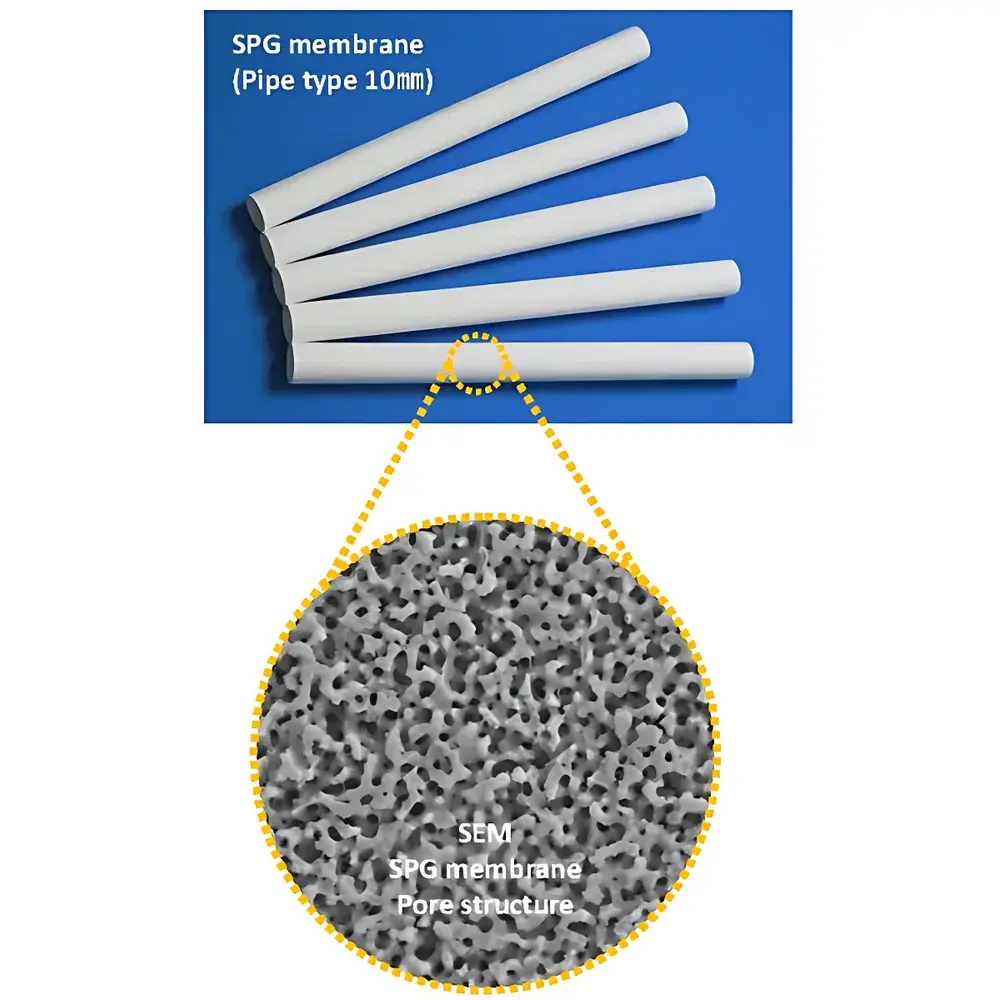
| Membrane Tube OD | 10 mm |
| Effective Membrane Length (MN-500) | 470 mm |
| Total Length (MN-500) | 500 mm |
| Membrane Pore Size | 1 µm (standard), customizable |
| Membrane Material | SUS304 or SUS316 stainless steel |
| Sealing Material | FKM (Viton®) O-rings |
| Gas Inlet Connection | 6 mm OD tubing |
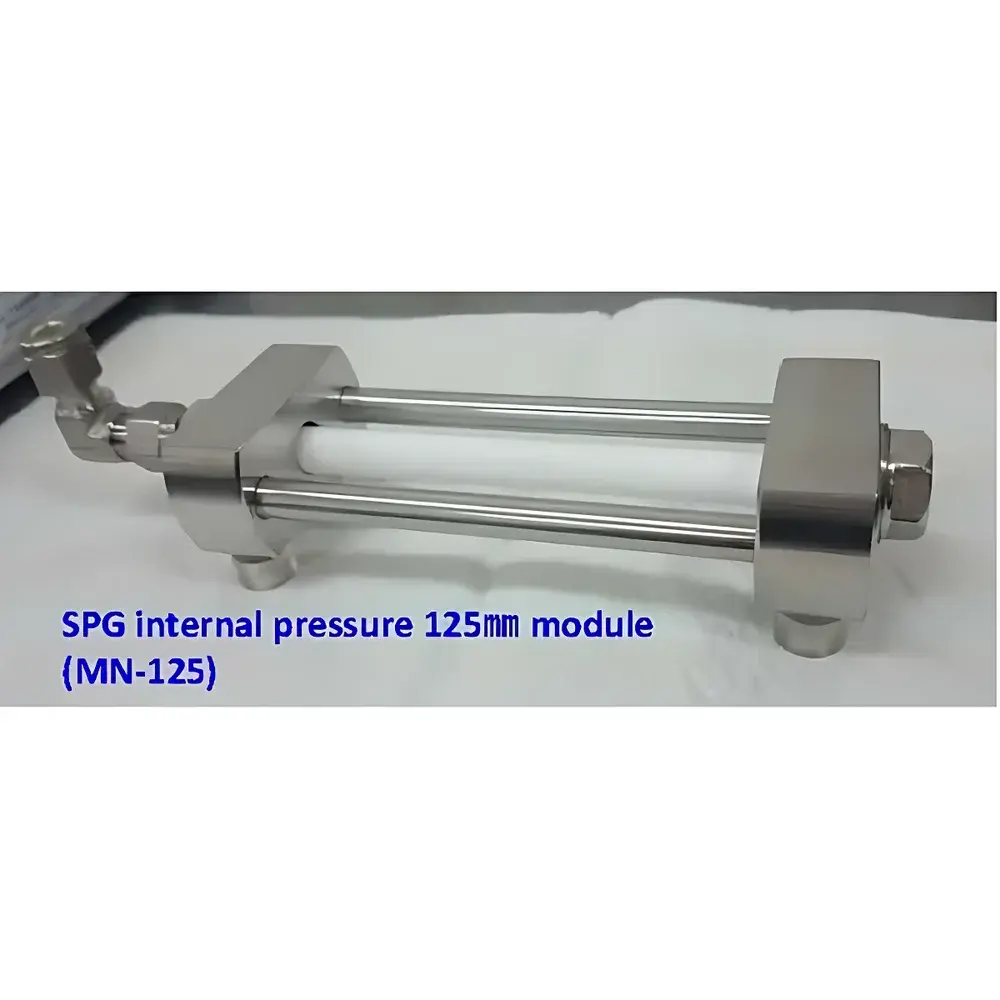
| Dimensions (MN-500) | W 560 mm × D 50 mm × H₁ 38 mm (×2) + H₂ adjustable 20–500 mm (stainless steel shaft length) |
| Excludes | Main pressure gauge, gas cylinder, primary pressure regulator, isolation valves, exhaust valves, pressure gauges, and piping |
Overview
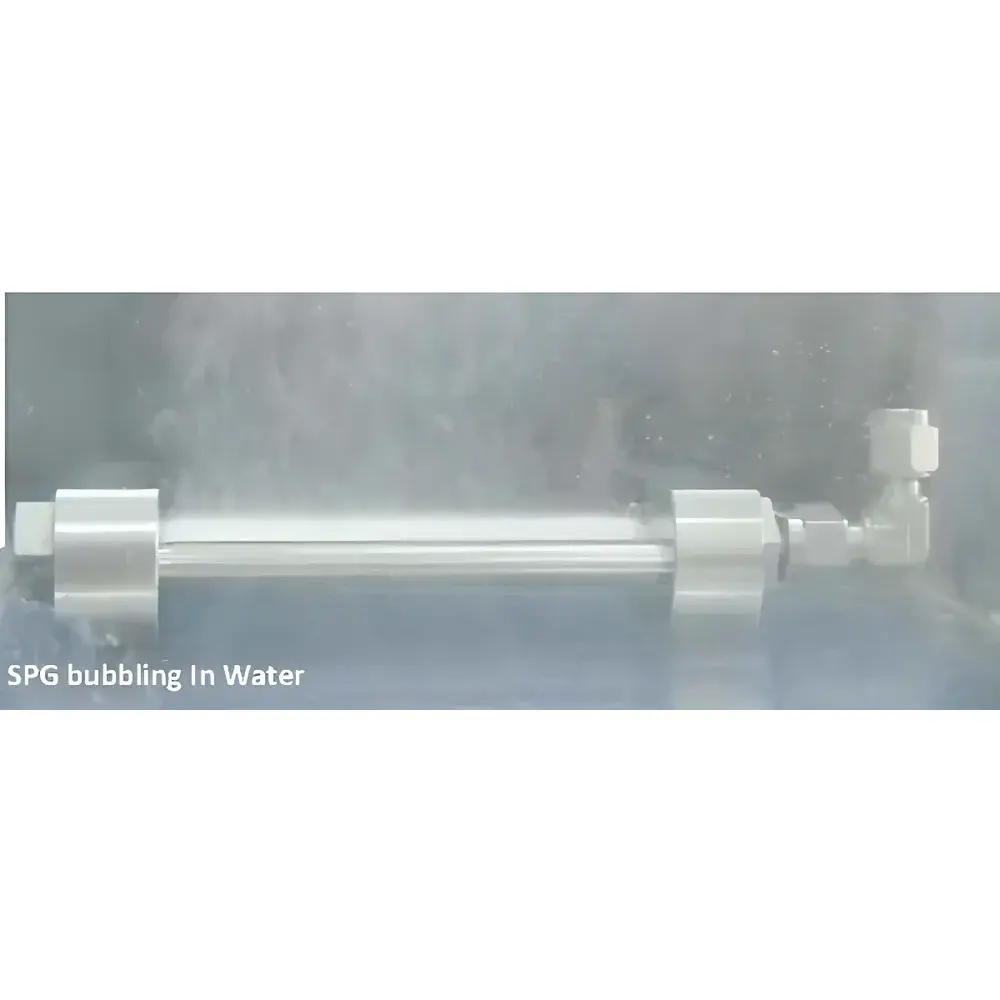
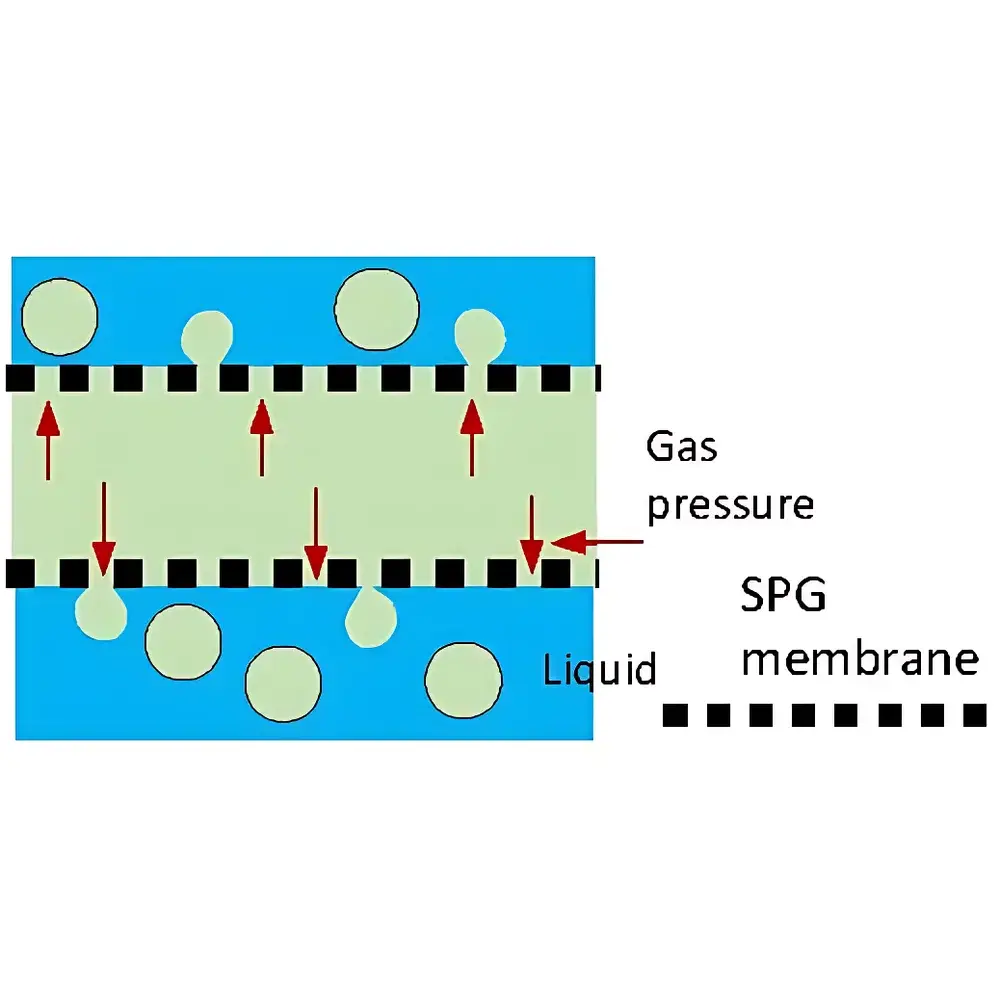
The SPG MN-500 Internal-Pressure Micro/Nano Bubble Generator is an engineered platform for the controlled, reproducible generation of microbubbles (1–100 µm) and nanobubbles (<1 µm) via membrane-based pressurized dispersion. It operates on the principle of gas extrusion through a sintered stainless-steel microporous membrane under regulated internal hydrostatic pressure—enabling precise bubble size distribution governed by pore geometry, liquid surface tension, gas solubility, and mass flow rate. Unlike shear-based or venturi-type generators, the MN-500 delivers high monodispersity and low polydispersity index (PDI) without mechanical degradation of sensitive biologics or colloidal systems. Designed for laboratory-scale process development and analytical validation, it supports batch volumes up to several liters and integrates seamlessly into closed-loop recirculation systems for continuous bubble generation and stability assessment.
Key Features
- SPG (Shirasu Porous Glass) membrane technology adapted to precision stainless-steel sintered membranes (SUS304/SUS316), offering superior corrosion resistance and thermal stability in aqueous and mildly aggressive media.
- Modular shaft design with adjustable H₂ dimension (20–500 mm stainless-steel support rod), enabling vertical integration into tanks, reactors, or flow cells of variable depth.
- Dual O-ring sealing system using FKM (Viton®) elastomers, rated for continuous operation at ≤0.3 MPa and compatible with compressed air, N₂, O₂, CO₂, and Ar.
- Standard 1 µm pore size membrane optimized for nanobubble nucleation; optional pore sizes available upon request to accommodate specific interfacial energy requirements.
- Gas inlet configured for 6 mm OD tubing—compatible with standard pneumatic fittings and ISO 8573-1 Class 2 compressed gas supply lines.
- No integrated pressure regulation or instrumentation: designed for external control via certified secondary pressure regulators, calibrated gauges, and ASME B31.3-compliant piping assemblies.
Sample Compatibility & Compliance
The MN-500 is validated for use with deionized water, buffered saline solutions, low-viscosity polymer dispersions (<10 mPa·s), and cell culture media. Bubble size output is empirically dependent on liquid surface tension (e.g., ~72 mN/m for pure water at 25 °C) and dissolved gas concentration—requiring pre-saturation where necessary. The unit complies with general laboratory equipment safety guidelines per IEC 61010-1 and carries CE marking for electromagnetic compatibility (EMC Directive 2014/30/EU). While not intrinsically safe, it may be deployed in Zone 2 classified areas when paired with ATEX-certified ancillary components (e.g., pressure regulators, solenoid valves). For GMP/GLP environments, full traceability of membrane lot numbers, material certifications (EN 10204 3.1), and FKM compound test reports (ASTM D1418, ISO 1629) are provided upon order.
Software & Data Management
The MN-500 is a hardware-only module with no embedded firmware or digital interface. Process parameters—including inlet pressure, temperature, flow rate, and solution conductivity—are monitored externally via industry-standard transmitters (e.g., Rosemount 3051, WIKA A10) connected to SCADA or LIMS platforms. When used in conjunction with dynamic light scattering (DLS), nanoparticle tracking analysis (NTA), or high-speed microscopy systems, raw bubble size and concentration data may be archived in accordance with FDA 21 CFR Part 11 requirements using validated third-party acquisition software (e.g., Malvern Panalytical ZS Xplorer, Particle Metrix ZetaView®). Audit trails, electronic signatures, and user access controls must be implemented at the supervisory system level.
Applications
- Research into nanobubble-mediated oxygen delivery in aquaculture and wastewater remediation.
- Stabilization studies of functional beverages and nanoemulsions requiring long-term colloidal integrity.
- Preclinical evaluation of ultrasound contrast agents and sonosensitizers in therapeutic cavitation research.
- Calibration and verification of optical particle counters (OPCs) and resonant mass measurement (RMM) instruments.
- Development of disinfection protocols leveraging reactive oxygen species (ROS) generated from ozone or oxygen nanobubbles.
- Interfacial science investigations including contact angle hysteresis, flotation kinetics, and nucleation thermodynamics.
FAQ
What determines the actual bubble size distribution generated by the MN-500?
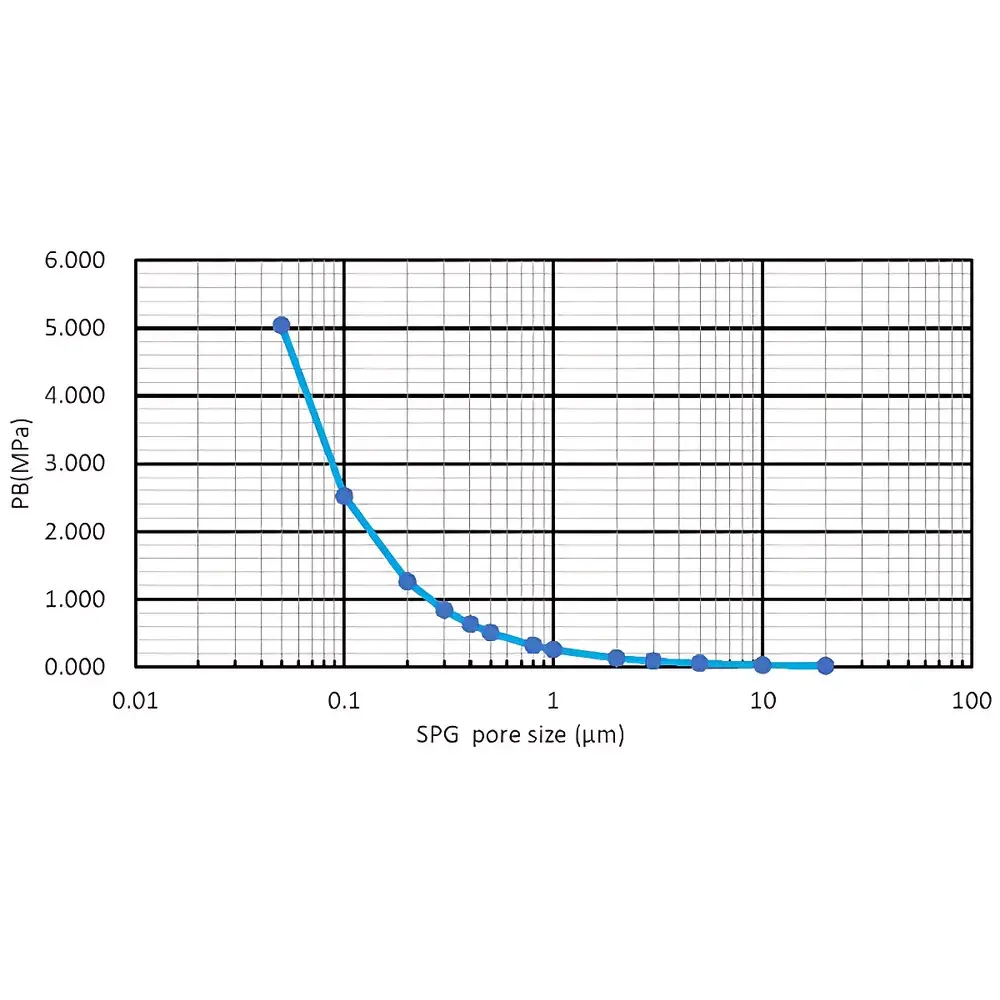
Bubble size is governed by capillary number (Ca), Laplace pressure (ΔP = 4γ/d), and gas supersaturation ratio—factors influenced by liquid surface tension (γ), pore diameter (d), applied pressure (P), and gas diffusion coefficient. Empirical calibration using laser diffraction or NTA is recommended for each fluid-gas combination.
Can the MN-500 be operated continuously for >24 hours?
Yes—provided inlet gas is oil-free and dew-point controlled (<−40 °C), membrane fouling is mitigated via periodic backflushing (≤0.1 MPa reverse pressure), and operating temperature remains within 5–40 °C.
Is sterilization of the membrane assembly possible?
SUS316 membranes withstand autoclaving (121 °C, 2 bar, 20 min) and hydrogen peroxide vapor (H₂O₂ VP) cycles; FKM O-rings require replacement after ≥3 autoclave cycles per ISO 17664.
Does SPG provide validation documentation for IQ/OQ protocols?
Yes—Factory Acceptance Test (FAT) reports, dimensional inspection records, pressure test certificates (hydrostatic @ 1.5× MWP), and material traceability dossiers are supplied as part of the delivery package.
Are custom pore sizes or non-standard membrane alloys available?
Yes—custom sintered membranes in Ti-6Al-4V, Hastelloy C-276, or ceramic composites can be commissioned subject to minimum order quantity and lead time confirmation.
Related Products