
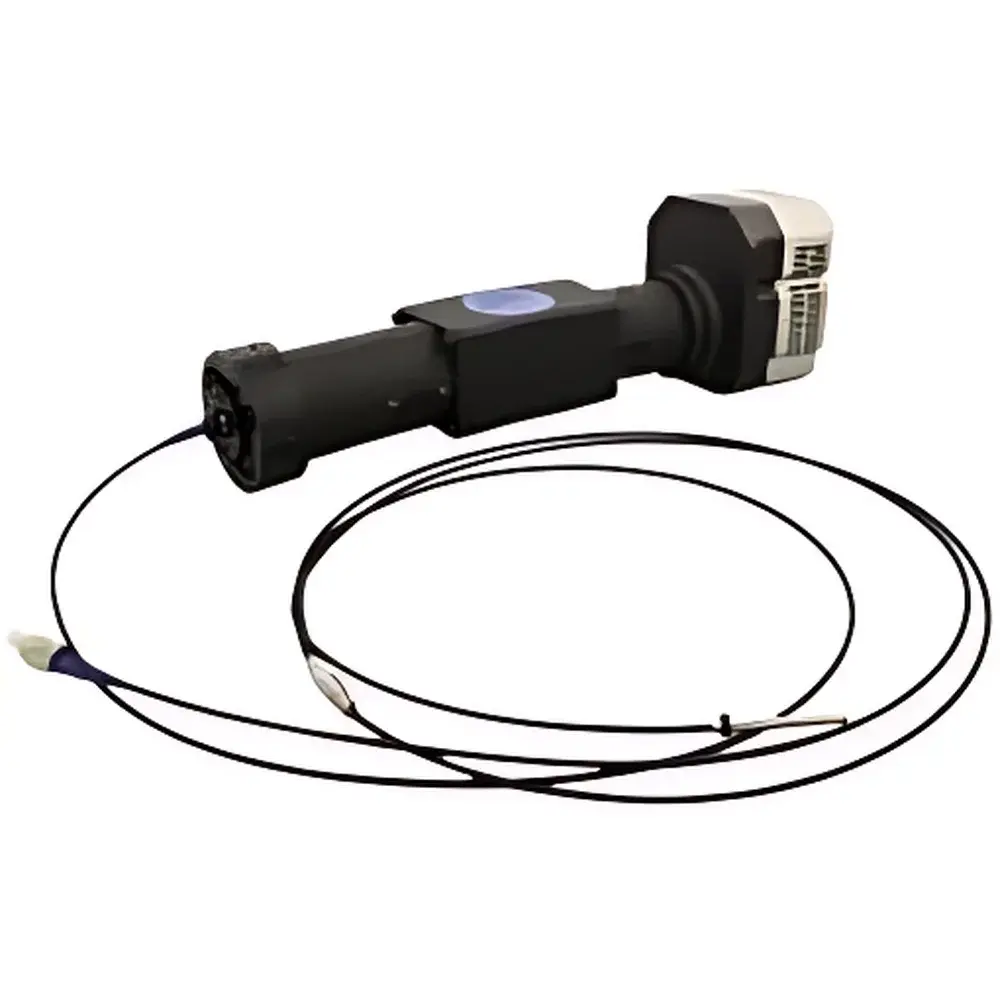
SPL Photonics 785 nm Raman Spectrometer
| Origin | USA |
|---|---|
| Manufacturer Type | Authorized Distributor |
| Import Status | Imported |
| Model | 785 Raman Spectrometer |
| Pricing | Available Upon Request |
Overview
The SPL Photonics 785 nm Raman Spectrometer is a high-performance, non-scanning dispersive Raman system engineered for quantitative chemical identification and structural analysis of solids, liquids, gases, and heterogeneous mixtures. It operates on the principle of inelastic light scattering—where monochromatic 785 nm laser excitation induces vibrational mode shifts in molecular bonds, yielding characteristic spectral fingerprints with wavenumber resolution calibrated to 30% system efficiency), minimal aberration across the full spectral range (typically 200–3200 cm⁻¹), and intrinsic thermal and mechanical stability. This architecture ensures high reproducibility in routine measurements while maintaining compatibility with regulated laboratory environments requiring traceable instrument performance.
Key Features
- 785 nm diode laser excitation source optimized to suppress fluorescence interference—especially critical for pharmaceutical APIs, biological tissues, pigments, and aged organic materials—without compromising signal-to-noise ratio (SNR)
- Back-illuminated, deep-depletion CCD detector with thermoelectric cooling (−15 °C typical) for low dark current and extended integration times (up to 60 s)
- Fixed-focal-length spectrograph with gel-mounted transmission grating enabling >90% diffraction efficiency and negligible polarization dependence
- Modular optical interface supporting interchangeable input slits (standard 50 µm; upgradeable to 12 mm for enhanced throughput in low-light applications)
- Integrated edge filter with OD6 rejection at laser line and <0.5 cm⁻¹ cut-on transition for precise Rayleigh suppression
- Optional 3 mm diameter fiber-coupled probe with built-in notch filter and adjustable working distance (5–50 mm), enabling non-contact, standoff, or immersion sampling
Sample Compatibility & Compliance
The system accommodates diverse sample geometries—including bulk solids, powders, films, solutions in quartz cuvettes, and gas-phase cells—without mandatory sample preparation. Its robust optical design meets ISO/IEC 17025 calibration traceability requirements when paired with NIST-traceable Raman shift standards (e.g., silicon, cyclohexane, sulfur). For regulated industries, the spectrometer supports audit-ready operation under GLP and GMP frameworks: metadata logging includes timestamp, laser power (monitored via integrated photodiode), integration time, grating position, and environmental temperature. While not FDA 21 CFR Part 11–certified out-of-the-box, the software architecture permits integration with validated LIMS or ELN platforms through standardized API protocols.
Software & Data Management
Control and analysis are performed via SPL’s SpectraView Pro software (Windows 10/11 compatible), which provides real-time spectral acquisition, baseline correction (Asymmetric Least Squares), peak deconvolution (Voigt fitting), multivariate analysis (PCA, PLS-DA), and spectral library matching against internal or user-defined databases (e.g., RRUFF, ICDD, or USP Reference Standards). All raw data are saved in HDF5 format with embedded metadata conforming to the ASTM E131-22 standard for spectroscopic data exchange. Export options include CSV, JCAMP-DX, and mzML-compatible formats for cross-platform interoperability. Software updates follow a documented version control policy aligned with ICH Q9 quality risk management principles.
Applications
This instrument is routinely deployed in QC/QA laboratories for raw material verification (e.g., polymorph screening of active pharmaceutical ingredients), counterfeit detection in cultural heritage conservation (pigment and binder identification in paintings), forensic analysis of illicit substances (fentanyl analogs, explosives precursors), and in-process monitoring of polymerization reactions. Its high photon efficiency enables sub-second acquisition for dynamic processes such as crystallization kinetics or catalytic surface reactions under ambient or controlled-atmosphere conditions. In academic research, it serves as a platform for developing machine learning–driven spectral classifiers and validating first-principles DFT simulations of vibrational modes.
FAQ
Is the 785 nm excitation wavelength fixed, or can other lasers be integrated?
The base configuration uses a single-mode, temperature-stabilized 785 nm laser module. Alternate wavelengths (e.g., 532 nm, 633 nm, or 1064 nm) require reconfiguration of the grating, filter set, and detector—available as factory-engineered variants upon request.
What spectral calibration standards are recommended for routine verification?
Silicon (520.7 cm⁻¹), cyclohexane (2847 cm⁻¹ C–H stretch), and sulfur (153 cm⁻¹) are primary references. SPL provides certified calibration kits traceable to NIST SRM 2241 and 2242.
Can the system operate in hazardous environments (e.g., Class I Div 2)?
The core spectrometer is rated for general laboratory use (IEC 61010-1). For intrinsically safe deployment, explosion-proof enclosures and fiber-optic remote probes must be specified separately per ATEX/IECEx guidelines.
Does the software support automated pass/fail criteria for release testing?
Yes—user-defined acceptance thresholds (peak position tolerance ±0.5 cm⁻¹, intensity ratio limits, spectral correlation >0.995) can be scripted and logged with electronic signature capability when integrated with compliant ELN systems.




