
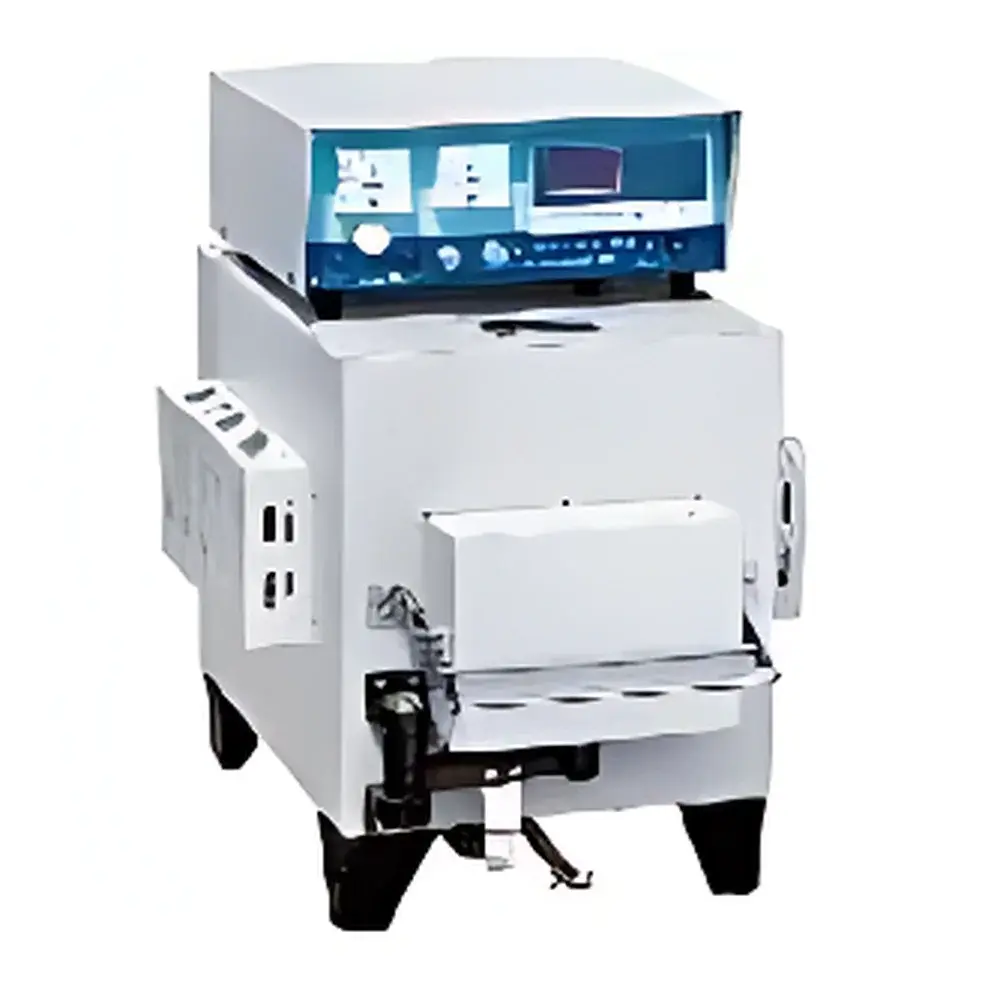
SRJX-4-13 / SRJX-8-13 High-Temperature Box-Type Resistance Furnace (Muffle Furnace)
| Voltage | 220 V / 380 V |
|---|---|
| Power | 4000 W / 8000 W |
| Max. Operating Temperature | 1300 °C |
| Chamber Dimensions | 250 × 150 × 100 mm (SRJX-4-13) / 500 × 200 × 180 mm (SRJX-8-13) |
| Heating Element | Silicon Carbide Rod (SiC) or Molybdenum Disilicide (MoSi₂) |
| Construction | Steel Enclosure with Electrostatic Powder Coating |
| Insulation | Refractory Ceramic Fiber Blanket |
| Compliance | CE-marked design principles, compatible with ISO/IEC 17025 laboratory environmental control requirements |
Overview
The SRJX-4-13 and SRJX-8-13 high-temperature box-type resistance furnaces are laboratory-grade muffle furnaces engineered for precise, repeatable thermal processing in research, quality control, and small-batch industrial applications. These units operate on the principle of resistive heating—electric current passes through high-resistivity heating elements (silicon carbide rods for SRJX-4-13; molybdenum disilicide rods for SRJX-8-13), generating uniform radiant heat within a thermally insulated chamber. With a maximum operating temperature of 1300 °C and stable temperature uniformity ±5 °C across the working zone, they support critical processes including ashing, calcination, sintering of ceramic powders, heat treatment of small metallic components, and pre-conditioning of refractory substrates. The furnace architecture adheres to fundamental thermal safety and energy efficiency standards common in ISO 15190-compliant laboratory infrastructure.
Key Features
- Robust welded steel chassis with electrostatic powder-coated exterior finish for corrosion resistance and long-term mechanical stability
- High-density refractory ceramic fiber insulation (≥1260 °C classification) between furnace chamber and outer casing, minimizing thermal loss and surface temperature rise
- Two model variants optimized for different throughput demands: SRJX-4-13 (compact 250 × 150 × 100 mm chamber, 4 kW input) and SRJX-8-13 (larger 500 × 200 × 180 mm chamber, 8 kW input at 380 V three-phase supply)
- Modular heating element configuration—SiC rods for standard 1300 °C operation (SRJX-4-13); MoSi₂ rods for enhanced longevity and oxidation resistance under repeated thermal cycling (SRJX-8-13)
- Integrated analog/digital temperature controller with K-type thermocouple input, enabling setpoint programming, ramp-hold profiles, and over-temperature cut-off protection
- Front-loading double-layer door with ceramic fiber gasket seal to maintain thermal integrity during operation and reduce ambient heat emission
Sample Compatibility & Compliance
These furnaces accommodate crucibles, boats, and trays made from alumina, silicon carbide, or quartz—compatible with ASTM C865 (sintering of advanced ceramics) and ISO 5659-2 (fire testing of materials). The chamber geometry supports standardized sample containers per USP heavy metals testing protocols and ASTM E1111 ash content determination. While not intrinsically certified for GMP environments, the design permits integration into GLP-aligned workflows when paired with external data loggers meeting FDA 21 CFR Part 11 audit trail requirements. All electrical interfaces comply with IEC 61000-6-3 (EMC emission limits) and IEC 61000-6-2 (immunity standards).
Software & Data Management
The furnace operates with a standalone PID-based temperature controller featuring manual setpoint adjustment, real-time digital display (0.1 °C resolution), and basic ramp-soak functionality. For traceable thermal process documentation, users may connect optional RS485/Modbus RTU interfaces to third-party SCADA or LIMS platforms. When integrated with validated data acquisition systems (e.g., Omega iSeries or LabVIEW-based DAQ), full thermal cycle logs—including time-stamped temperature, power draw, and alarm events—can be archived for ISO/IEC 17025 method validation or internal QA audits. No proprietary software is bundled; all communication protocols follow open industrial standards.
Applications
- Thermal gravimetric analysis (TGA) sample pre-treatment and residue stabilization
- Sintering of oxide ceramics (Al₂O₃, ZrO₂), ferrites, and lithium-ion battery cathode precursors
- Heat treatment of tool steels, stainless steel fasteners, and tungsten carbide blanks (annealing, stress relieving)
- Ash content determination in food, pharmaceutical excipients, and environmental filter samples per AOAC 942.05 and EPA Method 1695
- Calibration of thermocouples and RTDs using fixed-point reference materials (e.g., Al, Zn, Sn melting points)
- Pre-firing of catalyst supports and zeolite substrates prior to catalytic activity testing
FAQ
What is the recommended maintenance interval for the heating elements?
Silicon carbide rods should be inspected every 200 operational hours; molybdenum disilicide elements typically require replacement after 1,500–2,000 hours at 1300 °C, depending on atmosphere and thermal cycling frequency.
Can these furnaces operate under inert or reducing atmospheres?
Yes—when fitted with optional gas inlet/outlet ports and sealed flanges, both models support nitrogen, argon, or forming gas (5% H₂/95% N₂) purging; however, MoSi₂ elements are not recommended for sustained use below 400 °C in reducing environments.
Is temperature uniformity validated across the chamber volume?
Per manufacturer specifications, thermal uniformity is ±5 °C at 1300 °C measured at nine points (center + eight corners) per ASTM E2203; users conducting GLP work should perform independent mapping before first use.
Does the unit include over-temperature protection?
Yes—a redundant bimetallic safety cut-off switch de-energizes the heating circuit if the primary controller fails or chamber temperature exceeds 1350 °C.
Are spare parts such as thermocouples and insulation modules available?
Standard K-type thermocouples, ceramic fiber board inserts, and SiC/MoSi₂ replacement elements are stocked globally through authorized technical service partners and ship within 5 business days.
Related Products



