
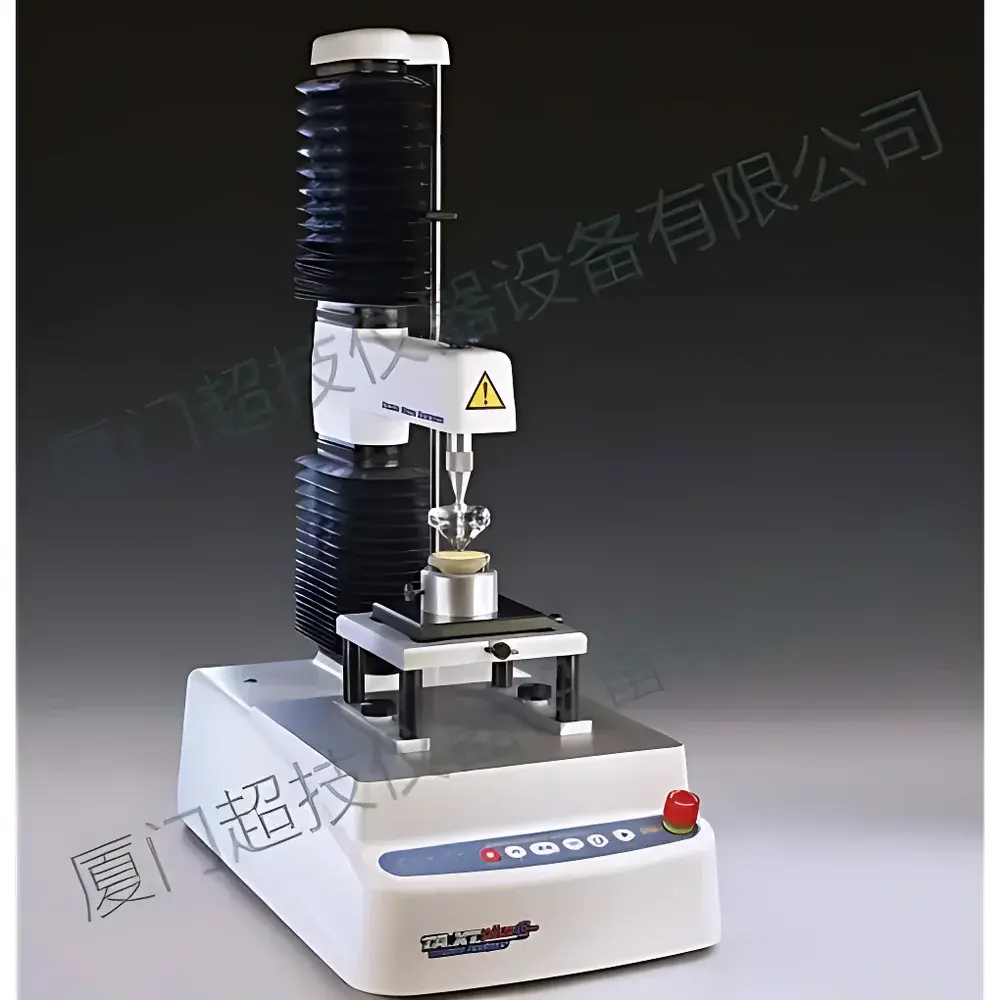
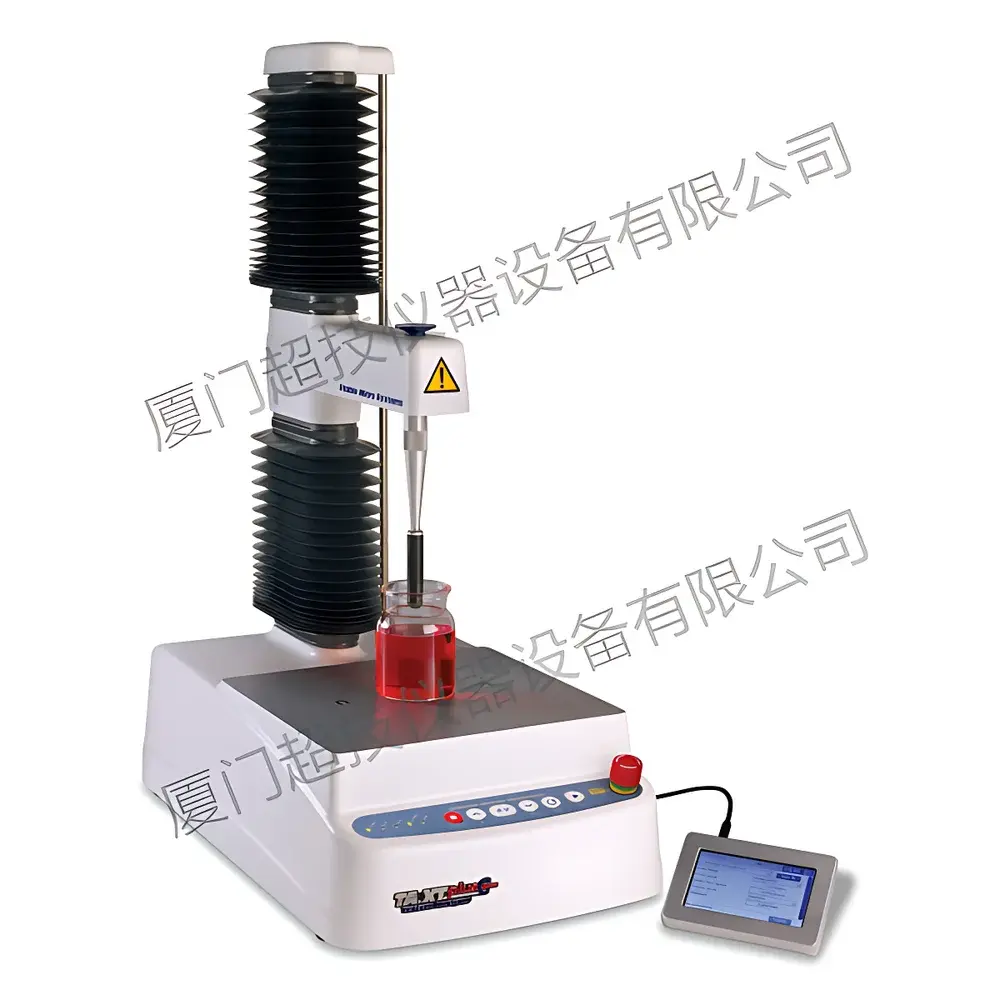
Stable Micro Systems TA.XTplusC Tobacco Stem and Leaf Texture Analyzer
| Brand | Stable Micro Systems |
|---|---|
| Origin | United Kingdom |
| Model | TA.XTplusC |
| Force Range | 0.5–50 kg |
| Force Resolution | 0.1 g |
| Test Speed Range | 0.01–40 mm/s |
| Travel Distance | 0.001–370 mm |
| Position Resolution | 0.001 mm |
| Data Acquisition Rate | >2,000 readings/sec (4 channels simultaneously) |
Overview
The Stable Micro Systems TA.XTplusC Tobacco Stem and Leaf Texture Analyzer is a high-precision universal testing instrument engineered for objective mechanical characterization of tobacco leaf lamina, stems, reconstituted tobacco (RT), cut filler, and filter components. Based on controlled-force compression, tension, bending, and puncture methodologies—rooted in fundamental principles of material science and biomechanics—the system quantifies structural integrity, deformation behavior, and energy absorption characteristics under standardized loading conditions. Unlike subjective sensory evaluation, this instrument delivers traceable, repeatable, and statistically robust metrics aligned with ISO 11357 (plastics—thermal analysis), ASTM D638 (tensile properties of plastics), and internal tobacco industry specifications for process control and quality assurance. Its modular probe design and programmable test sequences enable direct correlation between mechanical parameters—such as ductility, springiness, firmness, toughness, and rupture distance—and critical processing variables including moisture content, curing method, threshing efficiency, and stem-to-leaf ratio.
Key Features
- High-resolution dual-load-cell architecture supporting seamless switching between 0.5–50 kg force range with 0.1 g resolution, ensuring sensitivity across both delicate lamina tensile tests and high-force stem crushing evaluations.
- Precision-controlled motorized crosshead with adjustable speed from 0.01 to 40 mm/s and positional accuracy of ±0.001 mm, enabling compliance with dynamic testing protocols such as creep, stress relaxation, and cyclic loading.
- Real-time multi-channel data acquisition at >2,000 samples per second across four synchronized analog inputs—capturing simultaneous force, displacement, temperature (via optional sensor), and auxiliary transducer signals for comprehensive mechanical profiling.
- Barcode-triggered test execution: integration with industrial-grade barcode scanners allows instant recall and launch of pre-validated methods, minimizing operator intervention and reducing procedural errors in high-throughput QC environments.
- Remote operation capability via Secure Web Interface (SWI) protocol—enabling full software control, real-time monitoring, and post-test report generation from iOS, Android, or Windows tablets without physical proximity to the instrument.
- Modular probe library including custom-designed tobacco-specific fixtures: stem-bending jigs, lamina tensile clamps, filter burst platens, and RT sheet puncture probes—all calibrated and documented per ISO/IEC 17025 requirements.
Sample Compatibility & Compliance
The TA.XTplusC accommodates heterogeneous tobacco matrices—including air-cured, flue-cured, sun-cured, and burley leaf grades; pith-rich or woody stems; expanded cut filler; homogenized sheet tobacco; and cellulose acetate filter rods. Sample holders are designed to minimize slippage and lateral deflection during testing, ensuring measurement fidelity per ASTM D882 (tensile properties of thin plastic sheeting) and ISO 12048 (paper and board—tensile testing). All firmware and software modules comply with FDA 21 CFR Part 11 for electronic records and signatures, incorporating full audit trails, user-level permissions, and encrypted data storage. Instrument validation documentation supports GLP and GMP-aligned tobacco manufacturing environments, including traceability to NIST-traceable force and displacement standards.
Software & Data Management
Exponent Connect v3.1 software provides an ISO 17025-compliant platform for method development, execution, and reporting. It includes over 400 peer-reviewed application notes specific to tobacco science—including protocols for stalk strength index (SSI), lamina tear resistance (LTR), filter burst pressure (FBP), and reconstituted tobacco brittleness index (RT-BI). All test sequences support parameter locking, inter-method referencing, and automatic pass/fail flagging against user-defined specification limits. Raw data export is available in CSV, Excel, and XML formats compatible with LIMS integration. Automated email notification and secure cloud backup ensure immediate dissemination of QC reports to designated stakeholders following test completion.
Applications
- Quantification of lamina ductility and springback ratio to assess optimal moisture conditioning prior to cutting and blending.
- Stem flexural rigidity testing to evaluate threshing line efficiency and predict breakage rates during expansion processes.
- Rupture distance and burst strength measurement of filter tips containing encapsulated flavor beads, simulating human finger compression dynamics.
- Tensile strength profiling of reconstituted tobacco sheets across varying glycerol/water ratios to optimize humectant formulation.
- Correlation of firmness decay kinetics with aging time and storage humidity for shelf-life modeling of premium cigar wrappers.
- Validation of laser-perforation efficacy in low-tar cigarette papers via puncture resistance mapping.
FAQ
What standards does the TA.XTplusC comply with for tobacco testing?
The instrument and its associated software meet ISO/IEC 17025 calibration requirements, FDA 21 CFR Part 11 for data integrity, and support method development aligned with ASTM D638, ISO 11357, and proprietary tobacco industry test specifications.
Can the system be integrated into an existing LIMS environment?
Yes—Exponent Connect supports ODBC and HL7 interfaces, enabling bidirectional data exchange with major laboratory information management systems without custom middleware.
Is remote calibration verification possible?
Remote diagnostic checks are supported via encrypted SSH tunneling; however, physical calibration using NIST-traceable load cells and displacement standards remains mandatory per ISO/IEC 17025 and must be performed annually by accredited service engineers.
Does the software include tobacco-specific analysis modules?
Yes—preconfigured modules include Stalk Strength Index (SSI), Lamina Tear Resistance (LTR), Filter Burst Profile (FBP), and Reconstituted Tobacco Brittleness Index (RT-BI), each with validated statistical thresholds and graphical trend reporting.
How is operator training delivered?
Stable Micro Systems offers on-site and virtual instructor-led courses certified under CPD guidelines, supplemented by on-demand video libraries, interactive troubleshooting wizards, and live technical support via secure web portal.






