
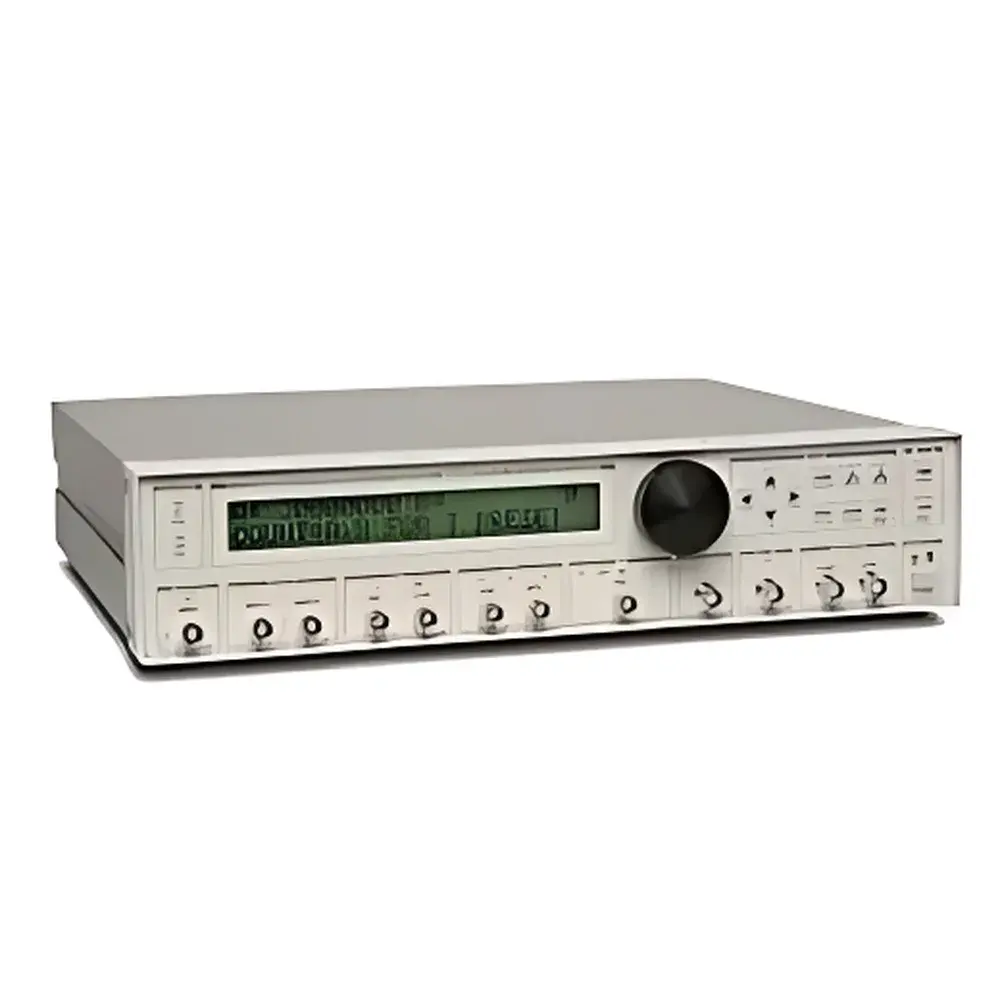
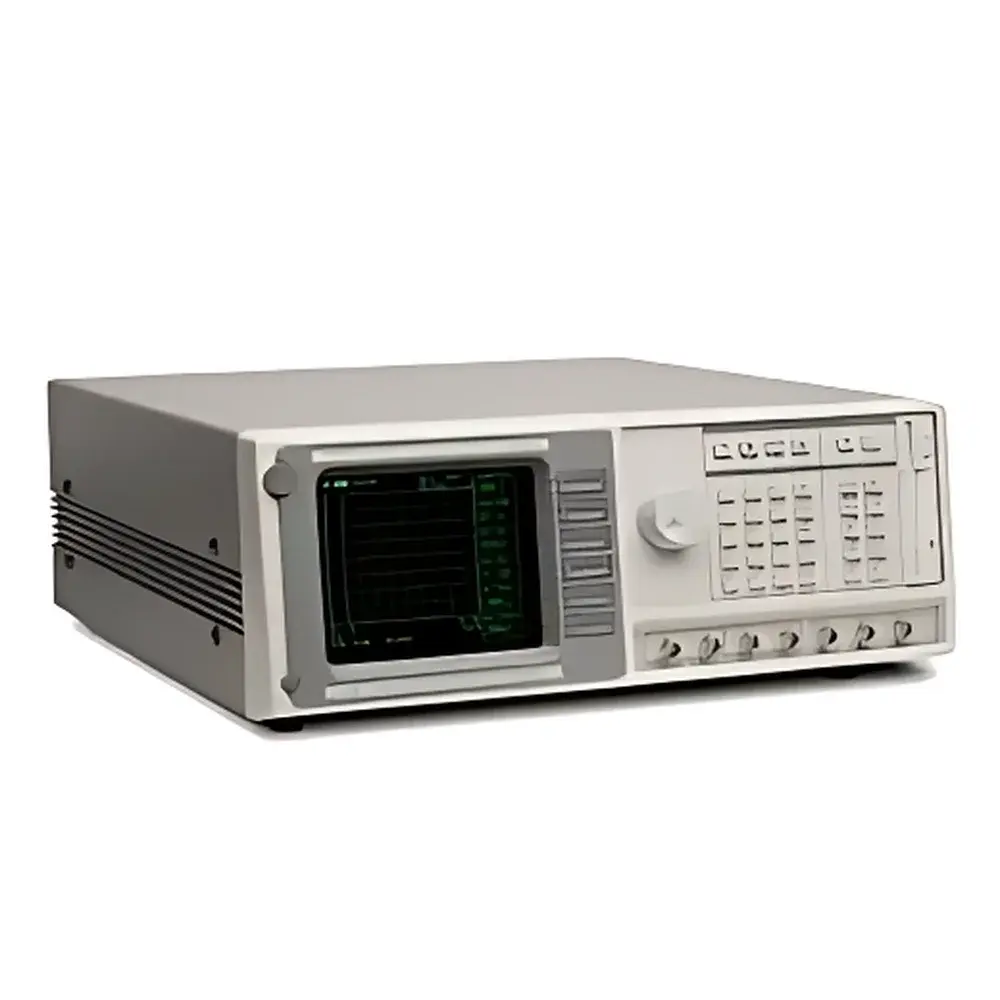
Stanford Research Systems SR400 Dual-Channel Gated Single-Photon Counter
| Brand | SRS/Stanford Research Systems |
|---|---|
| Origin | USA |
| Model | SR400 |
| Maximum Count Rate | 200 MHz |
| Pulse Resolution | 5 ns |
| Operating Modes | Gated and Continuous |
| Interface | GPIB and RS-232 |
Overview
The Stanford Research Systems SR400 is a dual-channel gated single-photon counter engineered for high-fidelity detection and quantification of ultra-low-intensity optical signals. It operates on the fundamental principle of discrete photoelectron pulse discrimination—leveraging the intrinsic single-photon sensitivity of photomultiplier tubes (PMTs) or other fast, low-noise photon detectors. When incident optical power falls below ~1 pW (corresponding to photon fluxes under ~10⁹ photons/s in the visible range), photocathode emission transitions from quasi-continuous to statistically discrete electron events. The SR400 captures these individual pulses with precise temporal gating, enabling time-resolved photon statistics, lifetime measurements, and correlation analysis without reliance on analog integration or signal averaging. Its architecture integrates amplifier stages, pulse discriminators, gate generators, and scalable counting logic into a single compact unit—eliminating the need for external cabling, timing synchronization, or custom NIM/TTL module configurations typical of legacy photon-counting setups.
Key Features
- Dual independent counting channels with fully synchronized gating capability—enabling coincidence detection, cross-correlation, and differential timing experiments
- Maximum sustained count rate of 200 MHz per channel, supporting high-throughput fluorescence lifetime imaging (FLIM), time-correlated single-photon counting (TCSPC), and quantum optics applications
- 5 ns minimum pulse width resolution ensures accurate separation of closely spaced photon events, critical for sub-nanosecond decay kinetics
- Programmable gate width (10 ns to 10 s) and delay (0 to 10 s), configurable via front-panel controls or remote interface
- Onboard discriminator with adjustable threshold (±1 V, 10 mV resolution) and hysteresis control to suppress noise-induced false triggers
- Standard GPIB (IEEE-488.2) and RS-232 serial interfaces for seamless integration into automated test benches, spectrometers, and laser scanning systems
- Rack-mountable 19-inch chassis (2U height) with front-panel LED status indicators, real-time count rate displays, and manual reset functionality
Sample Compatibility & Compliance
The SR400 is compatible with all standard PMT modules, microchannel plate (MCP) detectors, avalanche photodiodes (APDs), and silicon photomultipliers (SiPMs) delivering TTL/NIM-compatible output pulses. Its input impedance (50 Ω) and DC-coupled design accommodate both positive- and negative-going logic signals. The instrument meets CE marking requirements for electromagnetic compatibility (EMC Directive 2014/30/EU) and low-voltage safety (LVD Directive 2014/35/EU). While not certified for medical or industrial safety standards (e.g., IEC 61010-1), its design adheres to general laboratory instrumentation best practices for thermal stability, grounding integrity, and signal isolation. Data acquisition workflows using the SR400 are compatible with GLP-compliant environments when paired with audit-trail-enabled software platforms that log timestamped count data, gate parameters, and system configuration changes.
Software & Data Management
The SR400 supports native SCPI command sets over GPIB and ASCII-based protocols over RS-232, enabling direct control from LabVIEW, MATLAB, Python (via PyVISA), and custom C/C++ applications. SRS provides optional firmware-upgradable operation modes—including histogramming, burst-mode accumulation, and real-time dead-time correction algorithms. Raw count data is streamed as ASCII or binary packets; timestamps (relative to internal 100 MHz clock) can be appended for TCSPC post-processing. Integration with third-party spectroscopy platforms (e.g., Horiba FluoroLog, Edinburgh Instruments LifeSpec) is achieved through standardized trigger/gate handshaking protocols. All configuration settings—including discriminator levels, gate parameters, and channel enable states—are non-volatile and retained across power cycles.
Applications
- Time-resolved fluorescence spectroscopy and lifetime mapping in biological tissues, polymers, and semiconductor nanostructures
- Quantum key distribution (QKD) system validation and single-photon source characterization
- Laser-induced fluorescence (LIF) and resonance Raman detection in combustion diagnostics and environmental sensing
- Single-molecule fluorescence resonance energy transfer (smFRET) and nanoparticle tracking analysis
- Calibration of low-light radiometric standards and detector quantum efficiency measurements per ISO 15739 and CIE S 025/E:2015
- Photon antibunching experiments in quantum optics laboratories requiring Hanbury Brown–Twiss (HBT) interferometry
FAQ
What is the maximum input pulse repetition rate the SR400 can resolve without significant dead-time distortion?
The SR400 maintains linear response up to 200 MHz per channel; however, effective throughput depends on pulse width, discriminator recovery time, and user-defined gate duration. For continuous-mode operation, dead-time correction models (e.g., paralyzable/non-paralyzable) should be applied when average count rates exceed 10% of the maximum specification.
Can the SR400 operate in true time-tagged time-resolved (TTTR) mode?
No—the SR400 does not provide per-event timestamping at the picosecond level required for TTTR. It is optimized for gated accumulation and histogrammed lifetime analysis rather than event-by-event time-stamping.
Is external triggering required for gated operation?
No—internal gate generation is fully self-contained. External TTL triggers may optionally synchronize gate onset but are not mandatory for basic gated counting.
Does the SR400 support analog summing or coincidence logic between channels?
It provides independent channel outputs and a hardware-coincidence output (AND gate) with user-selectable coincidence window (10 ns to 1 µs), but no onboard analog summation or digital logic beyond basic AND/OR functions.
How is calibration traceability maintained for quantitative photon flux measurements?
The SR400 itself is a counting device—not a calibrated radiometer. Traceable photon flux determination requires concurrent calibration of the upstream detector’s quantum efficiency (e.g., NIST-traceable PMT calibration) and careful accounting of optical coupling losses, filter transmission, and electronic dead time.
Related Products






