
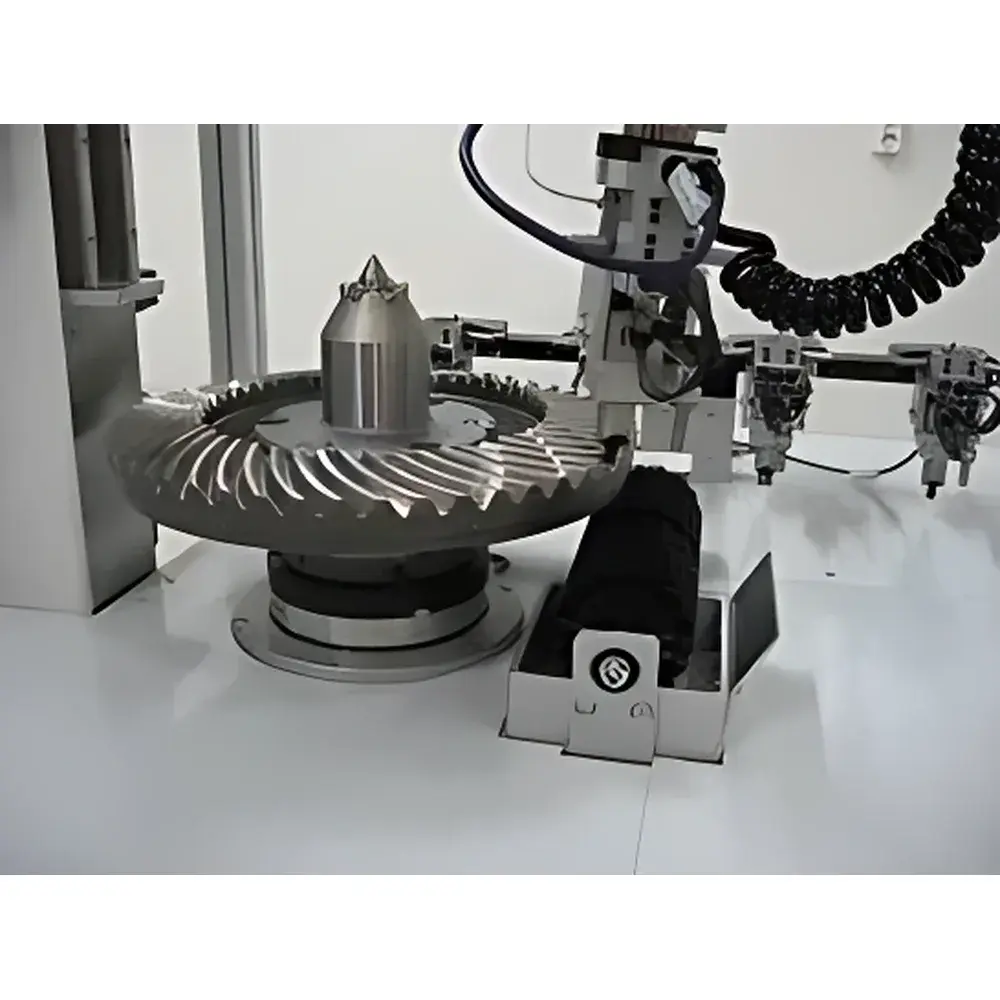
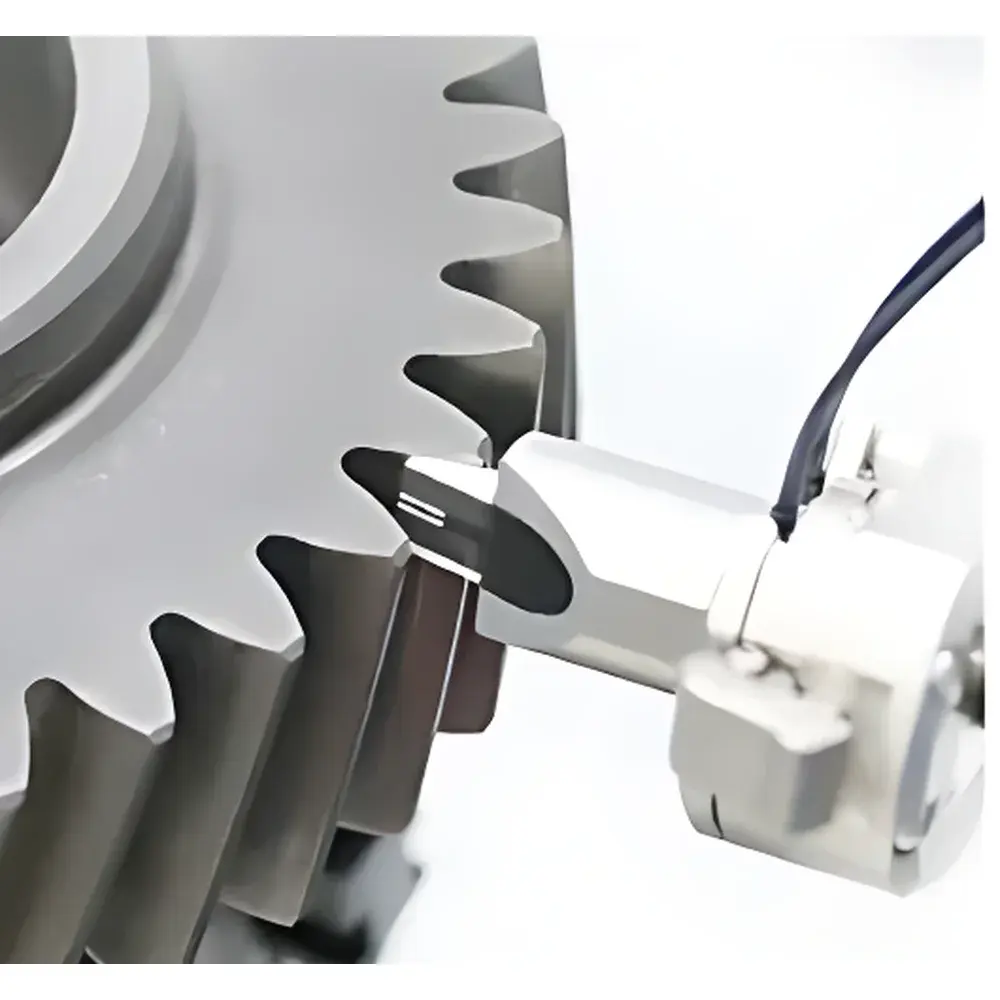
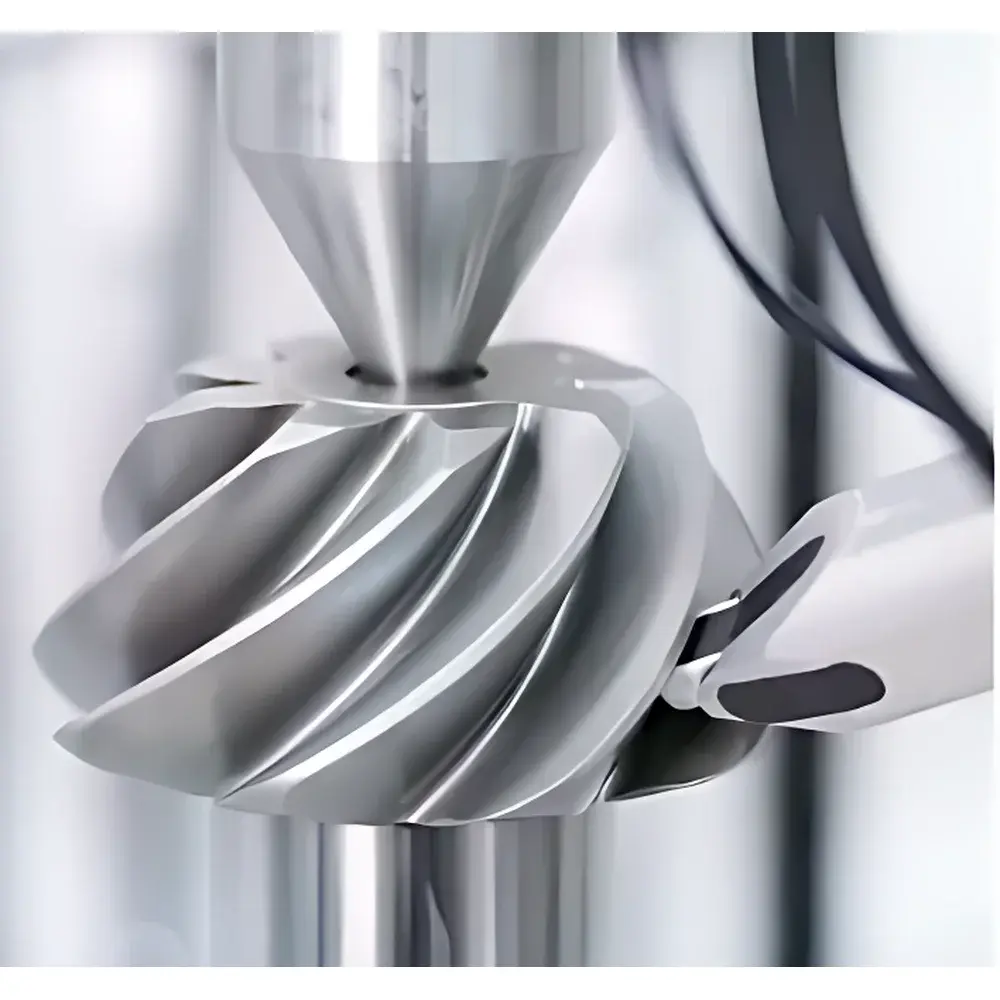
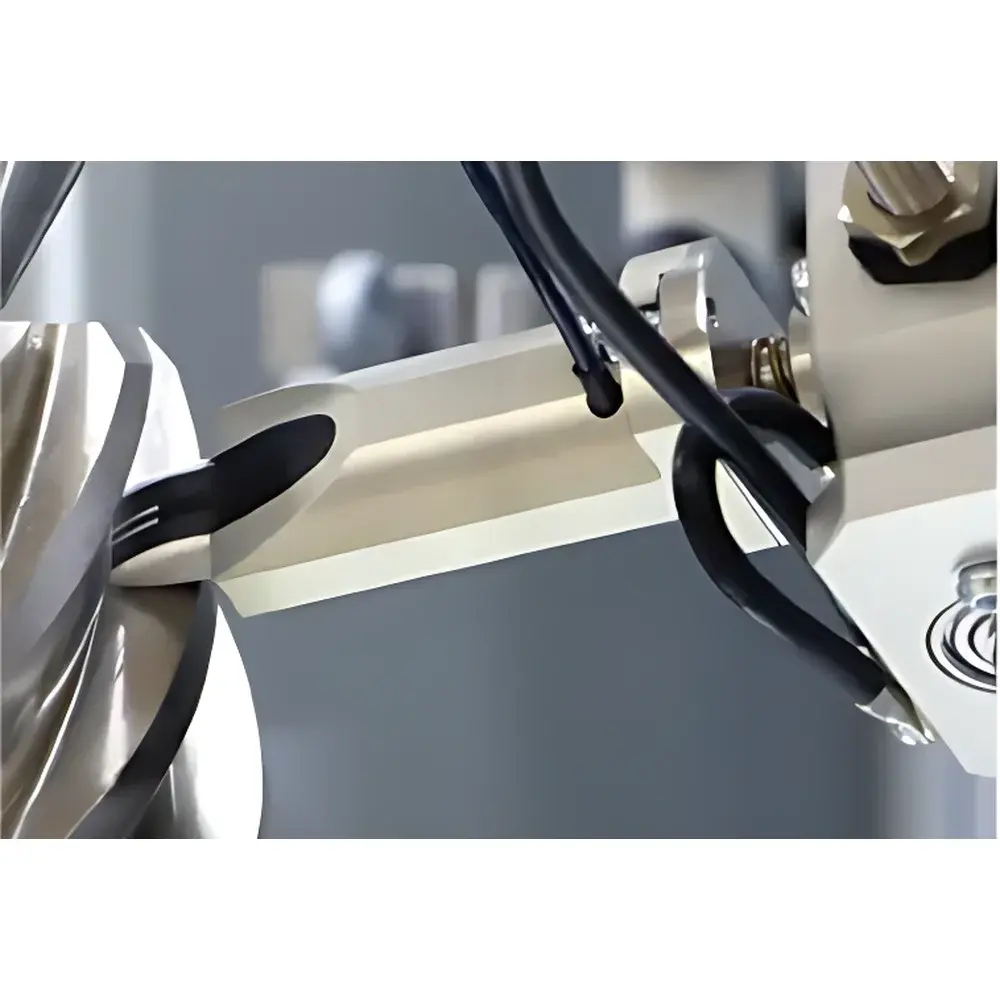
Stresstech RoboScan600 Barkhausen Noise-Based Gear Grinding Burn Detection System
| Brand | Stresstech Oy |
|---|---|
| Country of Origin | Finland |
| Model | RoboScan600 |
| Measurement Principle | Magnetic Barkhausen Noise (MBN) |
| Diameter Range | 5–2000 mm |
| Module Range | 1–70 |
| Measurement Time per Tooth | 2–30 s (dependent on gear geometry and surface condition) |
| Motion Control | Computer-controlled precision DC servo motor with linear bearing–guided probe actuation |
| Operation Modes | Manual and fully automated |
| Sample Handling Cycle Time | ≤20 s for gear loading/unloading |
Overview
The Stresstech RoboScan600 is a non-destructive, surface-sensitive inspection system engineered for the reliable detection of grinding-induced thermal damage—commonly referred to as “grinding burn”—in case-hardened gears. It operates on the physical principle of Magnetic Barkhausen Noise (MBN) analysis: when a magnetically permeable, ferromagnetic material (e.g., carburized or nitrided steel) is subjected to a time-varying magnetic field, abrupt domain wall movements generate measurable voltage pulses in a pickup coil. Local microstructural changes—including residual tensile stress, martensitic phase instability, and tempering-induced softening—alter MBN signal amplitude, frequency distribution, and noise envelope characteristics. The RoboScan600 quantifies these deviations against calibrated reference samples and statistical baselines to identify subsurface white-etching layers (WEL), overtempered zones, and untempered martensite—defects directly linked to premature pitting, spalling, and fatigue failure in high-load gear applications.
Key Features
- High-resolution MBN signal acquisition with synchronized spatial encoding: each tooth flank is scanned at programmable step intervals (down to 0.1 mm) along the involute profile and face width.
- Dual-mode operation: intuitive manual mode for rapid operator-guided inspection; fully automated mode with pre-loaded gear geometry templates and multi-tooth sequential scanning.
- Integrated motion control architecture: computer-driven DC servo motor ensures repeatable positioning accuracy ±5 µm; linear bearing–guided probe carriage guarantees orthogonal probe alignment and consistent lift-off control (0.2–1.5 mm).
- Real-time signal processing: onboard FPGA-based filtering and feature extraction enable immediate pass/fail evaluation per tooth segment using user-defined thresholds for RMS amplitude, peak count, and spectral centroid shift.
- Rugged industrial design: IP54-rated enclosure, shock-damped probe mount, and temperature-compensated sensor electronics for stable performance in shop-floor environments (10–40 °C ambient).
Sample Compatibility & Compliance
The RoboScan600 accommodates straight-cut and helical gears across a broad dimensional spectrum—diameters from 5 mm to 2000 mm and module values from 1 to 70—without mechanical reconfiguration. It supports both external and internal gear geometries (with optional probe adapters). All measurement protocols comply with ASTM E3089–22 *Standard Practice for Nondestructive Evaluation of Surface Integrity in Case-Hardened Steel Components Using Magnetic Barkhausen Noise*, and support traceable calibration per ISO/IEC 17025 requirements. Data records include full metadata (gear ID, tooth number, scan path, environmental conditions) to satisfy GLP/GMP documentation standards and FDA 21 CFR Part 11 audit-trail requirements when integrated with validated LIMS or MES platforms.
Software & Data Management
RoboScan Control Software (v5.2+) provides a Windows-based interface for method development, real-time visualization, and statistical reporting. Each measurement generates a comprehensive .mbn binary file containing raw time-series data, processed features, and positional metadata. Batch analysis tools enable comparative trending across production lots, while automated report generation exports PDF summaries with annotated MBN profiles, pass/fail heatmaps, and SPC charts (X̄/R, Cpk). Raw datasets are exportable in HDF5 format for third-party analysis (MATLAB, Python SciPy), and the software supports OPC UA connectivity for factory-wide data integration.
Applications
- Final quality gate for automotive transmission gears (differential pinions, planetary carriers, EV reduction gears).
- In-process verification during gear grinding and hard finishing operations to prevent batch rework.
- Root cause analysis of field failures involving surface-initiated fatigue or brittle fracture.
- Validation of heat treatment process stability (carburizing depth uniformity, quench severity, tempering consistency).
- Supplier qualification audits requiring objective, quantitative evidence of surface integrity compliance.
FAQ
What materials can the RoboScan600 inspect?
It is optimized for ferromagnetic, case-hardened steels (e.g., 16MnCr5, 20MnCr5, 18CrNiMo7-6) with hardness ≥55 HRC in the case layer and sufficient magnetic permeability contrast between case and core.
Does it require surface preparation before scanning?
No mechanical polishing or etching is needed; however, surfaces must be free of heavy oil, scale, or thick oxide layers that impede magnetic coupling. Light cleaning with isopropyl alcohol is recommended.
Can it detect subsurface defects beyond grinding burn?
Yes—it is sensitive to near-surface residual stress gradients, microcrack density, and phase transformations within the top ~100–300 µm, but it does not replace ultrasonic or eddy current methods for deeper flaws.
How is calibration maintained across shifts and operators?
Calibration is performed using certified reference gears with known burn severity levels; the system stores calibration coefficients with timestamp and operator ID, and prompts recalibration after 8 hours of continuous use or temperature drift >2 °C.
Is remote support and firmware updates available?
Stresstech provides secure remote diagnostics via encrypted TeamViewer sessions and quarterly firmware releases addressing measurement algorithm refinements and regulatory documentation enhancements.



