
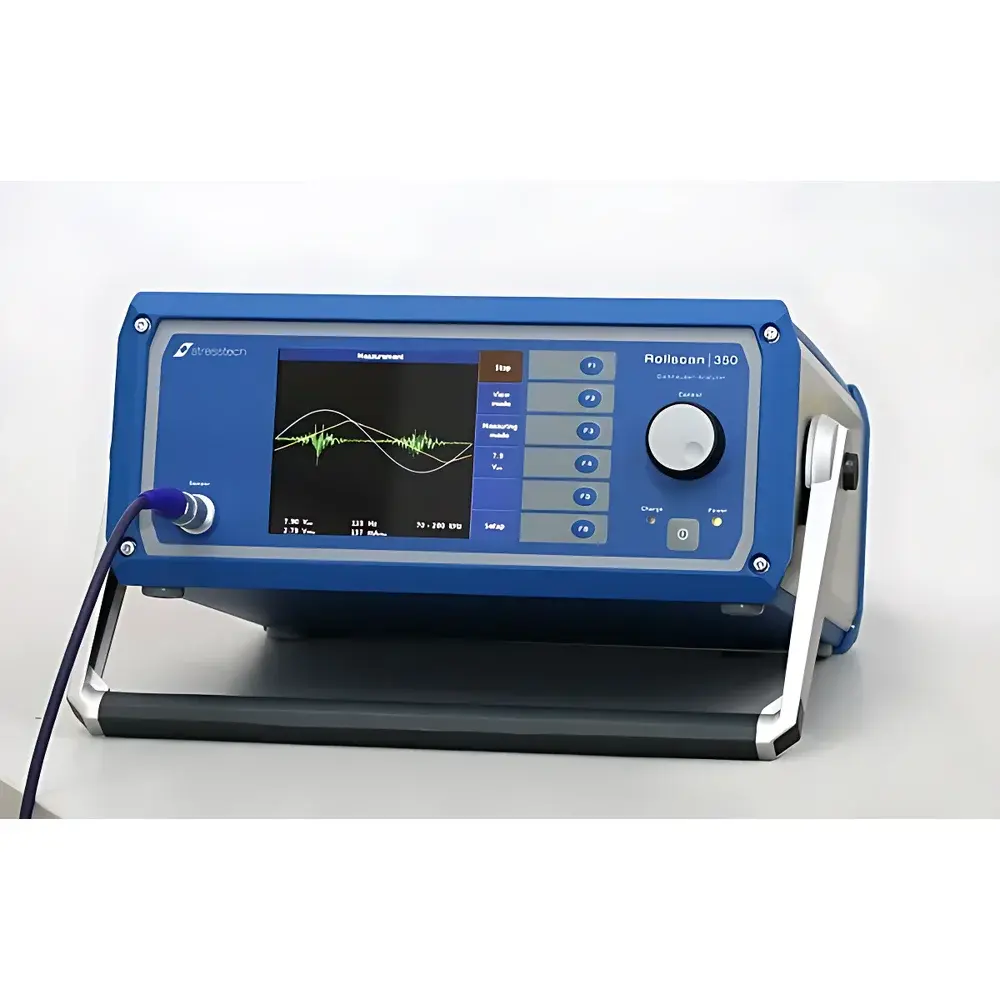
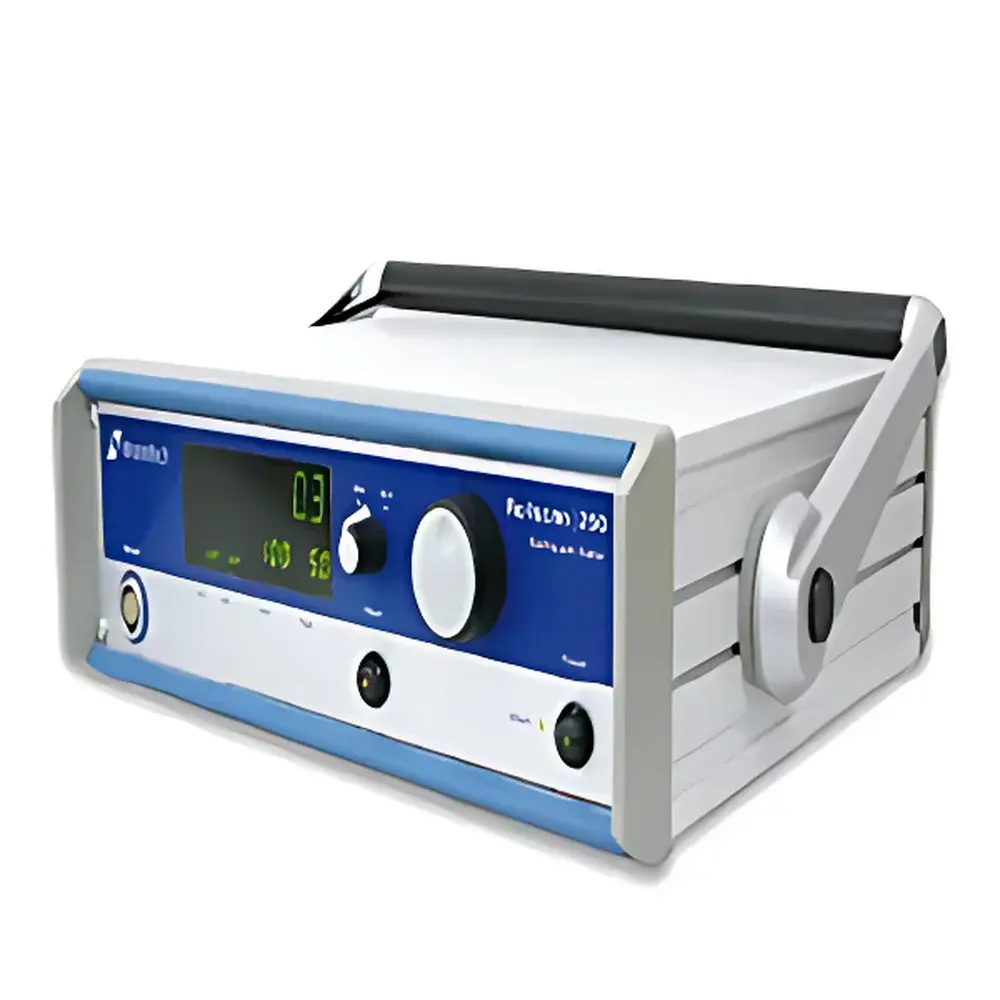
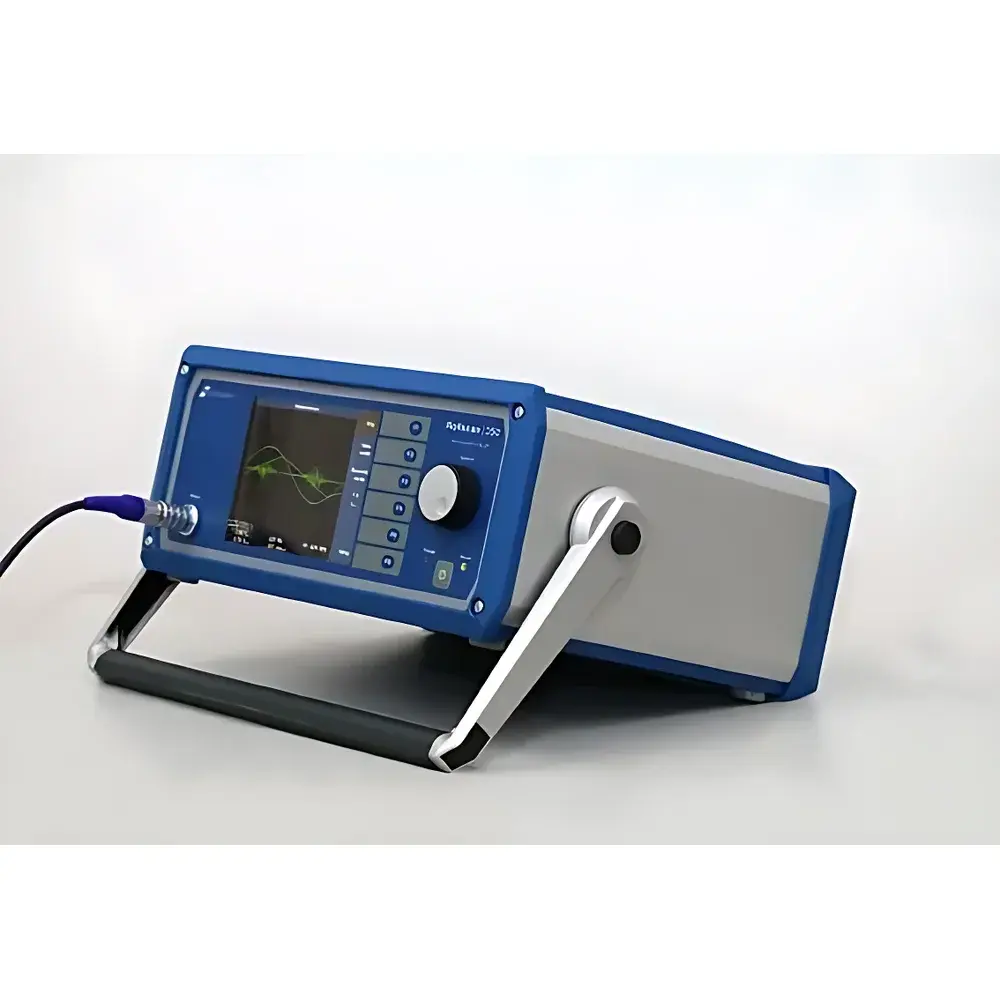
Stresstech Rollscan 250 Online Grinding Burn Detection System
| Brand | Stresstech Oy |
|---|---|
| Origin | Finland |
| Model | Rollscan 250 |
| Application | Non-destructive surface burn and subsurface defect detection in ferrous and nickel-based alloys |
| Sensor Compatibility | Multi-sensor modular system (eddy current, magnetic Barkhausen noise, and incremental flux leakage) |
| Data Acquisition | Real-time digital signal processing with ViewScan software platform |
| Compliance | Designed for ISO/IEC 17025-compliant QA environments |
| Power & Interface | 24 V DC input |
| Operating Temperature | 5–40 °C |
| Enclosure Rating | IP54 (industrial-grade housing) |
Overview
The Stresstech Rollscan 250 Online Grinding Burn Detection System is an industrial-grade, non-destructive evaluation (NDE) instrument engineered for real-time detection of grinding-induced surface and near-surface damage—including thermal burns, microcracks, rehardened zones, and residual stress anomalies—in rotationally symmetric components. Unlike destructive acid-etching methods, the Rollscan 250 employs electromagnetic principles—primarily magnetic Barkhausen noise (MBN) analysis combined with eddy current and incremental flux leakage (IFL) sensing—to quantitatively assess microstructural changes in ferromagnetic materials without physical contact or surface preparation. Its core measurement physics relies on domain wall dynamics under controlled magnetic excitation: localized plastic deformation, martensitic phase transitions, or tempering-induced softening alter the MBN emission profile, enabling discrimination between acceptable ground surfaces and thermally damaged layers as shallow as 10–50 µm below the surface. The system is purpose-built for integration into high-throughput manufacturing lines, particularly where post-grinding quality assurance is mandated by aerospace, power generation, or nuclear component specifications.
Key Features
- Modular sensor architecture supporting interchangeable MBN, eddy current, and IFL probes—enabling application-specific configuration for gears, bearing rings, camshafts, crankshafts, fuel injector nozzles, and landing gear components.
- Digital signal processor (DSP)-based acquisition with 16-bit analog-to-digital conversion and real-time spectral analysis, delivering high reproducibility across batch runs.
- Parameter tunability via intuitive front-panel controls: excitation voltage (0.5–12 Vpp), frequency sweep range (1–1000 Hz), and pulse width modulation—all accessible without software intervention.
- Integrated hardware synchronization for multi-sensor data fusion; time-aligned waveforms support cross-modal correlation of MBN amplitude, RMS noise, and harmonic distortion indices.
- Ruggedized industrial enclosure (IP54-rated) with passive cooling, designed for continuous operation in machine shop environments with ambient temperatures up to 40 °C.
- Native compatibility with Stresstech’s ViewScan data acquisition and analysis software suite—supporting automated pass/fail classification, statistical process control (SPC) charting, and export to CSV, XML, or HDF5 formats.
Sample Compatibility & Compliance
The Rollscan 250 is validated for use on carbon steels, alloy steels, stainless steels (ferritic and martensitic grades), nickel-based superalloys (e.g., Inconel 718, Waspaloy), and cobalt-chromium alloys. It does not require surface conductivity enhancement or couplant application. Component geometry constraints are minimal: minimum diameter ≥15 mm; curvature radius ≥3 mm; surface roughness Ra ≤3.2 µm. The system conforms to EN 1369 (magnetic particle inspection standards), ASTM E1444/E1444M (standard practice for magnetic particle testing), and supports traceability frameworks required under AS9100 Rev D and ISO 9001:2015. When deployed with validated ViewScan configurations—including user access controls, electronic signatures, and audit-log generation—it meets documentation requirements aligned with FDA 21 CFR Part 11 for regulated manufacturing environments.
Software & Data Management
ViewScan serves as the primary interface for configuration, acquisition, visualization, and reporting. It provides synchronized multi-channel waveform display, customizable alarm thresholds per measurement channel, and automated report generation compliant with internal QA templates. Raw time-domain signals and derived metrics—including peak MBN amplitude, noise energy in defined frequency bands (e.g., 30–150 kHz), and cumulative harmonic ratio—are stored with full metadata (operator ID, timestamp, part serial number, sensor ID). The software supports database-driven result archiving, trend analysis over time-series production batches, and integration with MES or LIMS platforms via OPC UA or RESTful API. Optional modules include SPC dashboarding, multivariate regression modeling for burn severity prediction, and PDF report templating with embedded signature fields.
Applications
- Aerospace: In-line verification of turbine disk rims, compressor blades, and landing gear pins following precision grinding.
- Automotive: 100% inspection of transmission gears, CV joint housings, and camshaft lobes prior to final assembly.
- Energy: Residual stress mapping and burn detection on steam turbine rotors, generator shafts, and nuclear fuel cladding support structures.
- Medical device manufacturing: Surface integrity validation of orthopedic implant stems and dental abutments fabricated from Ti-6Al-4V or CoCrMo.
- Research & development: Correlation studies between grinding parameters (wheel speed, feed rate, coolant flow) and subsurface microstructure evolution using MBN spectral fingerprints.
FAQ
Does the Rollscan 250 require calibration against reference standards?
Yes—annual recalibration using NIST-traceable MBN reference samples (e.g., Stresstech Calibration Kit CK-250) is recommended. Factory calibration certificates include uncertainty budgets per ISO/IEC 17025.
Can it detect grinding burns through surface coatings or platings?
No—non-ferromagnetic coatings (e.g., CrN, DLC, anodized layers) attenuate MBN signals; ferromagnetic overlays (e.g., electroplated nickel) may permit limited assessment if thickness <5 µm and substrate properties are known.
Is operator training required for valid interpretation of results?
Yes—Stresstech offers certified Level II NDT training courses covering MBN physics, signal artifact recognition, and correlation with metallographic validation protocols.
What is the typical measurement cycle time per part?
For a standard 100-mm-diameter bearing ring scanned at 2 rpm with 10 mm/s axial traverse: ~12 seconds including sensor positioning, excitation stabilization, and data capture.
How is sensor wear monitored during long-term deployment?
ViewScan logs probe impedance drift and excitation current variance; deviation >±3% from baseline triggers maintenance alert per preventive maintenance schedule.




