
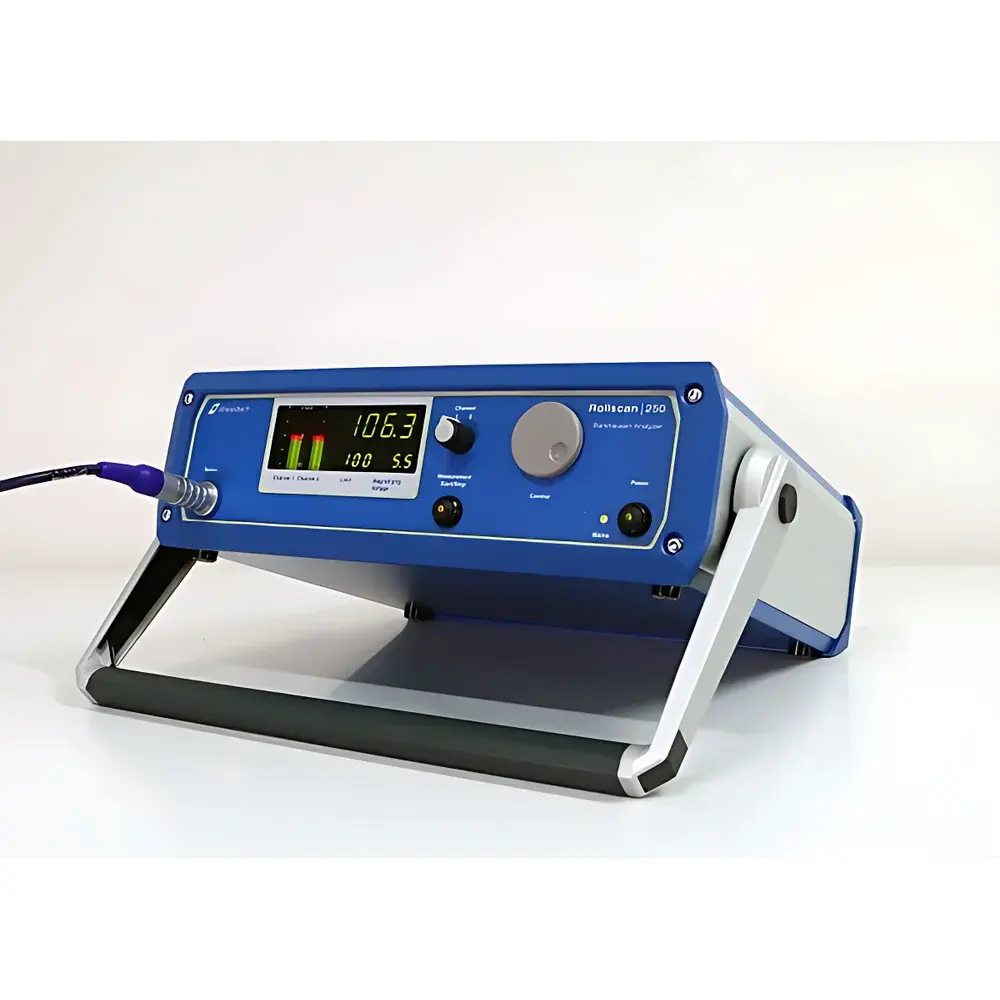
Stresstech Rollscan 250 Surface Grinding Burn Detection System
| Brand | Stresstech Oy |
|---|---|
| Country of Origin | Finland |
| Model | Rollscan 250 |
| Sensor Compatibility | Universal with Rollscan 250/300 platform |
| Signal Processing | Digital Signal Processor (DSP) |
| Material Coverage | Ferritic steels, iron-based alloys, nickel-based superalloys, cobalt-based alloys |
| Detection Principle | Magnetic Barkhausen Noise (MBN) and Incremental Permeability (IP) |
| Output Parameters | Voltage amplitude, current waveform, magnetization cycle synchronization |
| Software Platform | ViewScan (optional standalone data acquisition & analysis software) |
| Non-Destructive Testing (NDT) Compliance | ASTM E1444/E1444M, ISO 20639, EN 10204 Type 3.1 documentation support |
| Portability | Benchtop + modular handheld sensor configurations |
Overview
The Stresstech Rollscan 250 Surface Grinding Burn Detection System is a high-precision, non-destructive evaluation (NDE) instrument engineered for the quantitative detection of grinding-induced surface damage—including thermal softening, microstructural alterations, and subsurface cracks—in ferromagnetic components. Unlike destructive acid etching or subjective visual inspection, the Rollscan 250 employs the physical principles of Magnetic Barkhausen Noise (MBN) and Incremental Permeability (IP), both of which are sensitive to localized changes in magnetic domain wall mobility caused by residual stress gradients, phase transformations, and plastic deformation induced during grinding or heat treatment. The system delivers repeatable, traceable, and calibration-verifiable results—making it suitable for production line QA/QC, incoming material verification, and post-process validation in mission-critical industries where surface integrity directly impacts fatigue life and functional reliability.
Key Features
- Integrated digital signal processor (DSP) architecture ensures real-time noise filtering, high signal-to-noise ratio, and stable baseline acquisition across varying ambient electromagnetic conditions.
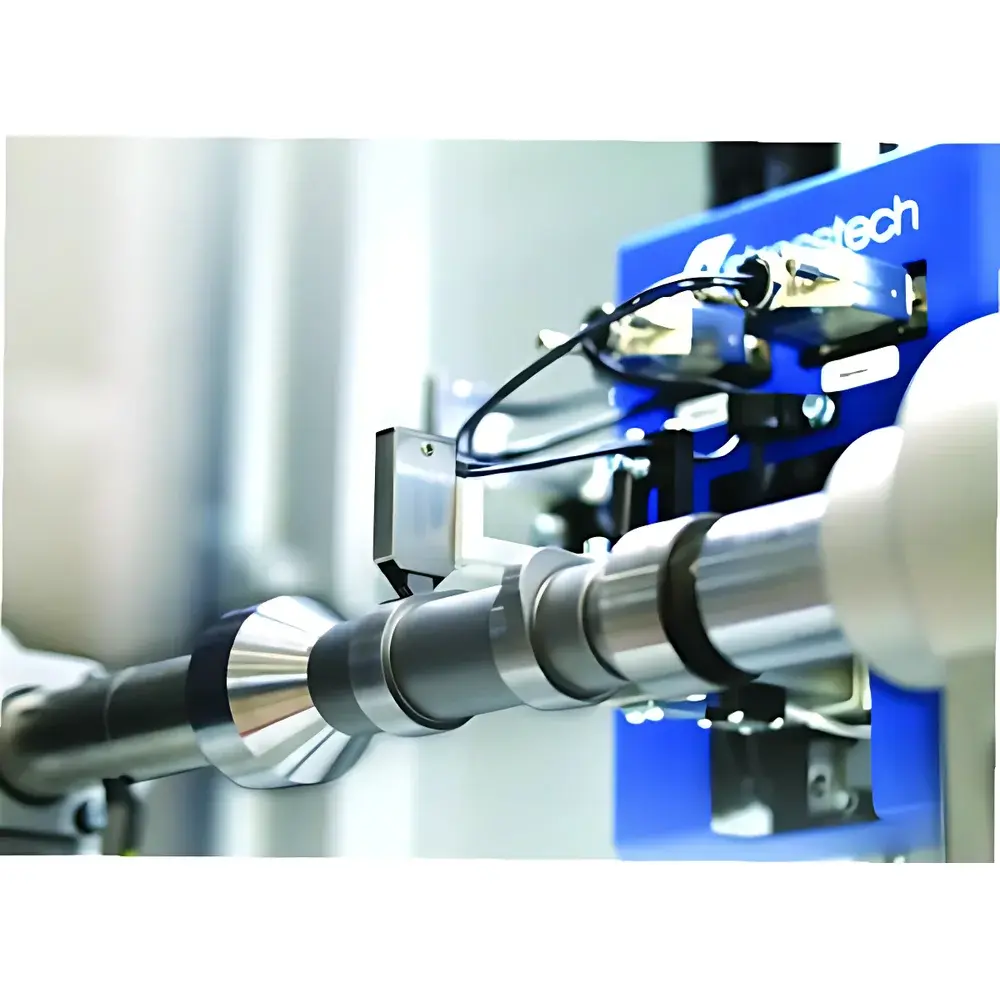
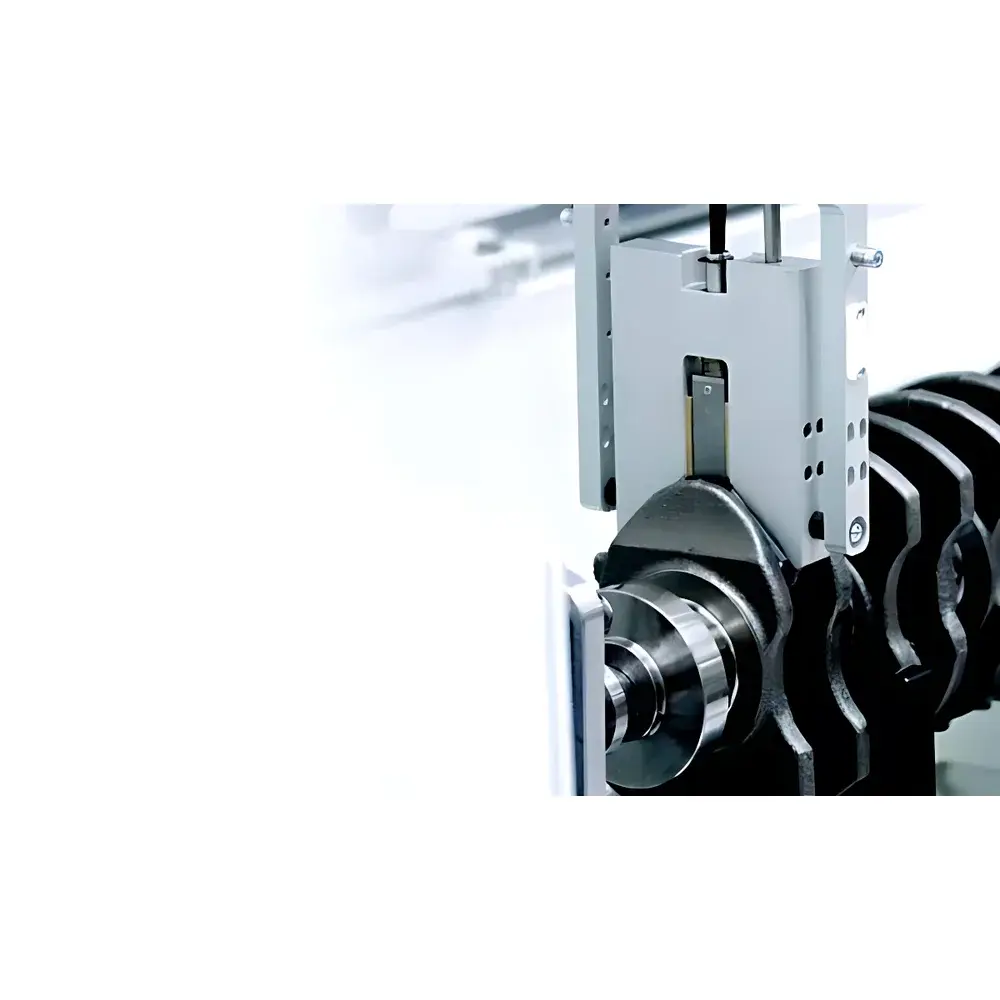
- Modular sensor design compatible with the full Stresstech Rollscan ecosystem—including standardized probe interfaces for Rollscan 250 and Rollscan 300 systems—enabling rapid reconfiguration for diverse geometries (e.g., bearing rings, camshafts, gear teeth, piston pins, landing gear shafts).
- Adjustable excitation parameters via mechanical control knobs: direct user access to magnetizing voltage and current amplitude without software dependency, facilitating on-the-fly optimization during field deployment.
- No external compensation required: built-in auto-zeroing and adaptive gain control eliminate manual calibration drift between measurements, supporting consistent inter-lot comparison under GLP/GMP-aligned workflows.
- Multi-alloy capability validated for ferritic steels (e.g., AISI 4140, 52100), martensitic stainless steels (e.g., 17-4PH), nickel-based superalloys (e.g., Inconel 718), and cobalt-chromium alloys (e.g., Stellite 6)—all referenced against material-specific MBN/IP reference libraries.
Sample Compatibility & Compliance
The Rollscan 250 accommodates complex rotational and linear components up to Ø300 mm diameter and 1,200 mm length when used with optional rotary stages or custom fixtures. Its sensor suite supports flat, curved, and contoured surfaces—including gear flank profiles, cam lobe radii, and journal fillets—with spatial resolution down to 0.5 mm lateral step size. The system conforms to international NDT standards including ASTM E1444/E1444M (Standard Practice for Magnetic Particle Testing), ISO 20639 (Non-destructive testing — Magnetic Barkhausen noise testing — General principles), and supports audit-ready documentation per EN 10204 Type 3.1 requirements. Data files generated by ViewScan software include embedded metadata (operator ID, timestamp, sensor serial, calibration certificate ID), enabling compliance with FDA 21 CFR Part 11 electronic record/electronic signature (ERES) guidelines when deployed in regulated manufacturing environments.
Software & Data Management
ViewScan is a Windows-based, standalone data acquisition and analysis application designed exclusively for Stresstech MBN/IP instrumentation. It provides synchronized dual-channel waveform capture (magnetizing current + MBN response), time-domain envelope extraction, frequency spectrum analysis (FFT up to 2 MHz bandwidth), and statistical mapping of burn severity indices (e.g., peak amplitude ratio, RMS energy density, zero-crossing count). All raw and processed datasets are stored in vendor-neutral .csv and .mat formats, supporting third-party integration with MES platforms (e.g., Siemens Opcenter, Rockwell FactoryTalk) and statistical process control (SPC) tools such as Minitab or JMP. Audit trails log all parameter modifications, file exports, and user login events—fully traceable for internal quality audits or regulatory inspections.
Applications
The Rollscan 250 is routinely deployed in aerospace powertrain manufacturing (turbine shafts, gearbox components), automotive transmission systems (differential gears, CV joints), energy sector rotating equipment (steam turbine rotors, nuclear pump shafts), and additive manufacturing post-processing (L-PBF Inconel 718 turbine blades). It serves as a primary tool for verifying grinding wheel condition, coolant efficacy, feed rate consistency, and quench uniformity—thereby reducing scrap rates and preventing premature in-service failures linked to undetected white-layer formation or tensile residual stress accumulation near the surface. Universities and national laboratories utilize the system for fundamental research into thermomechanical surface modification mechanisms and predictive modeling of fatigue crack nucleation thresholds.
FAQ
Does the Rollscan 250 require sample surface preparation prior to testing?
No surface cleaning beyond standard industrial degreasing is required; however, thick oxide layers or conductive coatings must be removed to ensure reliable magnetic coupling.
Can the system detect subsurface defects deeper than 100 µm?
MBN sensitivity is strongest within the top 20–50 µm; deeper assessment (up to ~200 µm) is achievable using incremental permeability mode, though resolution degrades with depth due to skin effect limitations.
Is ViewScan software validated for GxP environments?
Yes—when installed on validated Windows OS platforms with controlled access permissions, ViewScan supports 21 CFR Part 11 compliance through configurable electronic signatures, audit trail export, and password-protected method locking.
What calibration standards accompany the system?
Each shipment includes NIST-traceable reference samples with certified burn severity levels, along with documented calibration certificates issued by Stresstech Oy’s Helsinki metrology lab.
How does the Rollscan 250 differ from conventional eddy current or ultrasonic methods for burn detection?
Unlike eddy current (which responds primarily to conductivity changes) or ultrasound (which detects macroscopic discontinuities), MBN/IP directly probes microstructural integrity at the domain level—making it uniquely sensitive to grinding-induced tempering, untempered martensite, and dislocation density variations invisible to other NDT modalities.






