
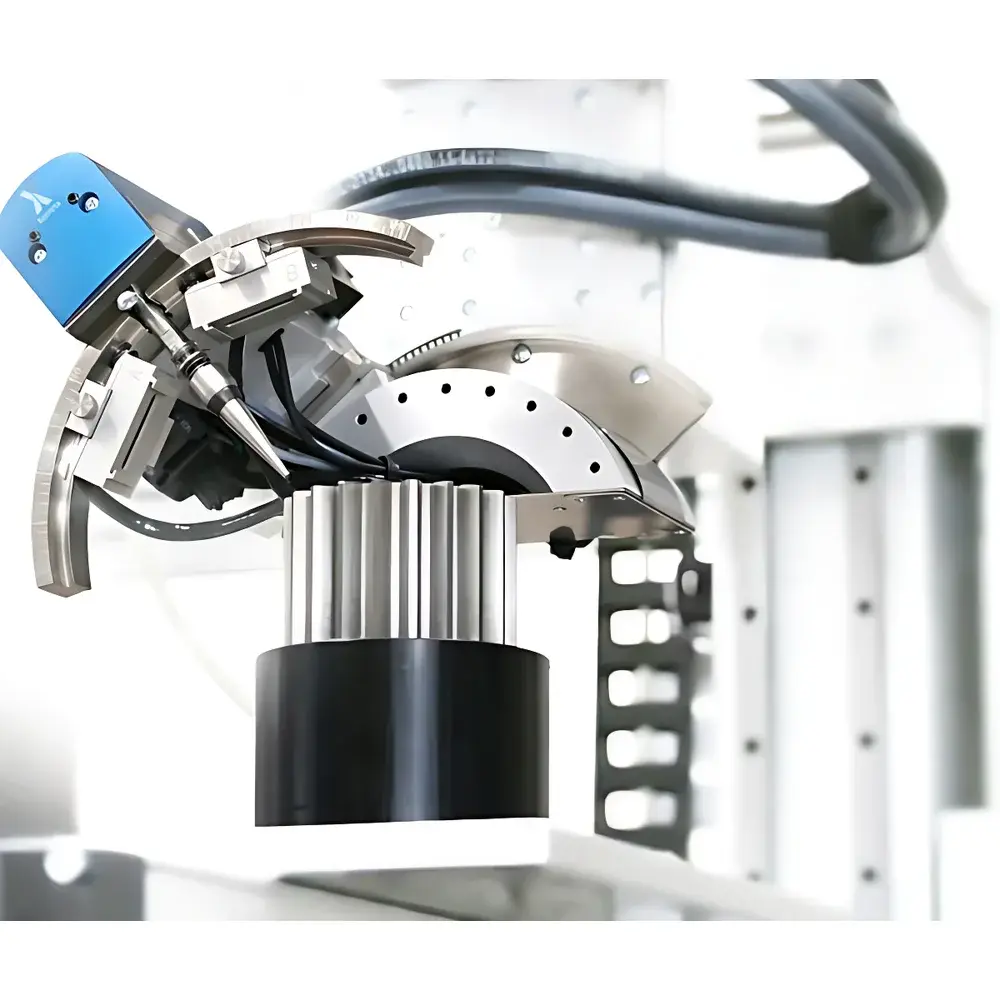
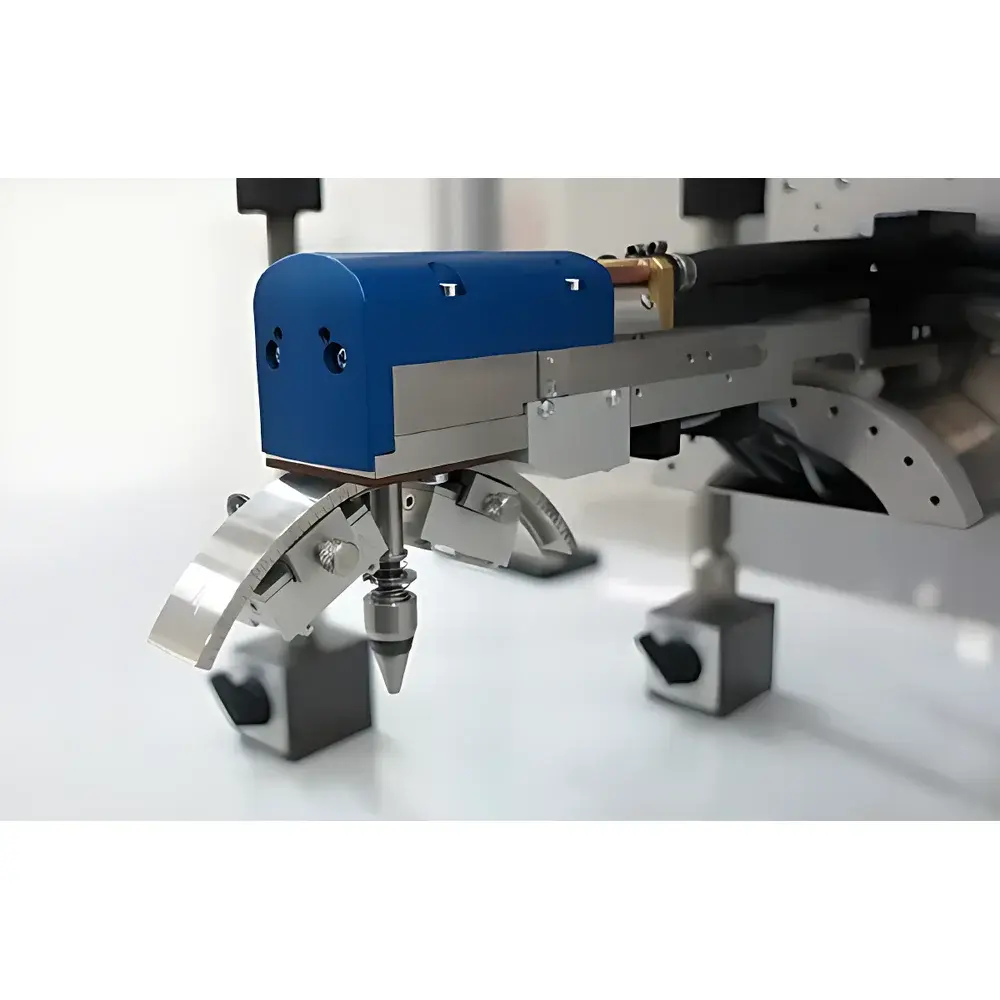
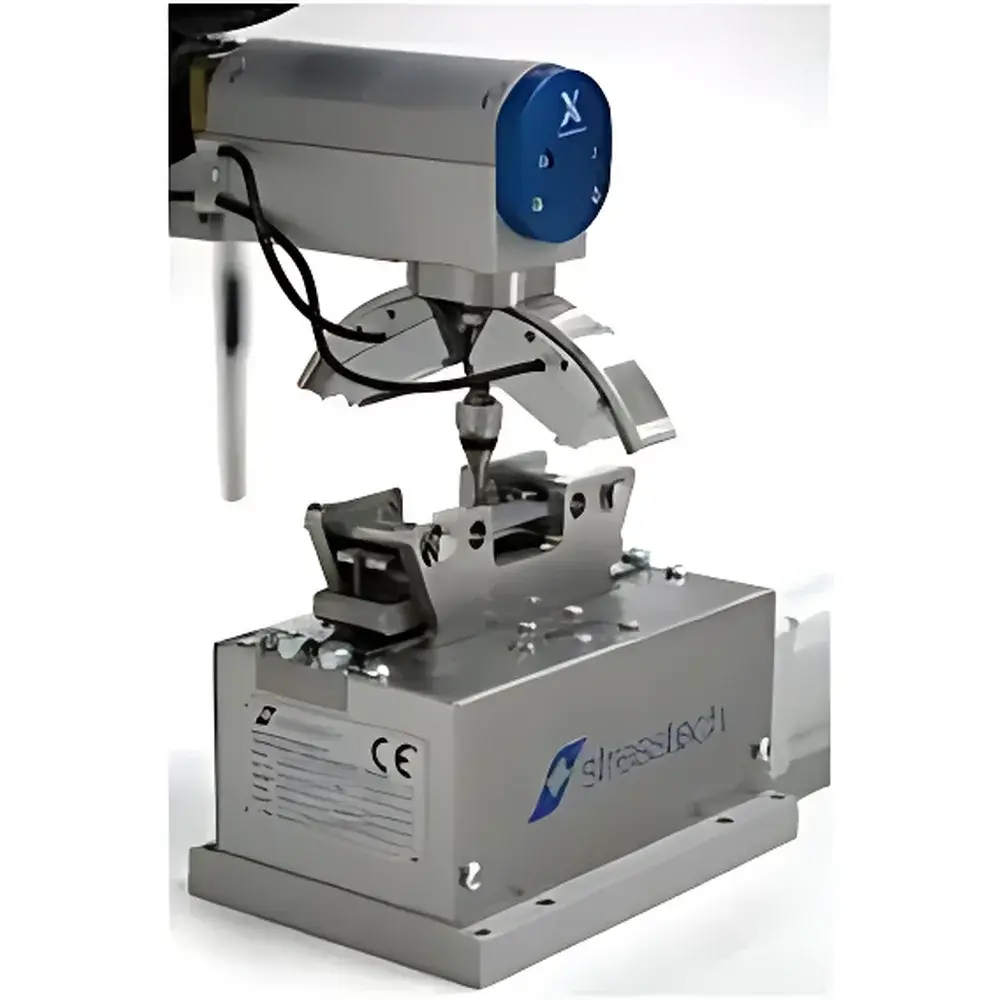
Stresstech xstress3000 Portable X-Ray Residual Stress Analyzer
| Brand | Stresstech Oy |
|---|---|
| Origin | Finland |
| Model | xstress3000 |
| Cooling | Air-cooled (no water required) |
| Deployment | Lab and field-portable |
| Weight | <15 kg (typical for xstress series) |
| Measurement Principle | Sin²ψ X-ray diffraction (XRD) |
| Compliance | ASTM E915, ISO 21945, EN 15305 |
| Data Access | Real-time in-measurement data viewing |
| Setup Time | ≤10 minutes |
| Interface | USB/RS-232 to Windows PC with embedded Microsoft Windows OS |
Overview
The Stresstech xstress3000 is a fully portable, air-cooled X-ray residual stress analyzer engineered for high-precision, non-destructive measurement of macroscopic residual stresses in polycrystalline metallic components. It operates on the well-established sin²ψ method of X-ray diffraction (XRD), where lattice strain—induced by residual stress—is quantified via angular shifts in Bragg diffraction peaks. Unlike fixed-laboratory diffractometers, the xstress3000 integrates a compact microfocus X-ray tube (Cr or Co anode, selectable), a high-resolution position-sensitive detector (PSD), and a precision goniometric stage into a single, self-contained unit weighing under 15 kg. Its air-cooled design eliminates dependency on external water chillers or compressed air, enabling immediate deployment in constrained or remote environments—including production floors, turbine maintenance bays, aircraft hangars, and offshore platforms. The system complies with internationally recognized standards for residual stress measurement, including ASTM E915 (“Standard Test Method for Verifying the Alignment of X-Ray Diffraction Instrumentation for Residual Stress Measurement”), ISO 21945 (“Non-destructive testing — X-ray diffraction methods for determining residual stresses”), and EN 15305 (“Non-destructive testing — Test method for residual stress analysis by X-ray diffraction”). All measurements are traceable to NIST-traceable reference materials and calibrated using certified stress-free reference samples.
Key Features
- True field-portability: Integrated battery option available; operational from standard 100–240 V AC or optional DC input; no external cooling infrastructure required.
- Automated alignment & calibration: Onboard laser positioning system dynamically adjusts focus distance in real time, ensuring consistent beam incidence angle (ψ) across curved or irregular surfaces.
- High angular resolution goniometer: Eliminates mechanical coupling errors associated with traditional arm-based geometries; achieves ±0.02° 2θ reproducibility over full scan range.
- Embedded Windows-based control: Runs proprietary Stresstech StressTrack™ software natively; supports direct USB or RS-232 communication with host PC for extended data logging and report generation.
- Multi-depth profiling capability: Compatible with electrolytic polishing units (e.g., Struers LectroPol™) for sequential layer removal—enabling depth-resolved residual stress mapping up to 100 µm.
- Robust industrial architecture: Conforms to IEC 60529 IP54 rating; housed in shock-absorbing magnesium alloy chassis; electronic subsystems mounted in standardized 19″ rack-compatible cage for EMI shielding and thermal stability.
Sample Compatibility & Compliance
The xstress3000 is validated for ferrous and non-ferrous engineering alloys—including austenitic and martensitic steels, titanium alloys (Ti-6Al-4V), nickel-based superalloys (Inconel 718), aluminum 2xxx/7xxx series, and cast irons. It supports both surface and near-surface stress evaluation (penetration depth: 1–30 µm, dependent on material and radiation energy). For residual austenite quantification, the system performs Rietveld refinement on overlapping (200)/(220) γ-Fe and α-Fe peaks using Cr-Kα radiation. All measurement protocols adhere to GLP-aligned documentation practices: full audit trail (user ID, timestamp, instrument configuration, raw diffractograms), electronic signatures, and 21 CFR Part 11–compliant data archiving when paired with StressTrack™ Enterprise Edition. Third-party validation reports are available per customer request for aerospace (AS9100), nuclear (ASME BPVC Section III), and pressure equipment (PED 2014/68/EU) applications.
Software & Data Management
StressTrack™ v6.x provides a unified interface for acquisition, real-time peak fitting (Pseudo-Voigt profile), stress tensor calculation (via stress-free d₀ library or iterative d₀ determination), and reporting. Raw intensity vs. 2θ datasets are stored in vendor-neutral .xy format; processed results export to CSV, PDF (ISO-compliant certificate templates), and XML for LIMS integration. The software includes built-in uncertainty estimation per GUM (JCGM 100:2019), factoring in beam divergence, detector resolution, ψ-tilt repeatability, and lattice parameter variability. Multi-user role management (operator, supervisor, administrator) enforces procedural controls, while encrypted local database storage ensures data integrity during offline field operation.
Applications
- Aerospace: Verification of shot-peening efficacy on compressor blades; post-weld stress mapping in engine casings; cold-working validation on landing gear components.
- Power Generation: Residual stress screening of steam turbine discs and generator rotor grooves prior to service; assessment of stress relaxation after thermal aging.
- Automotive: Quantification of grinding-induced tensile stresses in camshafts and bearing races; correlation of surface integrity with rolling contact fatigue life.
- Research & Development: In situ stress evolution studies during thermal cycling or mechanical loading; interfacial stress analysis in additively manufactured lattice structures.
- Heavy Industry: Field verification of stress relief annealing in welded pressure vessels per ASME Section VIII Div. 1; residual stress gradients in railhead hardening zones.
FAQ
Does the xstress3000 require regulatory licensing for X-ray operation?
Yes—operation requires site-specific registration with national radiation safety authority (e.g., NRC in USA, HSE/ONR in UK, STUK in Finland). Stresstech supplies full technical documentation for license application, including dose rate maps and interlock schematics.
Can the system measure through coatings or surface treatments?
It can quantify substrate stress beneath thin, X-ray-transparent coatings (e.g., TiN, Al₂O₃ < 5 µm); thicker or high-Z layers (e.g., chrome plating) attenuate signal and require removal or alternative techniques.
What is the typical measurement uncertainty for uniaxial stress?
Under controlled lab conditions: ±15 MPa (k=2) for steel; ±25 MPa (k=2) for aluminum alloys—dependent on crystallographic texture, surface roughness (< 0.8 µm Ra recommended), and counting statistics.
Is third-party calibration certification available?
Yes—Stresstech offers ISO/IEC 17025-accredited calibration services through its Helsinki metrology lab, including d-spacing verification, angular encoder linearity, and intensity stability testing.
How is data security maintained during field use?
All internal storage uses AES-256 encryption; user authentication is enforced via Windows Active Directory integration; audit logs record every configuration change and result export event.




