
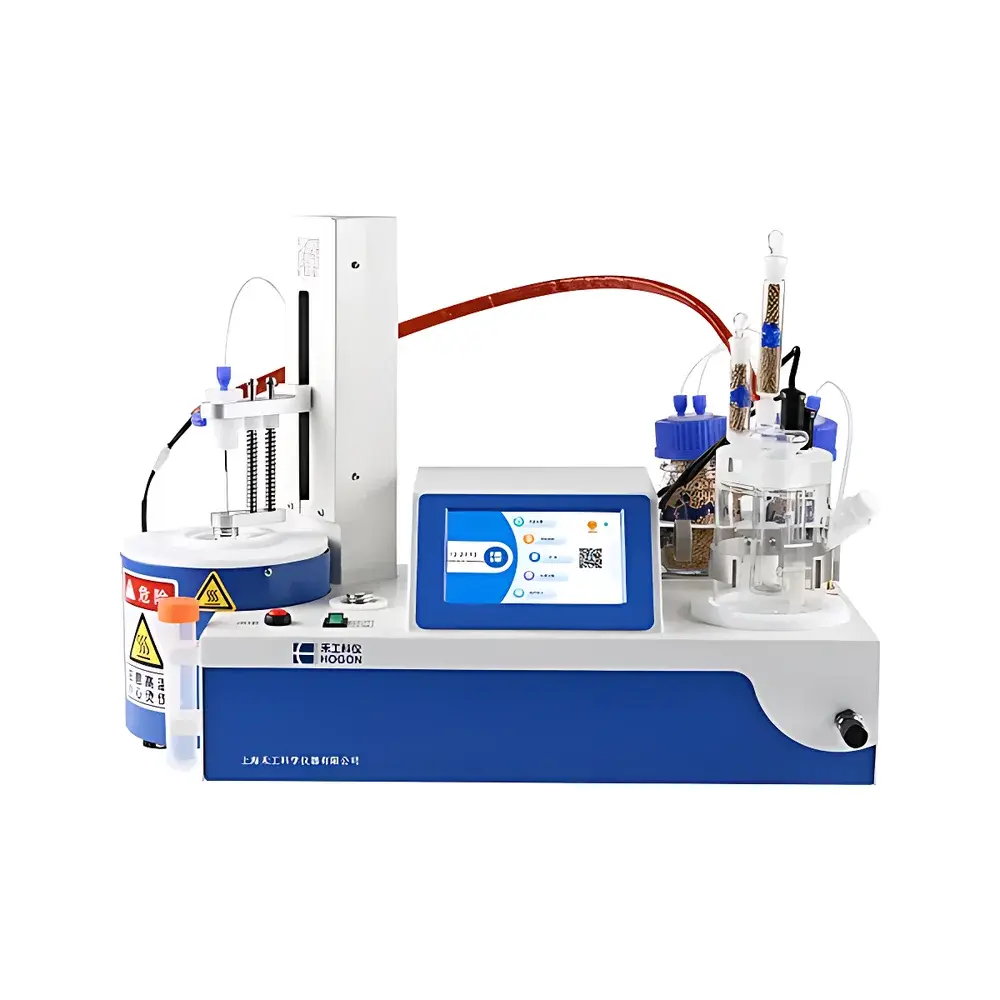
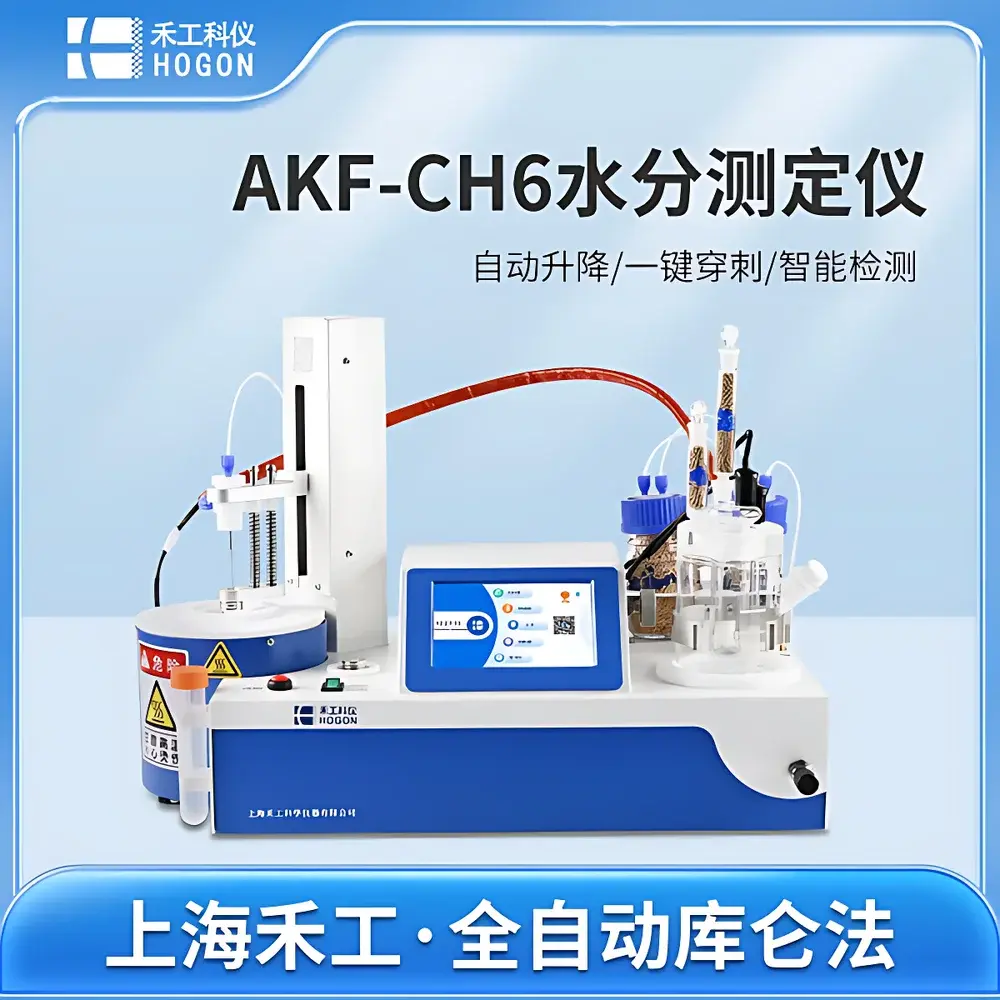
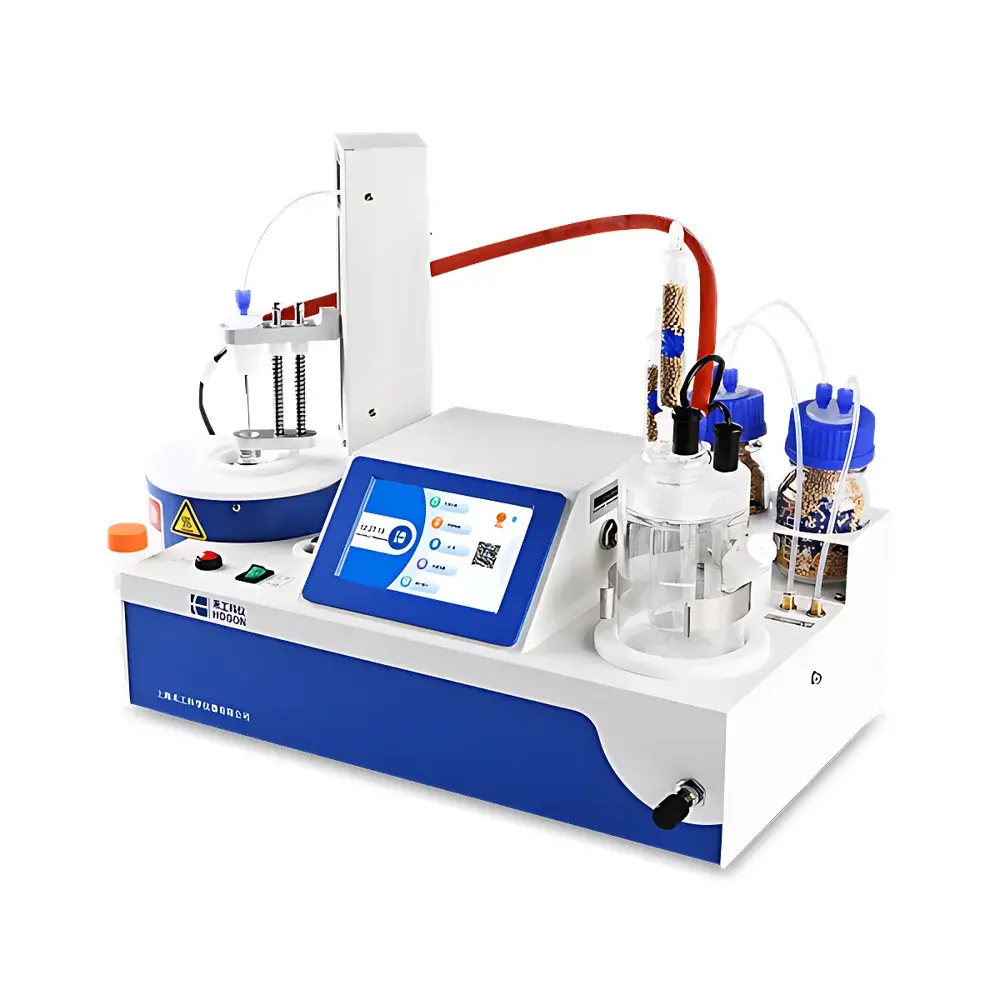
HOGON AKF-CH6 Coulometric Karl Fischer Moisture Titrator for Solder Paste
| Brand | HOGON |
|---|---|
| Origin | Shanghai, China |
| Manufacturer Type | Direct Manufacturer |
| Instrument Type | Coulometric Karl Fischer Moisture Analyzer |
| Model | AKF-CH6 |
| Detection Principle | Coulometric Karl Fischer Titration |
| Carrier Gas Flow Rate | 25 mL/min |
| Heating Temperature Range | Up to 150 °C |
| Electrolysis Mode | Auto-ranging |
| Stirring Speed | Adjustable (5-level) |
| Blank Value | ≤40 µg H₂O |
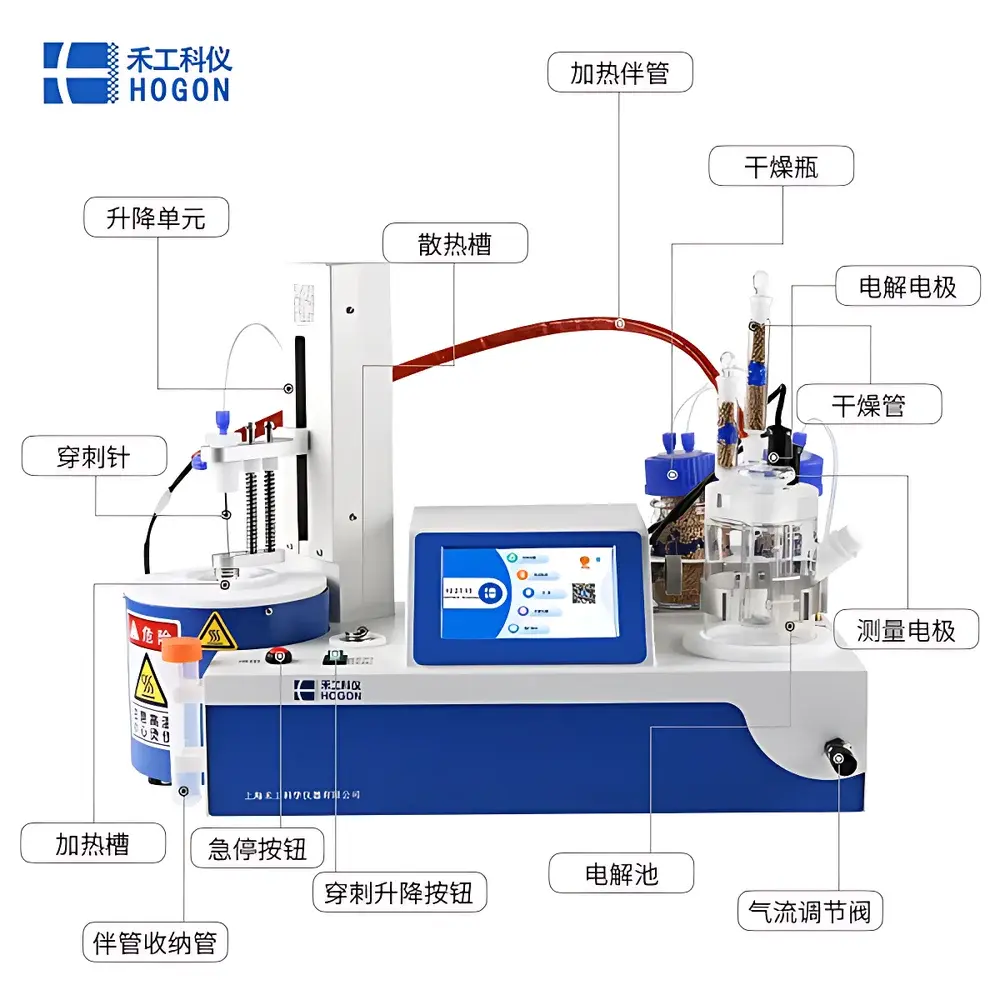
| Electrode Configuration | Dual Platinum Indicator Electrodes + Membrane-separated Generator Electrode |
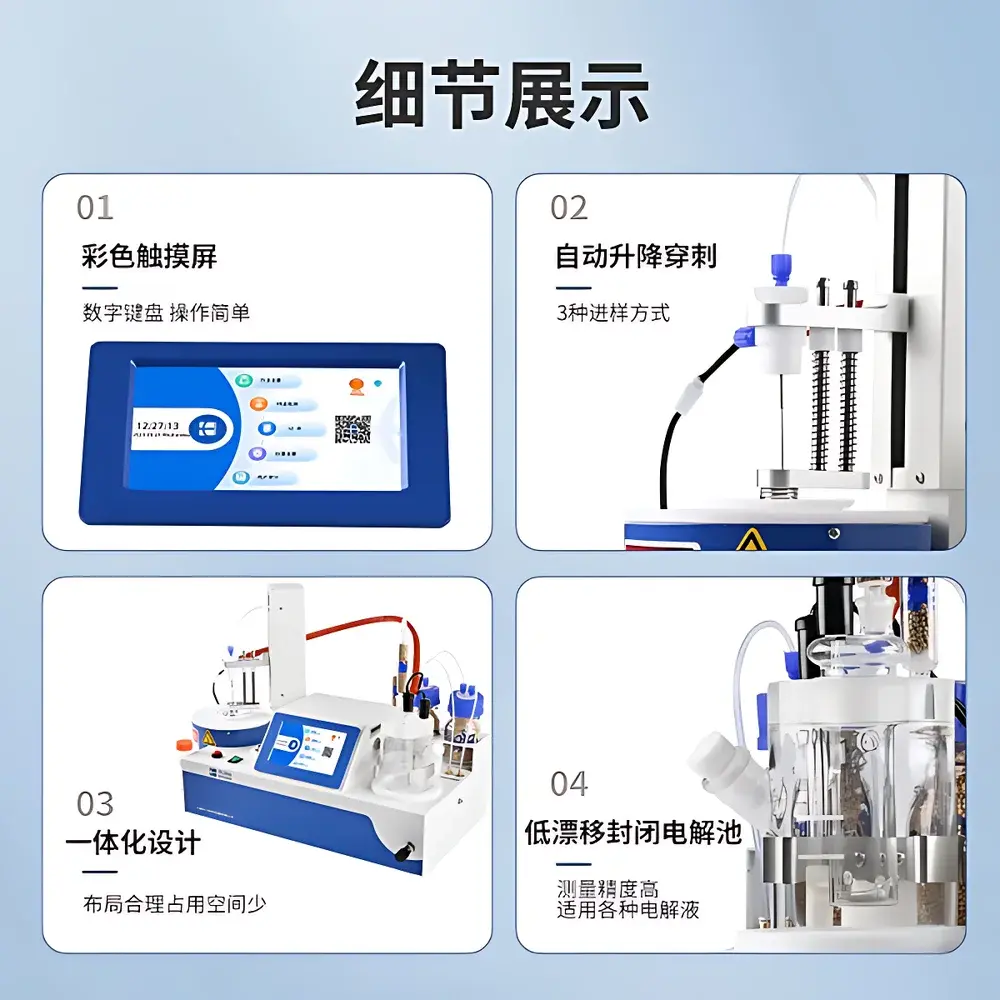
| Titration Cell | Sealed, Safety-optimized Coulometric Cell |
| Compliance | ASTM E203, ISO 8533, USP <921>, EP 2.5.12 |
Overview
The HOGON AKF-CH6 is a dedicated coulometric Karl Fischer moisture titrator engineered for precise, trace-level water quantification in low-moisture, high-sensitivity materials—particularly solder paste used in surface-mount technology (SMT) and advanced electronics assembly. Unlike volumetric KF systems, the AKF-CH6 employs controlled-current electrolysis to generate iodine *in situ* within a sealed titration cell, enabling sub-microgram (≤1 µg) detection limits and exceptional reproducibility (RSD < 2% at 10–100 µg H₂O). Its measurement principle conforms to the fundamental stoichiometry of the Karl Fischer reaction: I₂ + SO₂ + H₂O + 3RN + CH₃OH → 2RN·HI + RN·HSO₄CH₃, where water content is determined amperometrically via Faraday’s law (1 coulomb ≡ 10.72 µg H₂O). This makes the AKF-CH6 indispensable for quality control laboratories enforcing IPC-J-STD-005 and J-STD-004 specifications, where solder paste moisture must remain below 0.05–0.3 wt% to prevent solder balling, voiding, or popcorning during reflow.
Key Features
- Sealed coulometric titration cell with integrated membrane-separated generator electrode—minimizes reagent degradation, eliminates manual iodine handling, and ensures operator safety during routine analysis of volatile or hygroscopic pastes.
- Dual platinum indicator electrodes with real-time polarization monitoring—enables robust endpoint detection even in heterogeneous, viscous solder paste matrices containing flux vehicles, metal powders, and thixotropic additives.
- Programmable sample heating module (up to 150 °C) coupled with carrier gas (N₂ or dry air) purging—facilitates complete water release from encapsulated or bound moisture in rosin-based or no-clean flux systems.
- Auto-ranging electrolysis current (0.1–400 mA) with dynamic adjustment based on real-time water consumption—maintains optimal titration efficiency across wide concentration ranges (10 µg – 100 mg H₂O).
- Integrated magnetic stirrer with five-step speed control—ensures homogeneous mixing without disturbing the delicate electrode interface or introducing air bubbles into the anolyte.
- Compliance-ready firmware supporting audit trails, user access levels, and electronic signature capability—aligned with GLP/GMP documentation requirements per FDA 21 CFR Part 11 when configured with optional data management software.
Sample Compatibility & Compliance
The AKF-CH6 is validated for direct analysis of undiluted solder paste (lead-free and SnPb formulations), including water-soluble, no-clean, and halogen-free variants. It accommodates samples up to 2 g in standard 10-mL glass vials with septum caps. The system also supports solid, semi-solid, and solvent-containing samples common in electronics manufacturing—such as flux residues, underfill epoxies, and conformal coatings—without requiring derivatization or extraction. Method validation adheres to ASTM E203 (“Standard Test Method for Water Using Volumetric Karl Fischer Titration”) and ISO 8533 (“Determination of Water Content — Coulometric Karl Fischer Titration Method”). For pharmaceutical-grade applications, it satisfies USP and European Pharmacopoeia Chapter 2.5.12, provided instrument qualification (IQ/OQ/PQ) is performed per internal SOPs.
Software & Data Management
The AKF-CH6 operates via embedded microprocessor control with intuitive LCD interface and configurable method templates. Optional PC-based HOGON KF-Link software enables full method development, sequence programming (up to 99 samples), real-time titration curve visualization, and automated report generation (PDF/CSV). All raw data—including current vs. time profiles, endpoint confirmation logic, blank subtraction logs, and calibration history—are timestamped and stored with immutable audit trails. Data export supports LIMS integration via CSV or OPC-UA protocols. Electronic signatures, user-defined roles (admin/operator/auditor), and password-protected method editing comply with regulated environments requiring traceability under ISO/IEC 17025 and ICH Q7.
Applications
- Quantitative moisture verification of incoming solder paste batches prior to stencil printing—ensuring compliance with IPC-A-610 and J-STD-004B moisture sensitivity level (MSL) classifications.
- Stability studies tracking moisture uptake during storage (e.g., under nitrogen purge or desiccated conditions) and accelerated aging tests at elevated temperature/humidity.
- Process troubleshooting of reflow-related defects—including solder splatter, graping, and head-in-pillow—by correlating measured H₂O content with thermal profile deviations.
- QC testing of flux activators, tackifiers, and vehicle solvents used in paste formulation, where residual methanol or ethanol must be monitored.
- Supporting failure analysis (FA) labs in root-cause investigations of field returns linked to intermetallic compound (IMC) integrity or void formation.
FAQ
What sample preparation is required for solder paste analysis?
No dilution or solvent addition is needed. Paste is weighed directly into a sealed vial; heating and gas purge ensure complete water liberation.
How often must the blank value be measured?
A system blank (reagent-only run) is recommended before each analytical session and after every 10 samples—or whenever ambient humidity fluctuates significantly.
Can the AKF-CH6 measure moisture in lead-free solder pastes with high metal loading (>90%)?
Yes. The dual-electrode design and optimized stirring mitigate signal drift caused by conductive particulates; method validation per IPC-TM-650 2.3.34 confirms accuracy across SnAgCu, SnBi, and indium-based formulations.
Is the titration cell compatible with aggressive flux chemistries (e.g., highly acidic or halogenated activators)?
The PTFE-coated cell body and inert glass components resist corrosion; however, post-run cleaning with dry methanol is mandatory to prevent residue buildup on the membrane electrode.
Does the instrument support regulatory-compliant data archiving?
When paired with KF-Link software and enabled security settings, it meets ALCOA+ principles (Attributable, Legible, Contemporaneous, Original, Accurate) and supports 21 CFR Part 11 compliance through role-based access and electronic signatures.
Related Products





