
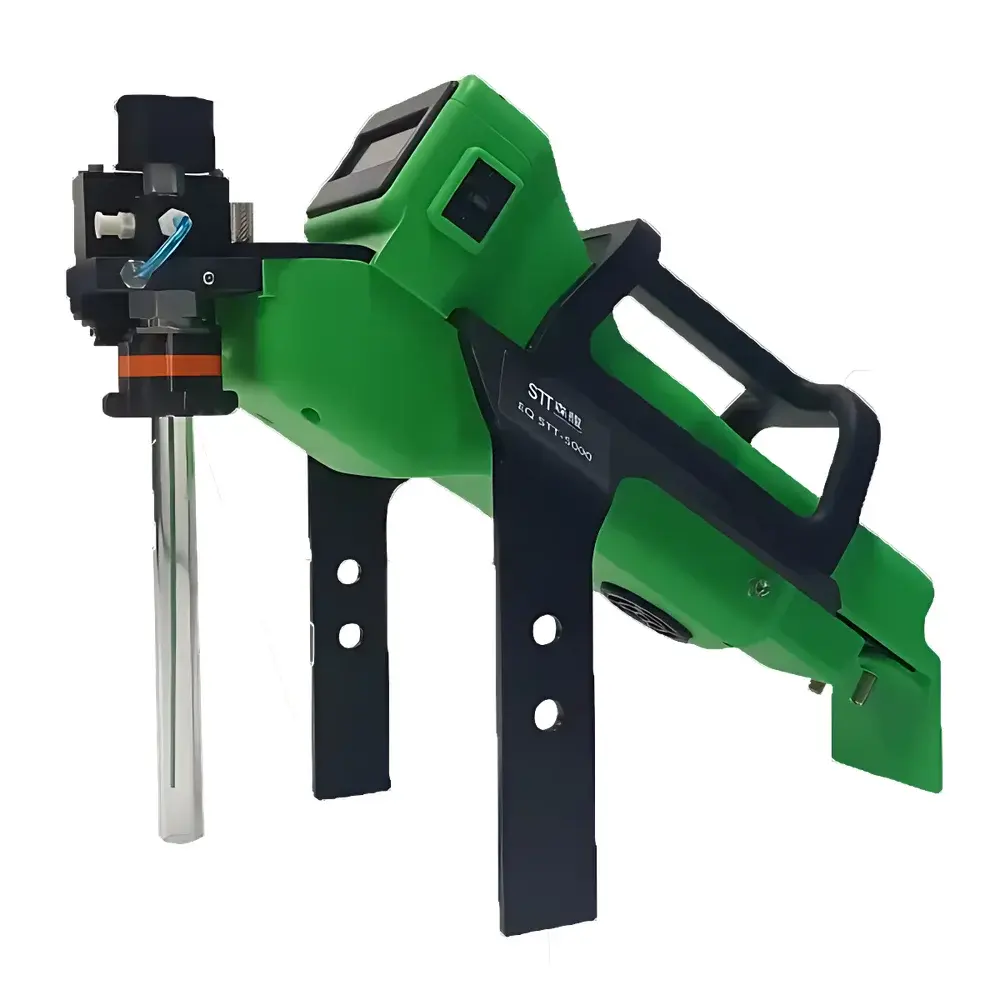
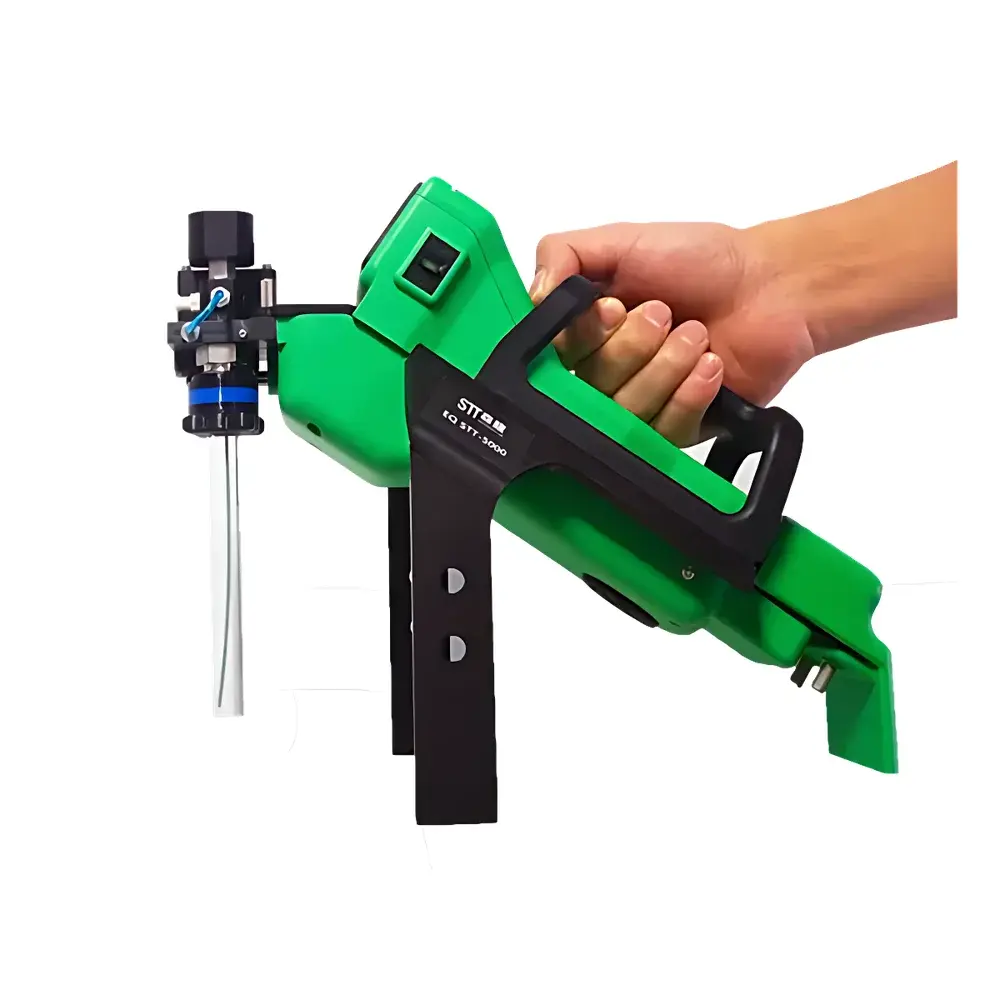
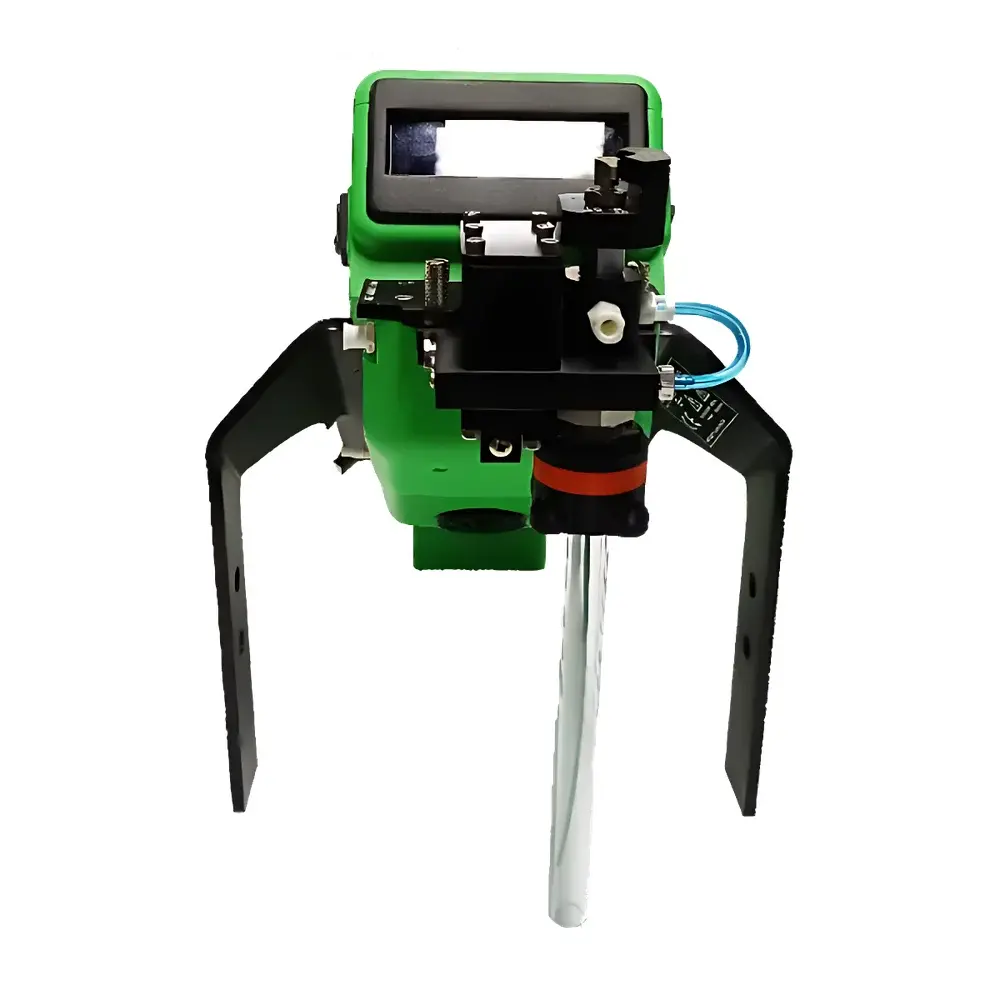
STT EQ STT-5000 Portable Gas Chromatograph with PID Detector
| Brand | STT |
|---|---|
| Origin | Beijing, China |
| Manufacturer | STT Senfu Technology |
| Model | EQ STT-5000 |
| Detection Limit | 0.1 ppb for benzene |
| Weight | 2.2 kg |
| Dimensions | 267 × 197 × 308 mm |
| Column | MEMS microfabricated capillary column |
| Detector | 10.6 eV Photoionization Detector (PID) |
| Measurement Range | 0.1–300 ppb (benzene, low-range mode) or 50 ppb–10 ppm (benzene, high-range mode) |
| Accuracy | ±1% FS |
| Carrier Gas | Ambient air (filtered via activated carbon and molecular sieve) |
| Battery Life | >9 hours |
| Compliance | GB/T 18883-2022 Annex C.3, EPA Method 5035, EPA Method 8021 |
Overview
The STT EQ STT-5000 is a field-deployable portable gas chromatograph engineered for rapid, on-site qualitative and quantitative analysis of volatile organic compounds (VOCs) in air, water, and soil matrices. It employs micro-electromechanical systems (MEMS)-based microfabricated capillary chromatography coupled with a 10.6 eV photoionization detector (PID), enabling selective, sensitive, and interference-resilient detection of aromatic hydrocarbons (e.g., benzene, toluene, xylene), chlorinated solvents (e.g., trichloroethylene, tetrachloroethylene), and other low-molecular-weight VOCs. Unlike benchtop GC systems requiring laboratory infrastructure, the EQ STT-5000 operates autonomously—using ambient air as carrier gas (conditioned by integrated activated carbon and molecular sieve filters)—and delivers chromatographic separation and quantification within ≤10 minutes directly in the field. Its design aligns with regulatory measurement principles defined in GB/T 18883-2022 (Annex C.3), U.S. EPA Methods 5035 (soil/water headspace analysis) and 8021 (aromatics in air), supporting compliance-driven environmental monitoring, indoor air quality assessment, and emergency response applications.
Key Features
- MEMS-integrated micro-chromatographic column architecture enabling miniaturization without sacrificing resolution or retention time reproducibility
- Dual-range benzene quantification: high-sensitivity mode (0.1–300 ppb) optimized for ambient air and indoor environments; extended range (50 ppb–10 ppm) suitable for industrial leak screening and contaminated site assessment
- Onboard 10.6 eV PID detector with linear dynamic range >4 orders of magnitude and <1% full-scale measurement uncertainty
- Integrated pre-concentration module compatible with thermal desorption principles, enhancing detection capability for sub-ppb-level benzene (LOD = 0.1 ppb, equivalent to 0.0003 mg/m³)
- Self-contained operation: no external PC, gas cylinders, or power grid required; powered by rechargeable lithium-ion battery with >9 hours continuous runtime
- Ruggedized enclosure (IP54-rated) and shock-absorbing chassis designed for transport and deployment in uncontrolled field conditions
Sample Compatibility & Compliance
The EQ STT-5000 supports direct analysis of gaseous samples (ambient, indoor, or headspace air), as well as liquid and solid-phase samples when used with optional accessories—including aqueous purge-and-trap modules and soil thermal desorption kits. It meets trace-level analytical requirements outlined in national and international standards: GB/T 18883-2022 for indoor air quality verification, EPA Method 5035 for VOC analysis in soils and waters via headspace extraction, and EPA Method 8021 for benzene, toluene, ethylbenzene, and xylenes (BTEX) in ambient air. All measurement protocols are fully documented and support audit-ready reporting under GLP and ISO/IEC 17025 frameworks. Data integrity is preserved through timestamped acquisition logs and non-editable result files compliant with FDA 21 CFR Part 11 electronic record requirements.
Software & Data Management
Instrument control, method configuration, real-time chromatogram visualization, and quantitative reporting are managed via the embedded touchscreen interface running STT’s proprietary firmware (v3.2+). Raw chromatographic data (retention time, peak area, baseline-corrected signal) are stored in vendor-neutral CSV format and can be exported via USB or Bluetooth. Optional desktop software (STT GC-Analyzer Pro) provides advanced features including spectral library matching (NIST-compatible), multi-point calibration curve generation, batch report templating, and integration with LIMS platforms via HL7 or ASTM E1384 interfaces. Audit trails capture all user actions—including method edits, calibration events, and result overrides—with immutable timestamps and operator ID logging.
Applications
- Indoor air quality (IAQ) surveys per GB/T 18883-2022, including post-renovation benzene screening in residential and commercial buildings
- Rapid response to chemical spills or vapor intrusion incidents, enabling real-time decision-making during hazmat operations
- Workplace exposure monitoring in petrochemical facilities, paint manufacturing, and printing industries
- Field validation of remediation effectiveness at brownfield sites using soil headspace analysis
- Mobile laboratory deployments for regulatory inspections, third-party environmental audits, and academic field studies
FAQ
What sample matrices can the EQ STT-5000 analyze without accessory modules?
It is optimized for direct analysis of ambient and indoor air samples. Water and soil require optional purge-and-trap or thermal desorption accessories.
Does the instrument support multi-component quantification in a single run?
Yes—its MEMS column and PID enable simultaneous resolution and quantification of up to 120 VOCs, including BTEX, chlorinated ethenes, and naphthalene derivatives, depending on method configuration.
How is carrier gas purity maintained during extended field use?
Ambient air is drawn through dual-stage filtration: first-stage activated carbon removes background VOCs; second-stage molecular sieve eliminates moisture—ensuring stable baseline and column longevity.
Is method validation documentation available for regulatory submissions?
Yes—STT provides IQ/OQ documentation packages, method validation reports per ISO 8466-1, and uncertainty budgets aligned with EURACHEM/CITAC guidelines.
Can the system be calibrated against certified reference standards?
Absolutely—the built-in calibration routine accepts certified gas standards (e.g., NIST-traceable benzene in nitrogen) and supports multi-point linear/nonlinear calibration curves with R² ≥ 0.999.






