
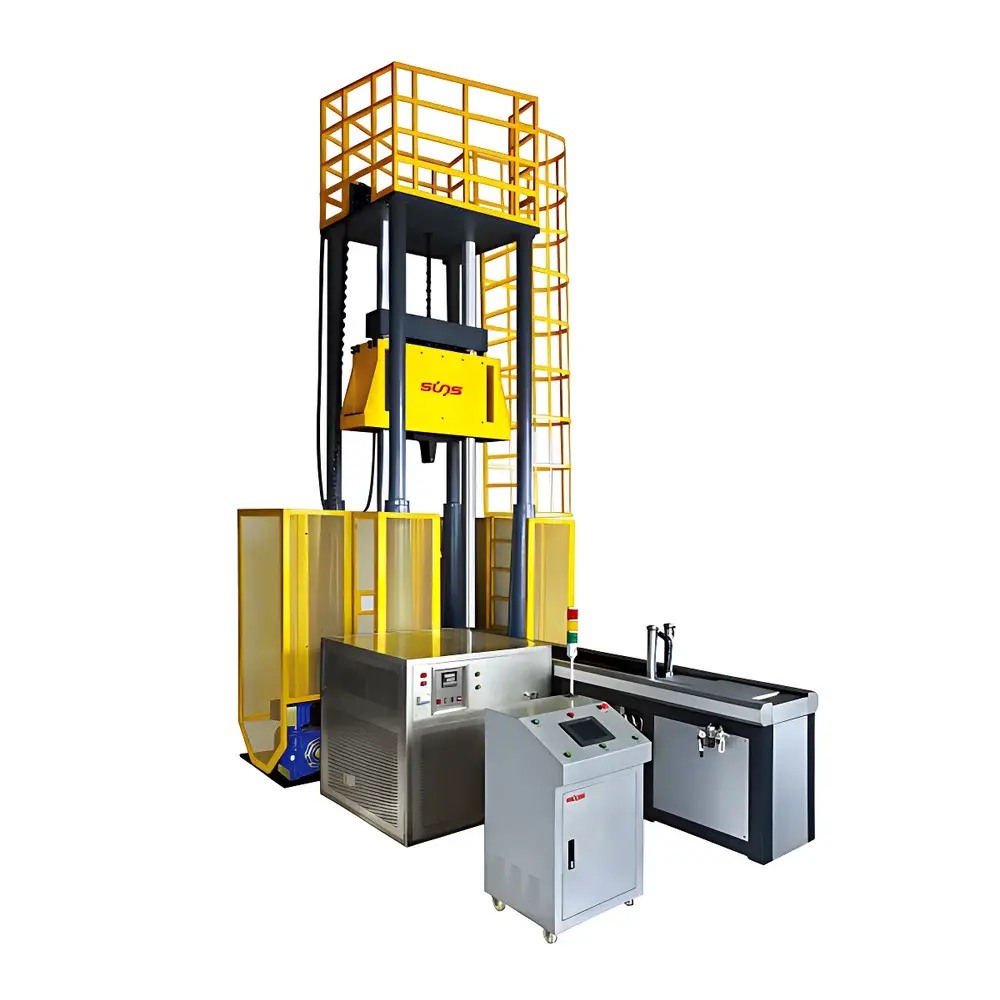
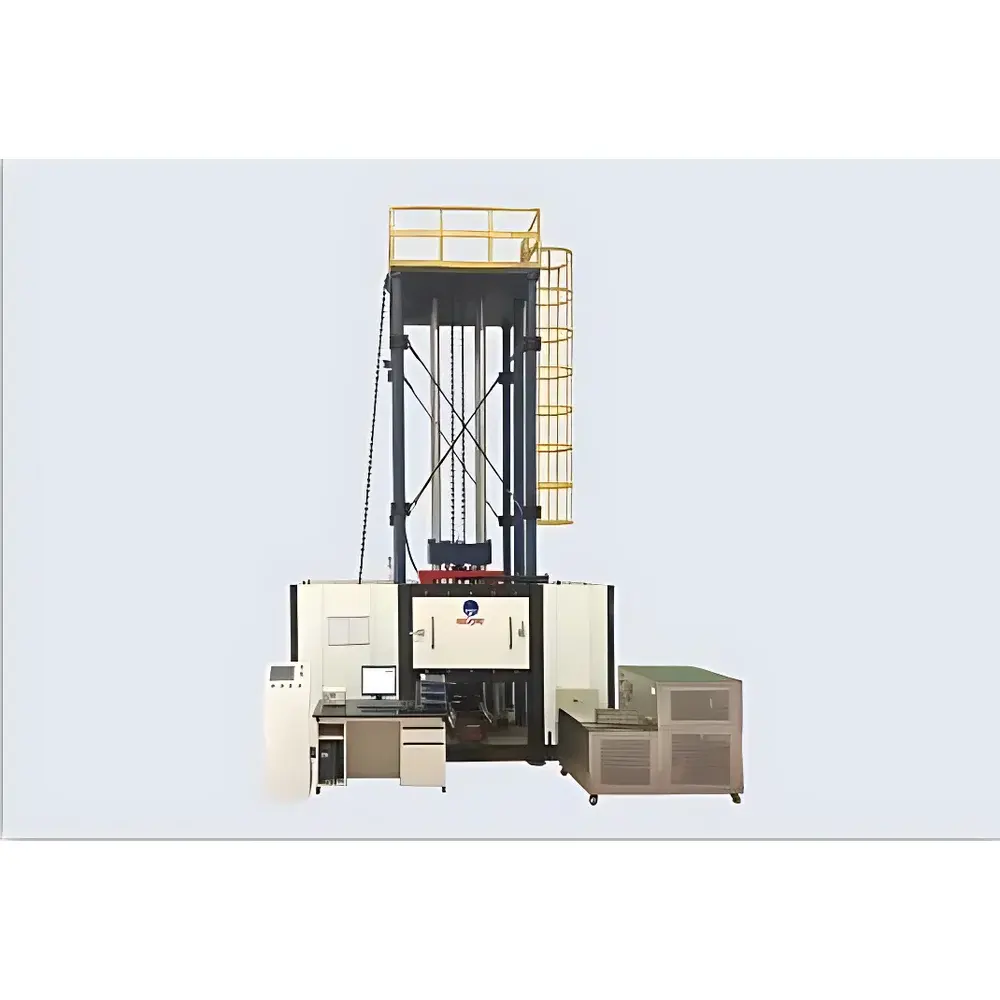
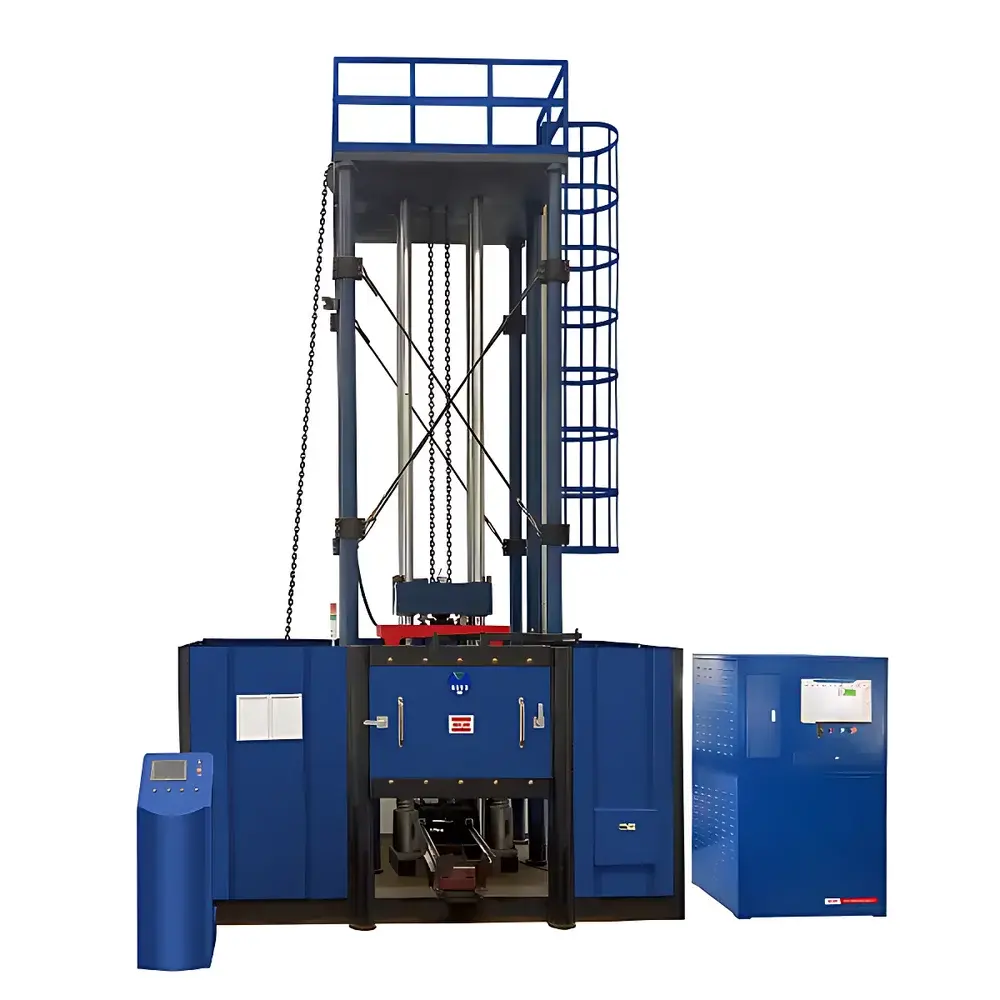
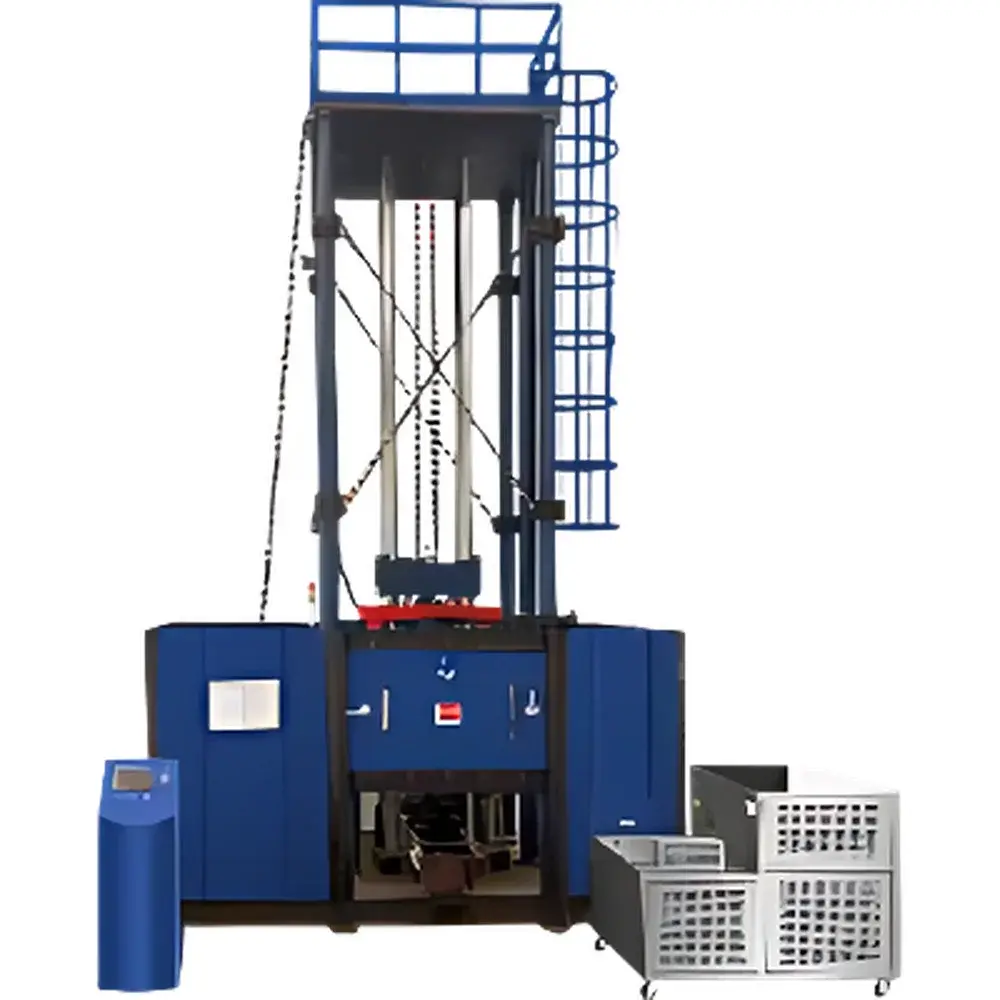
SUNS DTM2000 Series High-Energy Metal Drop-Weight Impact Tester
| Brand | SUNS |
|---|---|
| Origin | Guangdong, China |
| Manufacturer Type | Direct Manufacturer |
| Product Category | Domestic |
| Model | DTM2000 Series 1 |
| Instrument Type | Drop-Weight Impact Tester |
| Impact Energy | 100,000 J |
| Impact Velocity | 5–7.67 m/s |
| Hammer Moment (Impact Constant) | 305 × 7602 × (3–40) mm |
| Load Cell Range | 5–7.67 m/s |
| Maximum Lifting Height | 1275–3000 mm |
Overview
The SUNS DTM2000 Series High-Energy Metal Drop-Weight Impact Tester is an engineered solution for standardized drop-weight tear testing (DWTT) of ferritic steels—particularly pipeline-grade materials subjected to low-temperature service conditions. Operating on the principle of gravitational potential energy conversion, the system lifts a precisely calibrated hammer to a defined height and releases it under controlled conditions onto a notched, full-thickness specimen supported in a three-point bending configuration. The resulting fracture behavior—including ductile-to-brittle transition assessment, shear area percentage determination, and crack arrest evaluation—is quantified per internationally recognized mechanical testing standards. Designed for high-reproducibility, high-safety, and high-durability operation, the DTM2000 Series meets the rigorous demands of metallurgical laboratories, pipe manufacturing QA/QC departments, and third-party certification bodies conducting qualification testing for critical infrastructure applications.
Key Features
- Servo-motor-driven hammer lifting mechanism ensures micron-level positioning accuracy, with programmable acceleration/deceleration profiles to minimize mechanical shock during lift initiation and final positioning.
- Industrial-grade Siemens S7-1200 PLC integrated with Taiwan-made HMI touchscreen provides deterministic real-time control, electromagnetic interference (EMI) resilience, and scalable I/O architecture for future functional expansion.
- Fully automated sample handling: motorized specimen carriage enables precise X/Y/Z alignment; integrated pneumatic clamping secures specimens without manual intervention.
- Monolithic structural frame constructed from four vertical solid steel columns and a massive CNC-machined base plate (≥120 mm thick), delivering exceptional rigidity and vibration damping during impact events.
- One-piece forged hammer body—heat-treated and stress-relieved—eliminates bolted joints, ensuring long-term dimensional stability and acoustic noise reduction during repeated high-energy impacts.
- High-tensile marine-grade anchor chain drive replaces conventional wire rope: near-zero elastic elongation improves height repeatability (<±0.2 mm), while superior wear resistance extends service life beyond 50,000 cycles.
- Fail-safe self-locking hammer release mechanism engages automatically upon hammer capture; remains mechanically locked under gravity and maintains integrity during power loss or emergency stop activation.
- Custom-engineered hydraulic buffer cylinder absorbs residual kinetic energy (>98% dissipation efficiency at 7.67 m/s), protecting load cells, frame integrity, and foundation mounting points.
- Integrated specimen retrieval conveyor removes fractured remnants externally—eliminating operator entry into the impact zone and complying with ISO 13857 safety clearance requirements.
- Full-height welded safety enclosure with interlocked door switches, redundant light curtains, and real-time fault diagnostics (e.g., misaligned specimen, incomplete hammer lock, open guard door, insufficient lift height).
Sample Compatibility & Compliance
The DTM2000 Series accommodates standard DWTT specimens per API RP 5L3, ASTM E436, and GB/T 8363—specifically full-thickness pipe wall coupons (typically 30–50 mm wide × 150–300 mm long), with optional notching fixtures for machined or fatigue-precracked geometries. Specimen thickness ranges from 6 mm to 40 mm, compatible with both as-rolled and heat-treated ferritic microstructures. All operational sequences—including lift height calibration, velocity verification, and energy traceability—are documented in accordance with ISO/IEC 17025:2017 Clause 7.7 (Measurement Uncertainty) and support GLP/GMP audit readiness. System firmware includes built-in compliance checklists aligned with ASTM E436 Annex A1 (Equipment Verification) and API RP 5L3 Section 6 (Calibration Requirements).
Software & Data Management
Control and analysis are executed via SUNS’ proprietary ImpactTest Pro v4.2 software suite, running on Windows 10 IoT Enterprise. The application supports dual-mode acquisition: analog signal sampling at ≥100 kHz from strain-gauge-based load cells and synchronized high-speed video capture (optional 1000 fps module). Raw force-time data is processed using ASTM E436-compliant algorithms to compute peak load, total absorbed energy, and shear area ratio. All test records include embedded metadata (operator ID, timestamp, environmental conditions, calibration certificate IDs) and are exportable in ASTM E1447-compliant .csv and PDF formats. Audit trail functionality complies with FDA 21 CFR Part 11 requirements, including electronic signatures, immutable logs, and role-based access control.
Applications
- Qualification testing of API 5L X65–X80 seamless and welded line pipe for arctic and deepwater projects.
- Material acceptance testing for offshore platform structural components per DNV-OS-F101.
- Fracture toughness screening of heavy-section pressure vessel steels (ASTM A516, A302) prior to post-weld heat treatment.
- Research on temper embrittlement mechanisms in Cr-Mo steels under simulated service thermal cycling.
- Validation of thermomechanical controlled processing (TMCP) parameters in hot-rolled plate mills.
FAQ
What standards does the DTM2000 Series fully support for DWTT execution and reporting?
ASTM E436-03, API RP 5L3-96, and GB/T 8363-2007—including all mandatory verification steps for hammer mass, drop height, support span, and notch geometry.
Is the system capable of variable-height impact testing within its rated energy range?
Yes—impact energy is continuously adjustable from 30 kJ to 100 kJ via programmable lift height (1275–3000 mm) while maintaining ±0.5% velocity repeatability across the full range.
How is measurement traceability maintained for load cell and height calibration?
Load cells are certified to ISO 376 Class 0.5; height encoders are calibrated against NIST-traceable laser interferometers annually, with certificates stored in the system’s electronic record archive.
Can the DTM2000 be integrated into an existing LIMS environment?
Yes—via OPC UA server interface supporting structured data push (XML/JSON) to laboratory information management systems compliant with ASTM E1578 and ISO 15143-1.
What maintenance intervals are recommended for the anchor chain and hydraulic buffer system?
Anchor chain inspection every 10,000 drops; hydraulic oil replacement and buffer seal inspection every 24 months or 20,000 tests—whichever occurs first—as documented in the preventive maintenance logbook (EN 13849-1 compliant).



