
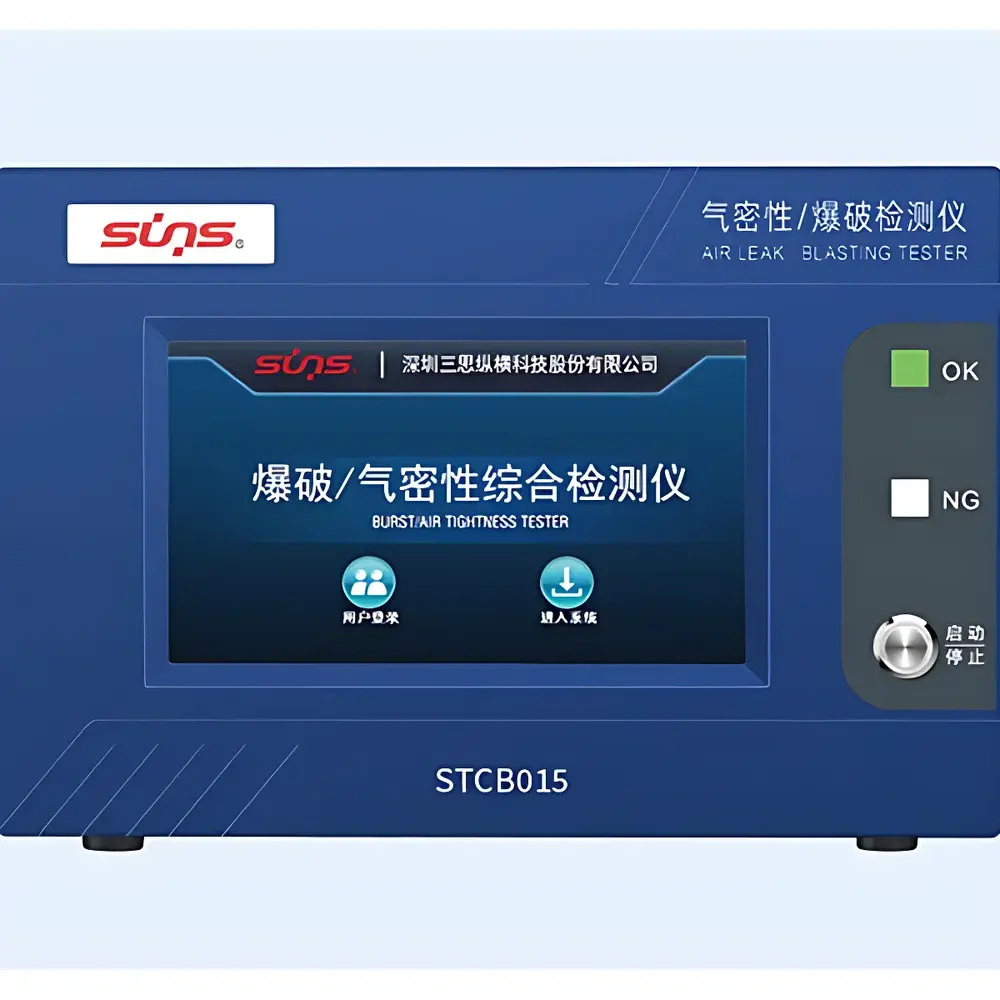
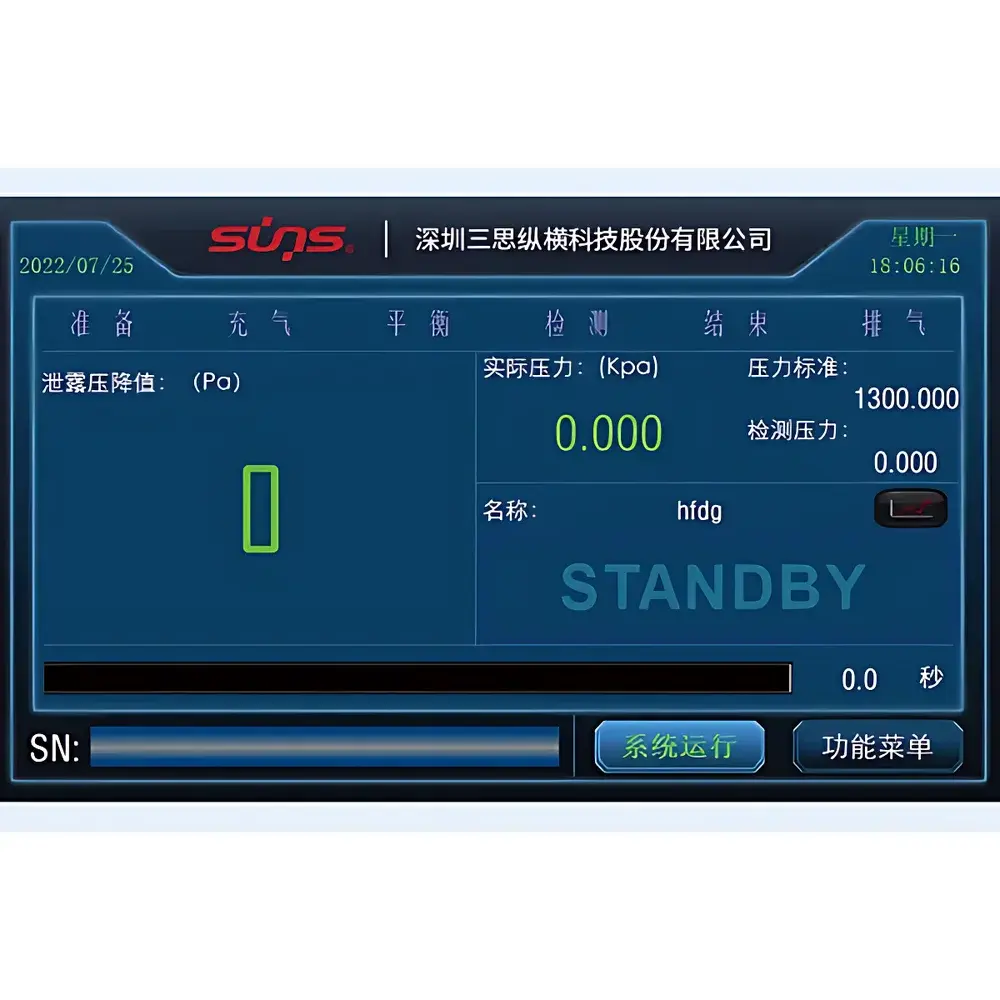
SUNS STCB015 Hermeticity Burst Test Instrument
| Brand | SUNS |
|---|---|
| Origin | Shenzhen, China |
| Manufacturer Type | Direct Manufacturer |
| Country of Origin | China |
| Model | STCB015 |
| Pressure Range | 1.0 / 1.5 / 2.0 / 3.0 MPa |
| Timing Range | 0–999.9 s (user-configurable) |
| Supply Air Pressure | 0.4–0.8 MPa (clean, dry air) |
| Pressure Resolution | 0.1 kPa / 1 kPa / 0.0001 MPa |
| Accuracy | ±0.2 % FS |
| Units | kPa, bar, psi, MPa |
| Pressure Regulation | Mechanical or Electromechanical (optional) |
| Data Export | USB |
| Communication Interfaces | RS232 / RS485 (selectable), RJ45 Ethernet |
| I/O Ports | 6 inputs, 6 outputs |
| Touchscreen | 7-inch LCD |
| Power Supply | AC 110–240 V, 50/60 Hz |
| Operating Environment | 5–45 °C, ≤80 % RH (non-condensing) |
| Weight | 9.8–11 kg |
| Dimensions | 450 × 270 × 190 mm |
| IoT Capability | Yes |
| Barcode Scanning & MES Integration | Yes |
| Multi-channel Configuration | Optional |
Overview
The SUNS STCB015 Hermeticity Burst Test Instrument is an engineered solution for quantitative assessment of seal integrity and pressure resistance in rigid and semi-rigid packaging systems—including blister packs, pouches, bottles, vials, and medical device trays. It operates on the principle of controlled pressurization to failure (burst testing) or sustained pressure hold (leak detection), delivering objective, repeatable metrics aligned with ASTM F2096, ISO 11607-2, and USP guidelines for package integrity validation. Designed specifically for packaging QA/QC laboratories and production line verification, the STCB015 applies calibrated pneumatic force via clean, dry compressed air while continuously monitoring real-time pressure decay or rupture threshold—enabling deterministic pass/fail decisions based on user-defined acceptance criteria.
Key Features
- High-fidelity pressure measurement architecture featuring imported SMC precision pressure regulators and OEM piezoresistive sensor chips with automatic ambient drift compensation
- Dual-mode regulation options: mechanical fine-tuning valve for manual calibration workflows, or electromechanical closed-loop control for automated test sequences
- Real-time acquisition system built on a 32-bit embedded processor with 24-bit A/D conversion and proprietary AI-accelerated signal processing for sub-second response latency
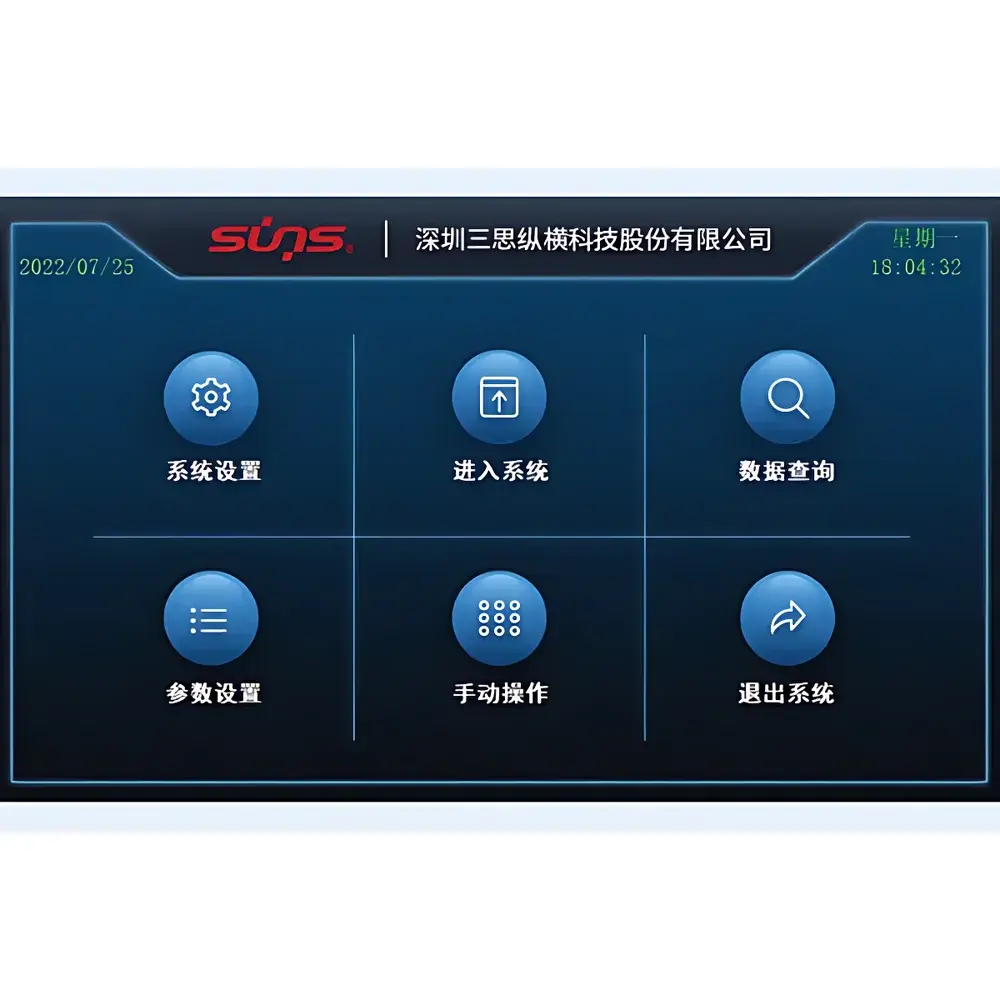
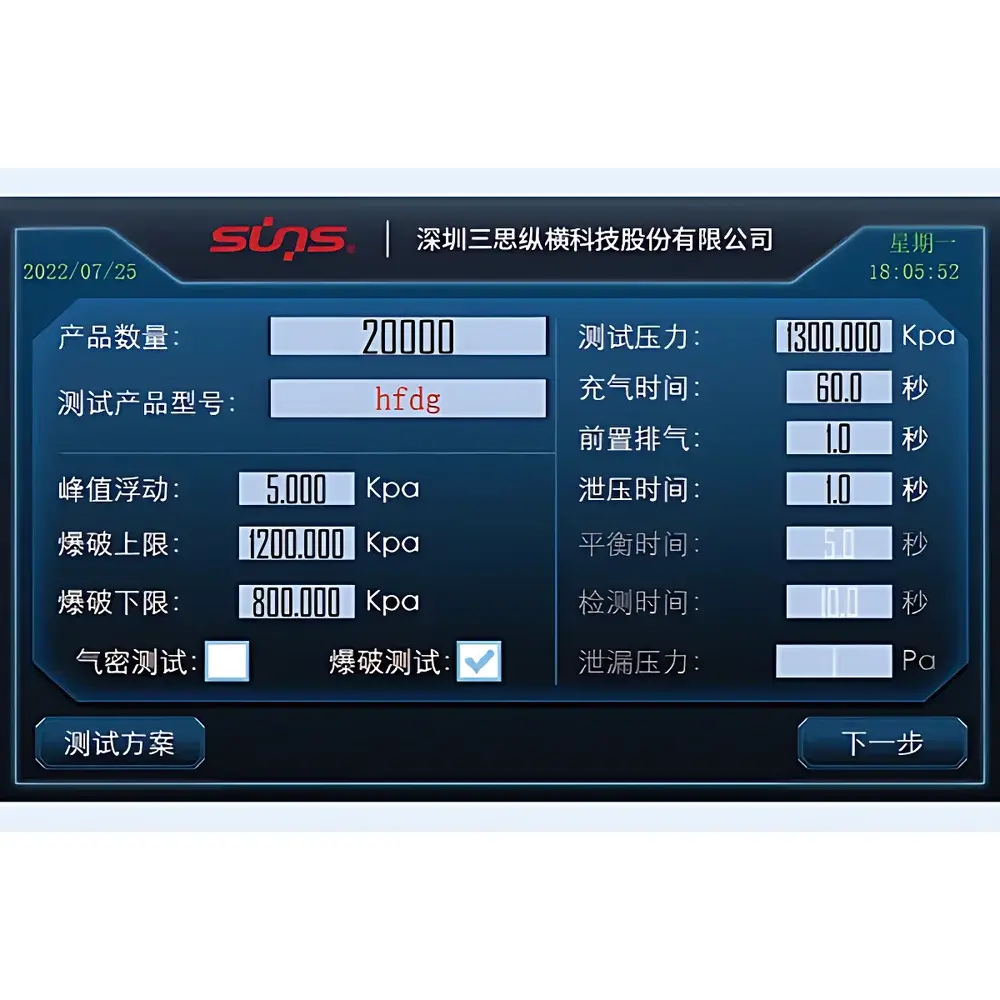
- Integrated 7-inch industrial-grade LCD touchscreen with SUNS-developed lightweight OS—optimized for glove-compatible operation and minimal learning curve
- Comprehensive I/O interface (6 digital inputs, 6 digital outputs) for hardware synchronization with PLCs, conveyor triggers, reject mechanisms, or external safety interlocks
- Built-in Ethernet (RJ45), RS232/RS485, and USB 2.0 ports enabling seamless integration into factory-wide SCADA, MES, or LIMS environments under 21 CFR Part 11-compliant data governance protocols
Sample Compatibility & Compliance
The STCB015 accommodates standard packaging formats up to Ø150 mm × H200 mm (custom fixtures available). Its modular chamber design supports both vacuum-assisted and positive-pressure burst modes, making it suitable for evaluating aluminum foil laminates, cold-form blisters, Tyvek®-sealed trays, and polymer-based sterile barrier systems. All firmware and data handling routines conform to GLP/GMP documentation requirements, including full audit trail logging, electronic signature support, and tamper-evident report generation. The instrument meets CE marking directives for electromagnetic compatibility (EMC) and low-voltage safety (LVD), and its pressure control subsystem complies with ISO 9001-certified manufacturing processes.
Software & Data Management
Embedded firmware enables local storage of ≥10,000 test records with timestamp, operator ID, batch number, and environmental metadata. Data export via USB supports CSV and PDF formats compatible with statistical process control (SPC) software such as Minitab or JMP. When connected to enterprise networks, the STCB015 publishes structured JSON payloads over HTTP/HTTPS or MQTT—facilitating direct ingestion into cloud-based analytics platforms. Barcode scanning functionality allows one-touch sample identification, eliminating manual entry errors and ensuring full traceability from raw material receipt through final release testing.
Applications
- Validation of heat-seal strength in pharmaceutical blister packaging prior to stability studies
- Leak rate quantification in pre-filled syringe assemblies per ISO 15378 Annex A
- Burst pressure characterization of child-resistant closures per ASTM D3475
- Quality gate testing for medical device pouches undergoing accelerated aging per ISO 11607-1
- In-process verification of thermoformed tray seals in high-speed packaging lines
- Root cause analysis of package failures during distribution simulation (e.g., drop, vibration, altitude exposure)
FAQ
What pressure ranges are supported by the STCB015?
The instrument offers four selectable full-scale ranges: 1.0 MPa, 1.5 MPa, 2.0 MPa, and 3.0 MPa—each calibrated independently to maintain ±0.2 % FS accuracy across the entire span.
Can the STCB015 be integrated into an existing MES environment?
Yes. Native support for barcode scanning, configurable data fields, and bidirectional communication via RS485 or TCP/IP ensures compatibility with major MES platforms including Siemens Opcenter, Rockwell FactoryTalk, and custom SQL-based systems.
Is multi-channel configuration available?
Standard units feature one test station; however, multi-head configurations (2-, 4-, or 6-channel) can be factory-customized to increase throughput without compromising individual channel calibration integrity.
Does the system meet regulatory requirements for electronic records?
All data capture, storage, and export functions comply with FDA 21 CFR Part 11 requirements, including role-based access control, electronic signatures, and immutable audit trails for all critical events.
What maintenance is required for long-term accuracy?
Annual calibration against NIST-traceable pressure standards is recommended; the onboard self-diagnostic routine verifies sensor linearity, regulator hysteresis, and I/O responsiveness prior to each test sequence.




