
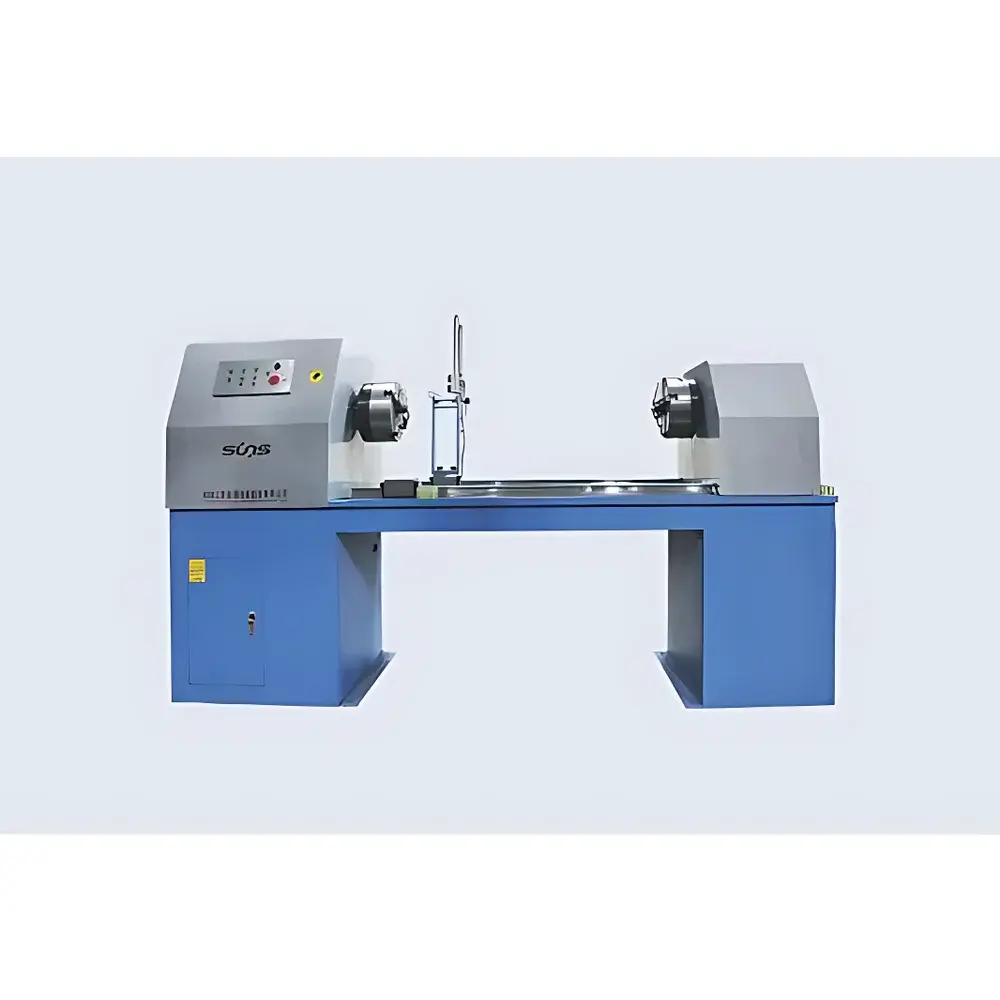
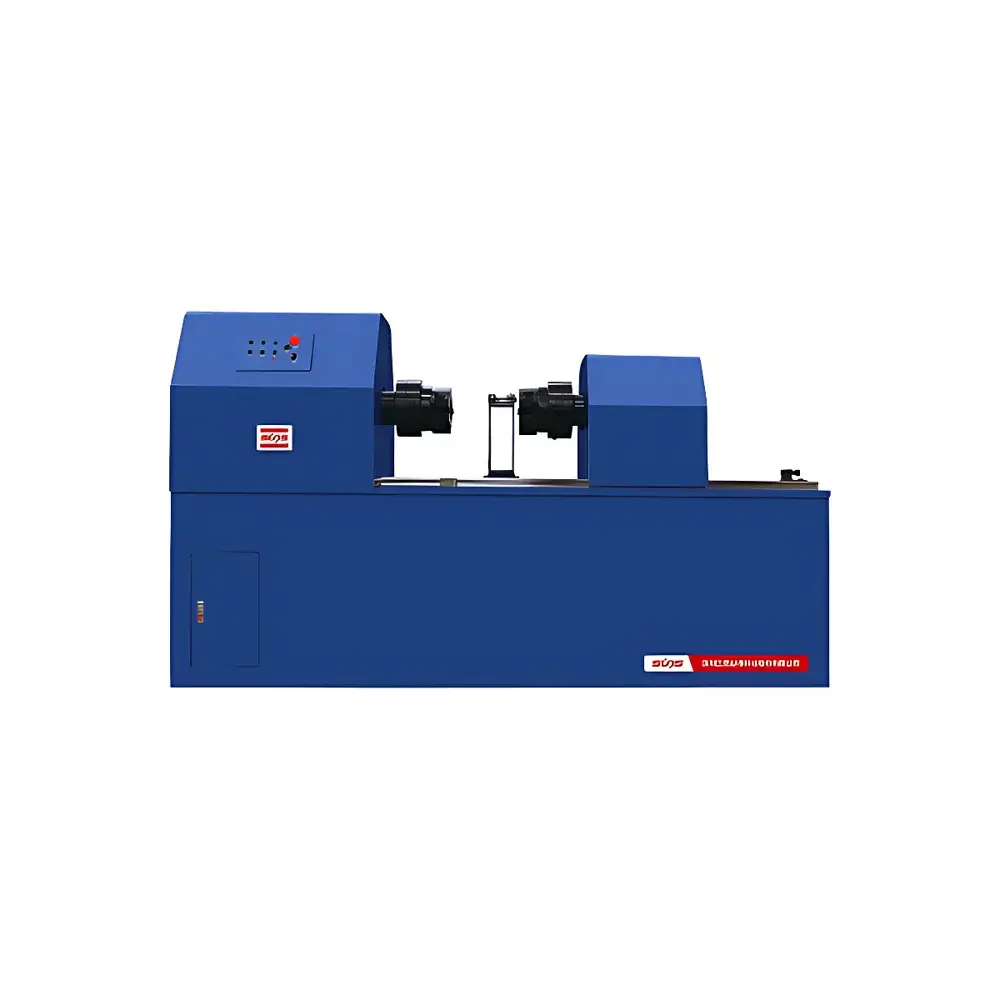
SUNS TTM Series Electronic Torsion Testing Machine
| Brand | SUNS |
|---|---|
| Origin | Guangdong, China |
| Manufacturer Type | Direct Manufacturer |
| Product Origin | Domestic (China) |
| Model | TTM Series |
| Quotation | Available Upon Request |
| Maximum Torque | 5000 N·m |
| Torque Measurement Range | 1–100% FS |
| Torque Resolution | 1/300,000 |
| Torsion Angle Measurement Range | 0–10,000° |
| Motor Power | 4 kW |
Overview
The SUNS TTM Series Electronic Torsion Testing Machine is a precision-engineered electromechanical system designed for static and quasi-static torsional characterization of metallic materials, polymers, composites, fasteners, shafts, and structural components. It operates on the principle of controlled angular displacement under applied torque, enabling direct measurement of torsional stiffness, yield torque, ultimate torque, plastic deformation behavior, and fracture angle. The system conforms to fundamental mechanical testing paradigms defined in international torsion standards—including ISO 7800, ASTM E143 (Shear Modulus), and EN 10002-5—while fully supporting national metrological verification requirements per JJG 269–2006 and material-specific test protocols such as GB/T 10128–2007 for metallic specimens at ambient temperature.
Key Features
- Servo motor-driven actuation ensures precise, programmable, and highly repeatable torsion rates—from ultra-low (0.001°/min) to high-speed (720°/min)—with closed-loop feedback control for consistent angular velocity across the full torque range.
- High-efficiency cycloidal pinwheel gearbox delivers minimal backlash (92% mechanical efficiency—critical for accurate hysteresis and energy dissipation analysis.
- Preloaded linear guideways with micron-level parallelism guarantee coaxial alignment between upper and lower chucks, minimizing bending moments and ensuring pure torsional loading per ISO 7500-1 Class 1 accuracy requirements.
- Dual-channel digital control architecture enables simultaneous real-time acquisition of torque (via calibrated strain-gauge transducer) and angular displacement (via high-resolution optical encoder, 0.001° resolution), with synchronized sampling up to 1 kHz.
- Integrated hardware safety layer includes overload cut-off (adjustable threshold), emergency stop circuitry compliant with IEC 60204-1, mechanical torque limiter, and software-enforced operational limits—fully traceable in audit logs.
- Modular load frame design supports rapid tooling changeover for standardized specimen grips (flat, round, hex, spline) and custom fixtures—including hollow shaft adapters and multi-point torque reaction stands.
Sample Compatibility & Compliance
The TTM series accommodates solid and tubular specimens ranging from Ø2 mm wires to Ø120 mm shafts, with lengths up to 1,200 mm. Standard configurations support ASTM E143-compliant shear modulus determination on cylindrical rods, while optional extensometry modules enable localized twist-angle measurement per ISO 14577-3. All systems undergo factory calibration against NIST-traceable torque standards and are supplied with a Certificate of Conformance detailing uncertainty budgets per ISO/IEC 17025 guidelines. The machine satisfies GLP documentation requirements, including electronic signature support, audit trail logging (per FDA 21 CFR Part 11), and data integrity controls for regulated environments.
Software & Data Management
The Windows-based TTM Control Suite provides ISO 17025-aligned test sequencing, real-time curve overlay, and automated report generation in PDF/XLS formats compliant with GB/T 228.1–2021 and ASTM E8/E8M reporting templates. Software features include automatic peak detection (torque, angle, rate-of-change), customizable pass/fail criteria, batch test scheduling, and export-ready metadata tagging (operator ID, environmental conditions, calibration ID). Raw data is stored in binary HDF5 format with embedded calibration coefficients and timestamped event markers—ensuring long-term reproducibility and third-party analysis compatibility.
Applications
- Mechanical property validation of automotive drive shafts, steering columns, and CV joint assemblies under torsional fatigue pre-screening.
- Quality control of threaded fasteners (bolts, screws) per ISO 898-1 and DIN 267-11 torsional strength specifications.
- Research-grade characterization of fiber-reinforced polymer (FRP) laminates and metal matrix composites for aerospace primary structures.
- Calibration reference for secondary torsion standards in metrology labs accredited to CNAS/ILAC MRA.
- Educational use in university mechanics labs for hands-on demonstration of Saint-Venant’s torsion theory and warping effects.
FAQ
What torque accuracy class does the TTM series meet?
The system meets ISO 7500-1 Class 1 requirements for static torque measurement, with typical expanded uncertainty (k=2) of ±0.5% FS over the 1–100% range.
Can the machine perform cyclic torsion tests?
Yes—when equipped with the optional TTM-Cycle module, it supports controlled sinusoidal, triangular, or trapezoidal waveforms up to 5 Hz, with phase-synchronized torque/angle data capture.
Is third-party calibration certification available?
Yes—SUNS offers accredited calibration services traceable to China NIM (National Institute of Metrology) with formal ISO/IEC 17025 certificates.
Does the software support multi-language UI?
The standard interface is English; Chinese, Spanish, and German language packs are available upon request and validated per ISO/IEC 17025 documentation protocols.
What maintenance intervals are recommended?
Gearbox oil replacement every 5,000 operating hours; annual recalibration of torque transducer and encoder; biannual inspection of chuck alignment and bearing preload per manufacturer’s service manual.



