
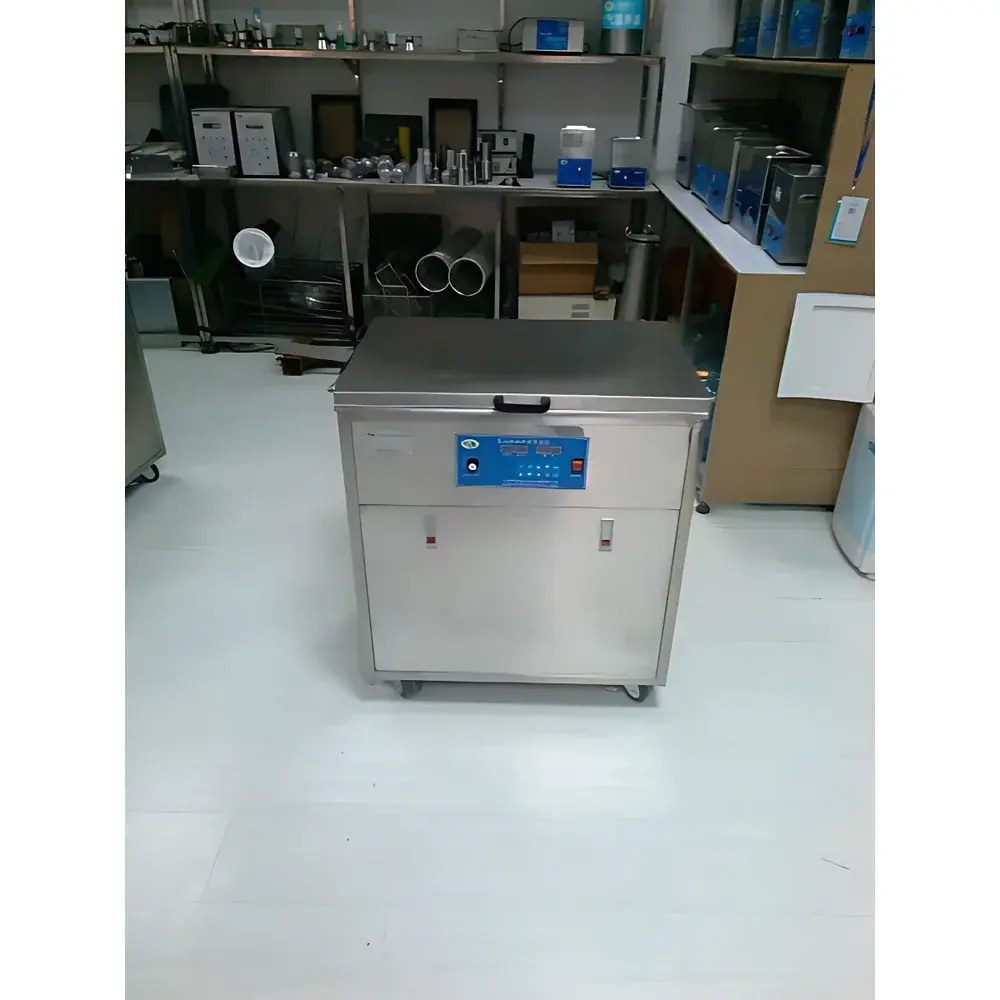
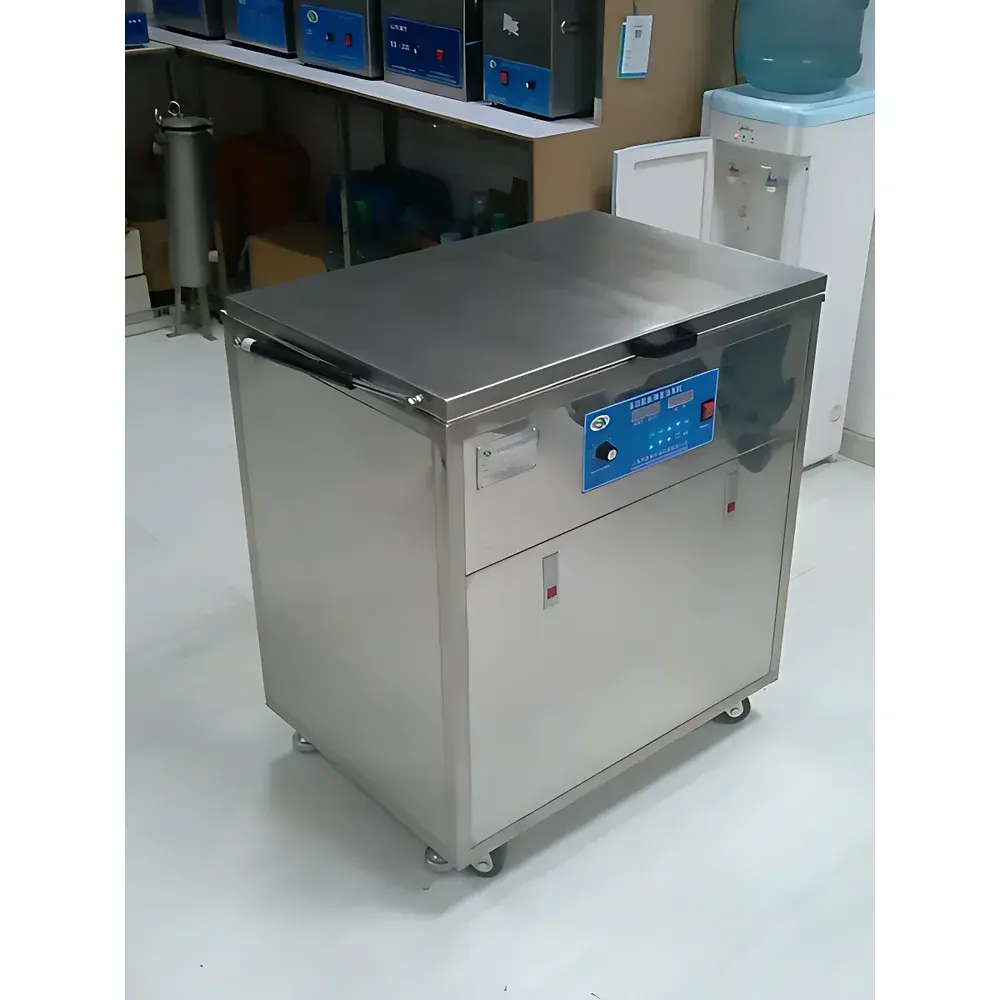
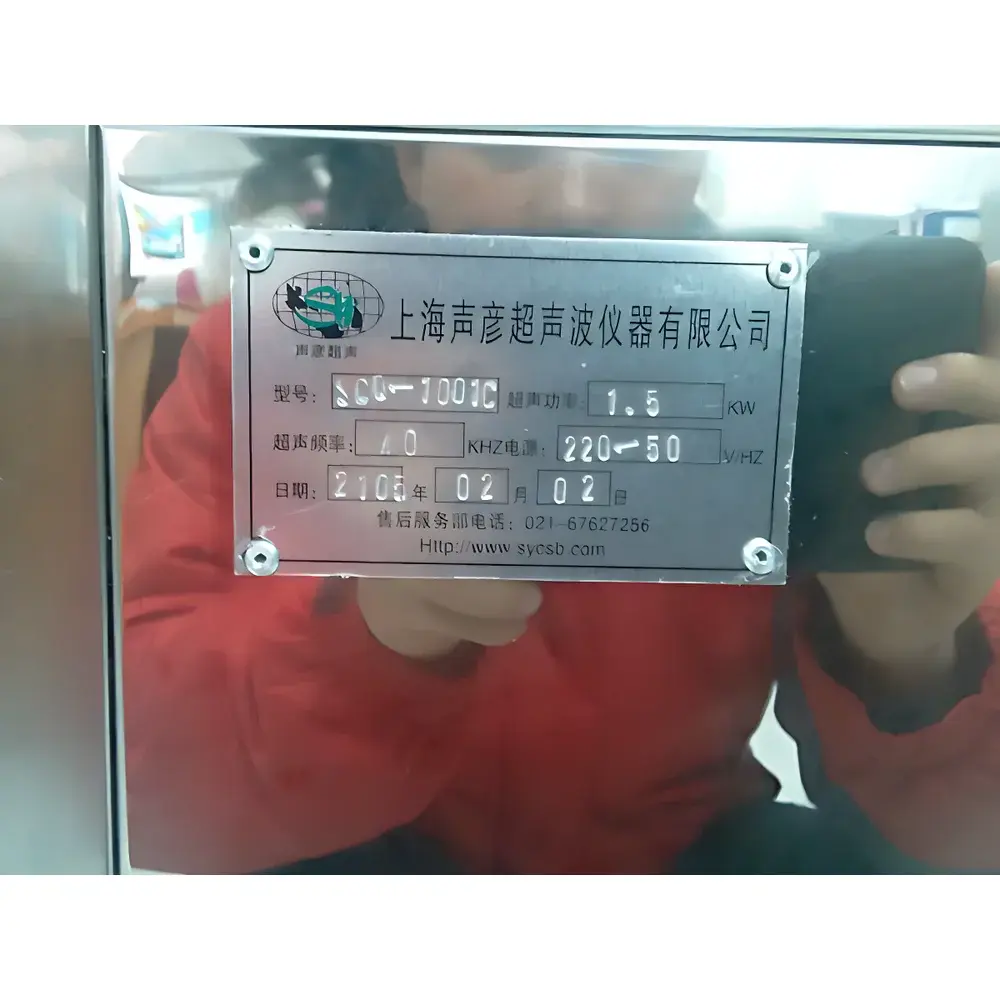
SYC Sycs SCQ-1001C 80L Programmable Digital Ultrasonic Cleaner with Heating and Variable Frequency
| Brand | SYC Sycs |
|---|---|
| Origin | Shanghai, China |
| Model | SCQ-1001C |
| Capacity | 78 L |
| Ultrasonic Frequencies | 25 / 28 / 40 / 60 / 80 / 100 kHz (user-selectable) |
| Ultrasonic Power Output | 1500 W |
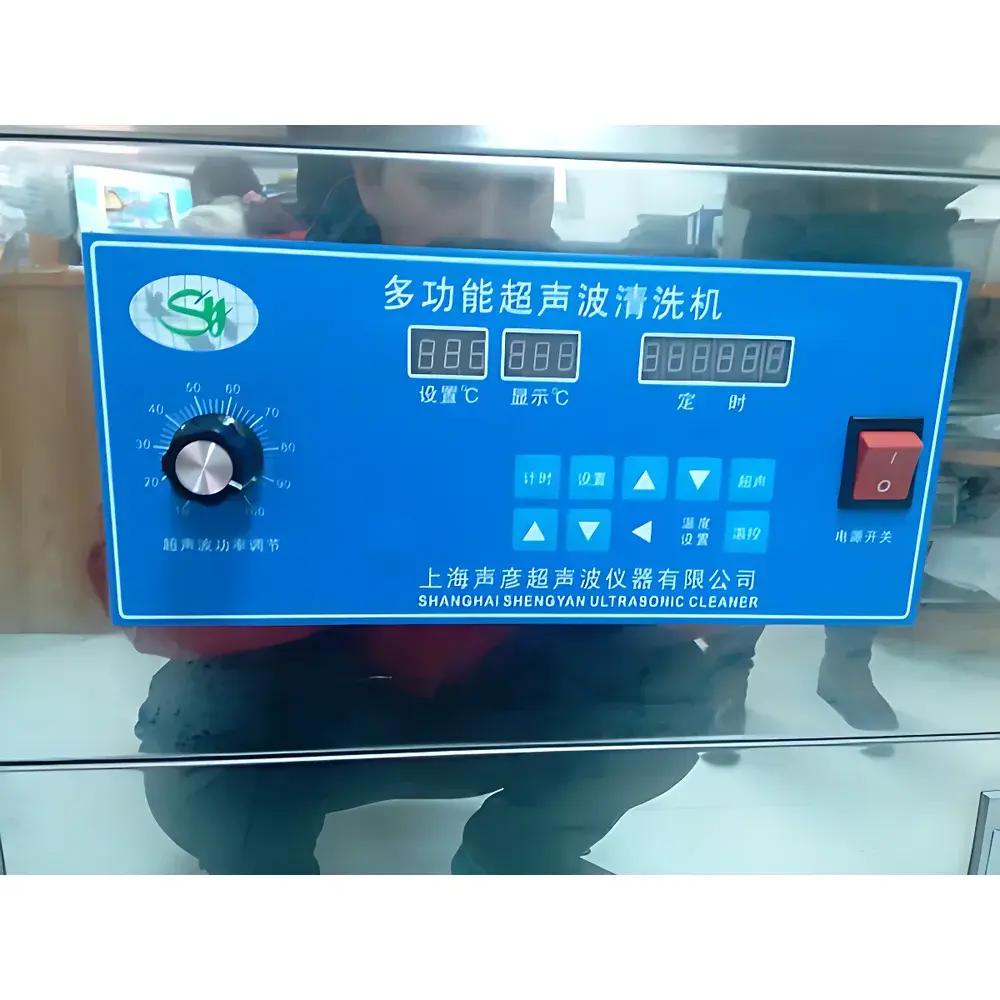
| Power Adjustment Range | 10–100% (continuous, digitally controlled) |
| Heating Power | 1500 W |
| Temperature Control Range | Ambient to 80 °C (±1 °C stability) |
| Timer Range | 1–600 min (digital, programmable) |
| Sound-Dampening Lid | Included |
| Drain Valve | Manual |
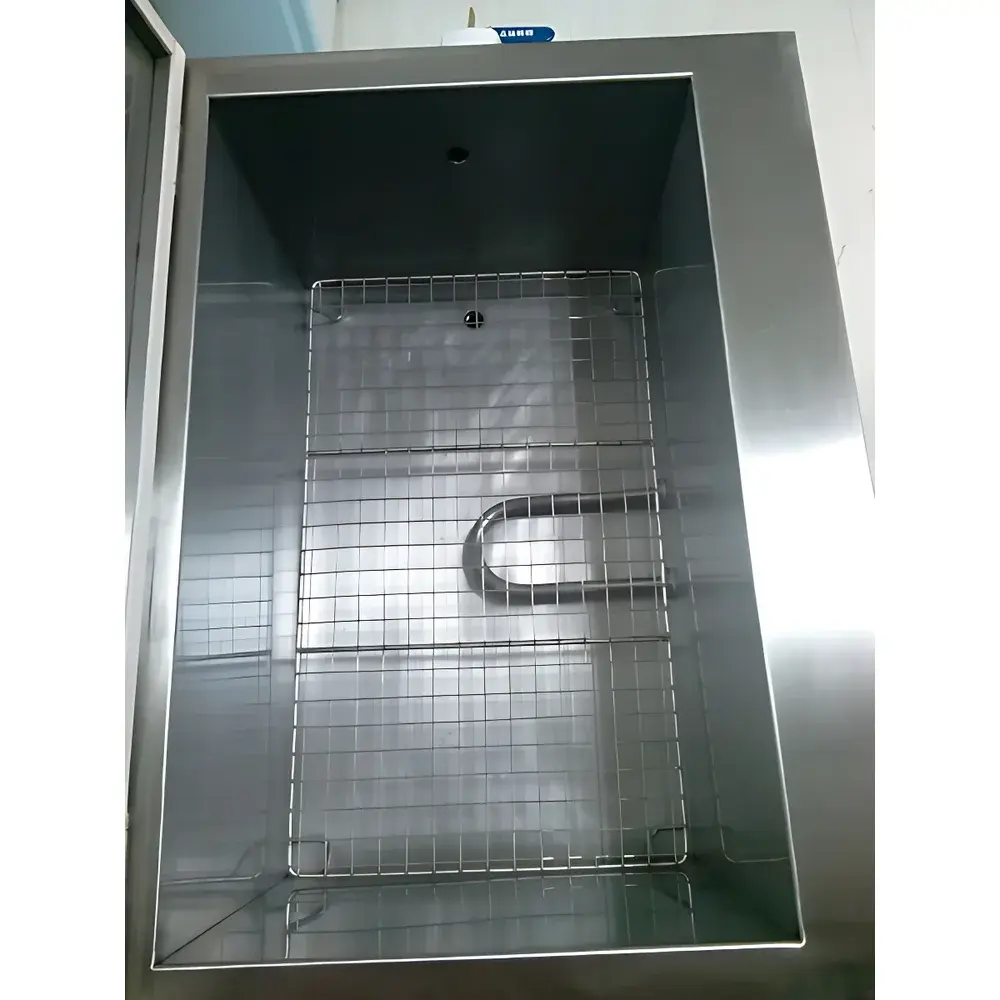
| Internal Tank Dimensions | 650 × 400 × 300 mm |
| Power Supply | 220 V AC, 50 Hz |
Overview
The SYC Sycs SCQ-1001C is a high-capacity, microprocessor-controlled ultrasonic cleaning system engineered for demanding laboratory, industrial R&D, and quality control environments. It operates on the principle of acoustic cavitation: high-frequency electrical energy from the generator is converted by piezoelectric transducers into mechanical vibrations transmitted into the cleaning medium (typically aqueous or solvent-based solutions). These vibrations generate alternating compression and rarefaction cycles in the liquid, resulting in the formation, growth, and implosive collapse of microscopic vacuum bubbles—known as transient cavitation. Each collapse produces localized shockwaves exceeding 1000 atm and micro-jets reaching velocities >400 m/s, enabling effective removal of particulate contaminants, organic residues, oxides, and biofilms from complex geometries—including blind holes, micro-channels, porous matrices, and delicate substrates—without mechanical abrasion or dimensional alteration.
Key Features
- 78-liter stainless steel tank (304 grade) with reinforced corner welds and integrated transducer mounting for uniform energy distribution and long-term structural integrity.
- Multi-frequency operation (25 / 28 / 40 / 60 / 80 / 100 kHz) allows optimization for diverse sample types: lower frequencies (25–40 kHz) deliver higher cavitation intensity for heavy-duty degreasing and rust removal; higher frequencies (60–100 kHz) provide finer, gentler cleaning for precision optics, semiconductor wafers, and MEMS components.
- Fully digital power regulation (10–100% in 1% increments) enables precise energy dosing—critical for reproducible cleaning validation and process qualification under GLP/GMP frameworks.
- Independent PID-controlled heating system (ambient to 80 °C, ±1 °C accuracy) supports temperature-sensitive chemistries and enhances surfactant activity without thermal degradation of samples.
- Programmable timer (1–600 minutes) with auto-shutdown and memory retention for repeatable batch processing; cumulative runtime counter supports preventive maintenance scheduling.
- Integrated sound-dampening lid reduces ambient noise to <65 dB(A) at 1 m distance and minimizes solvent evaporation during heated operation.
- Over-temperature, over-current, low-water-level, and dry-run protection circuits ensure operational safety and equipment longevity per IEC 61010-1 requirements.
Sample Compatibility & Compliance
The SCQ-1001C accommodates a broad range of materials including stainless steel, aluminum, titanium, silicon wafers, fused silica optics, ceramic substrates, polymer molds, and medical-grade alloys. Its non-contact cleaning mechanism preserves surface finish, dimensional tolerances, and coating integrity—making it suitable for pre-sterilization preparation of surgical instruments (per ISO 15883-1), residue testing of pharmaceutical manufacturing tools (aligned with USP and FDA 21 CFR Part 211), and cleaning validation per ASTM D2601 and ISO 14971 risk management principles. The unit complies with CE marking directives (EMC 2014/30/EU, LVD 2014/35/EU) and meets RoHS 2011/65/EU material restrictions.
Software & Data Management
While the SCQ-1001C operates via an embedded single-chip microcontroller interface (no external PC required), its digital display logs real-time parameters—including setpoint vs. actual temperature, elapsed time, active frequency, and power level—for manual audit trail generation. All user-defined settings (frequency, power %, temperature, duration) are retained after power cycling. For regulated environments, optional RS-232 or USB-to-serial adapters enable integration with LIMS or electronic lab notebooks (ELN) for automated data capture, timestamped event logging, and 21 CFR Part 11-compliant electronic signatures when paired with validated third-party software.
Applications
This system serves critical functions across multiple sectors: removal of photoresist and etch residues from semiconductor masks and wafers; cleaning of HPLC columns, GC injectors, and spectrophotometer cuvettes; decontamination of endoscopes and dental handpieces prior to sterilization; dispersion of nanomaterials and exfoliation of 2D materials (e.g., graphene oxide); cell lysis and DNA/RNA extraction in molecular biology workflows; degreasing of aerospace turbine blades and fuel system components; and surface activation of polymers prior to adhesive bonding or plasma treatment. Its large capacity supports batch processing of trays, racks, or multi-tier fixtures—ideal for centralized lab core facilities.
FAQ
What frequency should I select for cleaning optical lenses?
For high-precision optics, 60–80 kHz is recommended to minimize surface pitting while maintaining effective contaminant removal.
Can the unit be used with flammable solvents?
No—this model is designed exclusively for aqueous or water-miscible detergents. Use only in well-ventilated areas and never with acetone, ethanol, or chlorinated solvents unless equipped with explosion-proof certification (not included).
Is the heating function compatible with all cleaning solutions?
Heating must be disabled when using enzymatic or protein-sensitive formulations; consult the detergent manufacturer’s technical data sheet for maximum allowable temperature limits.
How often should the transducers be recalibrated?
Transducer output does not require periodic recalibration; however, annual verification of temperature sensor accuracy and timer linearity is advised for ISO/IEC 17025-accredited labs.
Does the unit support continuous operation?
Yes—designed for unattended 24/7 operation with thermal cut-off and automatic shutdown upon timer completion or fault detection.



