
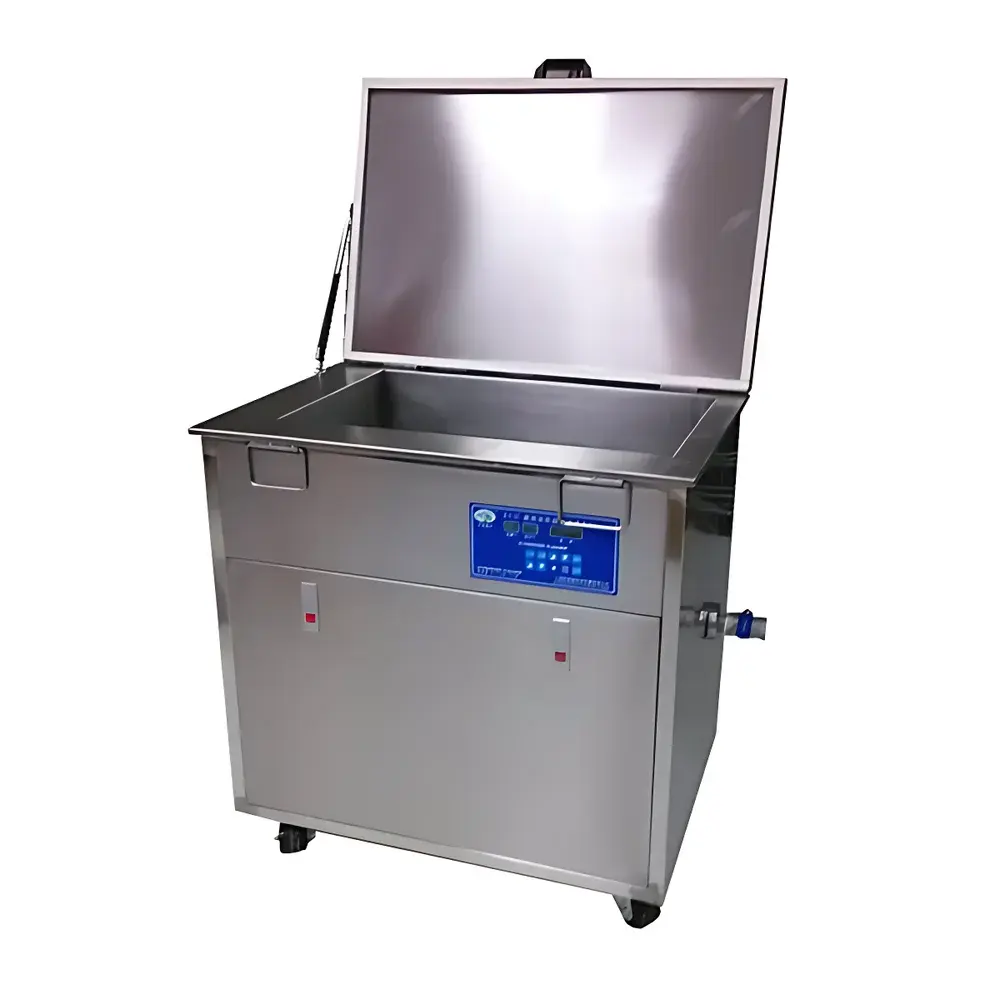
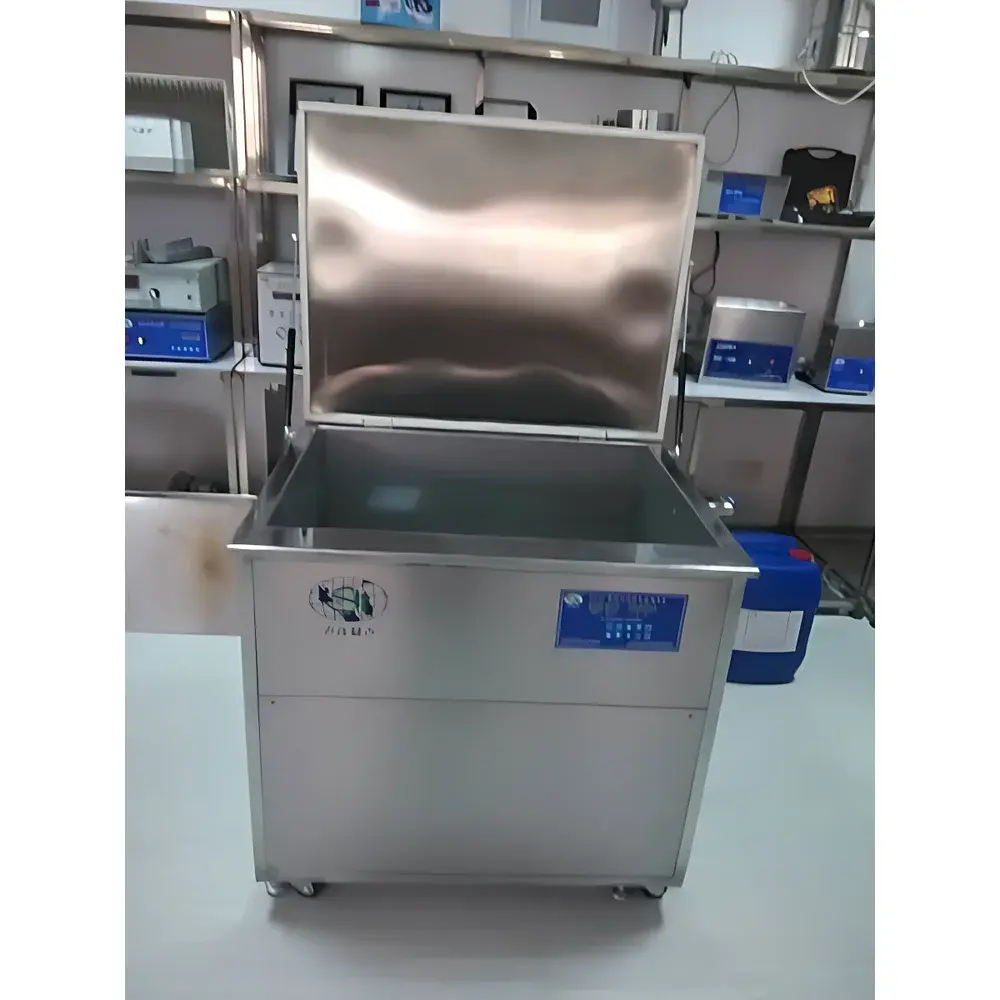
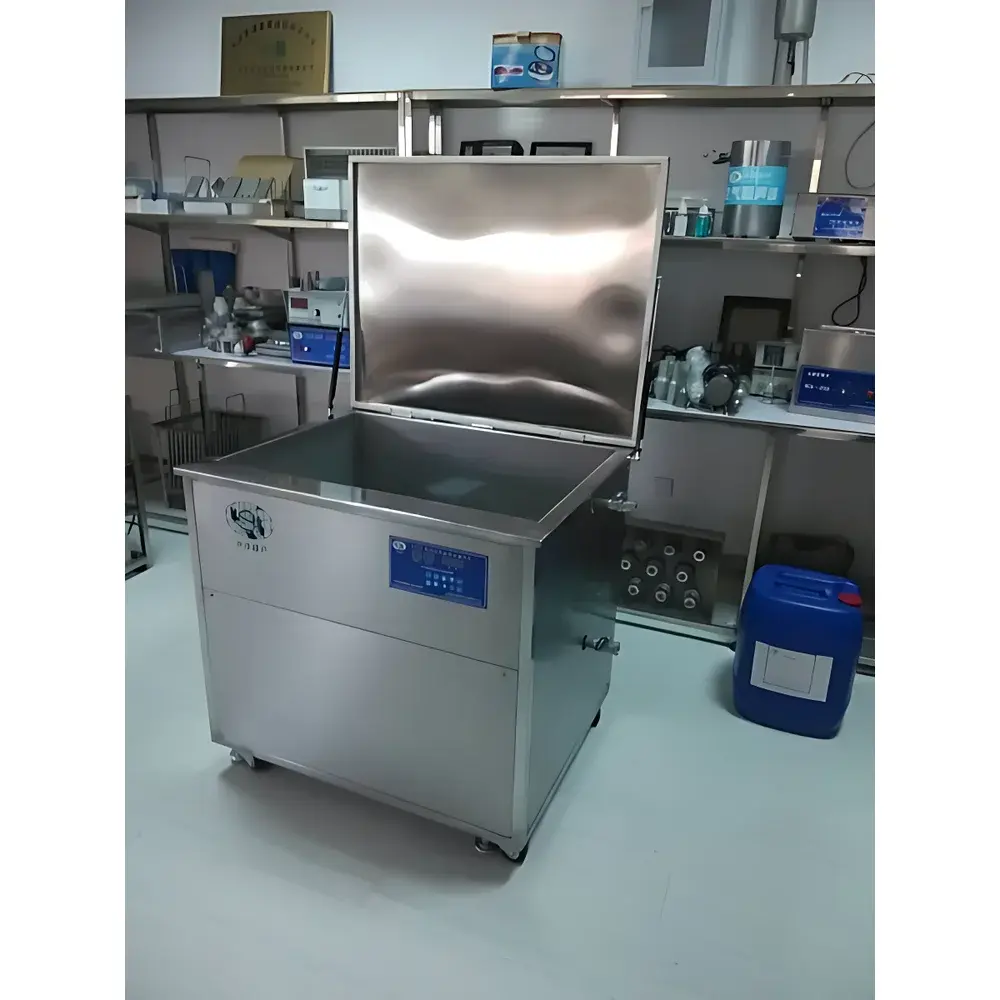
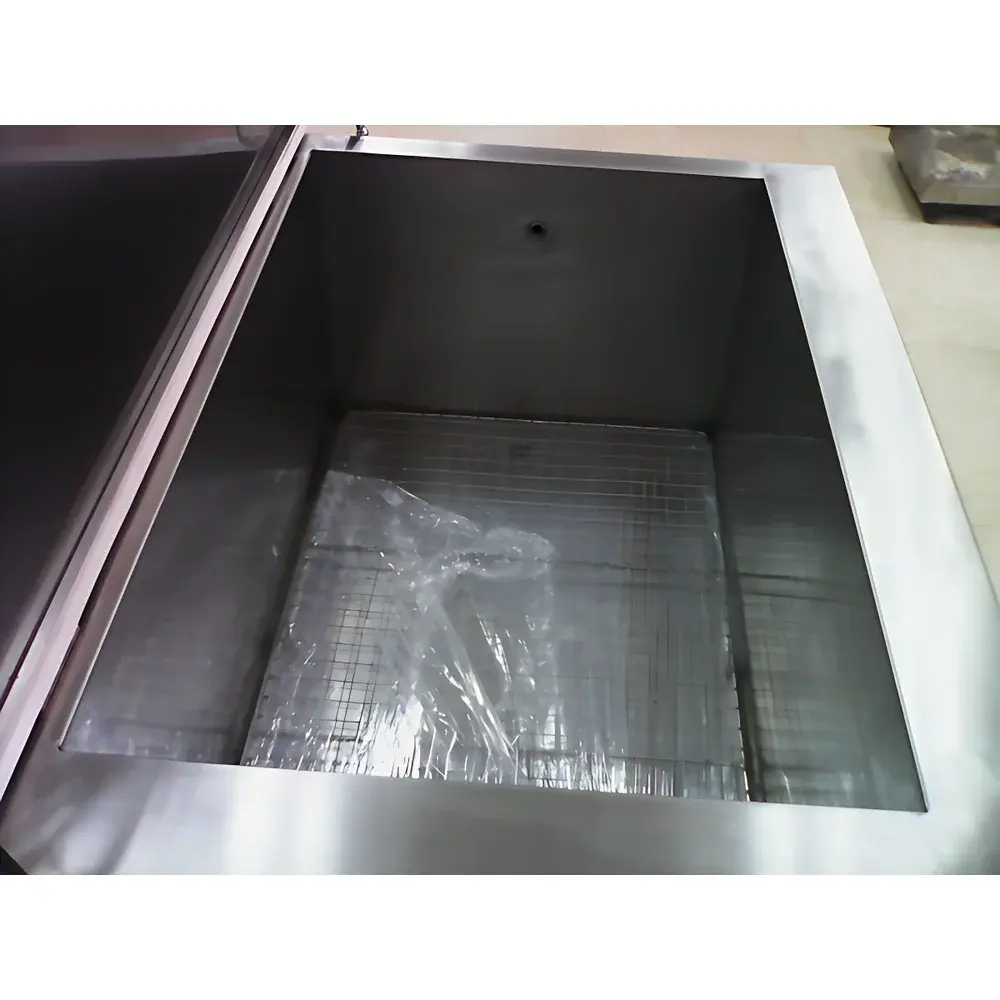
SYC Sycs SCQ-1020B Benchtop Ultrasonic Cleaner with Heated Tank
| Brand | SYC Sycs |
|---|---|
| Origin | Shanghai, China |
| Model | SCQ-1020B |
| Tank Capacity | 176 L |
| Internal Tank Dimensions | 830 × 530 × 400 mm |
| Ultrasonic Frequency Options | 25 / 28 / 40 / 60 / 80 / 100 kHz |
| Ultrasonic Power Output | 2500 W (fixed) |
| Heating Power | 3000 W |
| Temperature Range | Ambient to 80 °C (digital control) |
| Timer Range | 1–600 min (programmable) |
| Acoustic Lid | Included |
| Drain Valve | Manual |
| Power Supply | 220 VAC, 50 Hz |
| Safety Features | Over-temperature, over-current, low-water, and dry-run protection |
Overview
The SYC Sycs SCQ-1020B is a high-capacity benchtop ultrasonic cleaner engineered for demanding laboratory, industrial R&D, and quality control environments. It operates on the principle of acoustic cavitation: high-frequency electrical energy from an integrated generator is converted into mechanical vibrations via piezoelectric transducers bonded to the tank bottom and sidewalls. These vibrations propagate through the cleaning medium—typically aqueous or solvent-based solutions—generating alternating compression and rarefaction cycles. During rarefaction, microscopic vacuum bubbles nucleate and grow; during compression, they collapse violently, releasing localized energy in the form of transient pressures exceeding 1000 atm and temperatures up to ~5000 K. This controlled cavitation erodes particulate contaminants, organic residues, oxides, and biofilms from surfaces—even within blind holes, microchannels, porous matrices, and complex geometries—without mechanical abrasion or substrate damage. Unlike immersion-only systems, the SCQ-1020B integrates precise thermal regulation and extended timing capability, enabling reproducible extraction, degassing, emulsification, and cell lysis protocols beyond routine cleaning.
Key Features
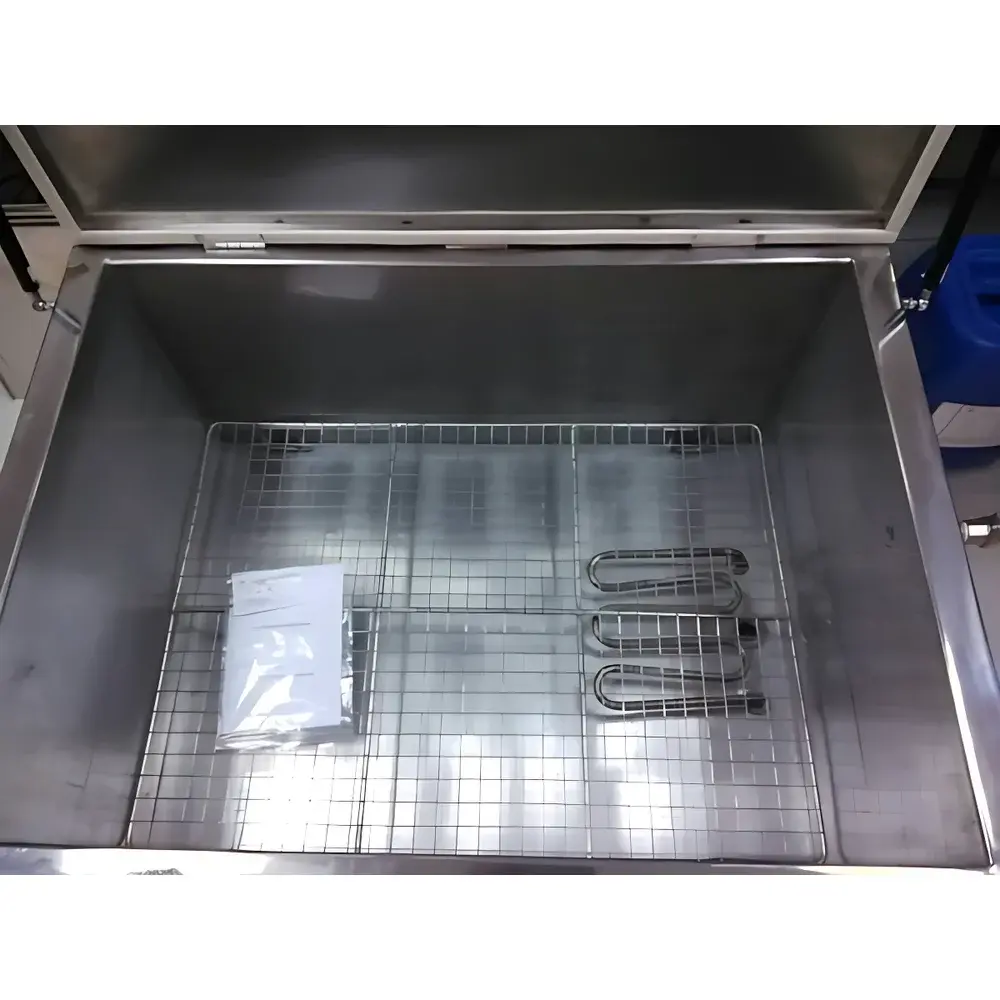
- Large-volume stainless steel tank (176 L capacity; 830 × 530 × 400 mm internal dimensions) constructed from 304-grade austenitic stainless steel for corrosion resistance and long-term structural integrity
- Multi-frequency ultrasonic generation (25 / 28 / 40 / 60 / 80 / 100 kHz selectable at time of order) to optimize cleaning efficacy across diverse sample types—from delicate optical components (best at 80–100 kHz) to heavy-duty metal parts (optimal at 25–40 kHz)
- Fixed-output 2500 W ultrasonic power with uniform transducer distribution ensuring consistent energy density across the entire tank volume
- Digital temperature controller with ±1 °C accuracy and ambient-to-80 °C range, supporting thermally assisted cleaning, enzymatic digestion, and accelerated solvent-based extractions
- Precision programmable timer (1–600 minutes) with auto-shutdown and memory retention for repeatable process validation
- Integrated safety architecture including real-time monitoring of water level, tank temperature, supply voltage, and current draw—triggering audible/visual alerts and automatic shutdown upon fault detection
- Acoustically damped hinged lid with gasket seal to reduce airborne noise (<65 dB(A) at 1 m) and minimize solvent evaporation during heated operation
- Manual drain valve positioned at tank base for safe, residue-free solution exchange between batches
- Standard stainless steel mesh basket and support rack included for optimized part suspension and cavitation exposure
Sample Compatibility & Compliance
The SCQ-1020B accommodates a broad spectrum of substrates without risk of surface degradation: glassware (vials, cuvettes, chromatography columns), metallic components (stainless steel surgical instruments, aerospace fasteners, fuel injectors), ceramics (sensor housings, MEMS wafers), polymers (PC, PTFE, polypropylene fixtures), and biological matrices (tissue homogenates, cell culture plates). Its design aligns with fundamental requirements of ISO 13485 for medical device reprocessing validation and supports GLP-compliant documentation when paired with external data loggers. While not certified to UL/CSA or CE for standalone medical device sterilization, it meets IEC 61000-6-3 (EMC emission limits) and IEC 61000-6-2 (immunity standards) for laboratory instrumentation. For regulated applications involving extractables/leachables testing (e.g., USP , ISO 10993-12), users must validate cleaning efficacy per ASTM D4297 (standard guide for ultrasonic cleaning verification) and maintain traceable calibration records for temperature and timer functions.
Software & Data Management
The SCQ-1020B employs embedded microcontroller firmware (no PC dependency) with non-volatile memory for storing user-defined protocols—including frequency selection (if configured), target temperature, and duration. All operational parameters are displayed via a dual-line LED interface showing setpoint vs. real-time values for temperature and elapsed time. While the unit lacks Ethernet or USB connectivity, its deterministic digital control architecture ensures repeatability essential for audit-ready workflows. When deployed in GMP-regulated settings, laboratories may integrate external calibrated thermistors and time-stamped data loggers to satisfy FDA 21 CFR Part 11 requirements for electronic records and signatures. The absence of variable power control simplifies SOP development and reduces operator-induced variability—a critical factor in inter-laboratory method transfer studies.
Applications
- Advanced Cleaning: Removal of machining oils, polishing compounds, solder fluxes, and oxide layers from semiconductor wafers, printed circuit boards, and precision optics
- Extraction & Homogenization: Accelerated solid-liquid extraction of phytochemicals, lipids, and nucleic acids from plant tissues, microbial pellets, and animal organs
- Cell Disruption: Efficient lysis of bacterial, yeast, and mammalian cells for proteomics and metabolomics workflows—particularly effective with cryo-cooled buffers to preserve labile biomolecules
- Degassing & Deaeration: Elimination of dissolved air from HPLC mobile phases, casting resins, and adhesive formulations to prevent bubble formation and void defects
- Emulsification & Dispersion: Stabilization of nanoemulsions, carbon nanotube suspensions, and ceramic slurries for materials science synthesis
- Pre-Analytical Sample Prep: Cleaning of sampling probes, autosampler vials, and ICP-MS nebulizers to minimize spectral interferences and memory effects
FAQ
What ultrasonic frequency should I select for my application?
Frequency selection depends on contaminant type and substrate geometry. Lower frequencies (25–40 kHz) generate larger, more energetic cavitation bubbles suited for robust parts with heavy soils. Higher frequencies (60–100 kHz) produce smaller, denser bubbles ideal for delicate surfaces (e.g., coated lenses, MEMS devices) and fine particulate removal.
Can the SCQ-1020B be used for sterilization?
No. Ultrasonic cleaning removes bioburden but does not achieve sterility assurance levels (SAL) required for sterilization. It serves as a critical pre-sterilization step per AAMI ST79 guidelines but must be followed by validated steam, ethylene oxide, or vaporized hydrogen peroxide processes.
Is deionized water sufficient as a cleaning medium?
Deionized water alone provides limited cleaning efficacy. For optimal results, use formulated aqueous detergents (e.g., Alconox-type alkaline cleaners) or low-toxicity solvents compatible with stainless steel and your sample material—always verifying compatibility prior to full-scale deployment.
How often should transducers be inspected or serviced?
Under normal operation, piezoelectric transducers require no scheduled maintenance. However, visual inspection for delamination or cracking every 6 months—and periodic verification of cleaning performance using standardized test foils (ASTM F1765) or gravimetric soiled coupons—is recommended to ensure sustained cavitation efficiency.
Does the unit support continuous operation?
Yes. The SCQ-1020B is rated for uninterrupted duty cycles up to 8 hours, provided ambient temperature remains below 35 °C and adequate ventilation is maintained around the rear heat exchanger fins. Extended unattended operation requires integration with facility monitoring systems for thermal and fluid-level oversight.



