
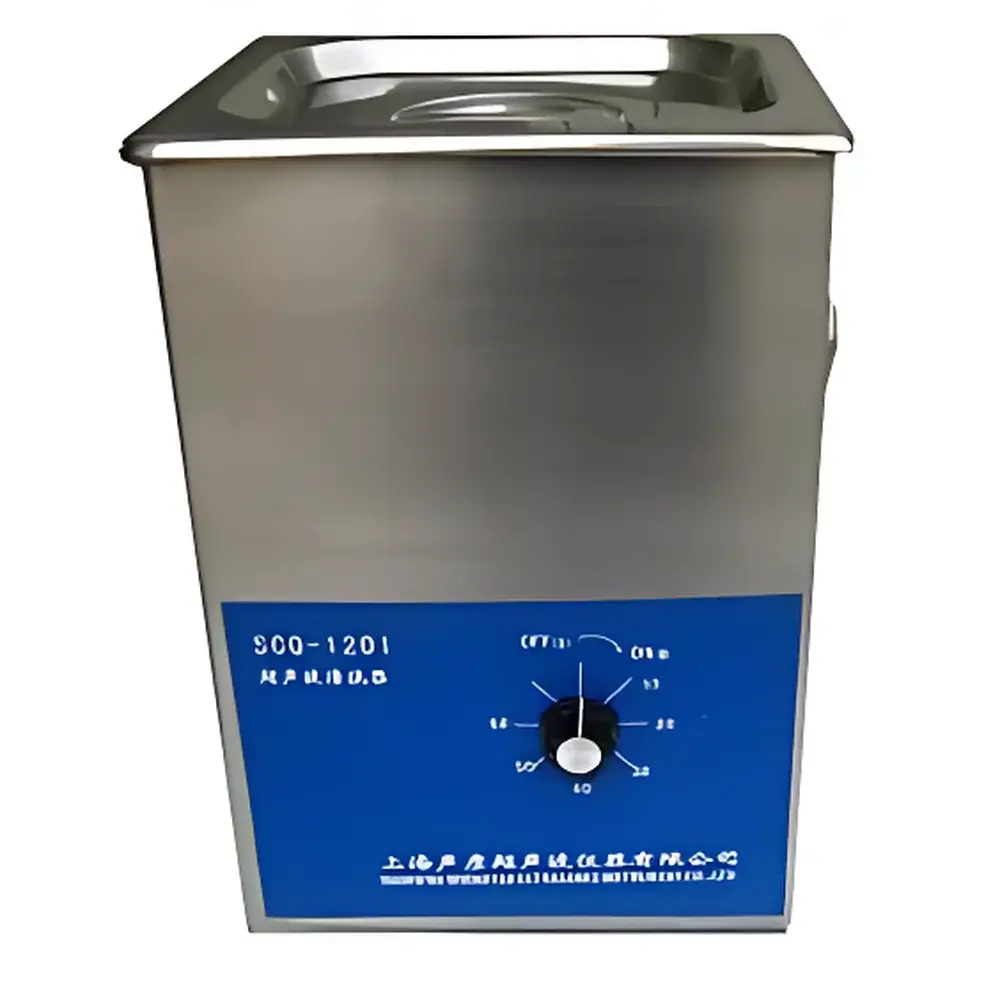
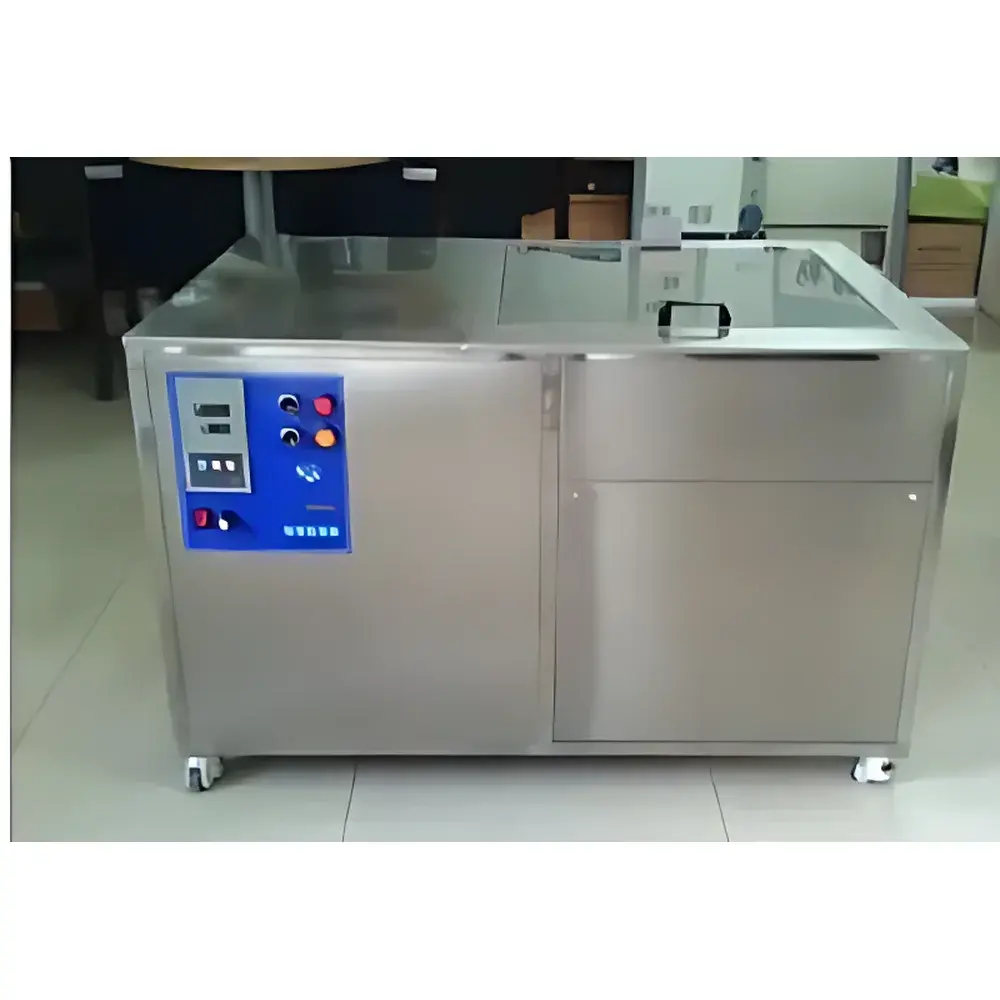
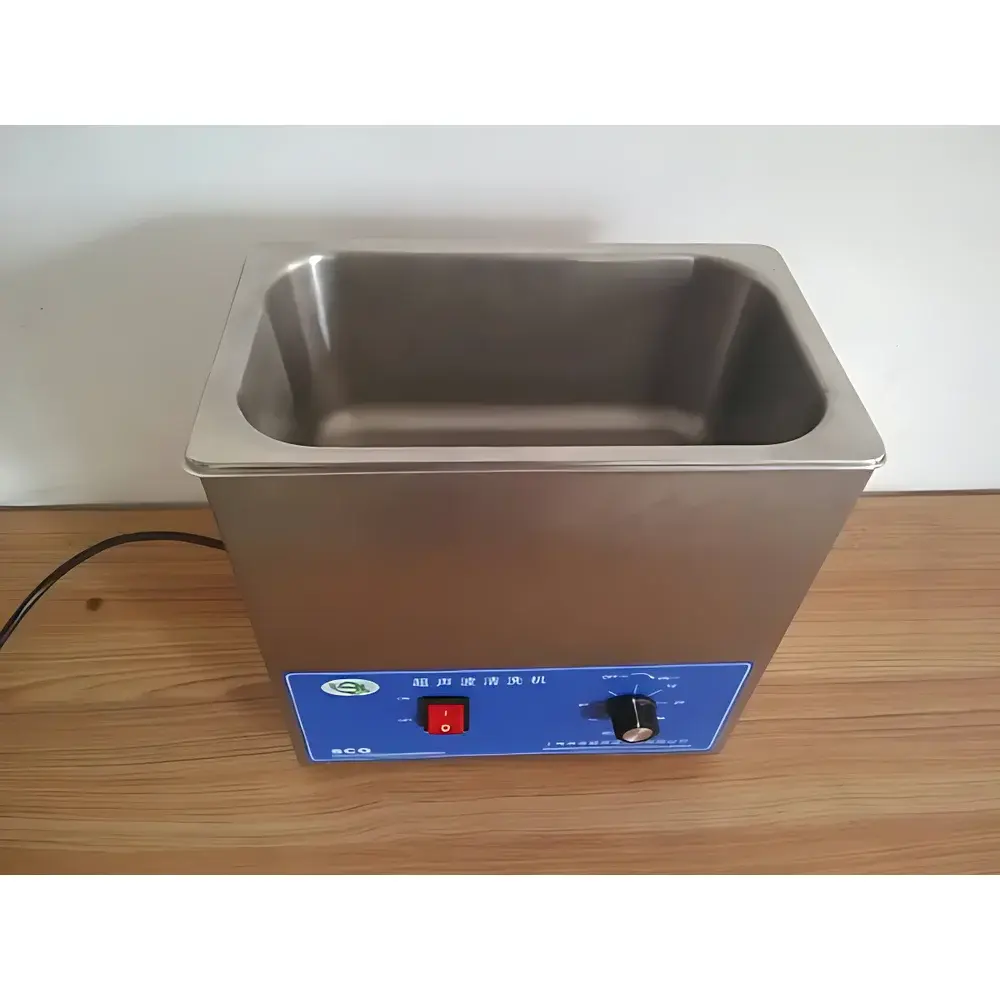
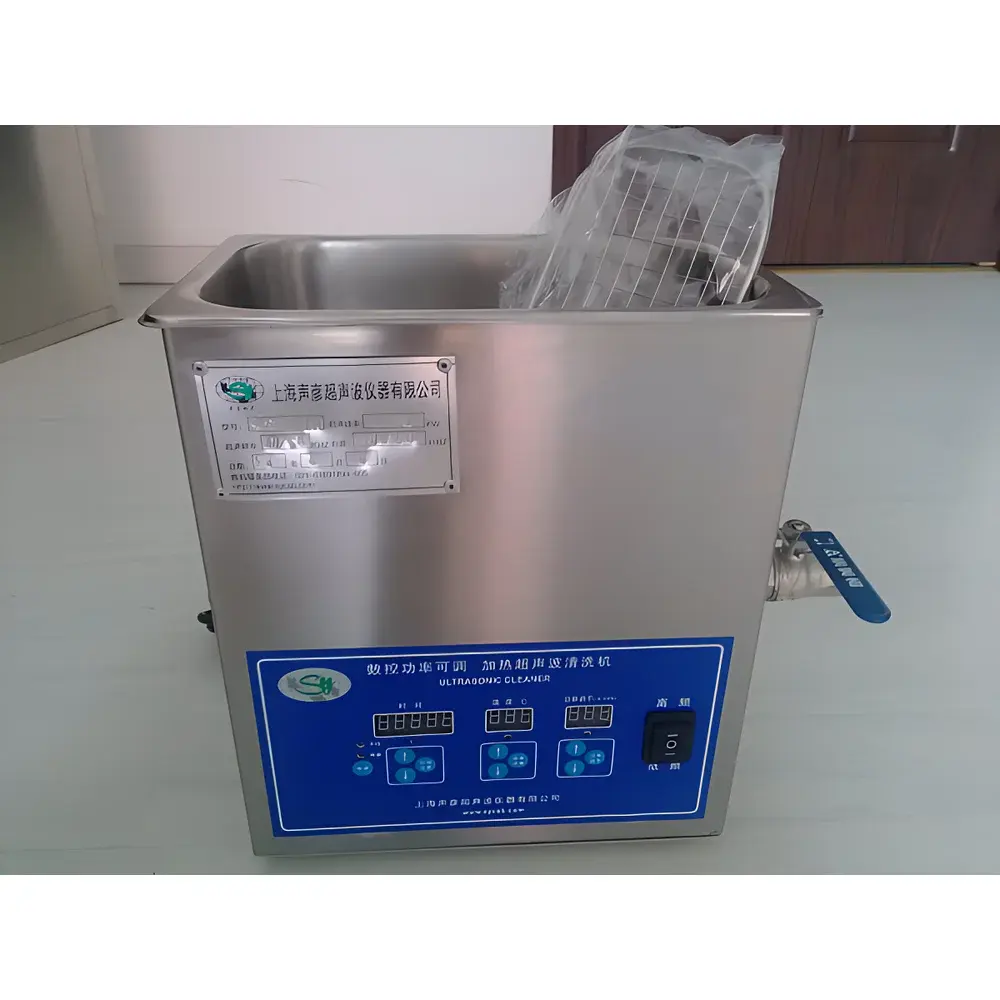
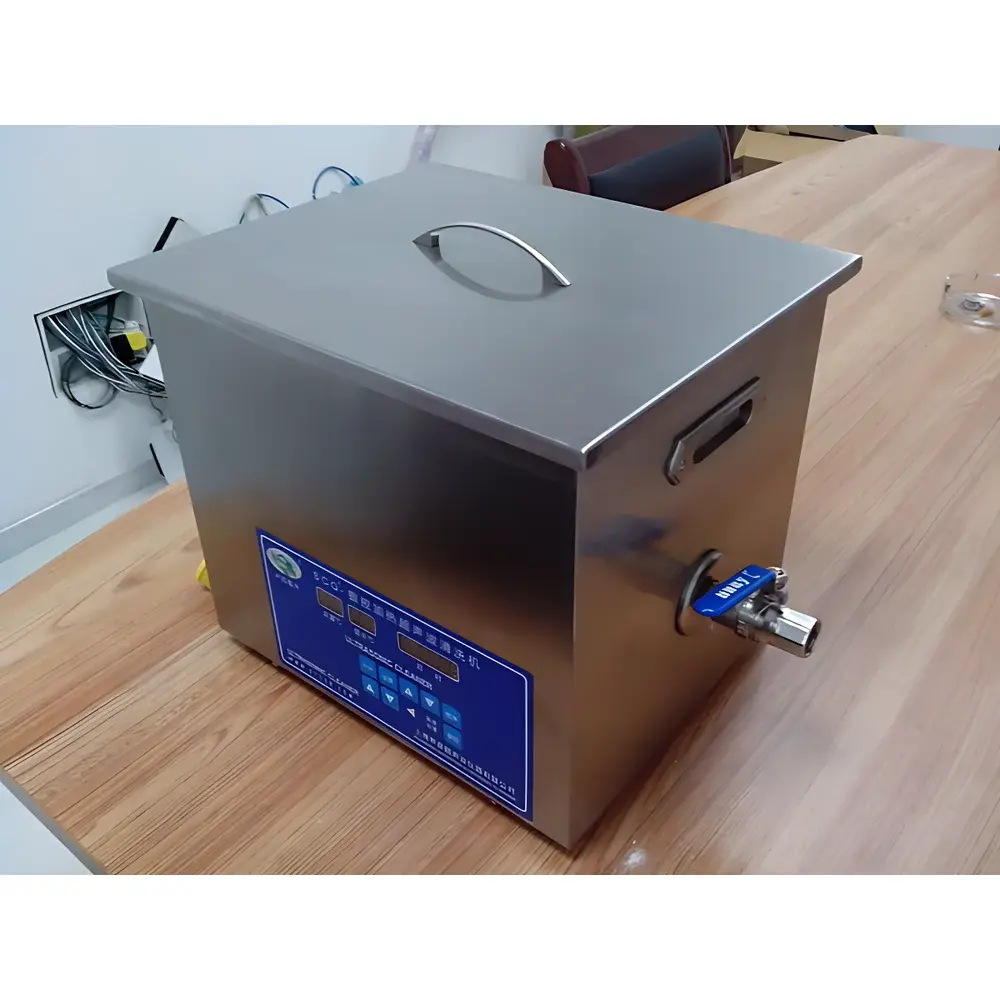
SYC Sycs SCQ-1201 Benchtop Ultrasonic Cleaner
| Brand | SYC Sycs |
|---|---|
| Origin | Shanghai, China |
| Model | SCQ-1201 |
| Capacity | 2 L |
| Ultrasonic Frequency | 40 kHz |
| Ultrasonic Power | 80 W |
| Power Adjustment | Not adjustable |
| Temperature Control | Not available |
| Timer Range | 1–60 min (adjustable) |
| Sound-Dampening Lid | Included |
| Drain Port | Not equipped |
| Tank Dimensions (L×W×H) | 140 × 150 × 100 mm |
| Tank Material | SUS304 stainless steel (2.0 mm thickness) |
| Housing Material | Full stainless steel |
| Power Supply | 220 V, 50 Hz |
| Warranty | 1 year (excluding misuse), lifetime technical support |
Overview
The SYC Sycs SCQ-1201 is a compact, benchtop ultrasonic cleaner engineered for precision cleaning of small to medium-sized components in laboratory, educational, and light industrial environments. It operates on the principle of cavitation—high-frequency sound waves (40 kHz) generate microscopic vacuum bubbles in the cleaning solution; upon collapse, these bubbles release localized energy sufficient to dislodge particulate contaminants, oils, oxides, biofilms, and organic residues from complex geometries—including blind holes, crevices, and microstructures—without mechanical abrasion or surface damage. Designed with a 2 L stainless steel tank (SUS304, 2.0 mm wall thickness), it delivers consistent acoustic energy distribution across the entire bath volume. Its fixed-frequency, fixed-power architecture ensures operational stability and repeatability—critical for standardized cleaning protocols in QC labs, R&D facilities, and teaching laboratories where procedural fidelity outweighs variable-parameter flexibility.
Key Features
- Benchtop footprint optimized for space-constrained lab benches (140 × 150 × 100 mm internal tank dimensions)
- Robust SUS304 stainless steel construction—both tank and outer housing—for corrosion resistance and long-term chemical compatibility with aqueous and mild solvent-based cleaning solutions
- Integrated sound-dampening lid reduces ambient noise by up to 15 dB(A) and minimizes solvent evaporation during timed cycles
- Digital timer with precise 1–60 minute adjustment in 1-minute increments, supporting repeatable cycle definition per SOP
- No heating element or temperature regulation—intended for room-temperature aqueous or low-boiling-point solvent applications only
- Fixed 80 W ultrasonic output at 40 kHz—engineered for high reproducibility in routine cleaning tasks involving electronics, optics, surgical instruments, and jewelry components
- Stainless steel mesh basket included for secure sample placement and protection against direct tank contact
Sample Compatibility & Compliance
The SCQ-1201 accommodates a broad range of sample types including glassware (vials, pipettes, cuvettes), metal parts (surgical tools, watch components, PCB assemblies), ceramics (optical lenses, sensor housings), and polymer substrates (microfluidic chips, 3D-printed fixtures). It complies with general laboratory safety standards for electrical appliances (IEC 61010-1) and meets material compatibility requirements under ISO 15883-1 for non-automated cleaning equipment used in healthcare settings. While not certified for sterilization or disinfection per EN 13060 or FDA 510(k), its cleaning efficacy supports pre-sterilization preparation steps aligned with AAMI ST79 and USP . The absence of temperature control and drain functionality restricts its use to manual fill-and-empty workflows compliant with GLP documentation practices.
Software & Data Management
This model operates via standalone hardware controls—no embedded software, network interface, or data logging capability. All operational parameters are set manually using the front-panel digital timer. For regulated environments requiring audit trails, users must document cycle parameters (duration, solution type, batch ID) externally—e.g., in paper-based logbooks or LIMS-integrated electronic records. The device’s deterministic behavior (fixed frequency, fixed power, no firmware updates) simplifies validation: IQ/OQ protocols can be completed using calibrated stopwatch timing and verified cavitation activity (e.g., aluminum foil test per ASTM E1721). No 21 CFR Part 11 compliance features are present; it is classified as a Class I general-purpose laboratory instrument.
Applications
The SCQ-1201 is routinely deployed in analytical chemistry labs for cleaning HPLC vials and autosampler trays; in electronics manufacturing for post-solder flux removal from PCBs and connectors; in dental and ophthalmic clinics for decontaminating reusable instruments prior to autoclaving; in materials science labs for preparing metallographic samples and MEMS devices; and in academic teaching labs for demonstrating ultrasonic cleaning principles in physical chemistry and biomedical engineering curricula. Its 2 L capacity and 40 kHz frequency provide optimal balance between penetration depth and surface cleaning resolution—making it especially effective for sub-5 cm components with fine features or delicate coatings. Applications exclude high-viscosity fluids, flammable solvents without explosion-proof certification, or heat-sensitive biologics requiring thermal stabilization.
FAQ
Is the SCQ-1201 suitable for cleaning surgical instruments in a clinical setting?
Yes, provided it is used strictly for pre-sterilization cleaning—not disinfection or sterilization—and followed by validated high-level disinfection or steam sterilization per local health authority guidelines.
Can I use acetone or isopropanol in this unit?
Only if the unit is explicitly rated for flammable solvents (this model is not). Use only water-based or low-volatility, non-flammable cleaning solutions approved for ultrasonic immersion.
Does the unit include a heater or temperature control?
No. The SCQ-1201 operates exclusively at ambient temperature and does not support heated cleaning cycles.
Is the ultrasonic frequency selectable on this model?
Although the SCQ-1201 series supports optional frequencies (25/28/40/60 kHz) across variants, the SCQ-1201 is factory-configured for 40 kHz operation only.
What maintenance is required to ensure long-term performance?
Regular descaling with mild citric acid solution every 3–6 months (depending on water hardness), periodic inspection of transducer integrity via aluminum foil test, and replacement of the mesh basket when deformation or corrosion is observed.



