
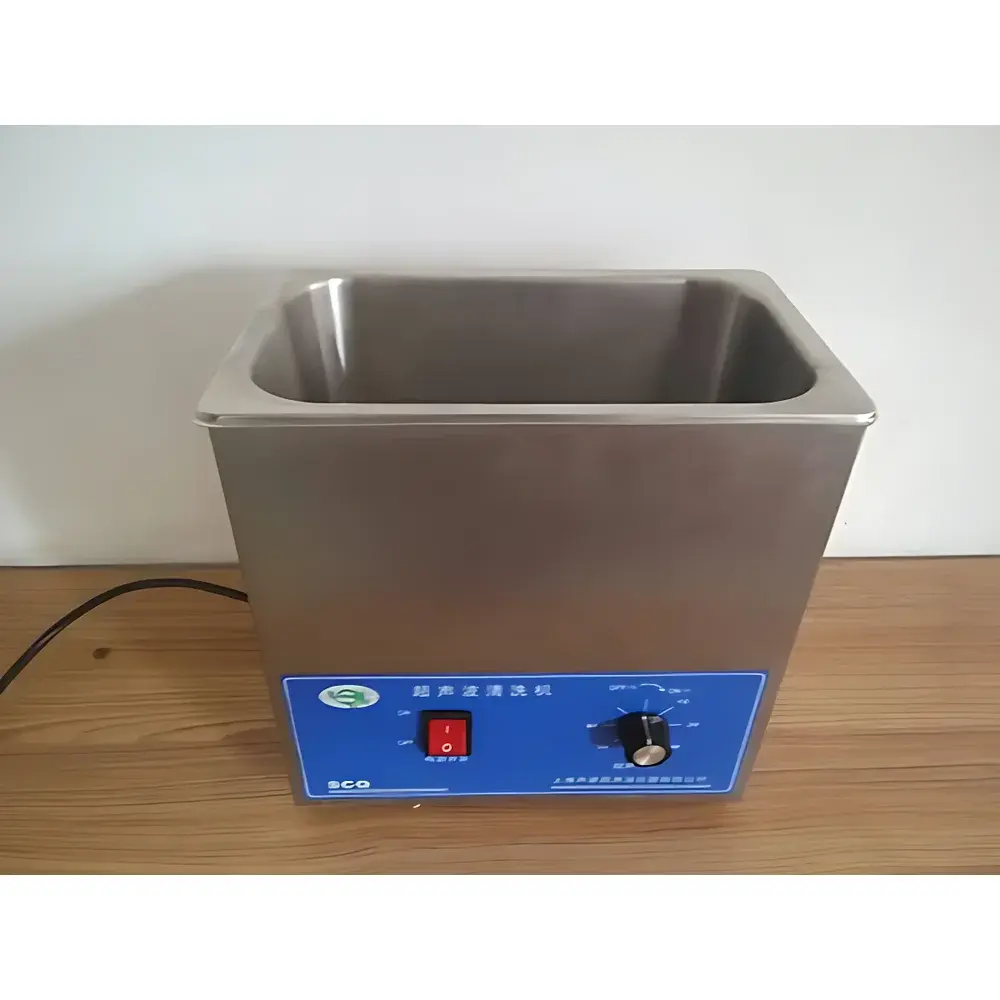
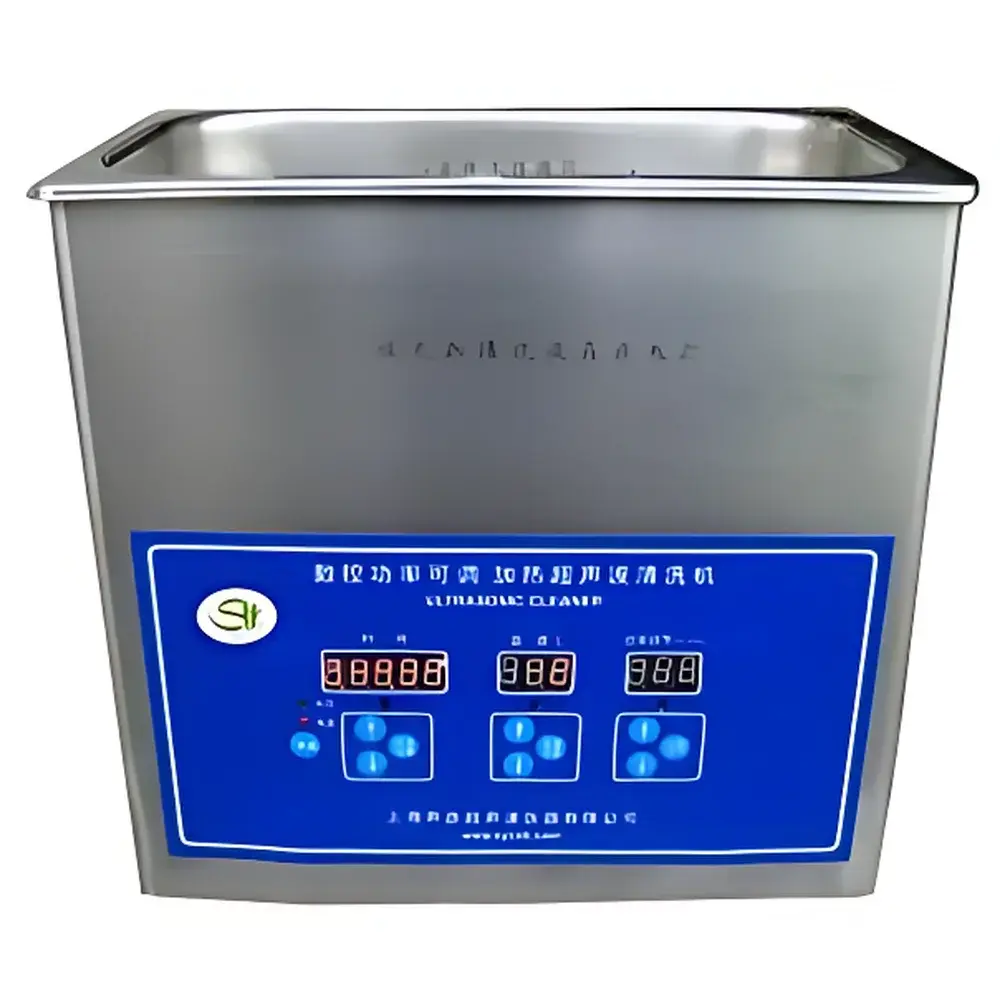
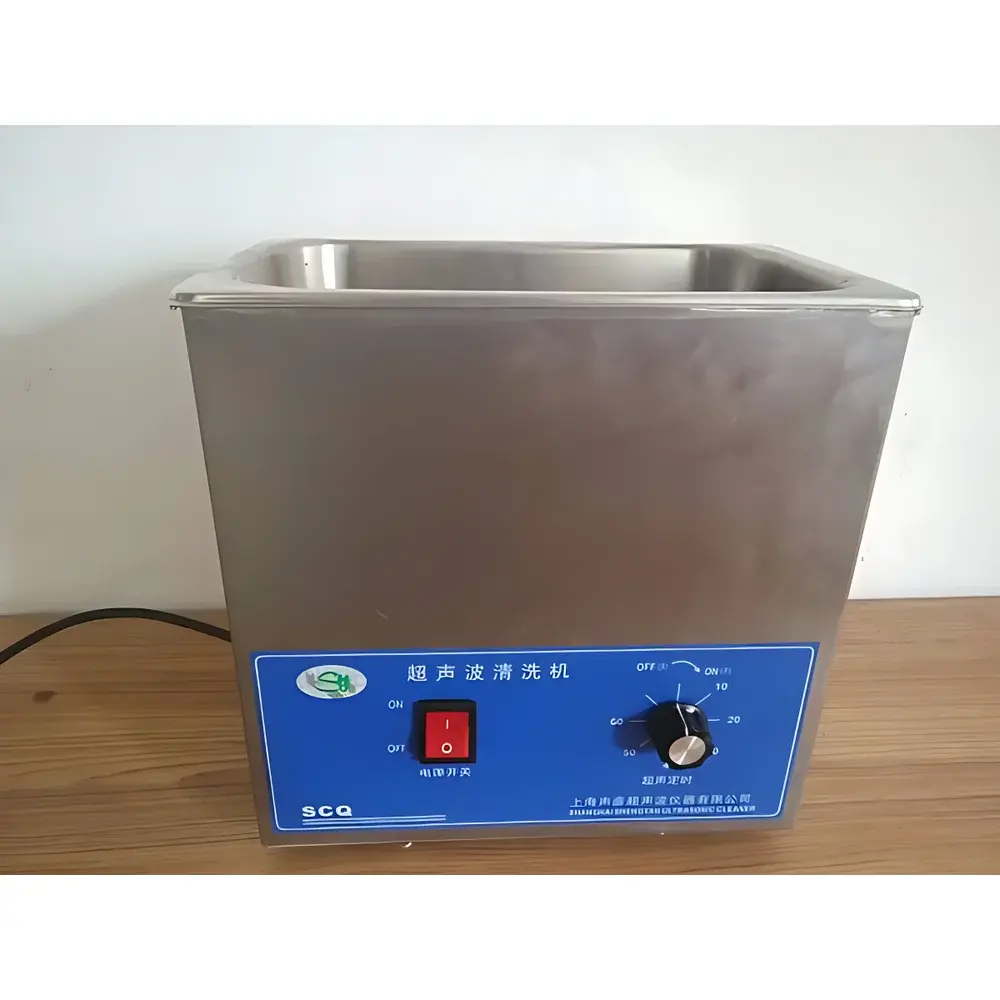
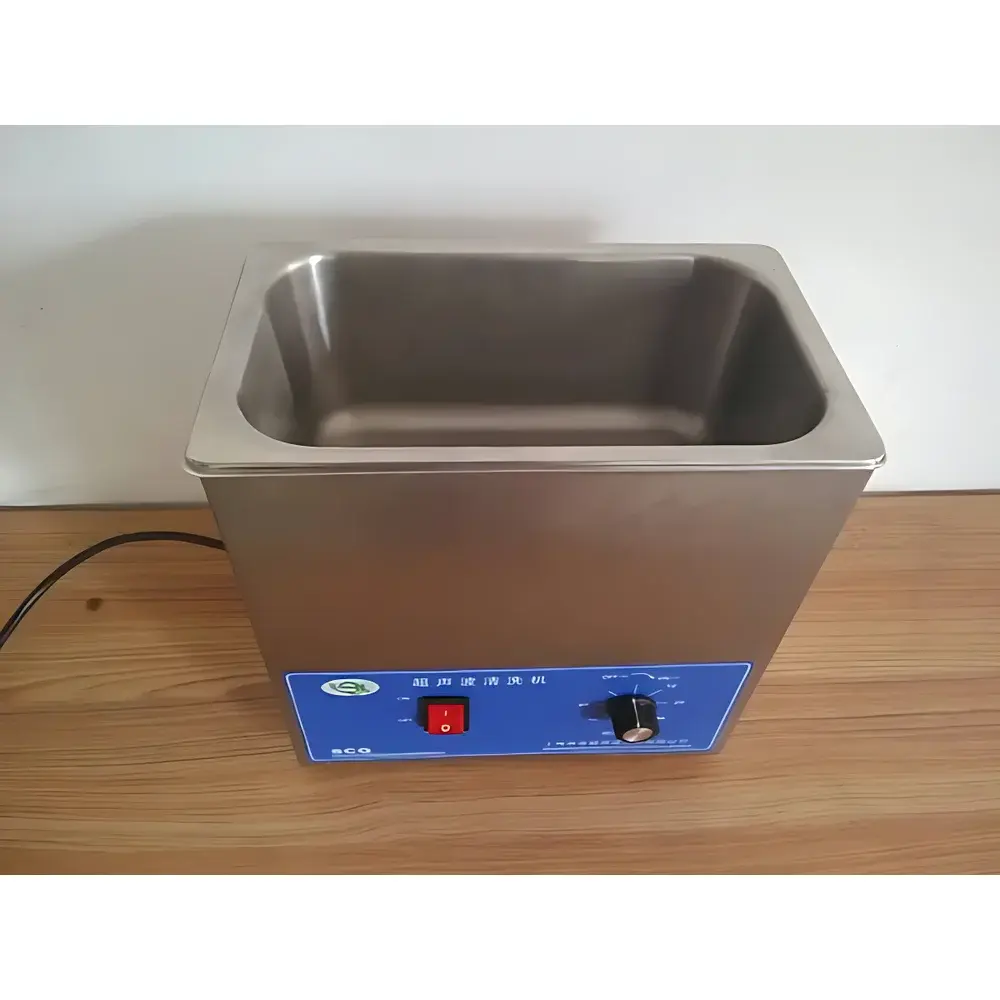
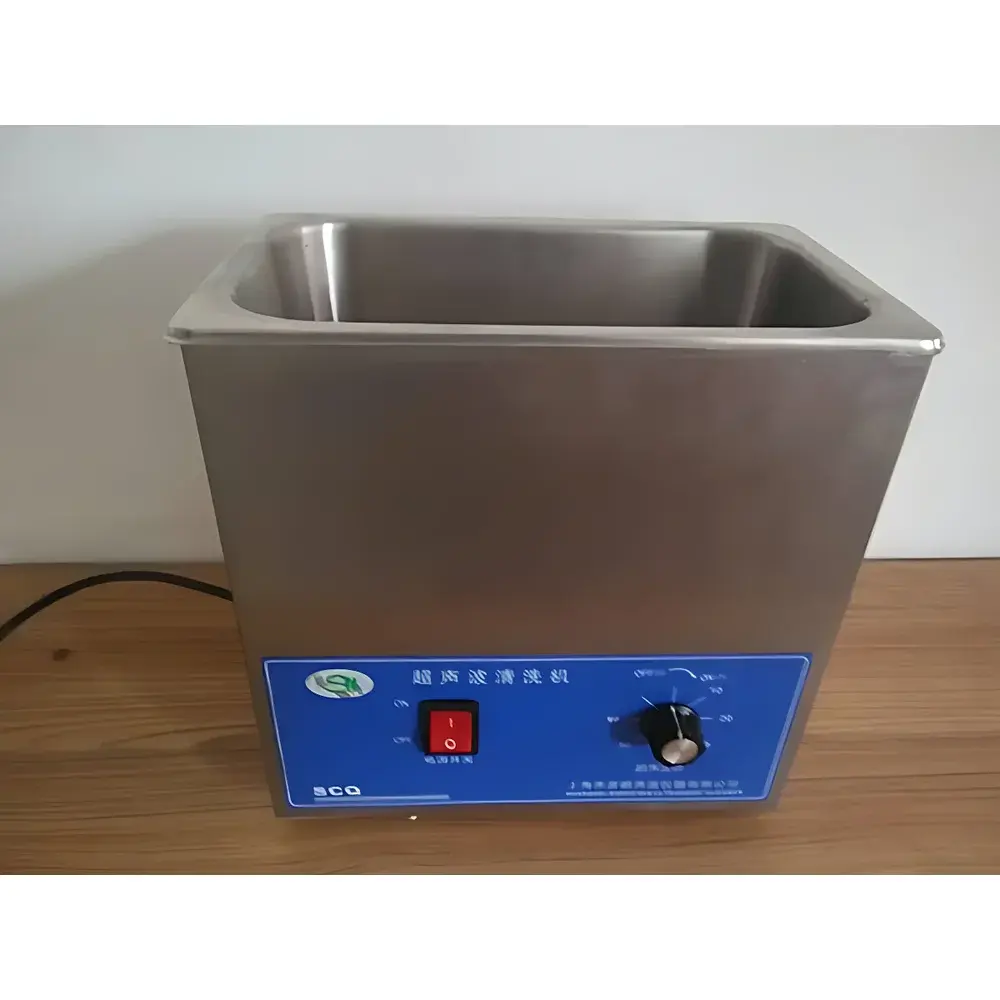
SYC Sycs SCQ-2201C Benchtop Ultrasonic Cleaner with Adjustable Power and Heating
| Brand | SYC Sycs |
|---|---|
| Origin | Shanghai, China |
| Model | SCQ-2201C |
| Capacity | 3 L |
| Ultrasonic Frequency Options | 25 kHz / 28 kHz / 40 kHz / 60 kHz |
| Nominal Ultrasonic Power | 120 W |
| Power Adjustment Range | 10–100% (continuously variable) |
| Heating Power | 600 W |
| Temperature Control Range | Ambient to 100 °C |
| Timer Range | 1–600 min |
| Tank Dimensions (L×W×H) | 230 × 135 × 100 mm |
| Construction | Full SUS304 stainless steel tank and basket |
| Safety Features | Overload protection, overtemperature cutoff |
| Sound-Dampening Lid | Included |
| Manual Drain | Yes |
| Rack & Basket | Included |
| Input Voltage | 220 VAC, 50 Hz |
Overview
The SYC Sycs SCQ-2201C is a compact, benchtop ultrasonic cleaner engineered for precision cleaning, degassing, and surface decontamination in regulated laboratory, clinical, and light industrial environments. It operates on the principle of high-frequency acoustic cavitation: ultrasonic transducers bonded to the tank base generate pressure waves in the cleaning medium (typically aqueous or solvent-based solutions), inducing controlled microbubble formation and collapse. This implosive energy dislodges particulate contaminants, organic residues, biofilms, and entrapped air from complex geometries—including blind holes, crevices, and microstructured surfaces—without mechanical abrasion. With selectable frequencies (25/28/40/60 kHz), the unit allows optimization for different applications: lower frequencies (25–28 kHz) deliver higher cavitation intensity for robust particle removal from metals and heavy soiling; higher frequencies (40–60 kHz) provide finer, gentler action suitable for delicate optics, semiconductor wafers, and biological specimens. Its 3 L capacity, combined with full SUS304 construction and integrated safety systems, supports reproducible, GLP-aligned cleaning workflows across QC labs, R&D facilities, dental clinics, and electronics repair stations.
Key Features
- Continuously adjustable ultrasonic power (10–100% of 120 W nominal output), enabling precise energy modulation for sensitive or heavily soiled samples
- Four-frequency selection (25 kHz, 28 kHz, 40 kHz, 60 kHz) via front-panel switch—no tooling or firmware changes required
- Independent digital temperature control (ambient to 100 °C) with 600 W heating element and ±1 °C stability, supporting thermally enhanced cleaning protocols
- Precision timer (1–600 minutes) with auto-shutdown and audible end-of-cycle alert
- Full 304 stainless steel tank (230 × 135 × 100 mm internal dimensions), corrosion-resistant rack, and mesh basket—exceeding ASTM A240 requirements for laboratory-grade wetted materials
- Integrated sound-dampening lid with ergonomic latch mechanism, reducing ambient noise to ≤55 dB(A) at 1 m distance
- Dual safety architecture: real-time thermal cutoff and electronic overload protection prevent component stress during extended operation
Sample Compatibility & Compliance
The SCQ-2201C accommodates a broad range of sample types without modification: glassware (vials, cuvettes, pipettes), metal components (PCB assemblies, watch movements, surgical instruments), polymers (lens housings, dental prostheses), and porous substrates (ceramic filters, sintered metal). Its SUS304 tank and accessories meet ISO 15223-1 labeling requirements for medical device cleaning equipment and are compatible with USP cleaning validation guidelines. While not certified to IEC 61000-6-3 (EMC) or UL 61010-1 out-of-box, the unit’s design aligns with common lab safety expectations for Class II non-sterile cleaning devices. It supports cleaning validation per ISO 13485 Annex C when paired with documented process parameters (frequency, power %, temperature, dwell time, solution composition).
Software & Data Management
The SCQ-2201C operates via an embedded microcontroller with a 4-digit LED display and tactile membrane keypad—designed for reliability, not connectivity. No USB, Ethernet, or cloud interface is provided; all operational parameters are set and logged manually. For laboratories requiring audit trails, users may integrate external data loggers (e.g., HOBO UX100 series) to record temperature and cycle duration. The absence of networked software eliminates cybersecurity exposure while ensuring deterministic behavior under GxP conditions where unverified firmware updates are prohibited. All parameter settings persist through power cycles, and no calibration certificate is supplied—users are advised to verify temperature accuracy annually using NIST-traceable thermometry per ISO/IEC 17025 Clause 6.5.
Applications
- Removal of flux residues, solder paste, and oxide films from printed circuit boards prior to AOI inspection
- Decontamination of reusable surgical tools, orthodontic appliances, and dental impressions per CDC-recommended ultrasonic protocols
- Pre-analytical cleaning of HPLC vials, GC autosampler inserts, and ICP-MS sample introduction components
- Extraction of analytes from plant tissues or environmental filters using sonication-assisted solvent leaching
- Degassing of viscous solvents (e.g., glycerol, silicone oil) prior to microscopy mounting or rheological testing
- Routine maintenance of optical components (microscope slides, spectrometer cuvettes) without scratching risk
FAQ
Is the SCQ-2201C compliant with FDA 21 CFR Part 11?
No. It lacks electronic signature capability, audit trail generation, and user access controls required for Part 11 compliance. It is intended for use as a general-purpose cleaning instrument—not as a computerized system within regulated manufacturing.
Can the unit be used with flammable solvents?
Not recommended. The heater and transducer electronics are not intrinsically safe. Only aqueous or flash-point >60 °C solutions should be used.
What is the expected service life of the transducers?
Under normal operation (≤4 h/day, proper solution maintenance), field data indicate median transducer longevity exceeding 5 years. SYC’s proprietary piezoceramic stack design—featuring U.S.-sourced active elements—contributes to reduced thermal drift and consistent cavitation output.
Does the unit support continuous operation?
Yes, but duty cycling is advised: maximum 4 hours ON followed by 30 minutes OFF to maintain thermal stability and extend component life.
How is cleaning efficacy validated?
Users should perform periodic verification using standardized test soils (e.g., carbon black on stainless coupons per ASTM F312-19) and quantify residual contamination via gravimetry or UV-Vis absorbance—documenting frequency, power, temperature, and time for each protocol.



