
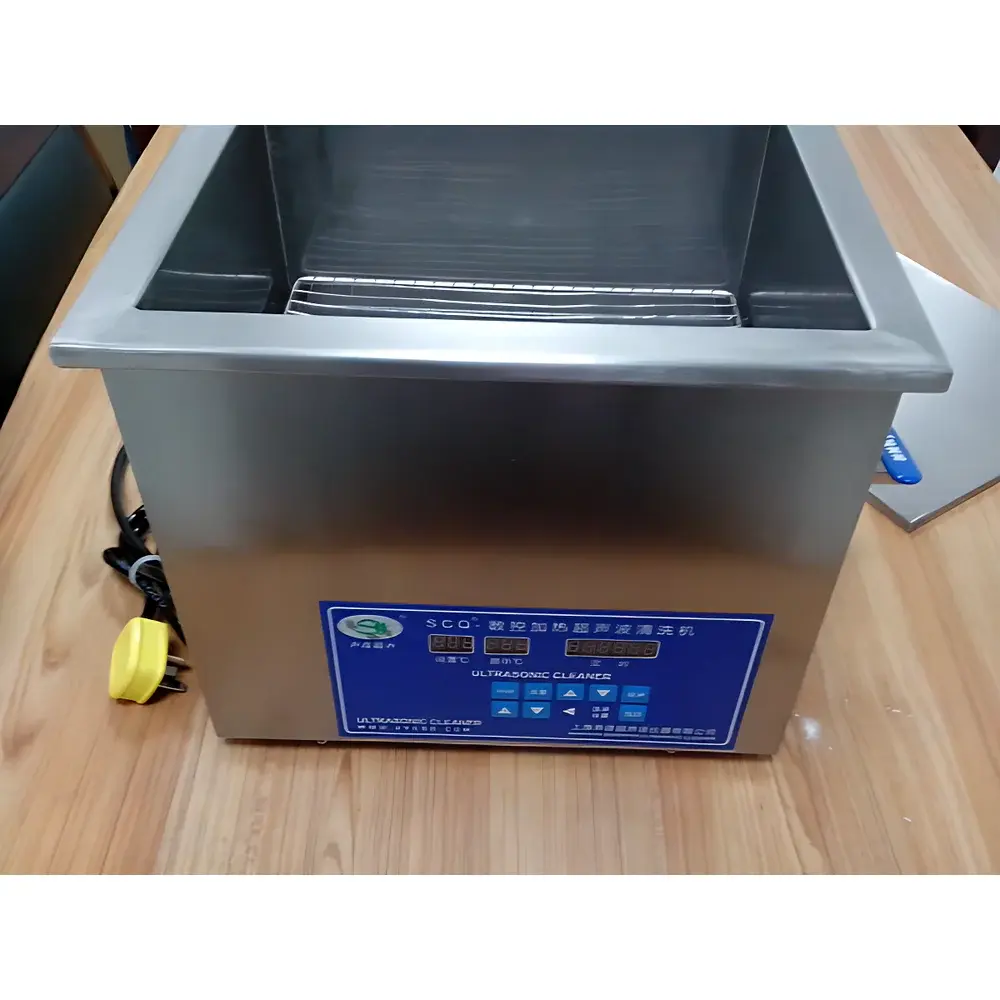
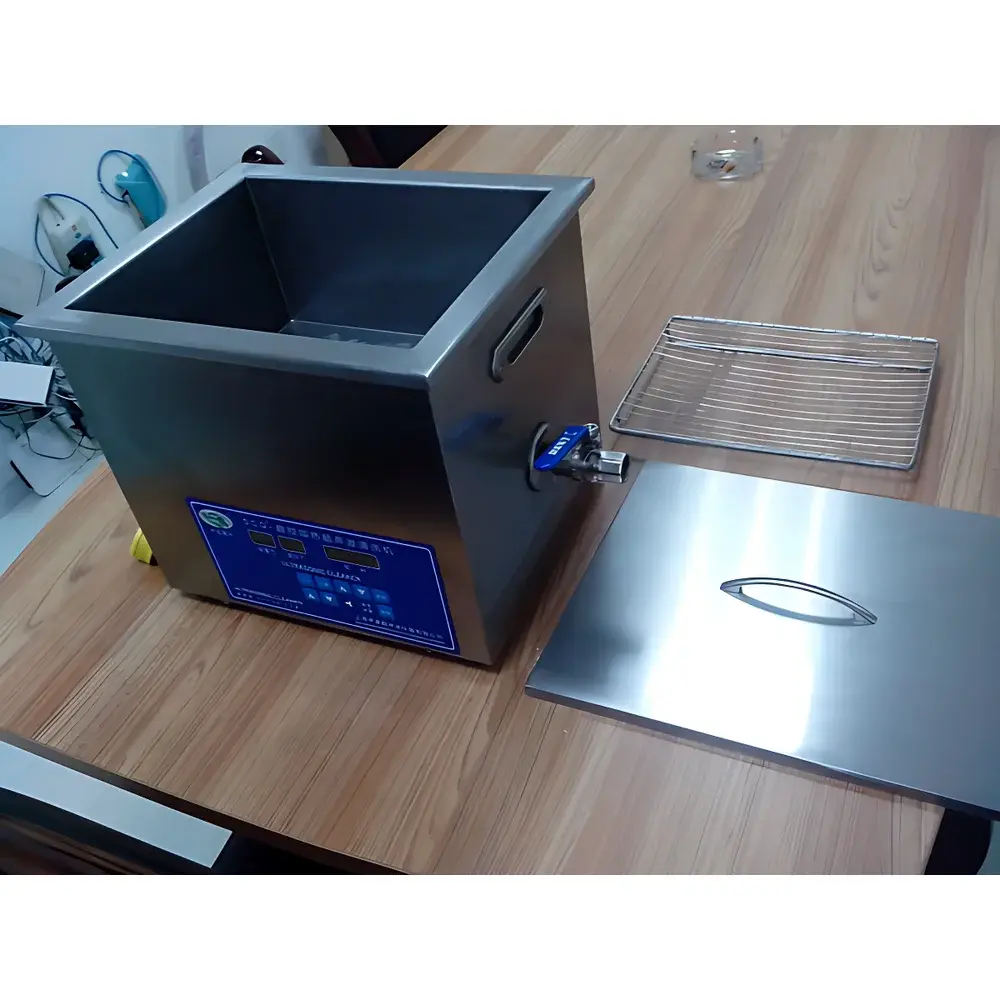
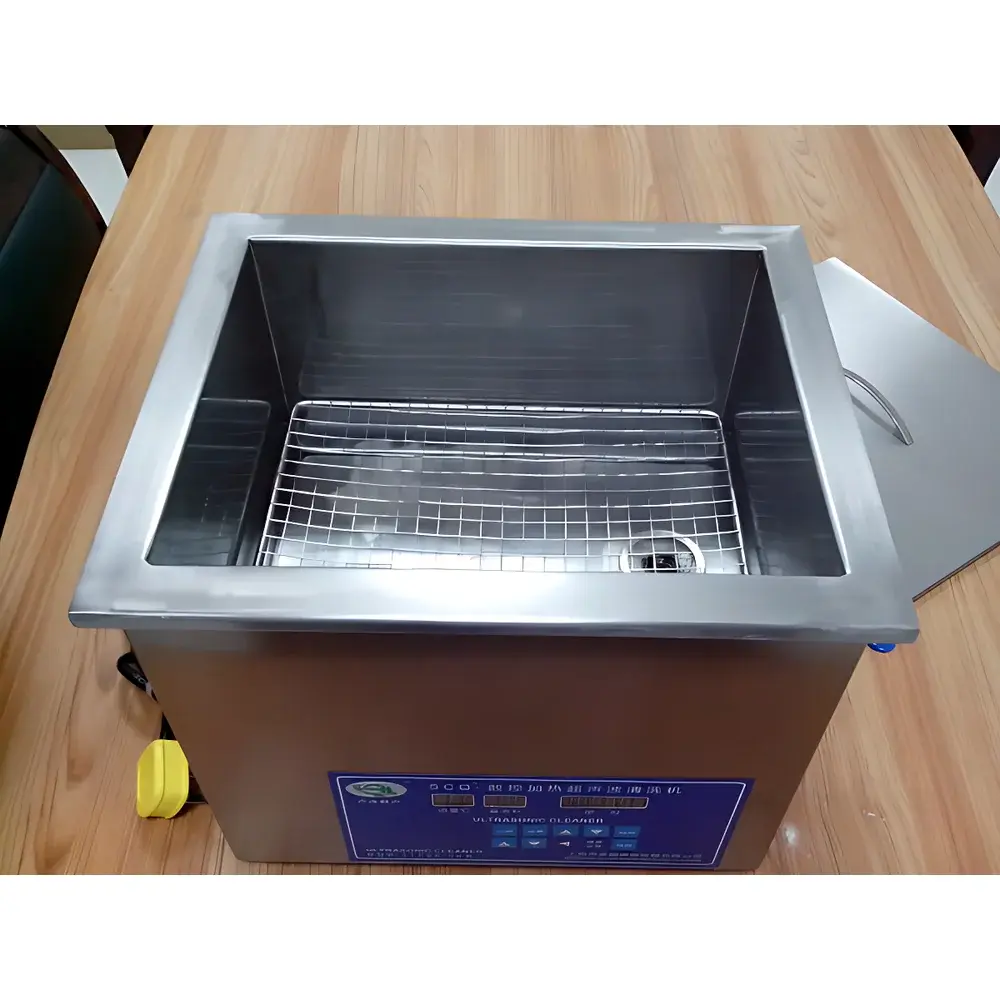
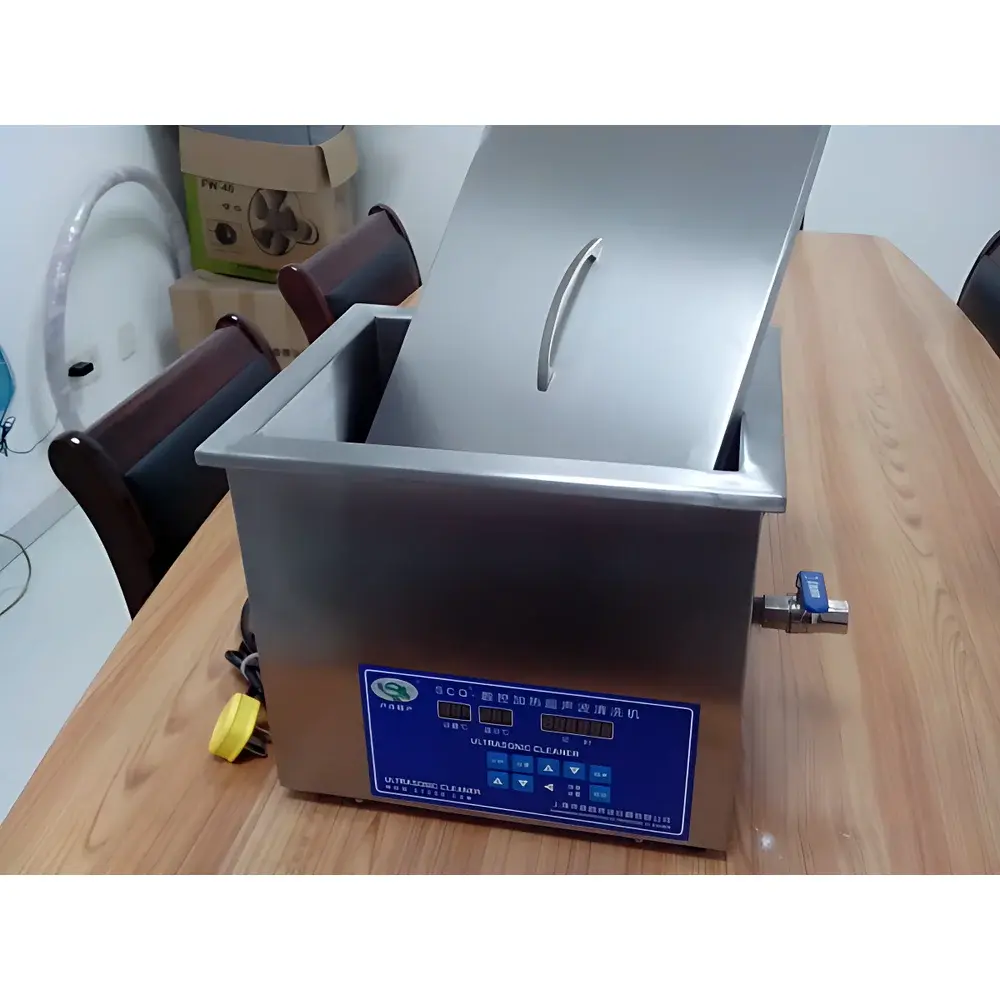
SYC Sycs SCQ-5201D Dual-Frequency 10L Benchtop Ultrasonic Cleaner
| Brand | SYC Sycs |
|---|---|
| Origin | Shanghai, China |
| Manufacturer Type | Authorized Distributor |
| Country of Origin | China |
| Model | SCQ-5201D |
| Capacity | 10 L |
| Ultrasonic Frequencies | 25 / 28 / 40 / 60 / 80 kHz |
| Ultrasonic Power Output | 300 W |
| Power Adjustment | Not Available |
| Temperature Control | Not Available |
| Timer Range | 1–60 min |
| Sound-Dampening Lid | Included |
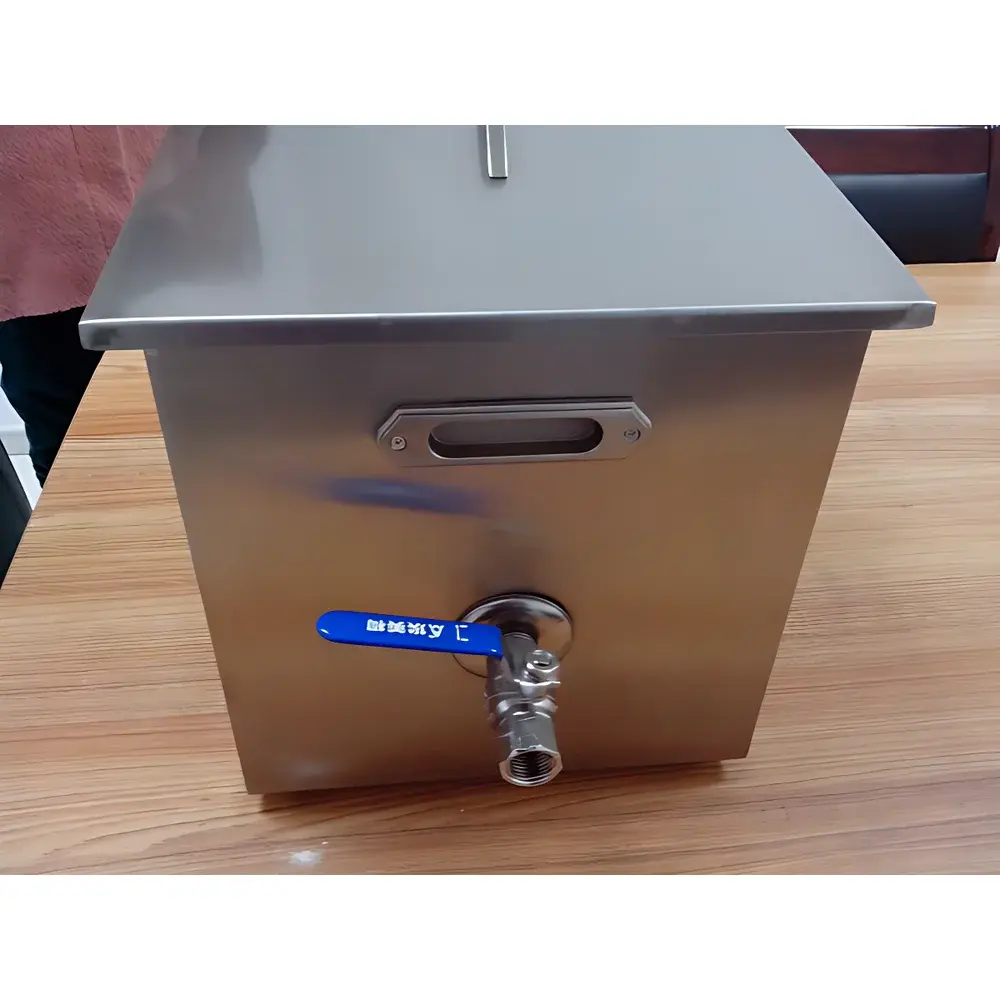
| Drainage | Manual Valve |
Overview
The SYC Sycs SCQ-5201D is a dual-frequency benchtop ultrasonic cleaner engineered for consistent, high-efficiency cleaning of precision components across laboratory, industrial, and quality control environments. It operates on the principle of acoustic cavitation—where high-frequency sound waves generate microscopic bubbles in a liquid medium (typically aqueous or solvent-based cleaning solutions) that implode with localized energy, dislodging particulate contaminants, organic residues, oils, oxides, and biofilms from surfaces—even within complex geometries such as blind holes, capillary channels, and micro-fissures. Unlike single-frequency systems, the SCQ-5201D offers five selectable frequencies (25, 28, 40, 60, and 80 kHz), enabling users to optimize cleaning efficacy based on part material, soiling type, and surface sensitivity. At lower frequencies (e.g., 25–28 kHz), cavitation intensity is higher—ideal for robust metal parts with heavy oil or rust. Higher frequencies (e.g., 60–80 kHz) produce finer, more numerous bubbles with gentler implosion dynamics—suited for delicate optics, semiconductor wafers, or coated substrates where surface integrity must be preserved.
Key Features
- Dual-frequency architecture supporting five discrete operating frequencies (25 / 28 / 40 / 60 / 80 kHz) for application-specific cleaning optimization.
- Stainless steel tank (SUS304 grade) with dimensions of 300 × 240 × 150 mm and nominal capacity of 10 L—corrosion-resistant, non-reactive, and compliant with ISO 15195 and ASTM D2603 standards for ultrasonic cleaning validation.
- 300 W ultrasonic transducer output with proprietary U.S.-sourced piezoelectric chips and in-house designed transducers—ensuring stable power delivery, extended service life (>10,000 h MTBF), and reduced operational noise (<55 dB(A) at 1 m with lid closed).
- Integrated safety architecture: over-temperature protection, overload circuit cutoff, and automatic dry-run alarm for tanks ≥10 L—meeting IEC 61000-6-3 EMC requirements and UL/CSA Class B electrical safety thresholds.
- Manual drain valve and ergonomic sound-dampening lid with secure latch mechanism—reducing ambient noise and preventing aerosol dispersion during operation.
- No heating function; designed for ambient-temperature cleaning processes—suitable for heat-sensitive samples and volatile solvents requiring strict thermal control.
Sample Compatibility & Compliance
The SCQ-5201D accommodates a broad range of sample types—including glassware (vials, cuvettes, pipettes), stainless steel tools, optical lenses, printed circuit boards (PCBs), surgical instruments, watch components, and ceramic substrates. Its SUS304 tank construction resists chloride-induced pitting and acidic degradation—critical for repeated exposure to alkaline detergents (e.g., Alconox®), enzymatic cleaners, or low-concentration citric acid rinses. The unit complies with GLP documentation requirements when paired with external timer logs; while it lacks built-in audit trail functionality, its fixed-timer interface (1–60 min, ±1% accuracy) supports repeatable process definition per SOP. It is not certified for FDA 21 CFR Part 11 compliance out-of-the-box but may be integrated into validated cleaning workflows under user-defined qualification protocols (IQ/OQ/PQ).
Software & Data Management
The SCQ-5201D is a hardware-only system with no embedded microprocessor, touchscreen, or network interface. All operational parameters are controlled via front-panel mechanical dials and push-button timer activation. This analog architecture eliminates firmware vulnerabilities, reduces calibration drift risk, and ensures long-term reliability in environments with electromagnetic interference (EMI) or unstable power grids. Process repeatability relies on documented operator procedures rather than digital logging—making it appropriate for laboratories operating under ISO/IEC 17025 or CAP-accredited frameworks where manual recordkeeping is standard practice. Optional accessories include calibrated temperature probes (for external monitoring), ultrasonic intensity mapping kits (per ASTM E1727), and custom stainless steel mesh baskets with adjustable height inserts.
Applications
This ultrasonic cleaner serves critical pre-analytical and preparatory functions across regulated and research-intensive domains. In pharmaceutical QC labs, it cleans HPLC vials and autosampler trays prior to residue testing (USP ). In medical device manufacturing, it removes polishing compounds and lubricants from orthopedic implants before passivation (ASTM A967). In electronics R&D, it prepares PCBs for solder mask adhesion testing (IPC-J-STD-001). In academic research, it decontaminates NMR tubes and TEM grids without introducing metallic leachates. Additional use cases include: degassing solvents prior to filtration, dispersing nanomaterial suspensions, accelerating enzymatic digestion in proteomics, and preparing quartz crystal microbalance (QCM) sensors for surface functionalization.
FAQ
Is the SCQ-5201D suitable for cleaning delicate optical components?
Yes—when operated at 60 or 80 kHz with low-surface-tension, non-ionic detergent solutions, it effectively removes fingerprints and dust without scratching AR-coated lenses or fused silica substrates.
Does this unit support continuous operation?
It is rated for intermittent duty cycles (max 3 × 20 min per hour) to maintain transducer thermal stability; continuous operation beyond 60 min requires active cooling or rest intervals.
Can I use flammable solvents in this cleaner?
No—this model lacks explosion-proof certification and ventilation ports; only aqueous or flashpoint >60°C solvents (e.g., ethanol/water blends) are permitted under local safety regulations.
What maintenance is required?
Monthly inspection of transducer mounting bolts, quarterly cleaning of the tank’s exterior and lid gasket, and annual verification of timer accuracy using a calibrated stopwatch.
Is replacement documentation available for regulatory submissions?
Yes—SYC Sycs provides CE Declaration of Conformity, RoHS compliance statement, and full mechanical schematics upon request for IQ/OQ protocol development.



