
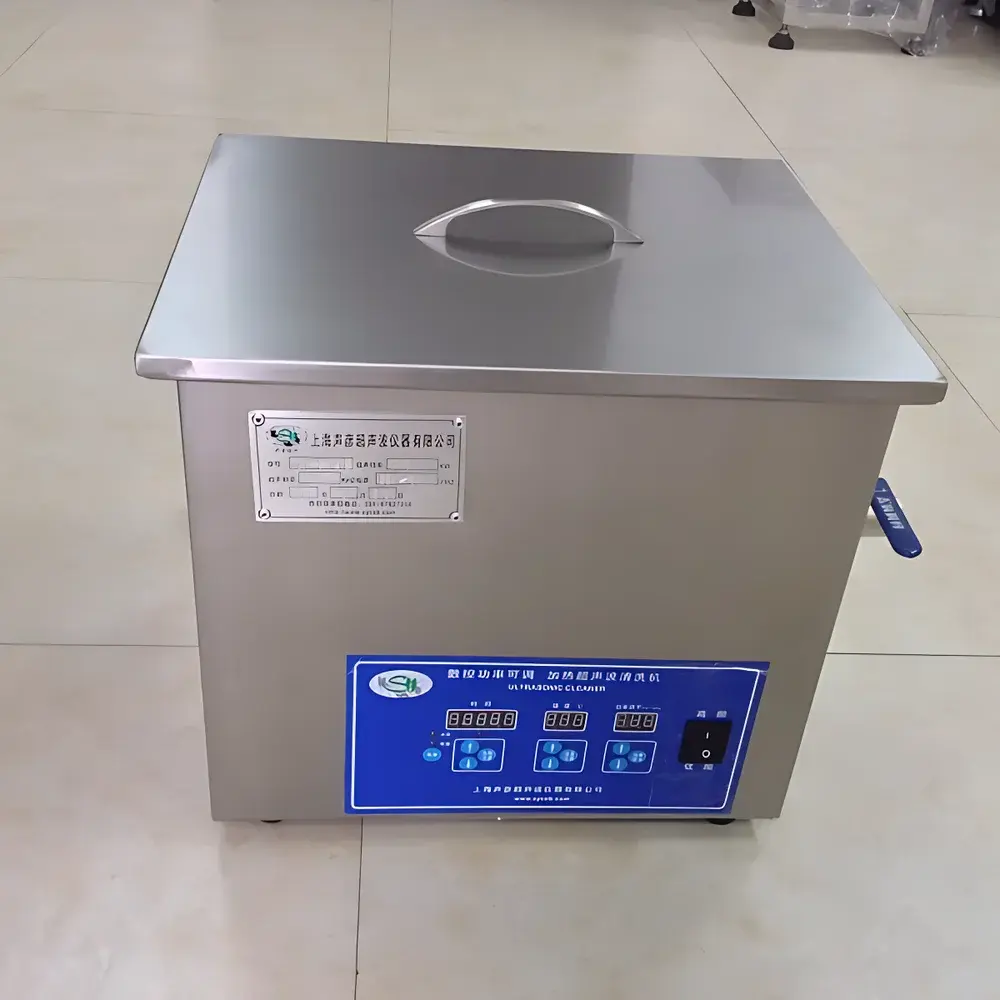
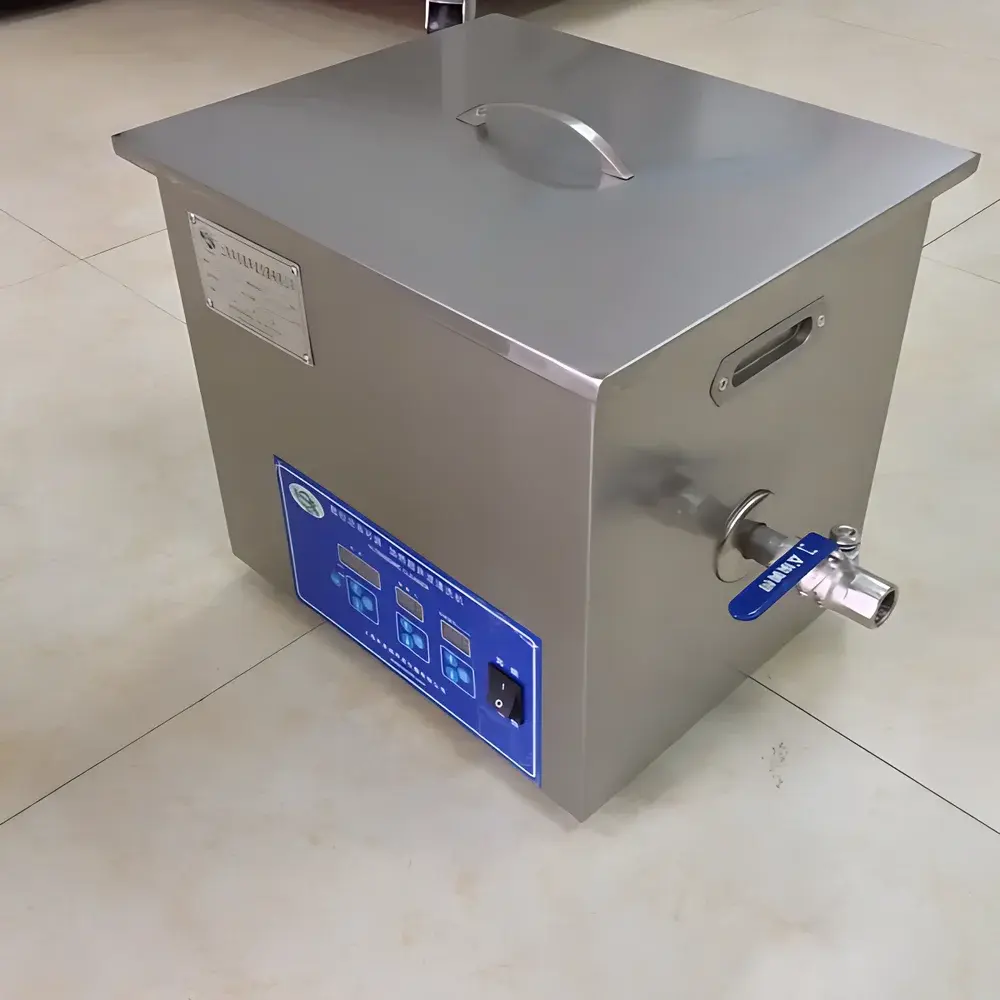
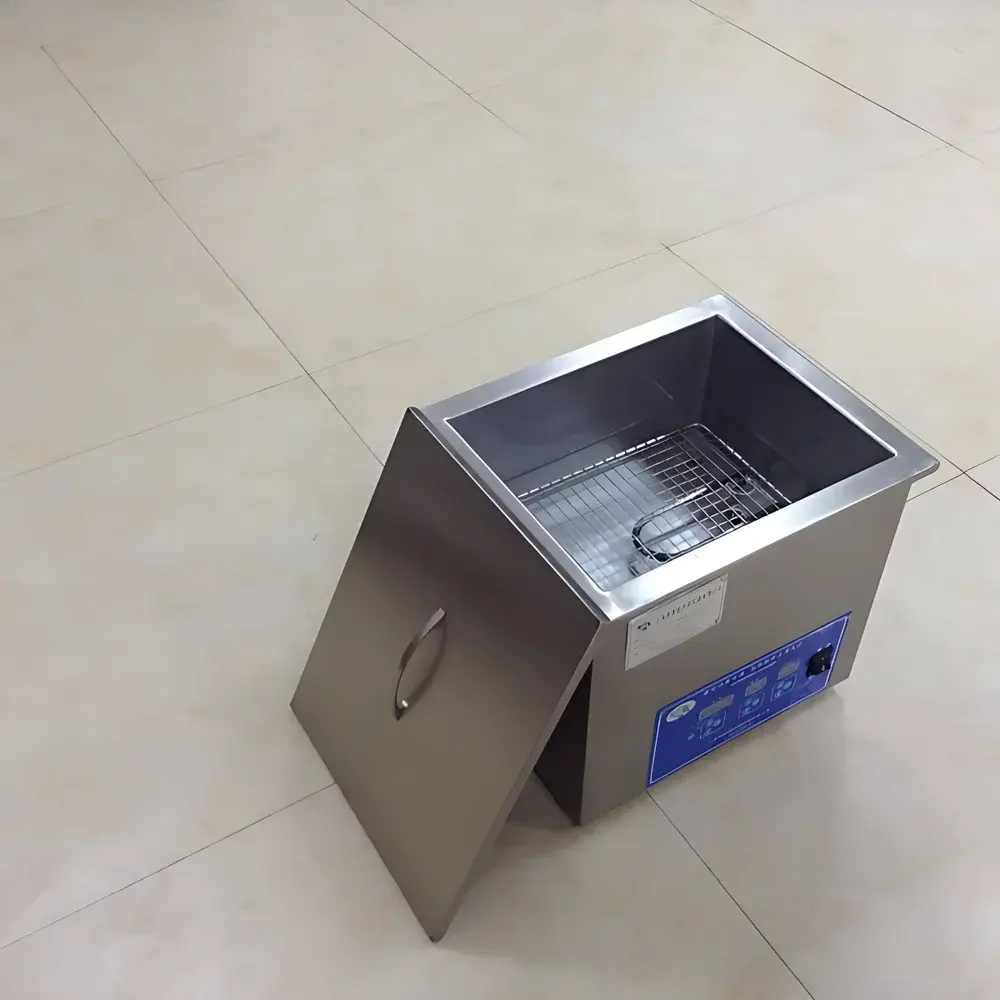
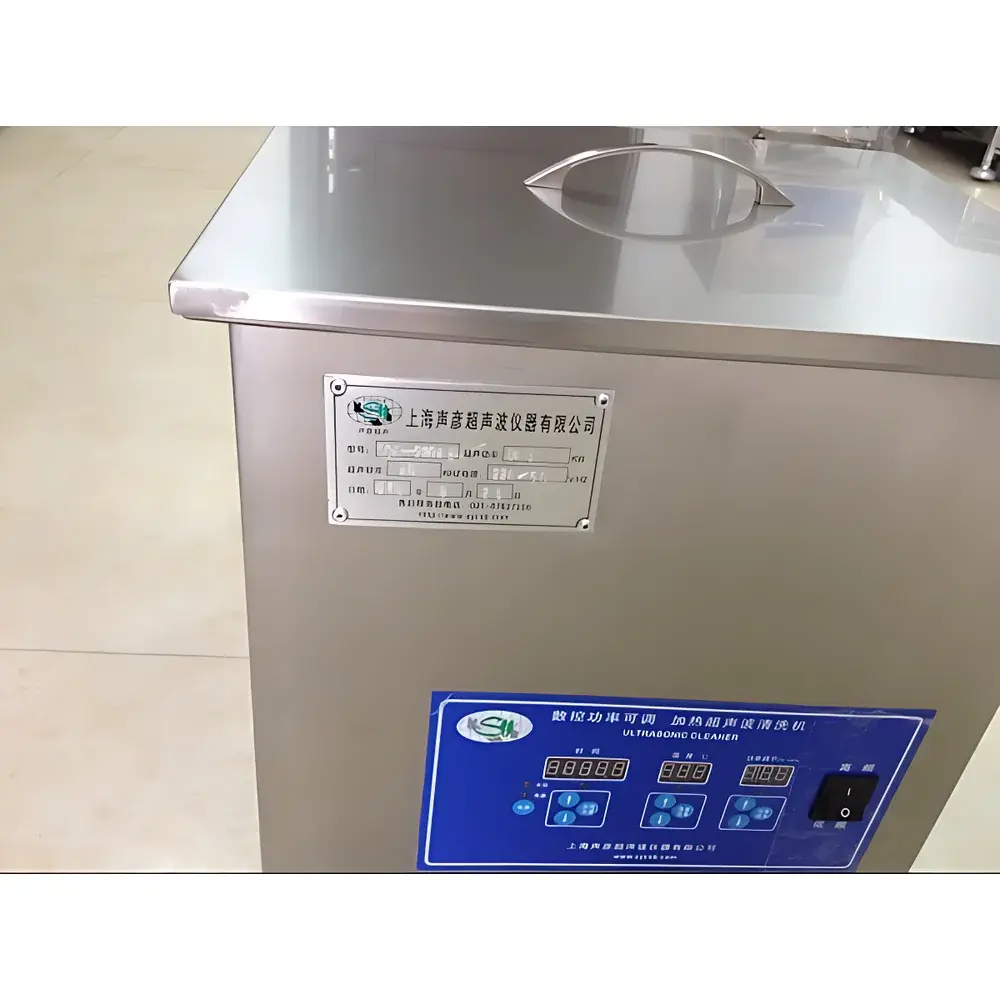
SYC Sycs SCQ-5201E 10L Dual-Frequency Ultrasonic Cleaner
| Brand | SYC Sycs |
|---|---|
| Origin | Shanghai, China |
| Manufacturer Type | Authorized Distributor |
| Product Category | Domestic (China-Made) |
| Model | SCQ-5201E |
| Instrument Type | General-Purpose Ultrasonic Cleaner |
| Tank Capacity | 10 L |
| Ultrasonic Frequencies | 25/40 kHz, 25/60 kHz, or 40/60 kHz (user-selectable dual-frequency modes) |
| Ultrasonic Power Output | 300 W |
| Power Adjustment Range | 10–100% (continuously variable) |
| Heating Function | Yes |
| Heater Power | 600 W |
| Temperature Control Range | Ambient to 80 °C (max. 100 °C per spec sheet) |
| Timer Range | 1–600 min |
| Sound-Dampening Lid | Included |
| Drain Valve | Manual |
| Internal Tank Dimensions | 300 × 240 × 150 mm |
| Construction Material | SUS304 Stainless Steel Tank & Basket |
| Safety Features | Overload protection, overheat protection, and auto-dry alarm (for tanks ≥10 L) |
| Compliance | Designed for GLP-compliant laboratory environments |
Overview
The SYC Sycs SCQ-5201E is a general-purpose, benchtop dual-frequency ultrasonic cleaner engineered for precision cleaning, degassing, and surface decontamination in regulated laboratory and light industrial settings. It operates on the principle of acoustic cavitation—where high-frequency sound waves generate microscopic vacuum bubbles in the cleaning solution that collapse violently upon contact with surfaces, dislodging particulate contaminants, organic residues, oils, oxides, and biofilms from complex geometries including blind holes, crevices, and microchannels. Unlike single-frequency systems, its dual-frequency architecture (25/40 kHz, 25/60 kHz, or 40/60 kHz selectable via front-panel interface) enables optimized energy delivery across diverse sample types: lower frequencies (e.g., 25 kHz) provide higher cavitation intensity for robust removal of heavy particulates and rust; higher frequencies (e.g., 60 kHz) yield finer, more uniform bubble distribution ideal for delicate optics, semiconductor wafers, and medical devices requiring non-destructive cleaning.
Key Features
- Dual-frequency transducer system with three preset frequency pair options (25/40, 25/60, 40/60 kHz), enabling application-specific optimization without hardware modification
- 300 W ultrasonic power output with continuous 10–100% amplitude control—critical for method development, reproducible cleaning validation, and sensitive substrate compatibility
- Integrated 600 W heating element with digital PID temperature regulation (ambient to 80 °C standard; up to 100 °C per extended specification), supporting aqueous and solvent-based cleaning chemistries requiring thermal activation
- Programmable timer (1–600 minutes) with automatic shutdown and audible end-of-cycle alert
- SUS304 stainless steel tank (300 × 240 × 150 mm internal dimensions) and matching wire mesh basket—corrosion-resistant, non-reactive, and compliant with ISO 15223-1 labeling requirements for medical device reprocessing
- Sound-dampening hinged lid with safety interlock, reducing ambient noise to ≤55 dB(A) at 1 m distance and preventing solvent evaporation during heated operation
- Comprehensive safety architecture: real-time temperature monitoring, overheat cutoff, ultrasonic overload protection, and dry-run detection with visual/audible alarm (activated when liquid level falls below transducer array)
Sample Compatibility & Compliance
The SCQ-5201E accommodates a broad spectrum of laboratory and manufacturing substrates—including glassware (vials, cuvettes, pipettes), metal components (stainless steel surgical instruments, calibration standards), optical elements (lenses, prisms), printed circuit boards (PCBs), and ceramic substrates. Its SUS304 construction ensures compatibility with common cleaning agents (e.g., alkaline detergents, ethanol, isopropanol, and low-concentration acidic solutions) without leaching or passivation concerns. The unit supports cleaning process qualification per ASTM F2476 (Standard Guide for Validation of Cleaning Processes for Reusable Medical Devices) and aligns with FDA 21 CFR Part 11 data integrity expectations when paired with validated external logging software. Its design facilitates routine maintenance, traceable calibration, and integration into GMP/GLP workflows—particularly for pharmaceutical QC labs performing residual solvent analysis or bioburden reduction validation.
Software & Data Management
While the SCQ-5201E features an embedded microcontroller-based interface (no onboard PC or proprietary software), it provides full manual control with digital parameter readouts and non-volatile memory for saving up to five user-defined cleaning protocols. For audit-ready documentation, optional RS-232 or USB-to-serial adapters enable connection to third-party lab information management systems (LIMS) or electronic lab notebooks (ELN). All operational parameters—including frequency selection, power setpoint, temperature setpoint, elapsed time, and fault logs—are accessible via serial command protocol for automated reporting and 21 CFR Part 11–compliant electronic signatures when integrated with validated software platforms.
Applications
- Pharmaceutical laboratories: Cleaning of HPLC vials, dissolution apparatus parts, and sterile glassware prior to endotoxin testing (USP )
- Medical device manufacturing: Pre-sterilization cleaning of stainless steel implants and polymer housings per ISO 13485 requirements
- Electronics R&D: Removal of flux residues from SMT assemblies and MEMS components without mechanical abrasion
- Materials science: Degassing of nanoparticle suspensions and solvent-based precursor solutions prior to spin-coating or casting
- Academic research: Standardized cleaning of TEM grids, AFM probes, and microfluidic chips to eliminate background contamination
- Quality control labs: Routine preparation of reference standards and calibration artifacts requiring sub-micron surface cleanliness
FAQ
What frequency pair is recommended for cleaning optical lenses without surface damage?
For precision optics, the 40/60 kHz mode is preferred—its higher frequency generates smaller, less energetic cavitation bubbles, minimizing risk of pitting or coating delamination while maintaining effective particulate removal.
Does the unit support validation documentation for ISO 13485-certified facilities?
Yes—the SCQ-5201E’s repeatable parameter control, stainless steel wetted path, and built-in safety interlocks support IQ/OQ protocols; full PQ requires correlation with cleaning efficacy testing (e.g., ATP bioluminescence or gravimetric residue analysis).
Can the heater operate independently of ultrasonic activation?
Yes—temperature control is fully decoupled from ultrasonic output, permitting standalone warming of solvents or pre-heating cycles prior to sonication.
Is the drain valve compatible with standard laboratory floor drain connections?
The manual ball valve features a 1/2-inch NPT female thread, allowing direct connection to standard lab waste tubing or flexible PVC drainage lines.
What is the expected service life of the transducers under continuous daily use?
With proper maintenance (de-gassing before startup, avoidance of dry operation, and periodic descaling), the proprietary U.S.-sourced piezoelectric transducers demonstrate >5,000 hours MTBF based on accelerated life testing per IEC 60068-2-64.



