
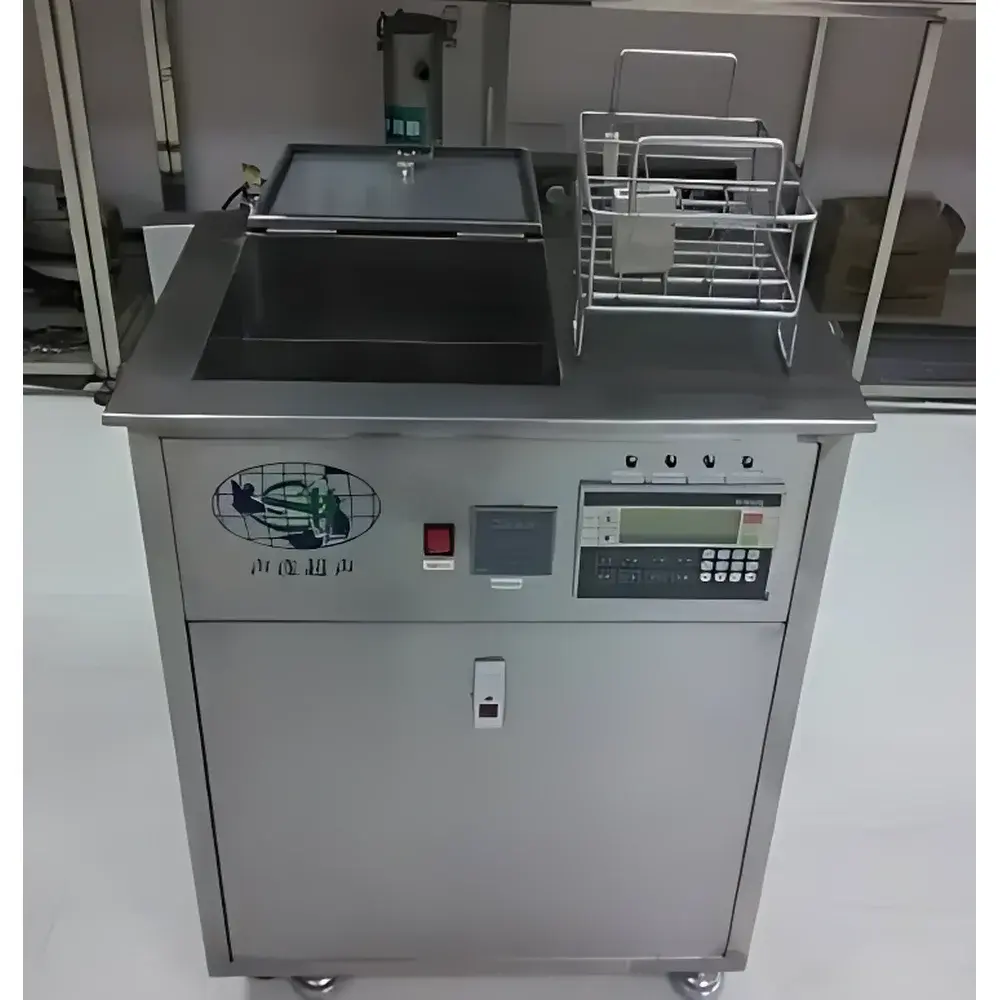
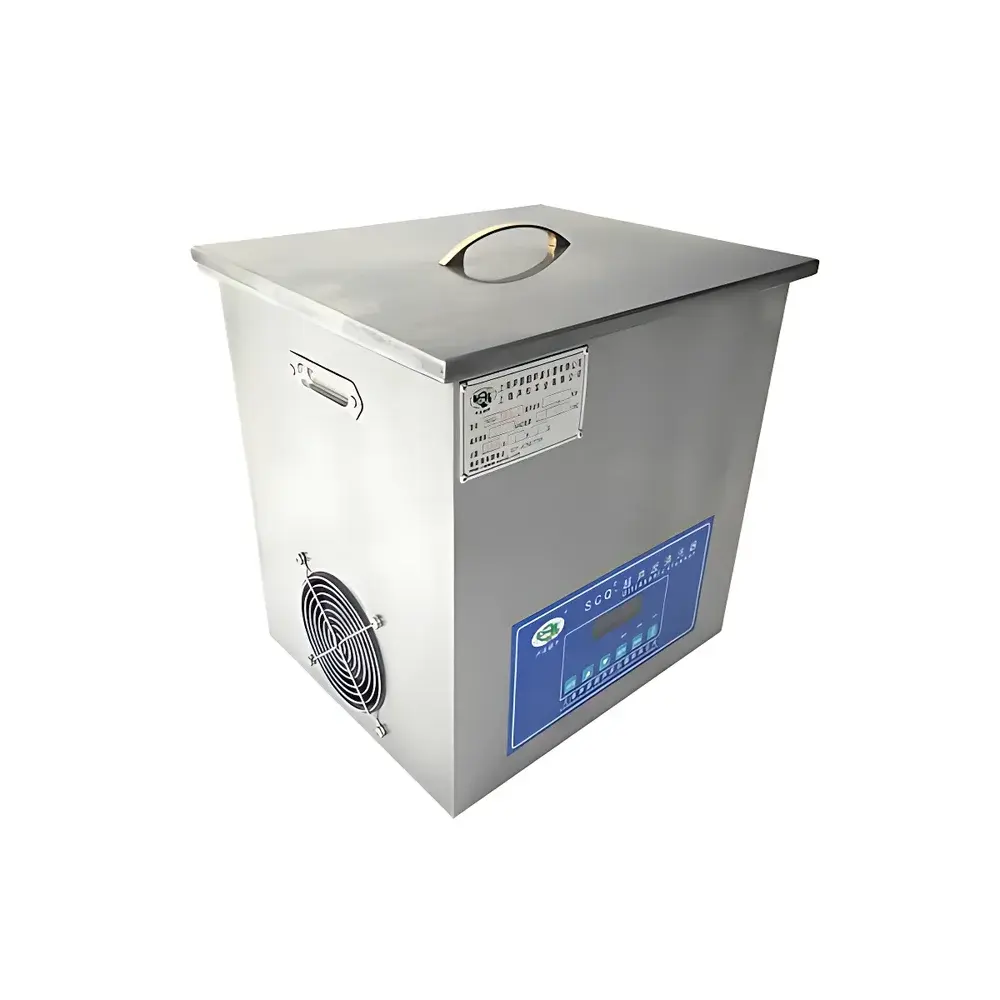
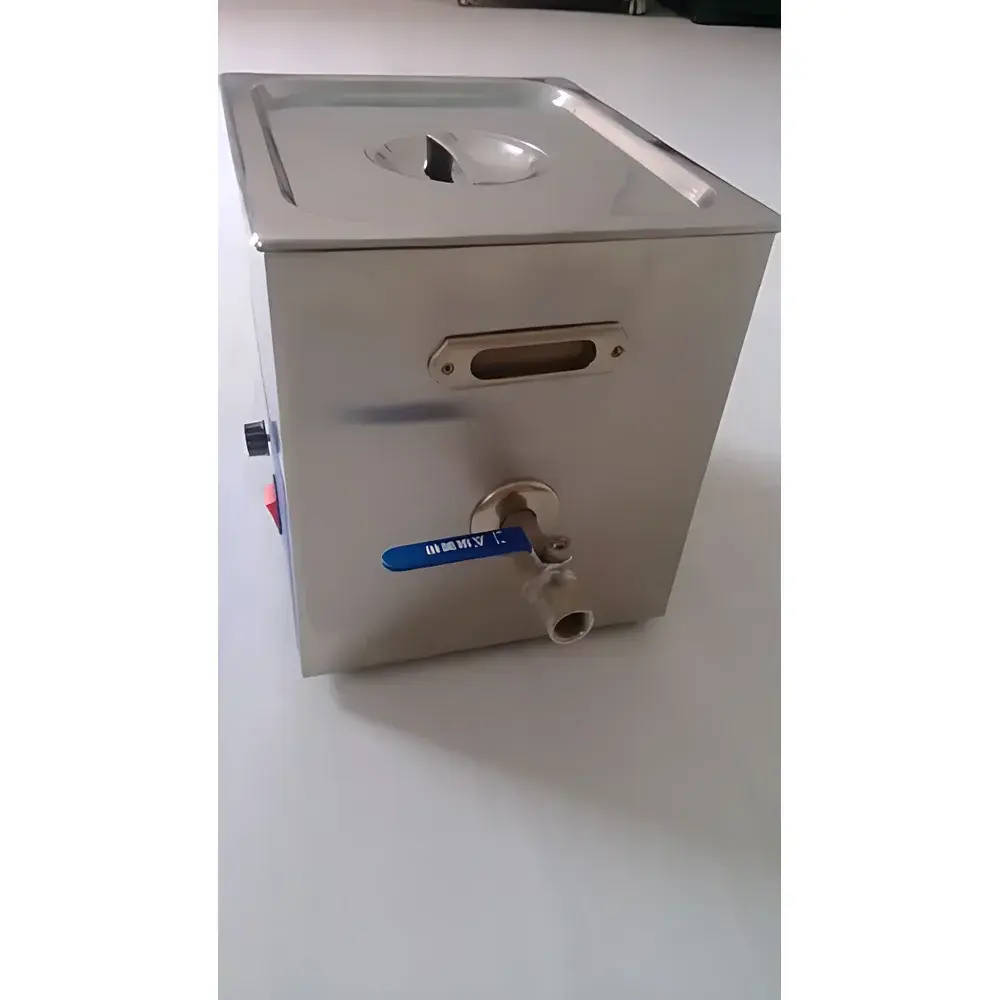
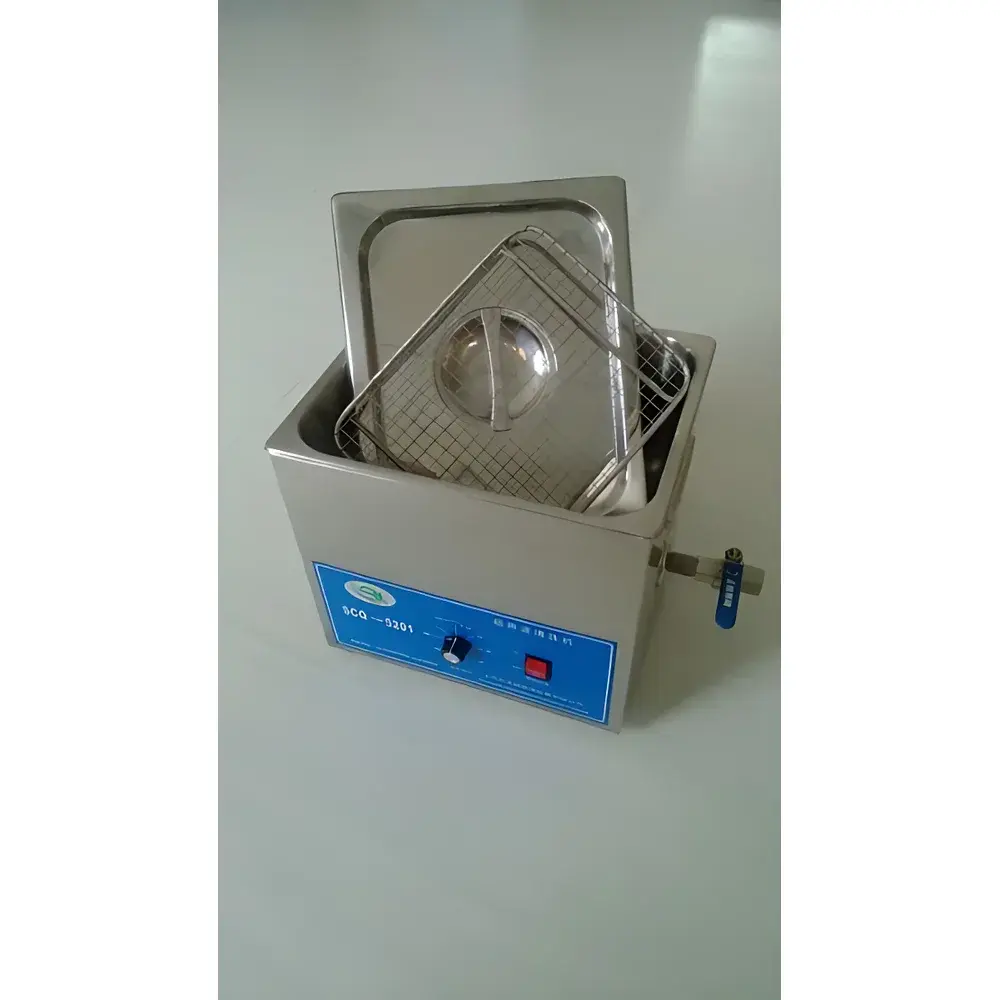
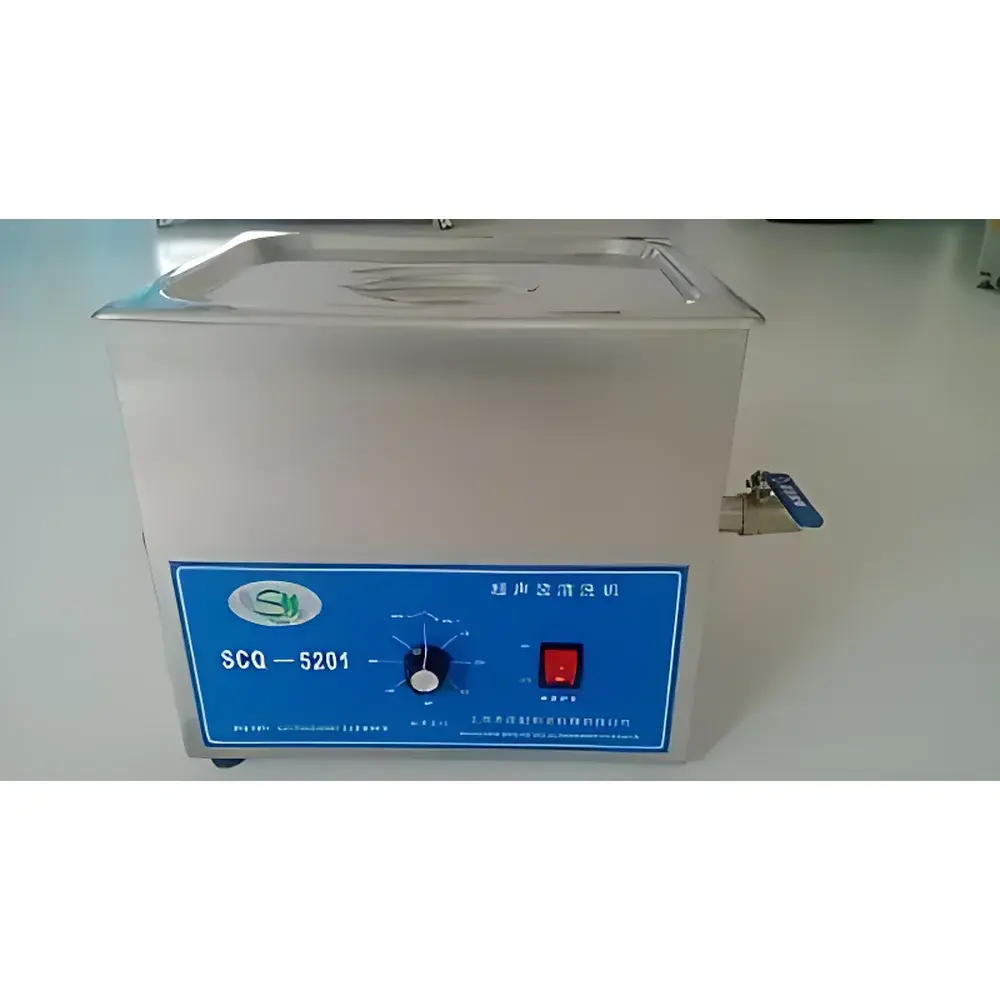
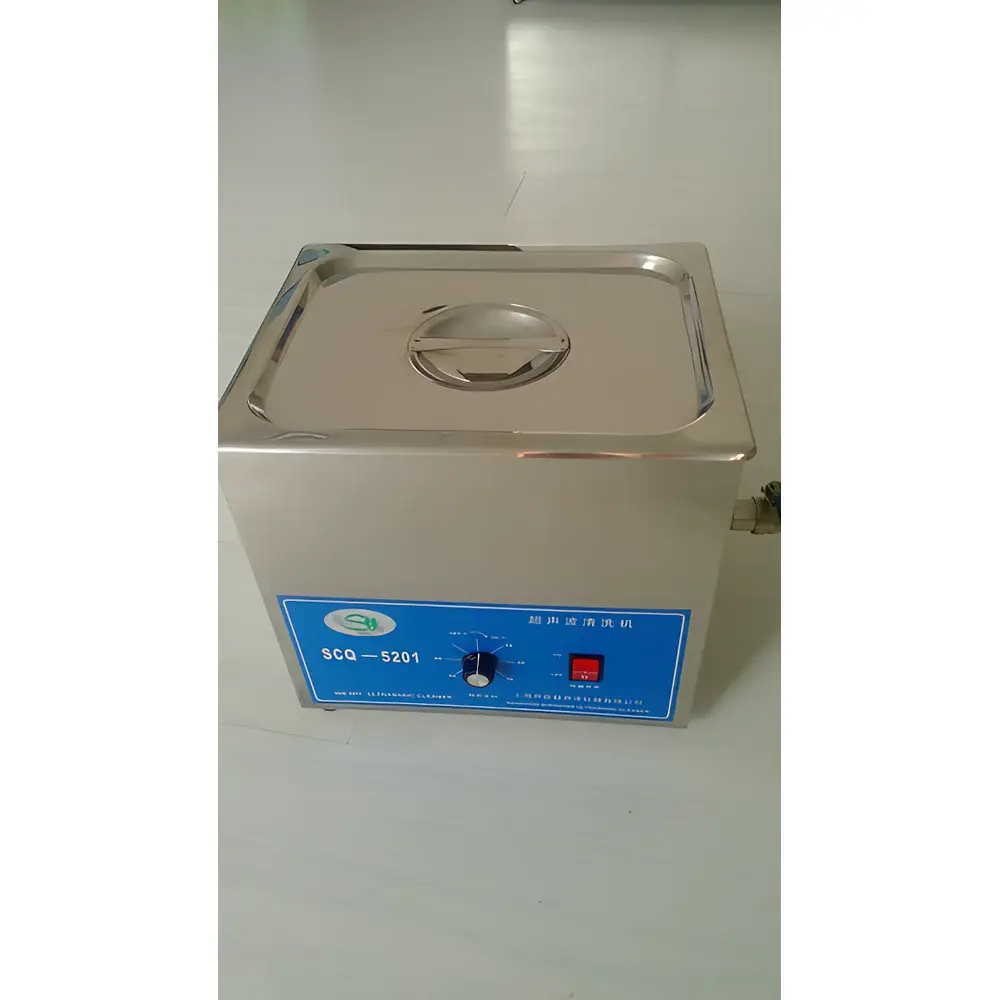
SYC Sycs SCQ-5211A 14L Digital Ultrasonic Cleaner
| Brand | SYC Sycs |
|---|---|
| Origin | Shanghai, China |
| Model | SCQ-5211A |
| Tank Capacity | 14 L |
| Ultrasonic Frequency | 40 kHz (25/40/60 kHz selectable) |
| Ultrasonic Power | 320 W |
| Power Adjustment | Not adjustable |
| Temperature Control | Not equipped |
| Timer Range | 1–600 min |
| Sound-Dampening Lid | Included |
| Drain Port | Equipped |
| Tank Dimensions | 300 × 240 × 200 mm |
| Construction | Full SUS304 stainless steel tank and housing |
| Transducer | Proprietary design with U.S.-sourced piezoelectric chips |
Overview
The SYC Sycs SCQ-5211A is a digitally controlled, benchtop ultrasonic cleaner engineered for consistent, residue-free cleaning of precision laboratory components—including glassware, pipette tips, filtration membranes, chromatography columns, optical lenses, and small metal or ceramic parts. It operates on the principle of acoustic cavitation: high-frequency sound waves (40 kHz nominal, with optional 25 kHz or 60 kHz modes) generate microscopic vacuum bubbles in the cleaning solution that implode with localized energy, dislodging particulate matter, organic films, and loosely adhered contaminants from surfaces without mechanical abrasion. Designed for ISO 17025-compliant laboratories and routine QC/QA workflows, the SCQ-5211A delivers reproducible cleaning performance across repeated cycles—critical for validation-sensitive applications such as analytical sample preparation, semiconductor wafer pre-cleaning, and medical device component decontamination prior to sterilization.
Key Features
- Full SUS304 stainless steel construction—tank, lid, and frame—for long-term corrosion resistance in aqueous, mild alkaline, and low-concentration solvent-based cleaning baths (unlike industry-standard SUS201/SUS202 alternatives).
- Digital microprocessor control with intuitive LED interface for precise timer setting (1–600 minutes); no analog dials or mechanical switches to drift over time.
- Integrated sound-dampening lid reduces ambient noise to ≤55 dB(A) at 1 m distance—meeting OSHA-recommended exposure limits for continuous operation in shared lab environments.
- Standard drain valve with threaded outlet (½” NPT) enables safe, tool-free emptying of spent cleaning solutions into waste collection systems—compliant with local chemical disposal protocols.
- Proprietary transducer array featuring U.S.-sourced piezoelectric ceramics ensures uniform energy distribution across the entire tank bottom, minimizing dead zones and improving cleaning homogeneity (validated per ASTM E1755-22 Annex A1).
- Robust power supply architecture with over-current and thermal cut-off protection extends service life beyond 10,000 operational hours under standard lab duty cycles.
Sample Compatibility & Compliance
The SCQ-5211A accommodates a wide range of sample geometries via its 300 × 240 × 200 mm internal tank volume (14 L usable capacity). Standard accessories include a SUS304 wire mesh basket and perforated tray—both autoclavable and compatible with IPA, aqueous alkaline detergents (e.g., Alconox®), and enzymatic formulations. The unit meets IEC 61000-6-3 (EMC emission limits) and IEC 61010-1 (safety requirements for electrical equipment used in laboratory settings). While not heated, its stable ultrasonic output supports validated cold-cleaning protocols aligned with USP “Cleaning Methodology” and ISO 15883-1 for non-sterile reprocessing steps. No regulatory certification (e.g., FDA 510(k), CE medical device) is claimed; it is classified as general-purpose laboratory equipment per EN 61326-1.
Software & Data Management
The SCQ-5211A operates as a standalone hardware platform with no embedded software, cloud connectivity, or data logging capability. All operational parameters are set locally via front-panel controls and retained in non-volatile memory during power interruption. For laboratories requiring audit trails or electronic records per FDA 21 CFR Part 11, integration with external PLC-based monitoring systems or time-stamped video documentation of cycle initiation/completion is recommended. The absence of firmware updates or network interfaces eliminates cybersecurity risks associated with connected lab instruments—supporting IT security policies in regulated environments.
Applications
- Pretreatment of HPLC vials, GC autosampler trays, and syringe filters prior to analytical use.
- Removal of solder flux residues and oxide layers from PCB test coupons in electronics R&D labs.
- Cleaning of reusable surgical instrument components (e.g., laparoscopic trocars, biopsy forceps) before steam sterilization—per AAMI ST79 guidelines for ultrasonic pretreatment.
- Decontamination of quartz cuvettes and optical mirrors in spectroscopy labs where micro-scratches must be avoided.
- Preparation of TEM grid substrates by eliminating carbon contamination prior to thin-film deposition.
- Routine maintenance of viscometer spindles, rheometer plates, and particle size analyzer flow cells.
FAQ
Is the SCQ-5211A suitable for cleaning delicate optics or MEMS devices?
Yes—when operated at 60 kHz (optional frequency mode) with low-surface-tension, low-foaming solvents (e.g., fluorinated alcohols), it achieves gentle yet effective contaminant removal without surface pitting or coating delamination.
Does the unit comply with GLP documentation requirements?
It supports GLP adherence through manual logbook entries of cycle start/end times, operator ID, bath composition, and visual inspection results. Electronic record generation requires external integration.
Can the transducer be replaced in-field?
Yes—the modular transducer assembly is accessible via rear panel access ports and can be swapped using standard Torx tools; replacement units are calibrated and serialized for traceability.
What cleaning solutions are compatible?
Aqueous alkaline detergents (pH 9–11), ethanol/water mixtures, isopropanol, and select halogen-free solvents. Avoid strong acids, chlorine-based oxidizers, or undiluted acetone unless verified for material compatibility.
Is calibration required or supported?
No formal calibration is specified per manufacturer documentation. Users may perform periodic verification using aluminum foil erosion tests per ASTM E1755-22 to confirm cavitation intensity consistency across the tank volume.



