
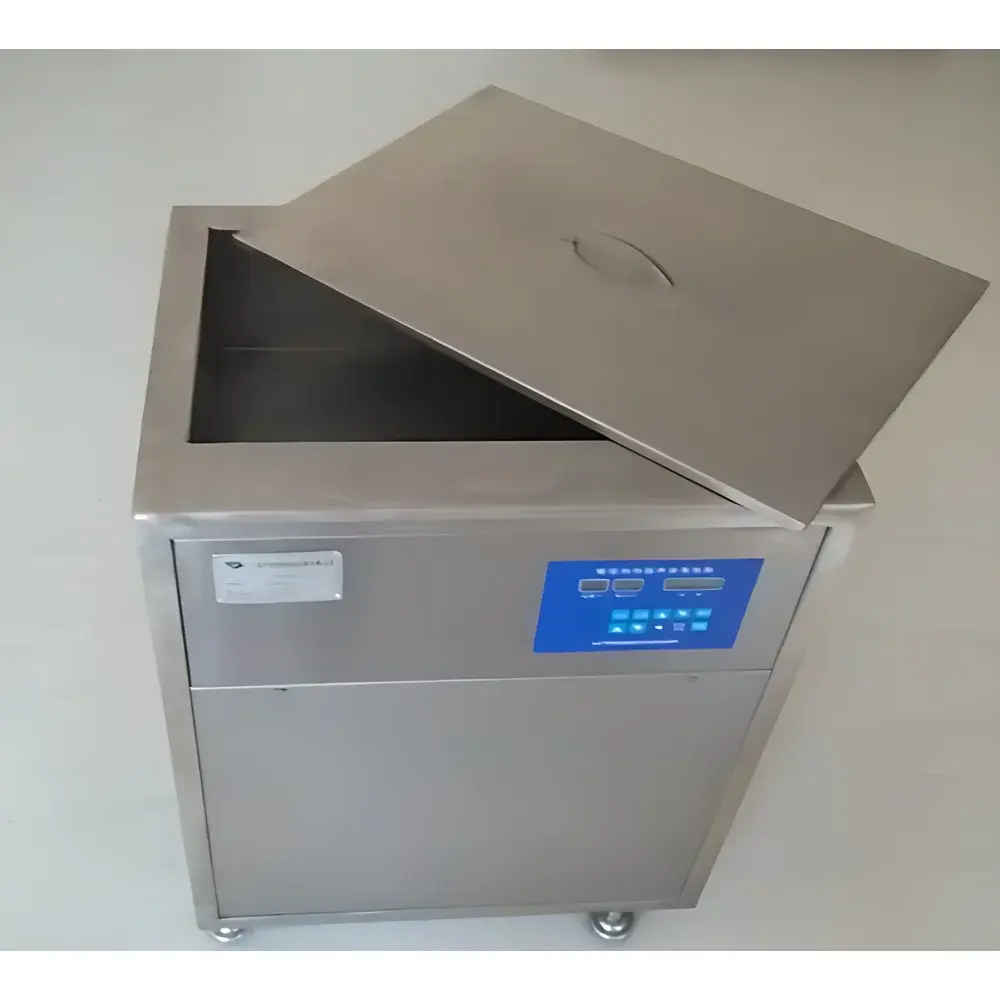
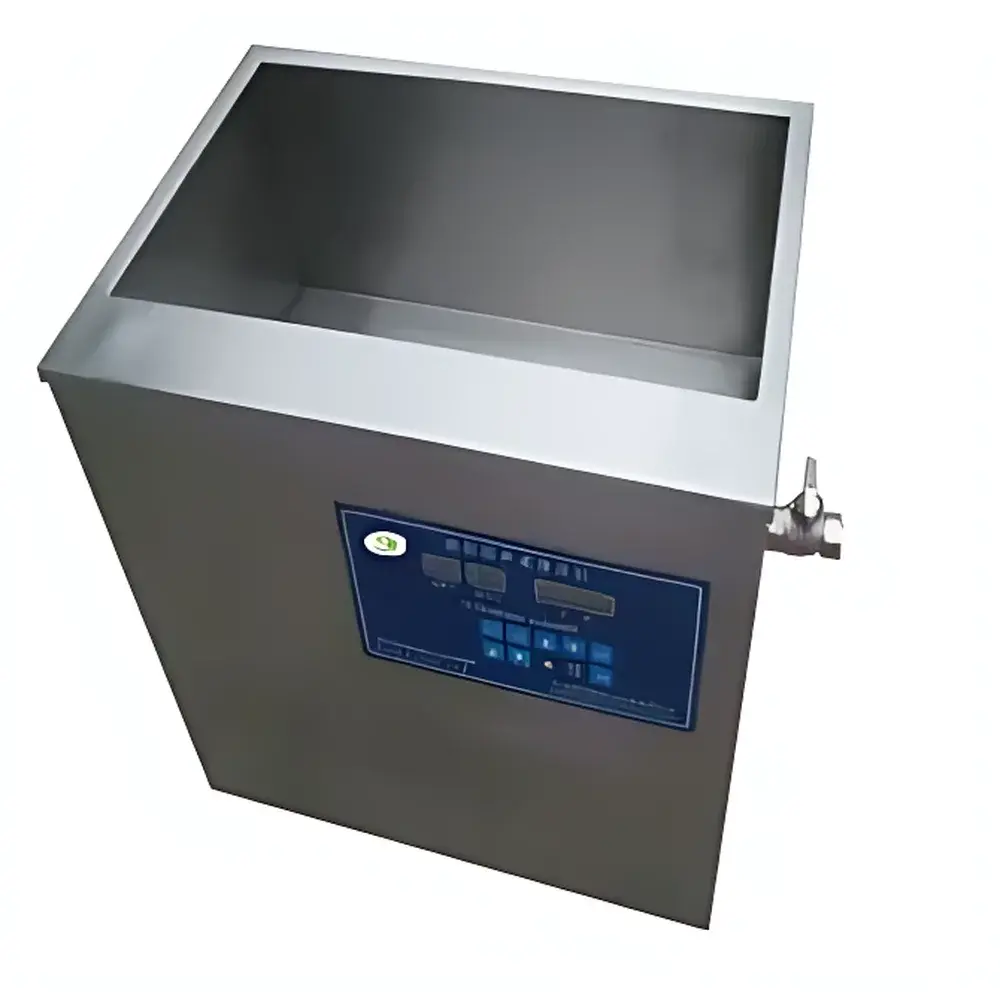
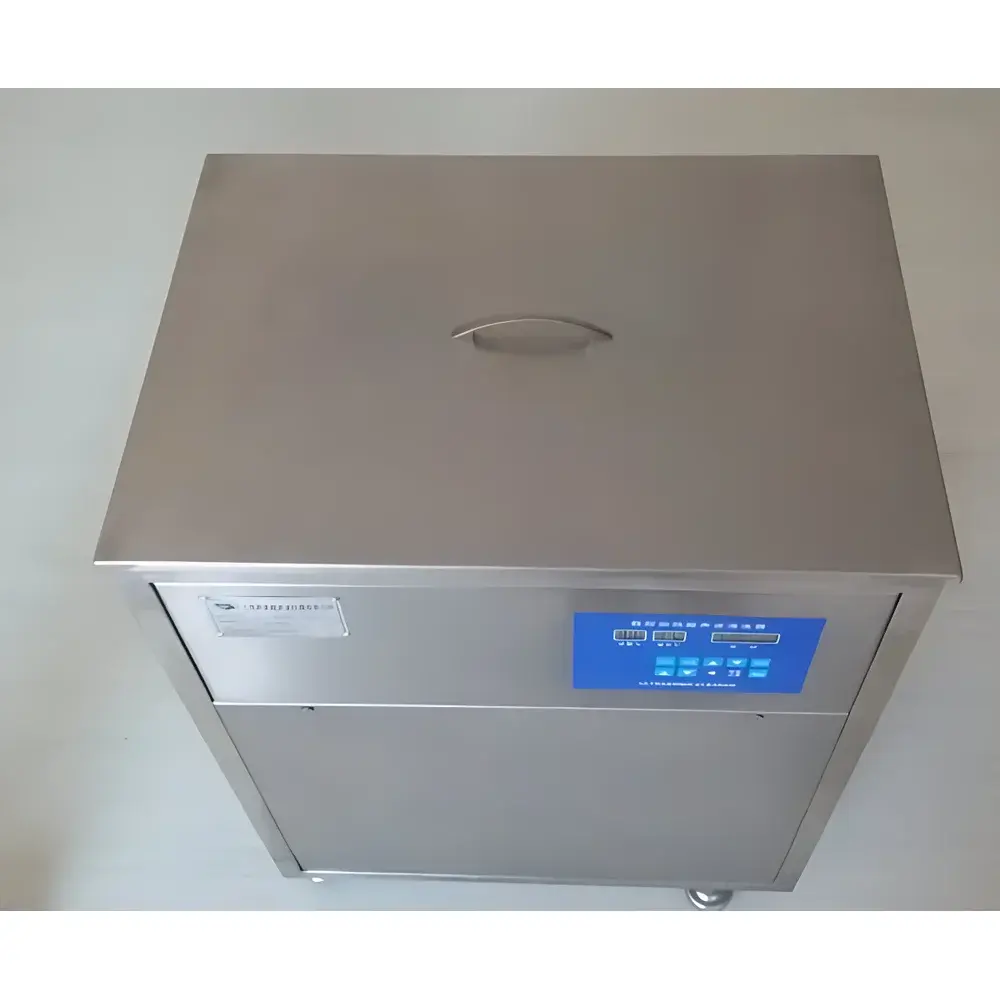
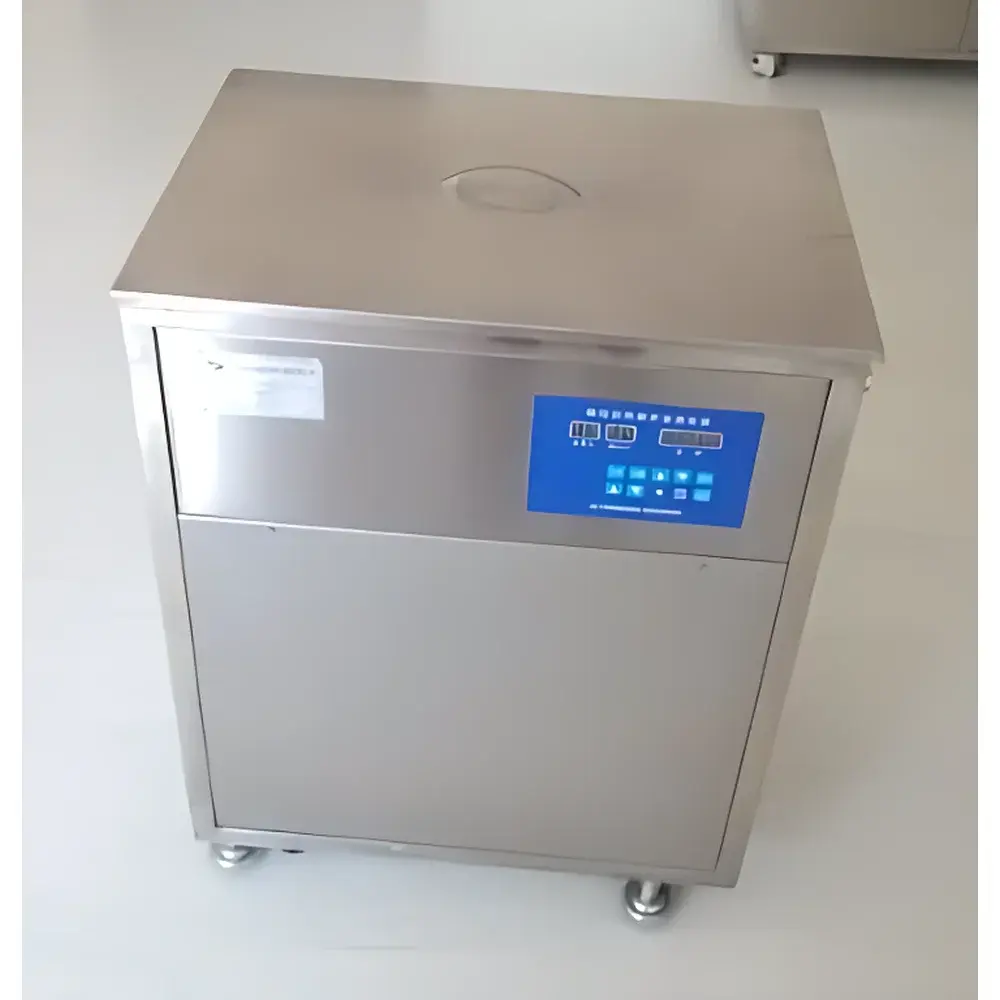
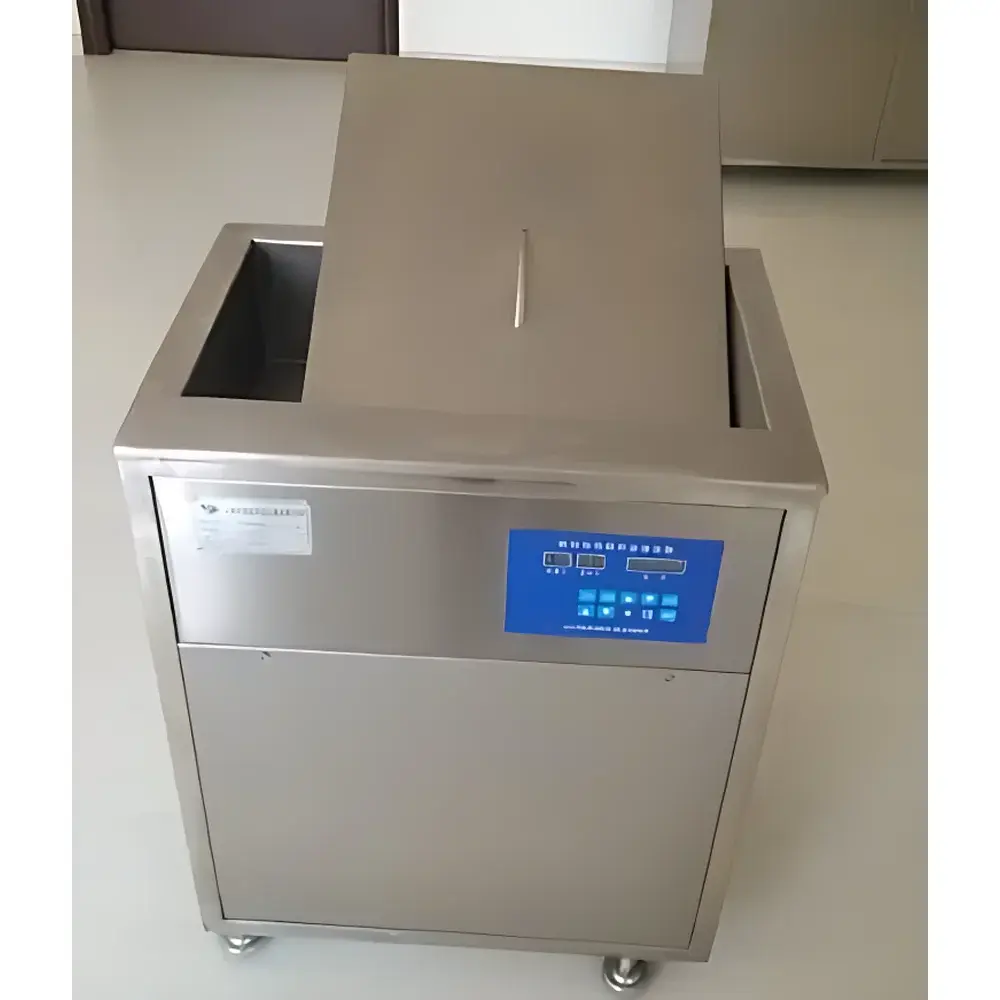
SYC Sycs SCQ-8201D 22.5L Dual-Frequency Benchtop Ultrasonic Cleaner
| Brand | SYC Sycs |
|---|---|
| Origin | Shanghai, China |
| Manufacturer Type | Authorized Distributor |
| Country of Origin | China |
| Model | SCQ-8201D |
| Capacity | 22.5 L |
| Ultrasonic Frequencies | 25/28/40/60/80 kHz (selectable) |
| Ultrasonic Power | 500 W |
| Power Adjustment | Not available |
| Temperature Control | Not available |
| Timer Range | 1–60 min |
| Sound-Dampening Lid | Included |
| Drainage | Manual valve |
| Internal Tank Dimensions | 500 × 300 × 150 mm |
| Construction Material | SUS304 stainless steel tank and basket |
| Safety Features | Overload and overheat protection |
| Compliance | Designed for GLP-compliant lab environments |
Overview
The SYC Sycs SCQ-8201D is a 22.5-liter dual-frequency benchtop ultrasonic cleaner engineered for reproducible, high-intensity cavitation-based cleaning in regulated laboratory and light industrial settings. It operates on the principle of acoustic cavitation—where high-frequency sound waves generate microscopic vacuum bubbles in liquid media that collapse violently upon contact with surfaces, dislodging particulate contaminants, organic residues, oils, oxides, and biofilms without mechanical abrasion. Unlike single-frequency units, the SCQ-8201D supports five discrete frequency options (25, 28, 40, 60, and 80 kHz), enabling users to select the optimal wavelength-to-feature-size ratio for diverse sample geometries and soil types: lower frequencies (25–28 kHz) deliver higher energy for robust removal of heavy oils and rust from machined parts; higher frequencies (60–80 kHz) provide finer, more uniform energy distribution ideal for delicate optics, semiconductor wafers, and microfluidic components. Its 500 W transducer array—integrated with proprietary U.S.-sourced piezoelectric chips—is mounted directly to the tank bottom for efficient energy coupling and minimized standing-wave interference. The unit is not equipped with heating or power modulation, making it suitable for ambient-temperature, time-controlled cleaning protocols aligned with ASTM D2607 (Standard Practice for Ultrasonic Cleaning of Metal Parts) and ISO 13485-associated pre-sterilization workflows.
Key Features
- 22.5 L capacity stainless steel tank (500 × 300 × 150 mm internal dimensions) constructed entirely from medical-grade SUS304 austenitic stainless steel—resistant to chloride-induced pitting and compatible with common aqueous cleaning chemistries including alkaline, neutral, and mild acidic formulations.
- Selectable ultrasonic frequencies (25 / 28 / 40 / 60 / 80 kHz) via front-panel switch—enabling method-specific optimization without hardware modification.
- Dual-safety architecture: integrated thermal cutoff and current-limiting circuitry prevent transducer overheating and electrical overload; automatic dry-run detection triggers audible alarm when liquid level falls below operational threshold (validated for tanks ≥10 L).
- Acoustically damped hinged lid reduces ambient noise by ≥15 dB(A) and minimizes solvent evaporation during extended cycles.
- Manual drain valve positioned at tank base ensures complete fluid evacuation without tilting; compatible with standard laboratory floor drains or waste collection vessels.
- Stainless steel mesh basket included—SUS304 construction, fully welded seams, and reinforced handles support loads up to 5 kg without deformation.
Sample Compatibility & Compliance
The SCQ-8201D accommodates a broad range of sample formats: glassware (vials, flasks, cuvettes), metallic components (surgical instruments, precision gears, watch parts), optical elements (lenses, prisms, fiber optic connectors), printed circuit boards (PCBs), and porous substrates (ceramic filters, sintered metal screens). Its non-heating design complies with USP recommendations for cold ultrasonic cleaning of heat-sensitive pharmaceutical contact surfaces. While not certified to FDA 21 CFR Part 11, the device supports audit-ready documentation when paired with external electronic loggers for timer activation timestamps. It satisfies baseline electromagnetic compatibility per IEC 61000-6-3 and meets CE marking requirements for laboratory equipment under Directive 2014/30/EU (EMC) and 2014/35/EU (LVD). All wetted surfaces are passivated per ASTM A967 to ensure low leachable metal content—critical for trace-metal-sensitive applications in environmental and clinical labs.
Software & Data Management
The SCQ-8201D is a standalone analog-controlled instrument with no embedded firmware, network interface, or digital data logging capability. Time-based operation is managed exclusively via a calibrated mechanical timer (1–60 minute range, ±5% accuracy at 25°C). This minimalist architecture eliminates software validation burdens associated with 21 CFR Part 11 compliance while ensuring long-term operational stability and immunity to firmware corruption. For laboratories requiring traceability, integration with external programmable logic controllers (PLCs) or time-stamped video monitoring systems is supported via dry-contact relay outputs (optional accessory). All operational parameters—including frequency selection, cycle duration, and lid status—are manually recorded in paper-based or LIMS-linked batch records per GLP Annex 11 and ISO/IEC 17025 Clause 7.7.
Applications
This ultrasonic cleaner is routinely deployed across quality control, R&D, and manufacturing support functions. In pharmaceutical labs, it cleans volumetric glassware prior to HPLC calibration and sterilizes stainless steel tooling used in aseptic filling line maintenance. Electronics manufacturers use the 60 kHz mode to remove flux residues from fine-pitch QFN packages prior to AOI inspection. Medical device facilities rely on its 40 kHz setting for consistent decontamination of endoscope channels and biopsy forceps before autoclaving. Research institutions apply the 28 kHz configuration to liberate adherent cells from culture plates during proteomic sample prep. Additional validated uses include: degassing solvents prior to GC-MS analysis; restoring porosity in catalytic monoliths; preparing TEM grids; and removing polishing compounds from precision-ground optical flats. Its absence of heating element makes it especially suitable for cleaning temperature-labile polymers, adhesives, and biological specimens where thermal denaturation must be avoided.
FAQ
Is the SCQ-8201D suitable for cleaning delicate optics such as coated lenses?
Yes—when operated at 60 or 80 kHz with low-surface-tension, non-ionic detergent solutions, it effectively removes fingerprint residues and dust without damaging anti-reflective coatings.
Does the unit include a heater or temperature control?
No—this model is strictly ambient-temperature ultrasonic cleaning only. Heating functionality is omitted to maintain simplicity, reliability, and regulatory alignment with cold-cleaning SOPs.
Can the ultrasonic power output be adjusted?
No—power is fixed at 500 W nominal output. Intensity modulation is achieved solely through frequency selection and dwell time optimization.
What safety certifications does the SCQ-8201D carry?
It conforms to IEC 61000-6-3 (EMC) and IEC 61000-6-2 (immunity); carries CE marking for EMC and Low Voltage Directives; and complies with RoHS 2011/65/EU material restrictions.
Is the stainless steel tank electropolished?
The tank undergoes standard acid passivation per ASTM A967 Method A (nitric acid), but electropolishing is not included as standard—available as a factory-configurable option for ultra-high-purity applications.



