
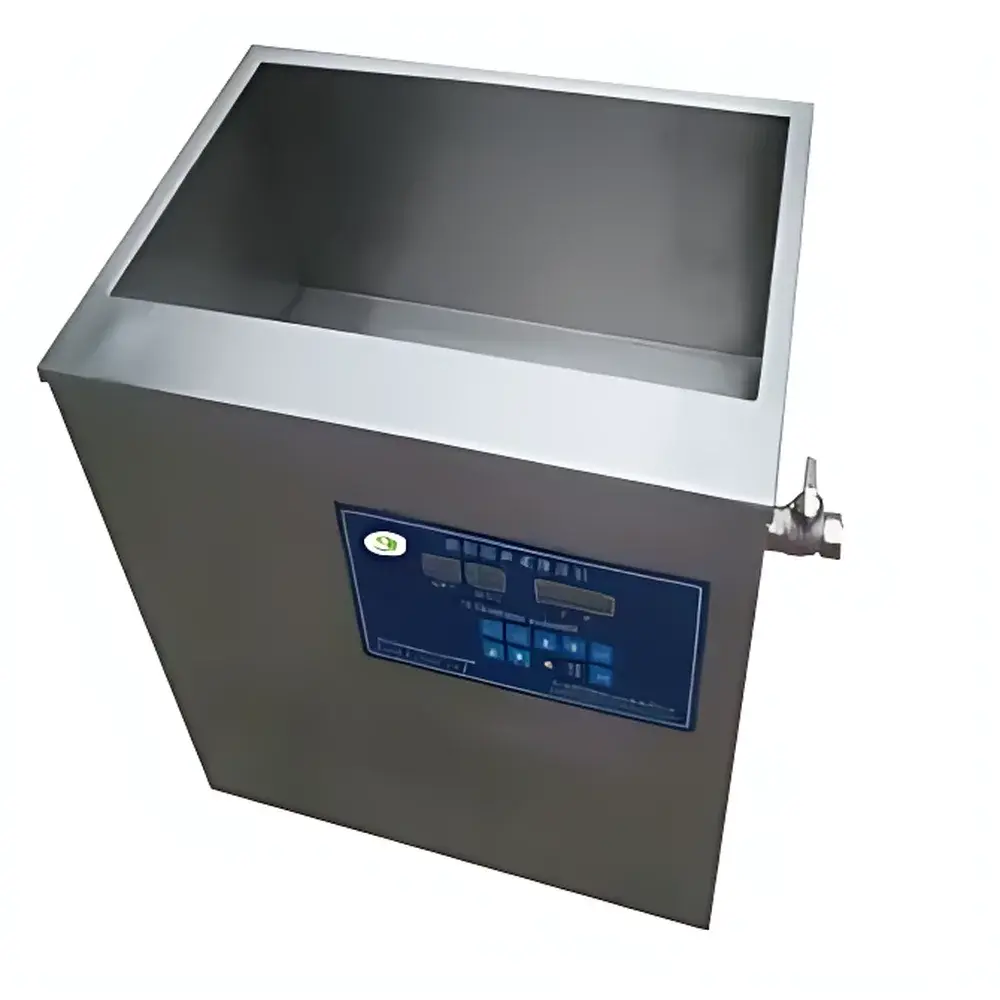
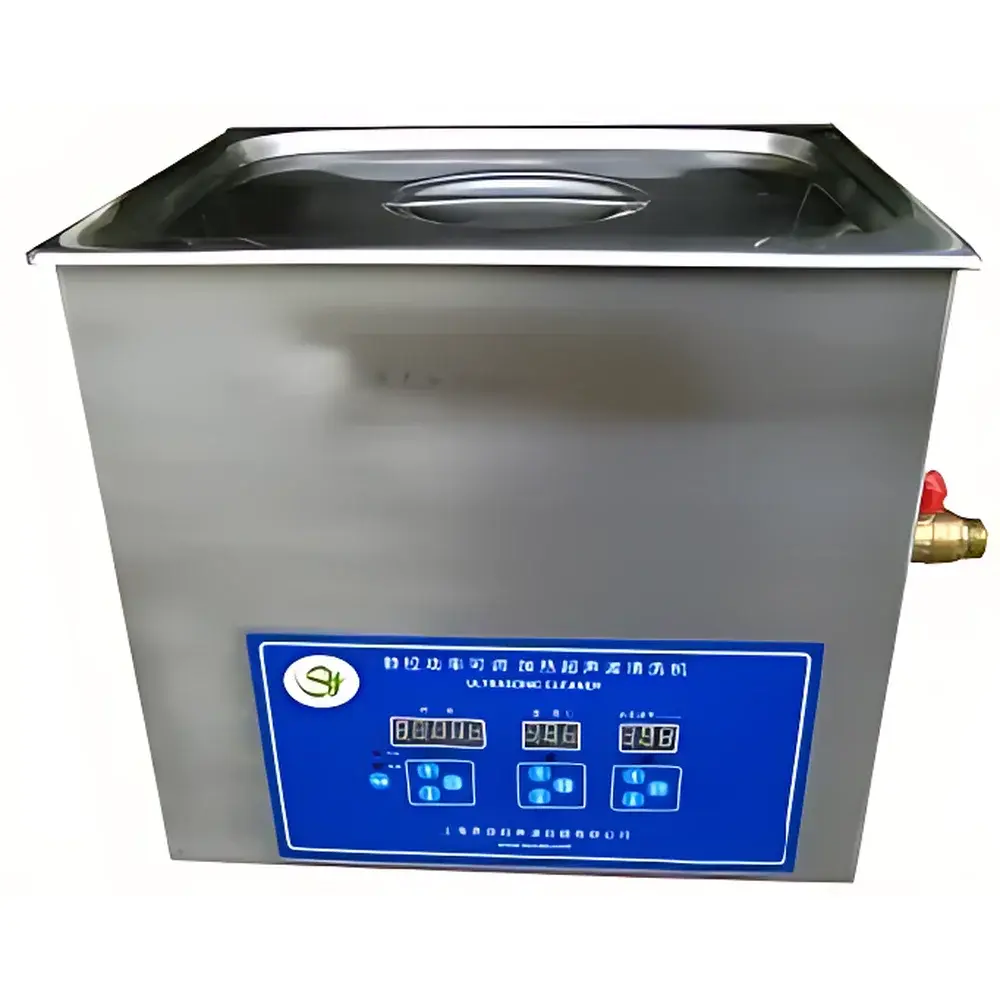
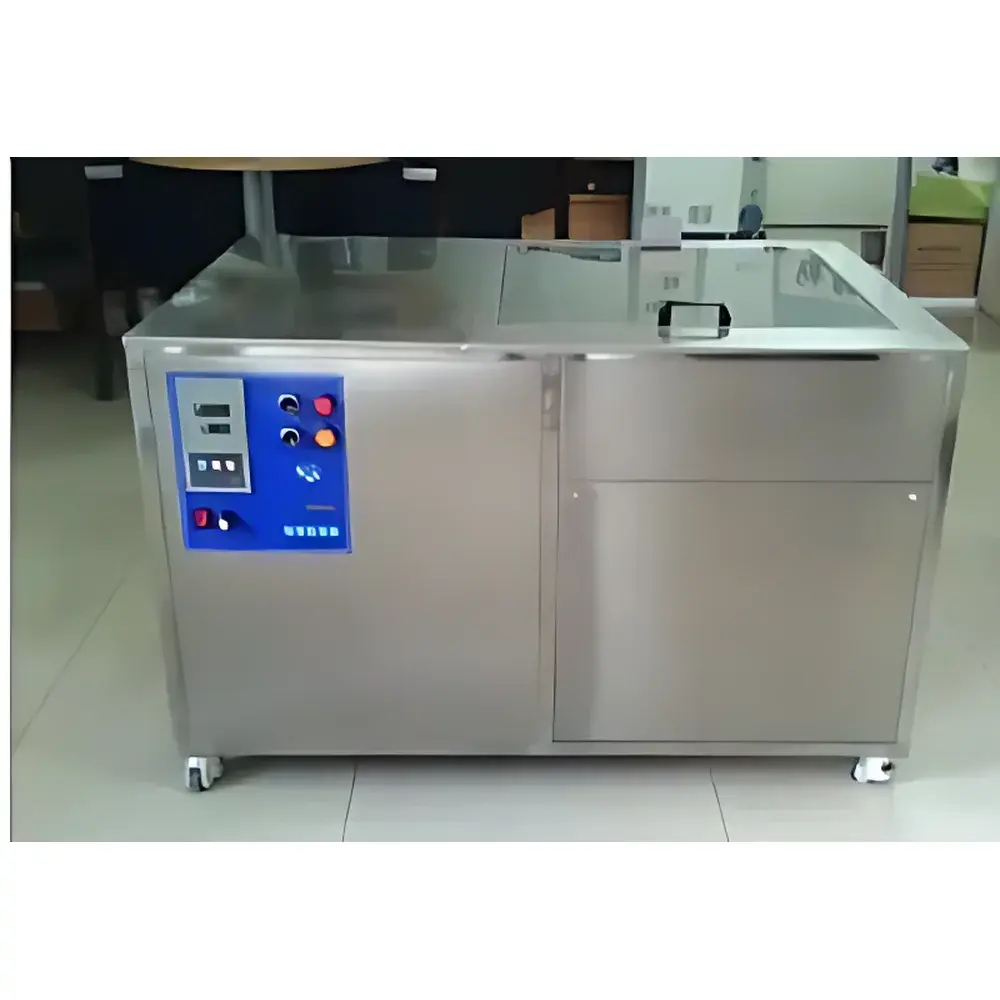
SYC Sycs SCQ-E300 Dental Prosthetic & Orthodontic Appliance Ultrasonic Cleaner
| Brand | SYC Sycs |
|---|---|
| Origin | Shanghai, China |
| Model | SCQ-E300 |
| Capacity | 10 L |
| Ultrasonic Frequency Options | 25 / 28 / 40 / 60 / 80 kHz |
| Ultrasonic Power Output | 300 W (adjustable 10–100%) |
| Heating Power | 600 W |
| Temperature Range | Ambient to 100 °C |
| Timer Range | 1–600 min |
| Lid | Sound-dampening cover included |
| Drain | Manual valve |
| Tank Dimensions (L×W×H) | 500 × 240 × 150 mm |
| Construction | SUS304 stainless steel tank and basket |
| Safety Features | Overheat protection, dry-run auto-shutoff (for ≥10 L models), overload protection |
| Power Supply | 220 V AC, 50 Hz |
Overview
The SYC Sycs SCQ-E300 is a purpose-engineered ultrasonic cleaner designed specifically for dental laboratories and clinical settings requiring high-fidelity cleaning of prosthetic devices, orthodontic appliances, and dental impressions. Operating on the principle of cavitation—where high-frequency acoustic energy generates microscopic implosive bubbles in a liquid medium—the SCQ-E300 delivers consistent, non-abrasive removal of organic residues, plaster debris, alginate film, acrylic monomer residue, and biofilm from complex geometries such as denture frameworks, retainers, aligner molds, and impression trays. Its multi-frequency capability (25–80 kHz) enables optimization across diverse load types: lower frequencies (25–28 kHz) provide higher energy for gross particulate removal from metal-based prostheses, while higher frequencies (40–80 kHz) ensure gentle yet effective cleaning of delicate acrylic, silicone, or 3D-printed resin components without surface pitting or dimensional compromise.
Key Features
- Stainless steel tank and mesh basket fabricated from certified AISI 304 stainless steel—resistant to corrosion from enzymatic, alkaline, and acidic cleaning solutions commonly used in dental reprocessing protocols.
- Five selectable ultrasonic frequencies (25 / 28 / 40 / 60 / 80 kHz) with independent power modulation (10–100% in 1% increments), enabling method-specific validation per device class and material composition.
- Precise digital temperature control (ambient to 100 °C) with ±1 °C stability, supporting thermally activated enzymatic detergents and thermal disinfection cycles compliant with ISO 15883-1 and EN ISO 17664.
- Programmable timer (1–600 minutes) with audible end-cycle alert and automatic shutdown—critical for reproducible processing in GLP-aligned dental lab workflows.
- Integrated sound-dampening lid reduces operational noise to <55 dB(A) at 1 m distance, meeting occupational safety thresholds outlined in EU Directive 2003/10/EC.
- Dual-safety architecture: real-time temperature monitoring prevents overheating; dry-run detection triggers immediate power cutoff when fluid level falls below transducer activation threshold—ensuring transducer longevity and preventing catastrophic failure.
Sample Compatibility & Compliance
The SCQ-E300 accommodates full-size dental stone models (up to 190 mm height), complete removable partial dentures, full-arch aligner trays, and multi-piece orthodontic appliances within its 10 L chamber. Its design supports compatibility with FDA-cleared enzymatic cleaners (e.g., Tergazyme®, Alconox® Tergajet®), low-foaming alkaline detergents, and alcohol-free disinfectants validated for use on Class I and IIa medical devices under MDR 2017/745 Annex I. The unit meets electromagnetic compatibility requirements per IEC 61326-1 and electrical safety standards per IEC 61010-1. While not classified as a medical device under FDA 21 CFR Part 820, it is routinely deployed in facilities adhering to ISO 13485 quality management systems for dental laboratory reprocessing.
Software & Data Management
The SCQ-E300 operates via an embedded microcontroller interface with no external software dependency. All operating parameters—including frequency selection, power level, temperature setpoint, and elapsed time—are digitally stored in non-volatile memory and retained after power cycling. Though lacking network connectivity or audit-trail functionality, its deterministic control logic ensures repeatable execution of validated cleaning protocols—a prerequisite for internal SOP documentation under CAP/CLIA and ISO/IEC 17025. For labs implementing electronic recordkeeping, manual entry of cycle parameters into LIMS or QMS platforms is supported via standardized parameter nomenclature aligned with ANSI/AAMI ST98:2022.
Applications
- Cleaning of acrylic, cobalt-chromium, and titanium-based removable prostheses prior to polishing or relining.
- Removal of gypsum, alginate, and polyvinyl siloxane residues from impression trays and master casts.
- Decontamination of orthodontic retainers, clear aligner molds, and bite registration devices between patient uses.
- Pre-sterilization cleaning of reusable intraoral scanners, impression copings, and analog transfer components.
- Supporting ISO 14971 risk management by reducing bioburden prior to steam sterilization (EN 285) or ethylene oxide processing.
FAQ
Is the SCQ-E300 suitable for cleaning 3D-printed dental resins?
Yes—when operated at 40 or 60 kHz with non-aggressive, alcohol-free cleaning solutions, it effectively removes uncured monomer and support residue without compromising surface integrity or dimensional accuracy of SLA/DLP-printed models.
Does it comply with dental sterilization workflow standards?
It fulfills the “cleaning” phase of multi-step reprocessing per ADA Statement on Infection Control and CDC Guidelines for Dentistry; however, it does not replace thermal or chemical sterilization—validation must be performed per device-specific IFU.
Can multiple frequencies be run simultaneously?
No—frequency selection is discrete and manually configured per cycle; simultaneous multi-frequency operation is not supported.
What maintenance is required for long-term reliability?
Quarterly inspection of transducer bonding integrity, semiannual descaling using citric acid solution (5% w/v, 60 °C, 20 min), and annual verification of temperature sensor calibration against NIST-traceable reference.



