
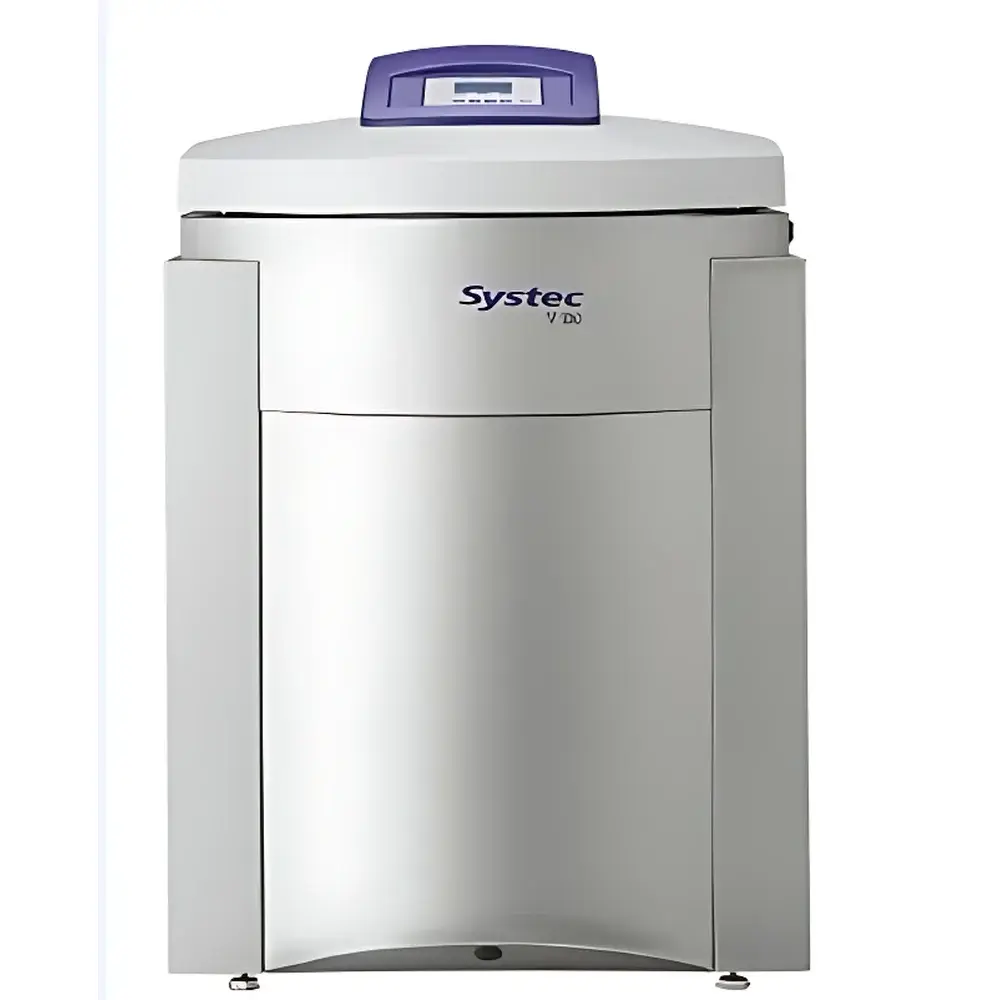
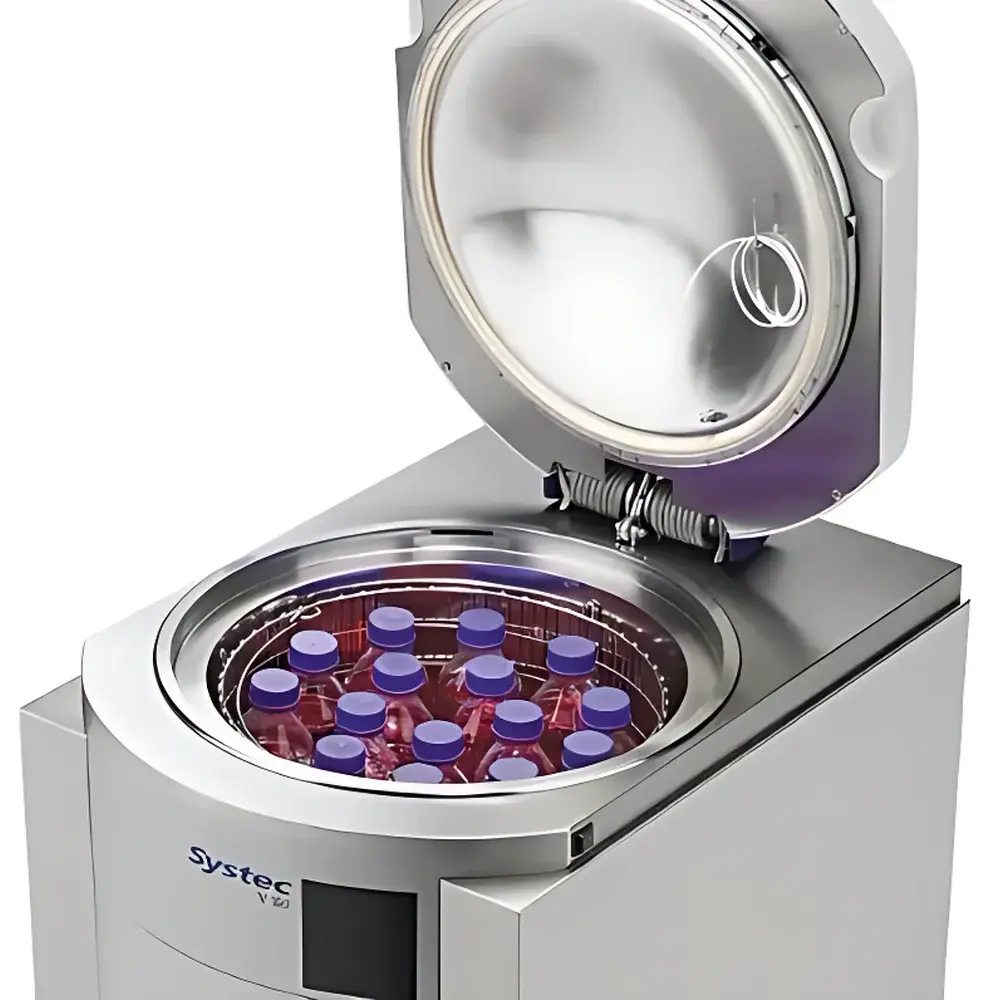
Systec V Series Vertical Autoclave
| Brand | Systec |
|---|---|
| Origin | Germany |
| Model | V Series |
| Type | Vertical Steam Sterilizer |
| Voltage & Phase | V-40–V-55: 220–240 V, 50/60 Hz, Single-phase, 16 A |
| V-65–V-150 | 380–400 V, 50/60 Hz, Three-phase five-wire (with PE and N), 16 A |
| Compliance | EN 285, EN 13060, ISO 17665-1, PED 2014/68/EU, CE-marked for medical device sterilization |
Overview
The Systec V Series Vertical Autoclave is a CE-marked, EN 285–compliant steam sterilization system engineered for precision, safety, and operational transparency in research laboratories, clinical diagnostics, and pharmaceutical quality control environments. Designed and manufactured in Germany, the V Series employs saturated steam under controlled pressure and temperature to achieve microbiological lethality (typically ≥121 °C at 2.1 bar g for liquid or wrapped load cycles) in accordance with ISO 17665-1 and validated against EN 13060 for small steam sterilizers. Its vertical chamber architecture optimizes floor space utilization while maintaining full compliance with Pressure Equipment Directive (PED) 2014/68/EU requirements for Class I and II pressure vessels. The series integrates real-time process monitoring, programmable cycle logic, and hardware-level redundancy for critical safety functions—including dual independent temperature sensors, overtemperature cut-off, and automatic door interlock release only after safe depressurization.
Key Features
- Three-tier performance configuration: VX (fully configurable with all optional modules), VE (optimized for routine media and instrument sterilization), and VB (entry-level fixed-cycle operation)
- Eight standard models (V-40 through V-150) offering internal chamber volumes from 40 L to 150 L, each engineered for high packing density of Erlenmeyer flasks, culture bottles, and wrapped instrument sets
- Robust stainless-steel chamber construction (AISI 316L inner jacket, AISI 304 outer casing) with electro-polished interior surface finish (Ra ≤ 0.8 µm) to minimize biofilm retention and facilitate cleaning validation
- Dual-channel PT100 temperature sensors with independent calibration traceability and automatic drift compensation
- Integrated vacuum-assisted air removal (optional on VE/VX; standard on VX) enabling efficient sterilization of porous loads and hollow devices per EN 13060 Annex C
- Programmable cycle editor supporting up to 99 user-defined protocols, including gravity, pre-vacuum, liquid, and drying phases with adjustable ramp rates and hold times
- Touchscreen HMI with multilingual interface (English, German, French, Spanish), audit trail logging, and password-protected access levels aligned with GLP/GMP documentation requirements
Sample Compatibility & Compliance
The Systec V Series accommodates a broad range of laboratory load types: aqueous solutions (e.g., agar, broth, saline), glassware (including borosilicate flasks up to 5 L), stainless-steel instruments, textile packs, and polymer-based labware rated for repeated autoclaving. Chamber geometry and shelf spacing are optimized to ensure uniform steam penetration and condensate drainage across heterogeneous loads. All models meet essential requirements of EN 285 for large sterilizers and EN 13060 for small sterilizers, with factory-installed validation packages supporting IQ/OQ documentation. Optional accessories—including biological indicator holders, thermocouple ports, and calibrated reference probes—enable full PQ execution per ISO 17665-2. Device firmware complies with IEC 62304 for medical device software lifecycle management.
Software & Data Management
Embedded sterilization controller firmware supports automated data capture of all critical process parameters (chamber temperature, jacket temperature, pressure, time, vacuum level, door status) at ≥1-second resolution. Cycle reports are exportable in CSV or PDF format via USB port or Ethernet interface (optional). Audit trail records include operator ID, timestamp, parameter modifications, alarm events, and electronic signatures—structured to satisfy FDA 21 CFR Part 11 requirements when paired with appropriate network authentication infrastructure. Remote monitoring and alarm notification (via SMTP or Modbus TCP) are available through the optional Systec Connect module, facilitating integration into centralized laboratory information management systems (LIMS).
Applications
- Preparation and sterilization of microbiological growth media in academic and industrial microbiology labs
- Decontamination of reusable surgical instruments and diagnostic tools in hospital central sterile supply departments (CSSD)
- Terminal sterilization of buffer solutions, reagents, and cell culture consumables in bioprocessing R&D settings
- Validation support for cleanroom gowning procedures and environmental monitoring equipment
- Compliance-driven sterilization workflows requiring documented traceability for ISO 13485, GMP Annex 1, or CLIA-certified operations
FAQ
What regulatory standards does the Systec V Series comply with?
The autoclaves conform to EN 285, EN 13060, ISO 17665-1, PED 2014/68/EU, and carry CE marking for Class IIa medical device sterilization.
Can the V Series be integrated into a laboratory’s existing validation framework?
Yes—each unit ships with Factory Acceptance Test (FAT) documentation and supports Installation Qualification (IQ), Operational Qualification (OQ), and Performance Qualification (PQ) using standard reference materials and third-party calibration services.
Is remote monitoring or network connectivity supported?
Ethernet-based remote access and alarm forwarding are available via the optional Systec Connect module, compatible with common LIMS and SCADA platforms.
What maintenance intervals are recommended for long-term reliability?
Annual preventive maintenance is advised, including chamber seal inspection, vacuum pump oil replacement (if equipped), sensor calibration verification, and safety valve testing per EN 13060 Clause 7.4.
Are custom voltage configurations available for non-European power grids?
Yes—special voltage and frequency variants (e.g., 110 V / 60 Hz, 208 V / 60 Hz three-phase) can be engineered upon request, subject to PED certification revalidation.



