
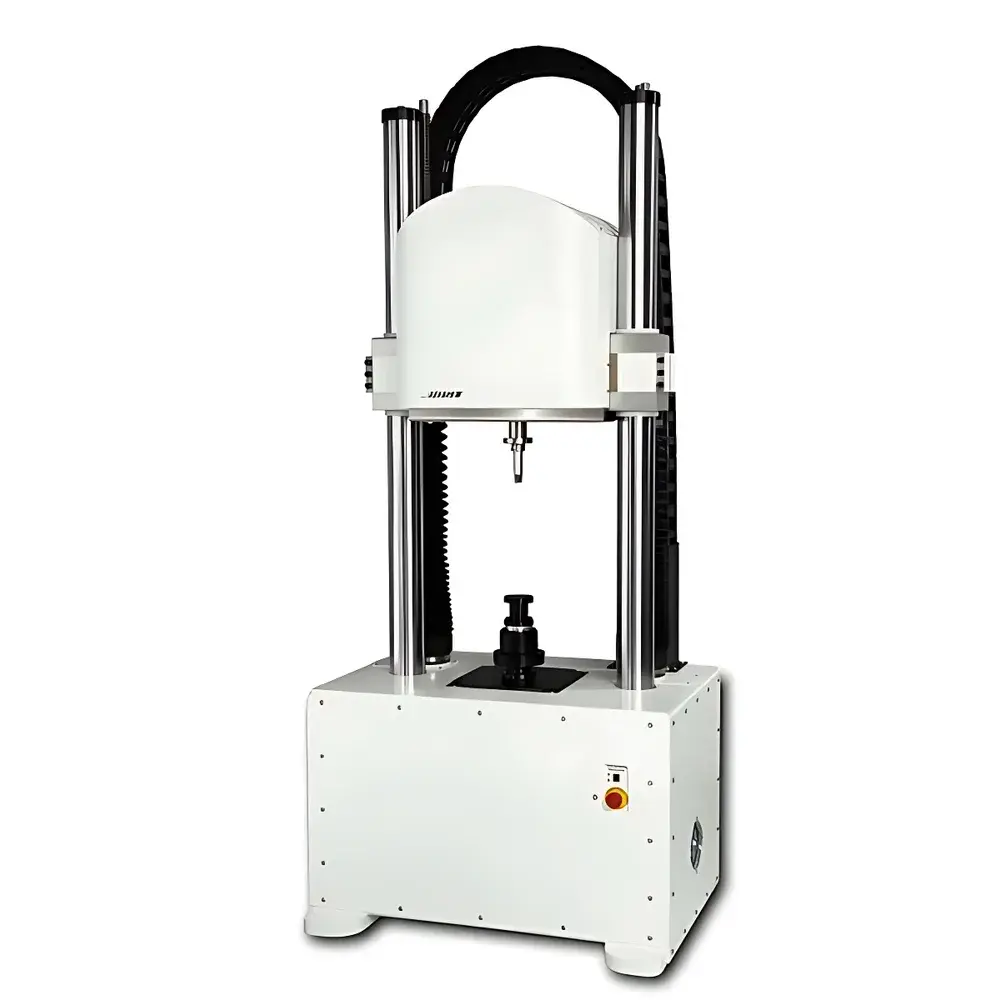
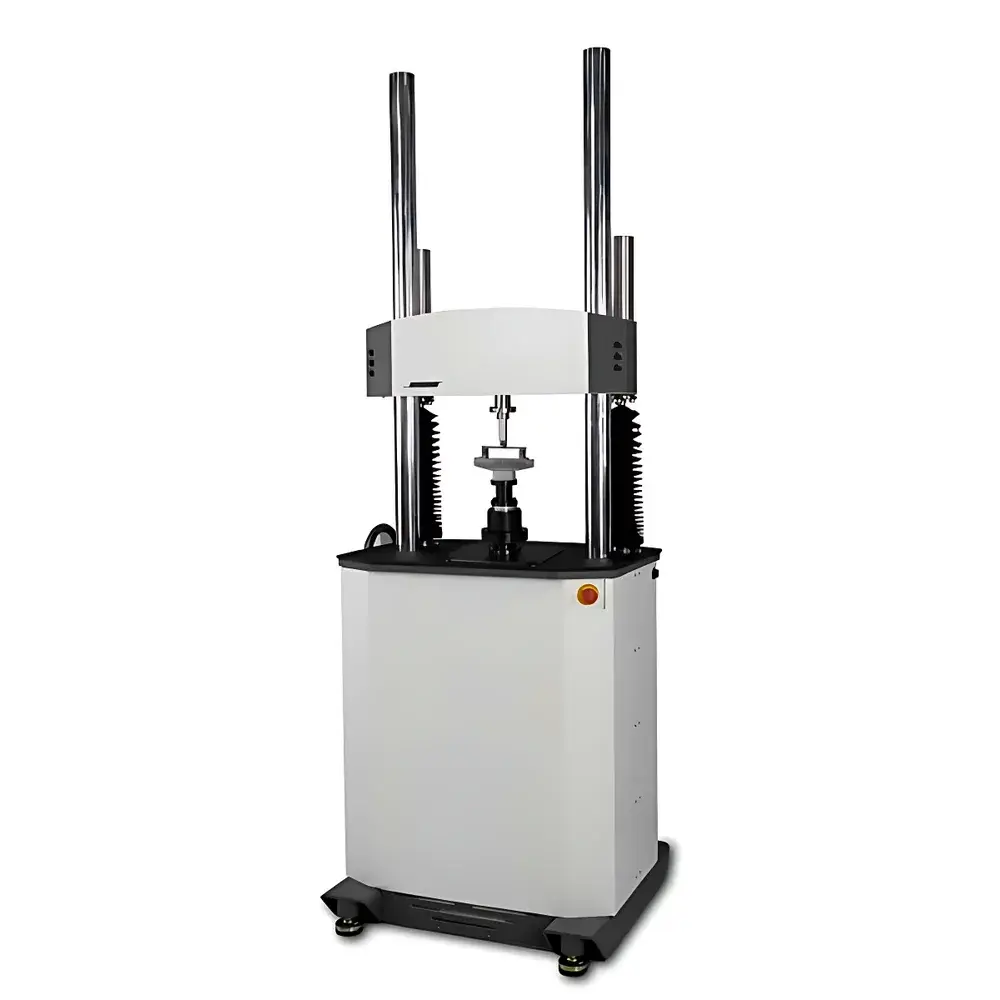
TA Instruments ElectroForce 3500 Dynamic Mechanical Testing System
| Brand | TA Instruments |
|---|---|
| Origin | USA |
| Model | 3500 |
| Instrument Type | Dynamic Mechanical Analyzer (DMA/DMTA) |
| Frequency Range | 0.00001–100 Hz |
| Maximum Dynamic Load | 7.5 kN (standard), 15 kN (optional) |
| Dynamic Stroke | 50 mm |
| Cooling | Air-cooled |
| Motor Mounting Options | Upper Crosshead (3510), Base-Mounted (3520), High-Load Configuration (3550) |
Overview
The TA Instruments ElectroForce® 3500 Dynamic Mechanical Testing System is a high-performance, servo-electric materials testing platform engineered for precision-controlled mechanical characterization under dynamic, cyclic, and quasi-static loading conditions. Unlike hydraulic or electro-hydraulic systems, the ElectroForce 3500 employs a high-fidelity linear motor drive architecture—delivering exceptional force resolution, zero fluid contamination risk, and intrinsic compatibility with cleanroom environments. Its core measurement principle relies on closed-loop displacement and load control, enabling rigorous quantification of viscoelastic behavior, fatigue life, fracture mechanics parameters (e.g., ΔK, da/dN), and time-dependent deformation across broad frequency domains—from ultra-slow creep tests (as low as one cycle per day) to high-frequency oscillatory loading up to 100 Hz. Designed specifically for demanding biomedical, aerospace, and advanced polymer applications, the system supports both uniaxial and multi-axial test configurations via optional linear or torsional actuator modules, making it suitable for biaxial tension-compression, torsion-tension coupling, and complex waveform-driven physiological simulations.
Key Features
- Three configurable base platforms: 3510 (upper-mounted linear motor, optimized for environmental chamber integration), 3520 (base-mounted motor, enhanced stability for high-stiffness specimens), and 3550 (15 kN high-load variant for structural component validation)
- Air-cooled linear motor technology—eliminates hydraulic oil, reduces thermal drift, enables ISO Class 5 cleanroom operation, and ensures silent, vibration-isolated performance
- Dynamic stroke of 50 mm with sub-micron displacement resolution and force accuracy traceable to NIST standards
- Modular environmental control: optional cryogenic-to-high-temperature chambers (−150 °C to +300 °C) or dedicated high-temperature furnaces (up to 1000 °C with custom configuration)
- Motorized or manual crosshead height adjustment for rapid specimen setup and alignment repeatability
- Integrated overload protection, real-time safety interlocks, and hardware-based emergency stop compliant with ISO 13857 and IEC 61508 functional safety requirements
Sample Compatibility & Compliance
The ElectroForce 3500 accommodates a wide range of specimen geometries—including ASTM E8/E21 tensile bars, ISO 148-1 Charpy impact coupons, custom orthopedic fixation constructs (e.g., locking plates, intramedullary nails), spinal disc simulators, and composite laminates up to 300 mm in length. Gripping solutions include pneumatic wedge grips, hydraulic self-tightening fixtures, and custom-designed bio-compatible jaw inserts. The system meets essential regulatory and quality framework requirements for preclinical and industrial testing: data acquisition and reporting are fully compatible with FDA 21 CFR Part 11 electronic records/signatures when paired with TA Instruments TRIOS software configured for audit trail and user access control. Test protocols align with ASTM D7028 (DMTA of polymers), ISO 6721 (dynamic mechanical properties), ASTM F2118/F2127 (fatigue testing of orthopedic implants), and ISO 14801 (dental implant fatigue), supporting GLP and GMP-aligned laboratory workflows.
Software & Data Management
Controlled via TA Instruments’ TRIOS™ software suite, the ElectroForce 3500 provides synchronized, high-speed data acquisition at up to 10 kHz sampling rate. TRIOS supports advanced waveform generation—including sine, square, triangle, random, and user-defined transient profiles—as well as closed-loop control modes (load, displacement, strain, or stress-rate). All raw and processed data are stored in vendor-neutral HDF5 format with embedded metadata (test parameters, calibration history, operator ID, timestamp). The software includes built-in modules for fatigue life prediction (Miner’s rule, Manson-Coffin analysis), hysteresis loop quantification, storage/loss modulus derivation, and time-temperature superposition (TTS) modeling. Export options include CSV, MATLAB .mat, and direct integration with LIMS platforms via OPC UA or RESTful API interfaces.
Applications
- Biomedical device validation: fatigue testing of orthopedic implants (plates, screws, interbody cages), prosthetic joints, and soft-tissue scaffolds under physiologically relevant waveforms
- Advanced material development: dynamic mechanical analysis of thermosets, carbon-fiber composites, shape-memory alloys, and elastomeric damping components
- Automotive and aerospace R&D: suspension component durability, crash-energy absorption characterization, and thermo-mechanical cycling of turbine blade coatings
- Consumer product engineering: cyclic endurance evaluation of sporting goods (bike frames, running shoes, tennis rackets) and wearable electronics housings
- Fracture mechanics research: crack growth rate measurement (da/dN vs. ΔK), R-curve determination, and mixed-mode I/II loading simulations
- Regulatory submission support: generation of ISO 14801-compliant fatigue datasets for CE marking and FDA 510(k) submissions
FAQ
What distinguishes the ElectroForce 3500 from traditional hydraulic testing systems?
It uses a brushless linear motor with air cooling—eliminating hydraulic fluid, reducing maintenance, improving positional fidelity, and enabling cleanroom deployment.
Can the system perform true multi-axial loading?
Yes—via optional add-on torsional actuators or third-party biaxial stages, enabling combined tension-torsion or planar shear testing with synchronized control.
Is temperature control integrated or modular?
Temperature control is fully modular: standard configurations support ambient operation; cryo/thermal chambers and high-temperature furnaces are available as validated accessories with independent PID control and thermal mapping certification.
What level of compliance does the system offer for regulated industries?
When configured with TRIOS Audit Trail mode and role-based user authentication, it satisfies FDA 21 CFR Part 11, EU Annex 11, and ISO/IEC 17025 documentation requirements for test data integrity.
How is calibration maintained across the dynamic range?
TA Instruments provides NIST-traceable load cell and displacement transducer calibration kits, with automated calibration verification routines embedded in TRIOS software for daily operational checks.



