
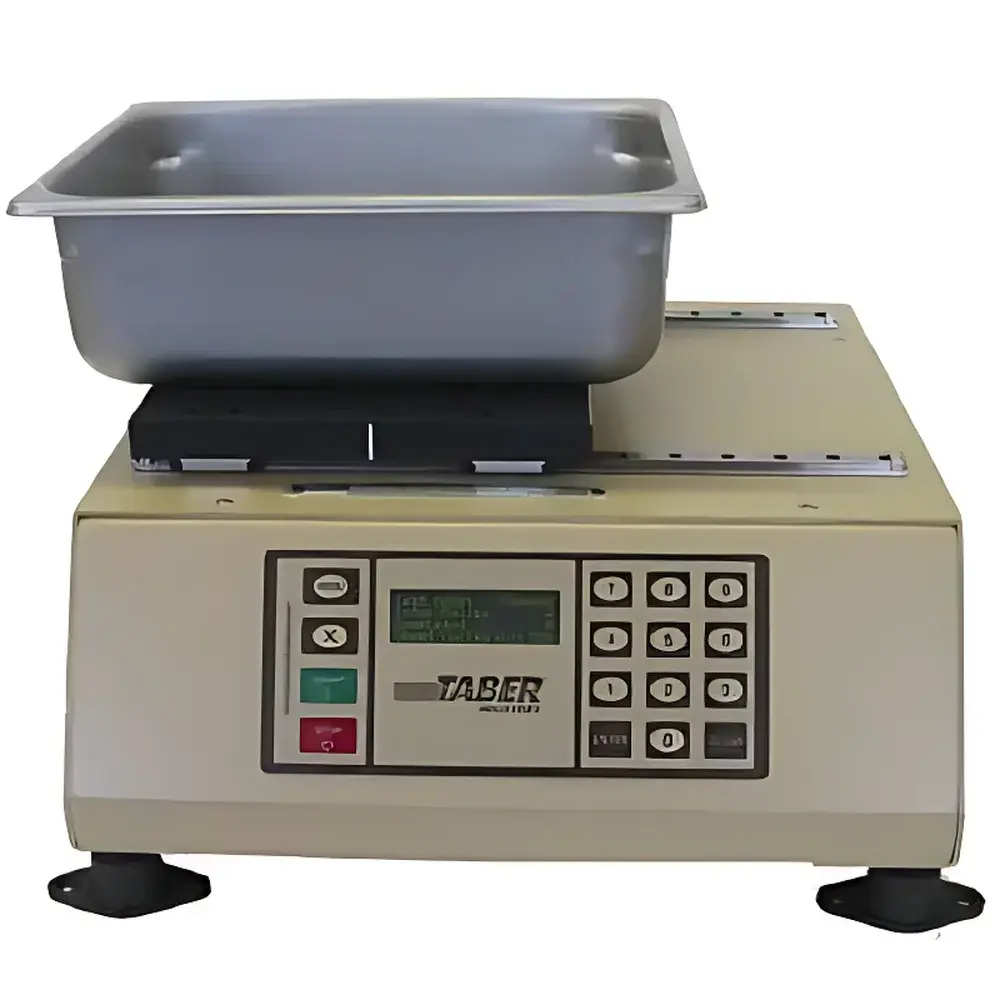
Taber 6160 Oscillating Abraser
| Brand | Taber |
|---|---|
| Origin | USA |
| Model | 6160 |
| Compliance | ASTM F735, ARCA AR-C STP 5.2.5 |
| Stroke Length Options | 1", 2", 3", or 4" |
| Oscillation Frequency | 100–200 cycles/min |
| Sample Height Exposure | ≤1 mm |
| Compatible Abrasives | Quartz sand, aluminum oxide, silicon carbide, glass beads |
Overview
The Taber 6160 Oscillating Abraser is an engineered precision instrument designed for quantitative evaluation of surface wear resistance and scratch durability under controlled oscillatory motion. Based on the Couette-type abrasive action principle—where abrasive media are mobilized across a stationary test specimen via reciprocating horizontal motion—the system replicates real-world mechanical degradation mechanisms encountered during handling, cleaning, and environmental exposure. Unlike rotary or linear abrasion testers, the 6160 employs a planar oscillation geometry that ensures uniform abrasive contact distribution without rotational bias, making it particularly suitable for optically sensitive substrates such as coated lenses, transparent polymers, architectural glazing, and display cover materials. Its operational foundation aligns with ASTM F735 (“Standard Test Method for Abrasion Resistance of Transparent Plastics Using an Oscillating Abraser”), which specifies methodology for quantifying haze increase, gloss loss, or visible scarring after defined cycle counts.
Key Features
- Programmable oscillation stroke lengths of 1″, 2″, 3″, or 4″ to accommodate diverse material response profiles and standard-specific requirements.
- Adjustable oscillation frequency ranging from 100 to 200 cycles per minute, enabling precise control over abrasive energy input and test duration reproducibility.
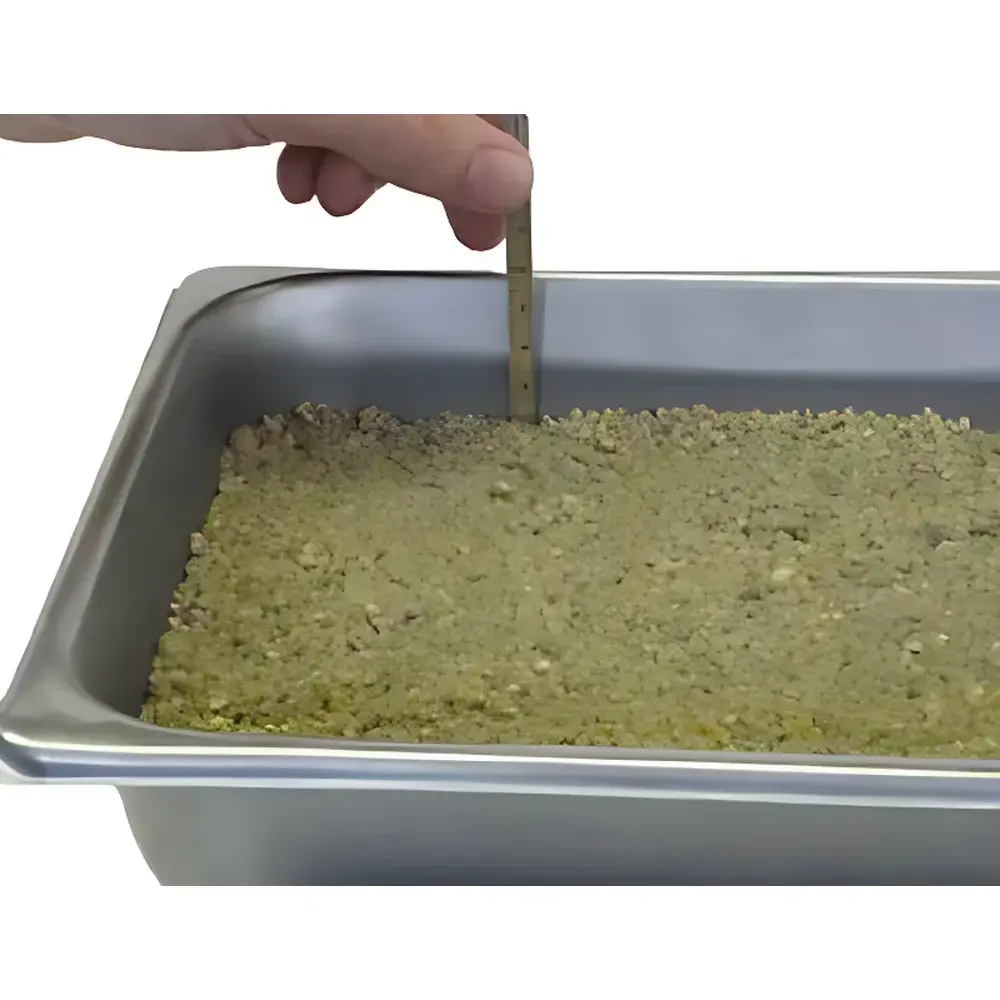
- Fixed-specimen mounting configuration with ≤1 mm surface protrusion tolerance—ensuring consistent abrasive engagement depth and minimizing edge effects.
- Modular abrasive media compatibility: validated use with standardized quartz sand (ASTM D937), calcined aluminum oxide, silicon carbide grit, and spherical glass beads—each selected based on hardness, particle size distribution, and angularity per ISO 12100 and ASTM E11 specifications.
- Optional slurry testing capability allows integration of liquid-based abrasive suspensions (e.g., silica/water or alumina/glycol mixtures) for simulating corrosion-abrasion synergies in automotive clear coats or marine coatings.
- Bayer test functionality available via dedicated lens-holding fixture (sold separately), supporting comparative optical transmission and haze assessment against certified reference lenses per ARCA AR-C STP 5.2.5 protocol.
Sample Compatibility & Compliance
The Taber 6160 accommodates flat or gently curved specimens up to 100 mm × 100 mm, including but not limited to: hard-coated polycarbonate and acrylic lenses; anti-reflective and oleophobic thin-film stacks on glass substrates; powder-coated aluminum panels; PVD-deposited metallic finishes; and elastomeric touchscreen overlays. All test configurations maintain strict adherence to ASTM F735’s dimensional and procedural constraints—including abrasive bed depth consistency (±0.5 mm), specimen clamping force calibration, and environmental conditioning prior to testing (23 °C ±2 °C, 50% RH ±5%). The instrument is routinely deployed in GLP-compliant laboratories undergoing FDA 21 CFR Part 11–aligned audits for medical device coating validation and ISO 9001-certified QC workflows in optics manufacturing.
Software & Data Management
While the Taber 6160 operates via analog electromechanical controls for core motion parameters, digital data capture is achieved through third-party integration: cycle counters with RS-232/USB output enable synchronization with spectrophotometers (e.g., BYK Gardner haze meters), glossmeters (ASTM D523), or profilometers (ISO 4287). Taber-supplied documentation includes full traceability templates for raw data logging—including operator ID, ambient conditions, abrasive lot number, and post-test metrology references—supporting audit readiness under ISO/IEC 17025 and ICH Q5E guidelines. Firmware-upgradable timer modules (optional) provide timestamped cycle logging with password-protected parameter locking for regulated environments.
Applications
- Quantitative ranking of anti-scratch coatings on augmented reality (AR) waveguides and HUD combiners.
- Validation of sol-gel hardcoat durability on automotive LED headlamp lenses per SAE J2527.
- Comparative wear screening of biocompatible polymer films used in implantable sensor housings.
- Accelerated aging studies of PVDF-based architectural membranes exposed to desert particulate environments.
- Development-stage optimization of inkjet-printed conductive traces on flexible OLED substrates.
- Supplier qualification testing for aerospace-grade polyimide films subjected to repeated wipe-down protocols.
FAQ
Does the Taber 6160 support automated data export to LIMS or ELN platforms?
Yes—when paired with optional digital cycle counter modules and compatible serial-to-CSV gateways, test logs can be ingested directly into laboratory information management systems compliant with ASTM E1578 and ISO 15197.
Can the instrument be used for non-standard abrasives beyond those listed in the manual?
Custom abrasive validation is possible provided particle size distribution (PSD), Mohs hardness, and sphericity fall within ISO 13320 and ASTM C721 limits; Taber Technical Support provides guidance on media qualification protocols.
Is the one-year warranty applicable to accessories such as lens fixtures or slurry trays?
Yes—original accessories purchased concurrently with the base unit are covered under the same terms, excluding consumables like abrasive media and gaskets subject to normal wear.
How is calibration maintained across long-term usage?
Calibration verification is performed annually using NIST-traceable displacement sensors and certified stopwatch standards; Taber-certified service technicians issue ISO 17025-accredited calibration certificates upon request.



