
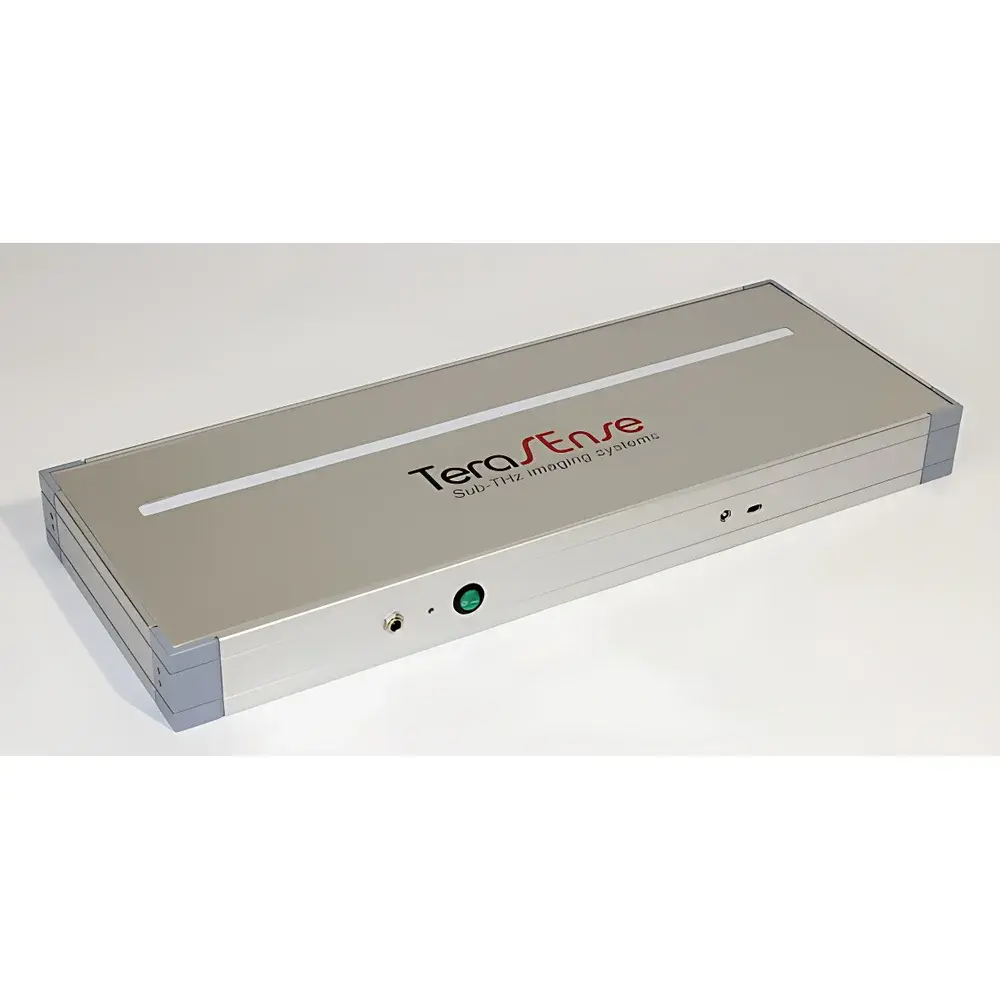
TeraSense TeraFAST-256 High-Speed Linear Terahertz Imaging Camera
| Brand | TeraSense |
|---|---|
| Origin | Russia |
| Model | TeraFAST-256 |
| Pixel Array | 256 × 1 |
| Frequency Range | 0.05–0.7 THz |
| Frame Rate | 5000 fps |
| Pixel Size | 1.5 × 3 mm² |
| Imaging Area | 384 × 3 mm² |
| Minimum Detectable Power per Pixel | 100 nW (at 5000 fps) |
| Dimensions | 450 × 160 × 44 mm³ |
| Synchronization Interface | TTL (+5 V) |
| Data Interface | USB |
| Responsivity | 8000 V/W |
| Software | TeraFast® Viewer |
Overview
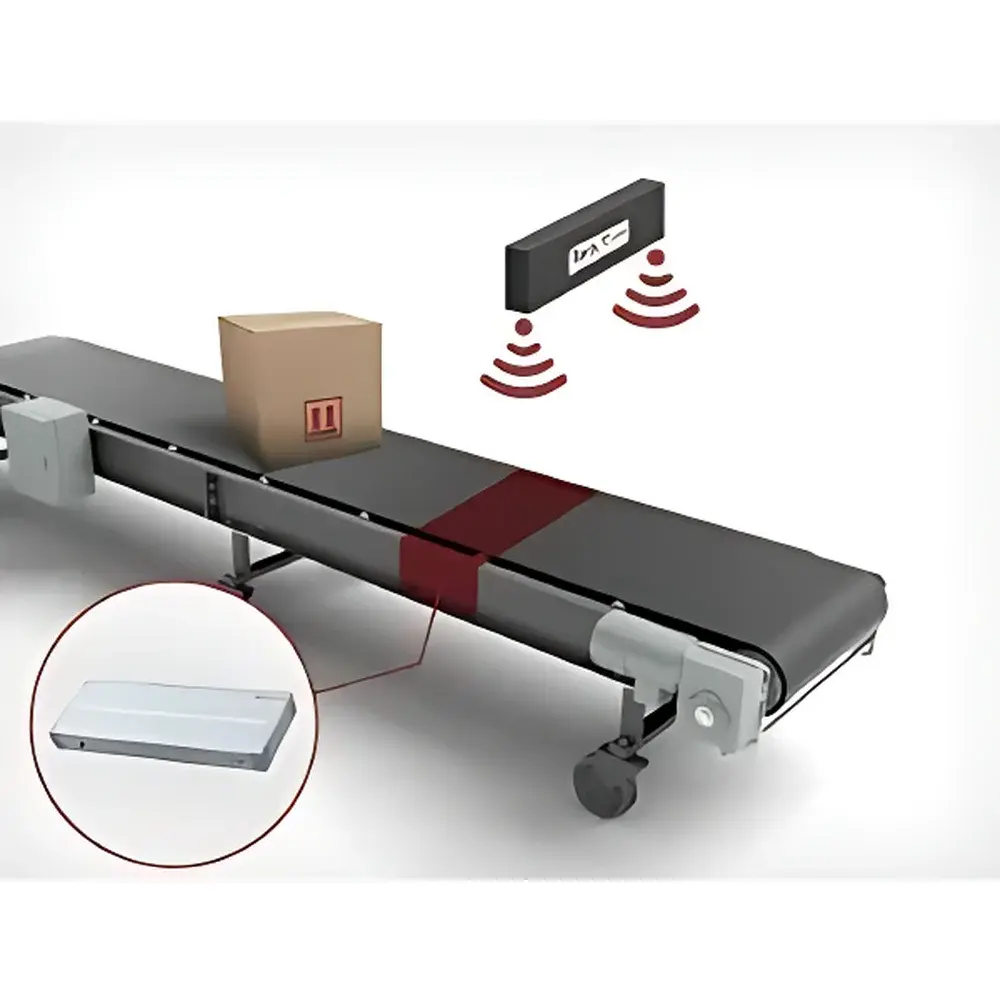
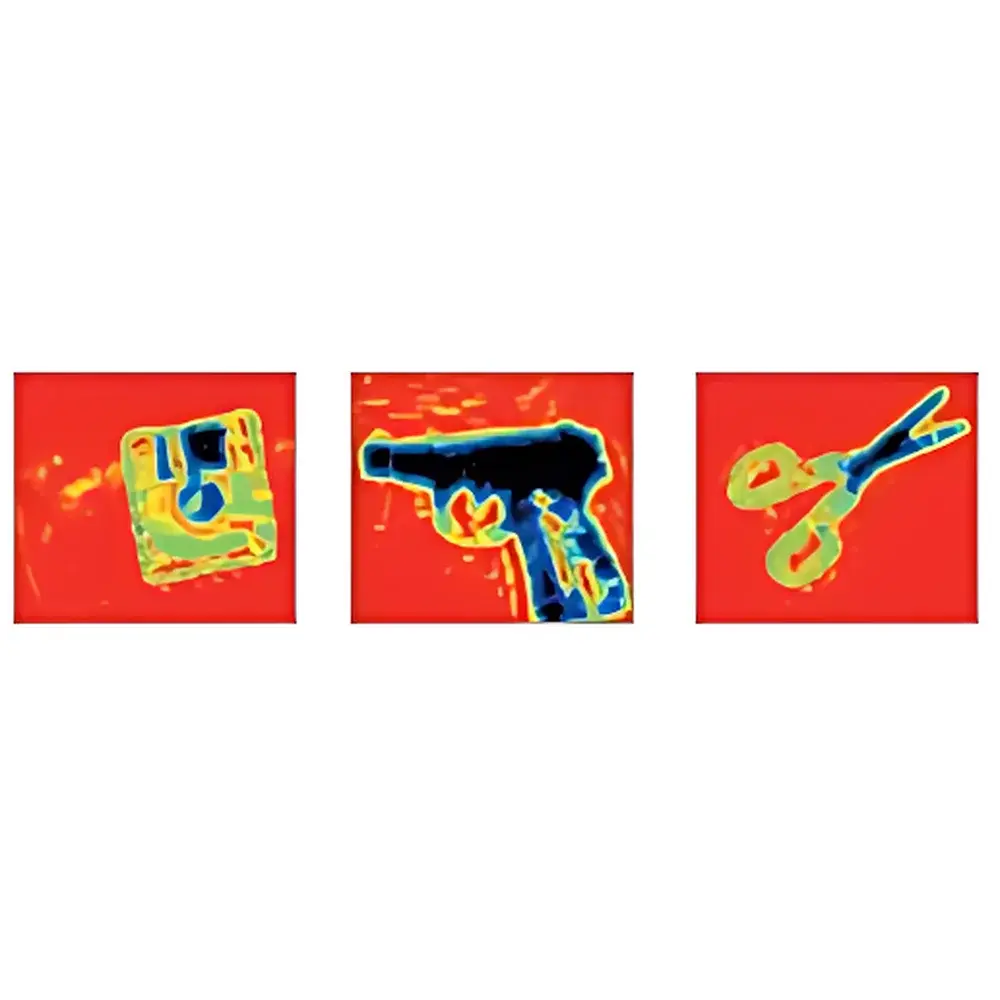
The TeraSense TeraFAST-256 is a high-speed linear terahertz imaging camera engineered for real-time, non-ionizing, non-destructive inspection in industrial automation environments. Unlike conventional raster-scanned or focal-plane-array-based THz systems, the TeraFAST-256 employs a monolithic 256-pixel linear sensor array operating on photoconductive or electro-optic sampling principles—optimized for continuous-line acquisition synchronized with moving objects. Its core measurement modality relies on coherent detection of pulsed or CW terahertz radiation in the 0.05–0.7 THz band, enabling material characterization through absorption, reflection, and time-of-flight contrast mechanisms. Designed explicitly for inline deployment, it delivers deterministic temporal resolution (200 µs per frame) and spatial fidelity sufficient to resolve structural anomalies ≥1.5 mm in dimension—making it suitable for continuous monitoring of packaged goods, composite laminates, pharmaceutical blister packs, and polymer extrusions on conveyor belts moving at up to 15 m/s.
Key Features
- Real-time linear acquisition at 5 kHz frame rate—enabling sub-millisecond temporal sampling without motion blur on high-speed production lines
- Compact form factor (450 × 160 × 44 mm³) with integrated thermal management, facilitating OEM integration into existing machine vision architectures
- 256-pixel uncooled linear array with uniform pixel pitch (1.5 mm), delivering consistent 384 mm wide field-of-view at working distance
- Native TTL synchronization input for precise hardware-level triggering with external THz emitters, encoders, or PLC-controlled conveyors
- No ionizing radiation—fully compliant with occupational safety standards for continuous human-proximate operation (IEC 62471, ICNIRP guidelines)
- USB 3.0 interface supporting lossless streaming of raw 16-bit intensity data at full frame rate, with low-latency driver support for Windows/Linux
Sample Compatibility & Compliance
The TeraFAST-256 is compatible with standard industrial THz sources—including photoconductive antennas pumped by femtosecond fiber lasers and resonant-tunneling-diode (RTD) emitters—provided they operate within the 0.05–0.7 THz bandwidth and support TTL-synchronized gating. It supports non-contact inspection of dielectric and semi-conductive materials including plastics, ceramics, paperboard, textiles, and pharmaceutical tablets. The system adheres to electromagnetic compatibility requirements per EN 61326-1:2013 and meets CE marking directives for industrial measurement equipment. While not certified for medical use under FDA 21 CFR Part 820 or ISO 13485, its data output format and timestamped acquisition metadata are structured to support GLP-compliant documentation workflows when deployed in QC laboratories under internal SOPs.
Software & Data Management
The included TeraFast® Viewer software provides real-time visualization, ROI-based intensity profiling, and batch export of calibrated intensity maps in HDF5 and TIFF formats. It implements configurable background subtraction, line-scan averaging, and dynamic range optimization algorithms optimized for conveyor-synchronous acquisition. All acquired frames are stamped with microsecond-precision timestamps aligned to the TTL trigger edge, enabling traceable correlation with encoder position or process variables. Raw data streams support third-party integration via DLL API (C/C++/Python bindings) and are compatible with common industrial vision platforms including HALCON, OpenCV, and National Instruments LabVIEW. Audit trails, user access logs, and parameter change history are recorded locally—meeting foundational requirements for 21 CFR Part 11–aligned electronic recordkeeping when paired with validated IT infrastructure.
Applications
- In-line defect detection in multilayer polymer films (e.g., delamination, thickness variation, foreign inclusion)
- Real-time integrity verification of sealed pharmaceutical blister packs—identifying broken seals, missing tablets, or moisture ingress without opening packaging
- Non-contact thickness mapping of insulating coatings on metallic substrates in wire-drawing or pipe-coating lines
- Moisture content profiling in paper, cardboard, or agricultural products during drying or sorting processes
- Structural homogeneity assessment of carbon-fiber-reinforced polymer (CFRP) prepreg tapes prior to autoclave curing
FAQ
What THz source configurations are recommended for optimal performance with the TeraFAST-256?
TeraSense recommends synchronized pulsed THz sources with <100 fs pulse duration and repetition rates ≥5 kHz, or CW sources with active amplitude modulation at ≥5 kHz. Horn antenna beam profiles should be collimated to uniformly illuminate the full 384 mm imaging width.
Can the TeraFAST-256 be used in ambient air without nitrogen purging?
Yes—the 0.05–0.7 THz operational window avoids strong atmospheric water vapor absorption lines; typical path lengths ≤1.5 m require no environmental enclosure for stable SNR.
Is calibration traceable to national standards available?
Factory calibration uses NIST-traceable blackbody references and THz power meters; certificate of conformance includes responsivity (8000 V/W ±8%), NEP, and linearity deviation (<±2% over 60 dB dynamic range).
Does the system support multi-camera synchronization for wider coverage?
Yes—multiple TeraFAST-256 units can be daisy-chained via TTL master-slave triggering, enabling seamless tiling of adjacent linear fields without overlap or gap artifacts.
What maintenance is required for long-term industrial operation?
No consumables or periodic recalibration are required; only routine optical window cleaning and verification of USB/TTL cable integrity every 6 months per ISO 9001 preventive maintenance schedules.






