
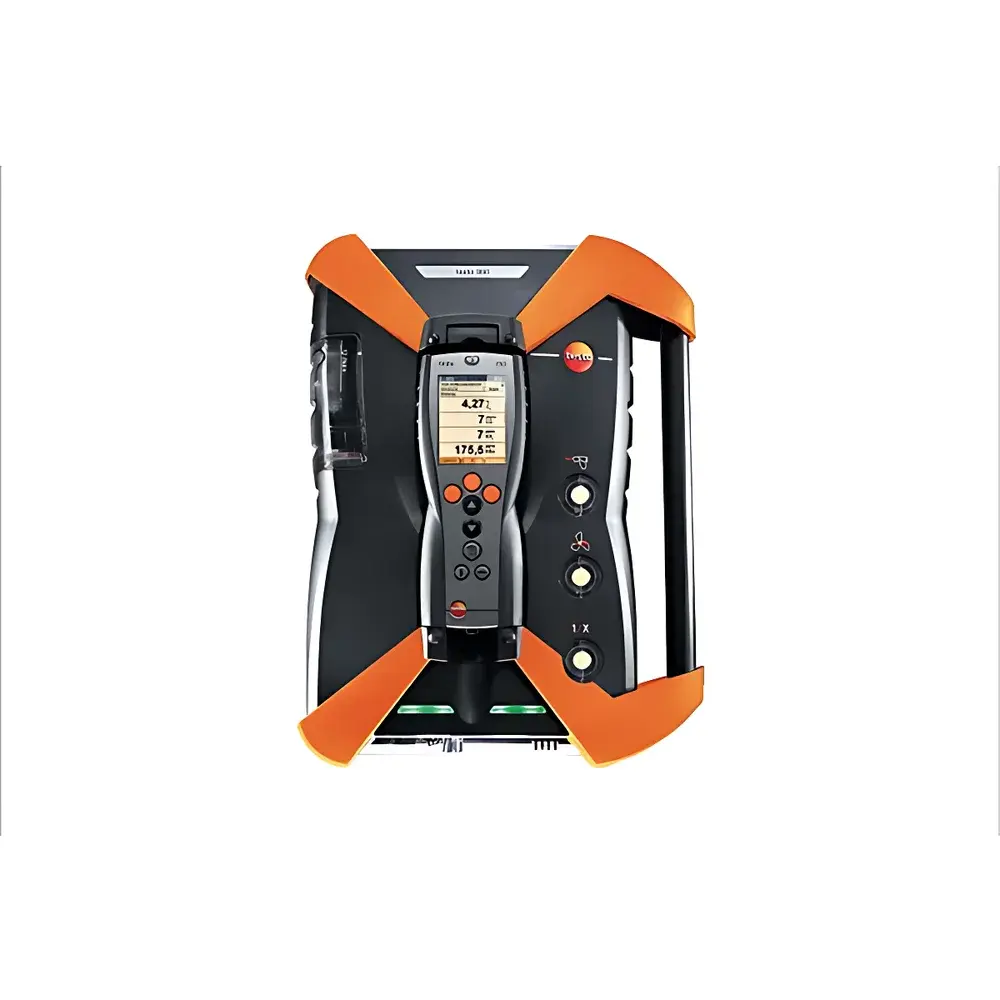
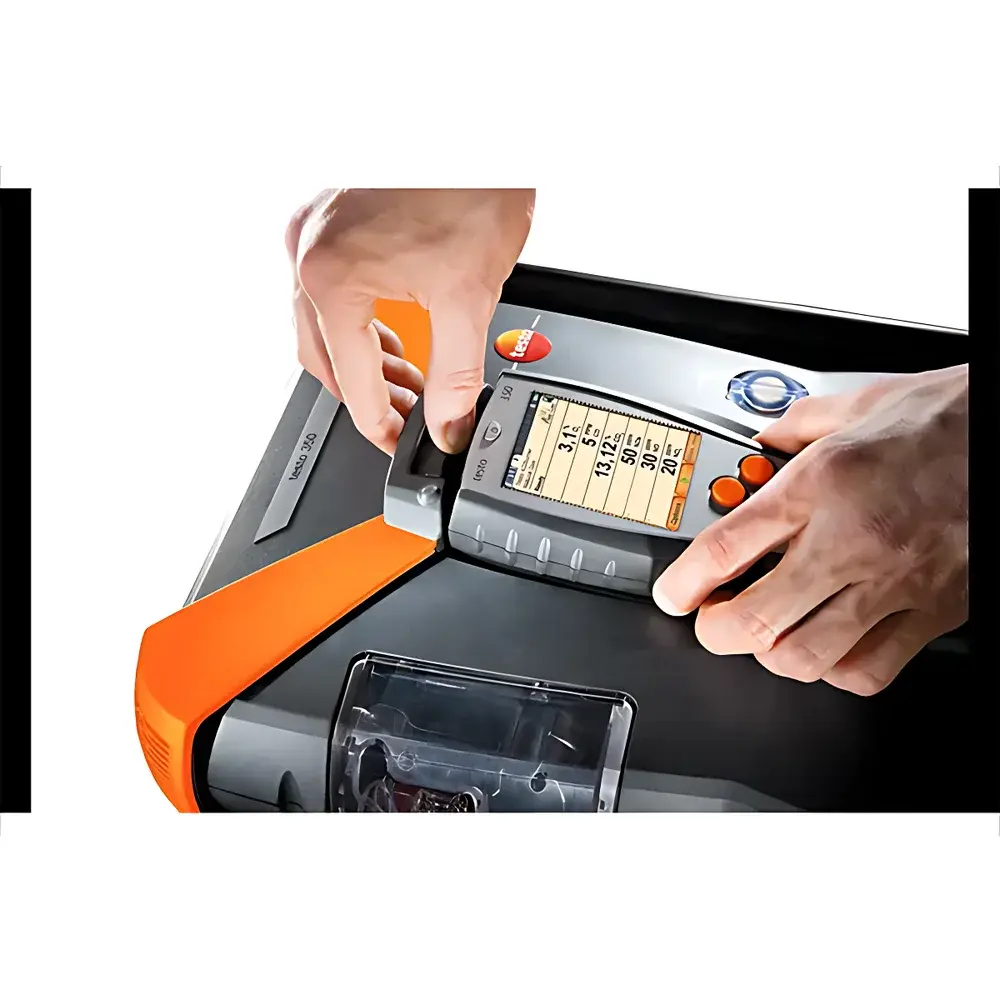
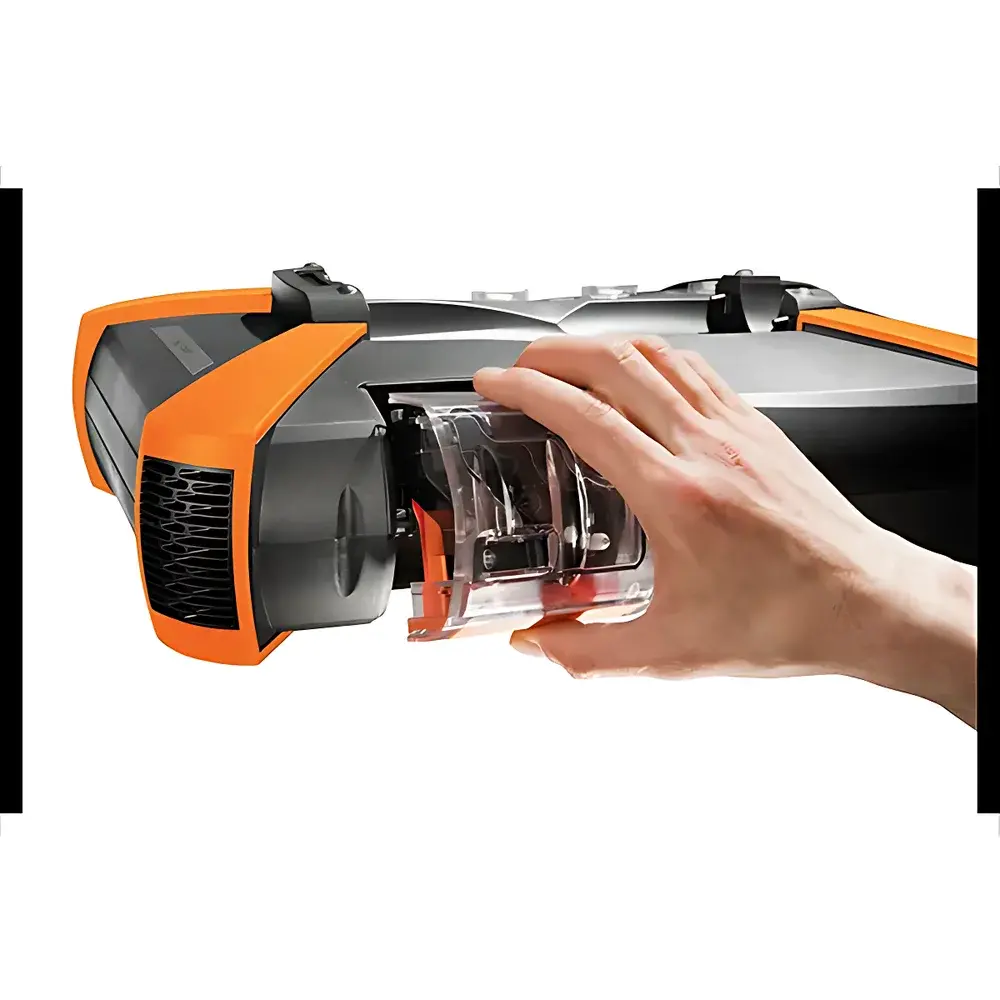
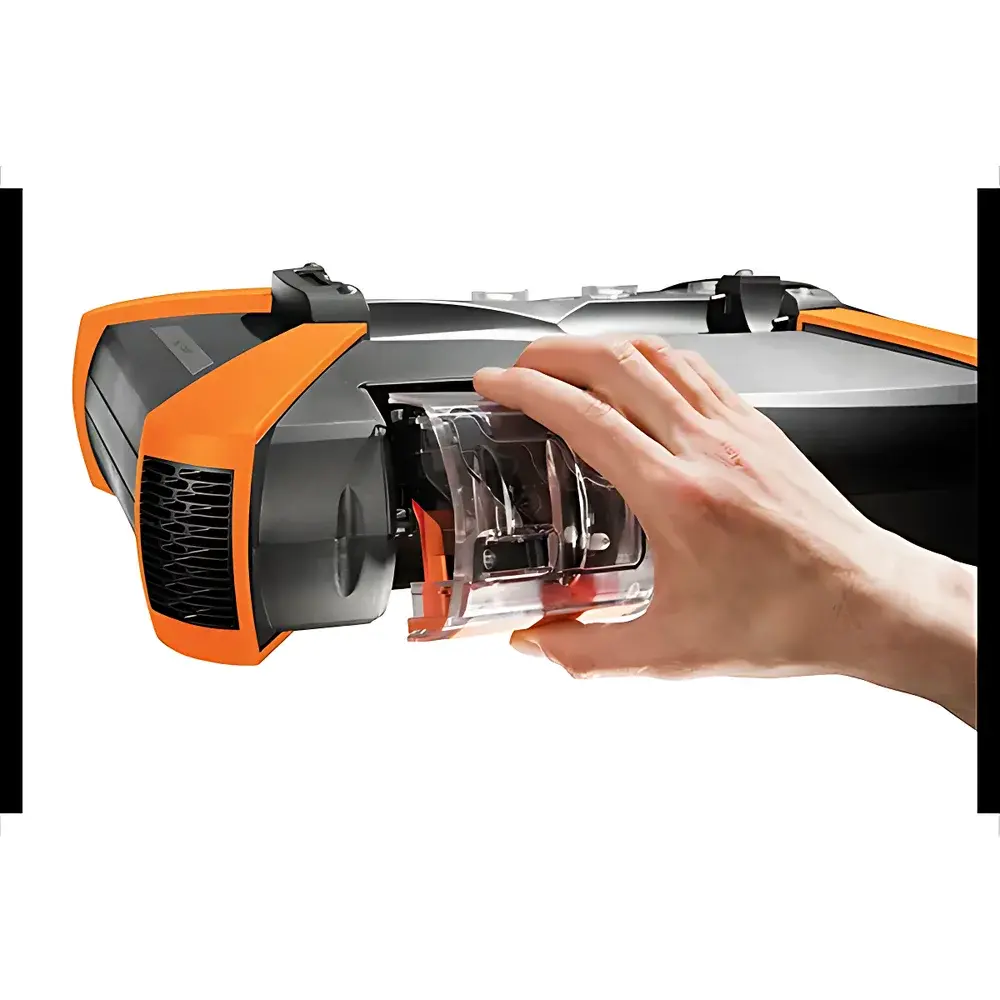
testo 350 Orange Edition Portable Flue Gas Analyzer
| Brand | testo |
|---|---|
| Origin | Shenzhen, China |
| Model | testo 350 |
| Instrument Type | Portable Flue Gas Analyzer |
| Measurement Principle | Electrochemical (O₂, CO, NO, NO₂, SO₂, H₂S), NDIR (CO₂, CxHy), Catalytic Combustion (CxHy) |
| Response Time (t95) | 20 s (O₂), <30 s (SO₂), <40 s (CO), <10 s (CO₂ via NDIR) |
| Accuracy | ±5% of reading (typical for electrochemical sensors), ±4 ppm (SO₂, low range), ±0.3 Vol.% + 1% (CO₂, NDIR) |
| Detection Parameters | O₂, CO, NO, NO₂, SO₂, SO₂low, H₂S, CO₂ (calculated & NDIR), CxHy (CH₄, C₃H₈, C₄H₁₀), differential pressure, ambient & flue gas temperature, velocity, dew point, efficiency, heat loss |
| Sensor Interference Compensation | CO-compensated SO₂ and SO₂low sensors (up to 10,000 ppm CO), H₂-compensated CO and COlow |
| Preconditioning | Integrated high-efficiency gas conditioning module with condensate separation, multi-stage particulate filtration, automatic dilution for high-concentration sampling |
| Connectivity | testo DataBus interface (supports up to 16 analyzers in cascade), USB, Bluetooth, Wi-Fi, LIMS-compatible data export |
| Operating Temperature | −5 °C to +45 °C |
| Battery Life | Up to 5 h (rechargeable Li-ion) |
| Dimensions | 330 × 128 × 438 mm |
| Weight | 4800 g |
| IP Rating | IP40 |
| Max. Dust Load | 20 g/m³ |
| Max. Flue Gas Pressure | −300 mbar (vacuum) / +50 mbar (overpressure) |
| Max. Flue Gas Temp (via probe) | 1800 °C (Type S) |
Overview
The testo 350 Orange Edition is a professional-grade portable flue gas analyzer engineered for regulatory-compliant emissions monitoring, combustion optimization, and industrial stack testing. It integrates multiple detection principles—electrochemical (EC) for O₂, CO, NO, NO₂, SO₂, SO₂low, and H₂S; non-dispersive infrared (NDIR) for CO₂ and hydrocarbons (CxHy); and catalytic combustion (CatEx) for combustible gas quantification—within a single, field-rugged platform. Unlike single-technology analyzers, the testo 350 Orange Edition enables concurrent measurement of up to six gas components while maintaining traceable accuracy across dynamic flue conditions. Its core architecture supports real-time compensation for cross-sensitivity (e.g., CO interference on SO₂ measurement up to 10,000 ppm), automatic flue gas dilution for high-concentration sampling (>10,000 ppm CO), and intelligent sensor protection protocols that extend service life under harsh thermal and particulate loads. Designed for ISO 16911-1, EN 15267-3, and EPA Method 6C/7E field deployment, the instrument meets the metrological requirements for periodic stack testing, continuous emission monitoring system (CEMS) verification, and boiler efficiency audits per DIN EN 12952-15 and VDI 2066.
Key Features
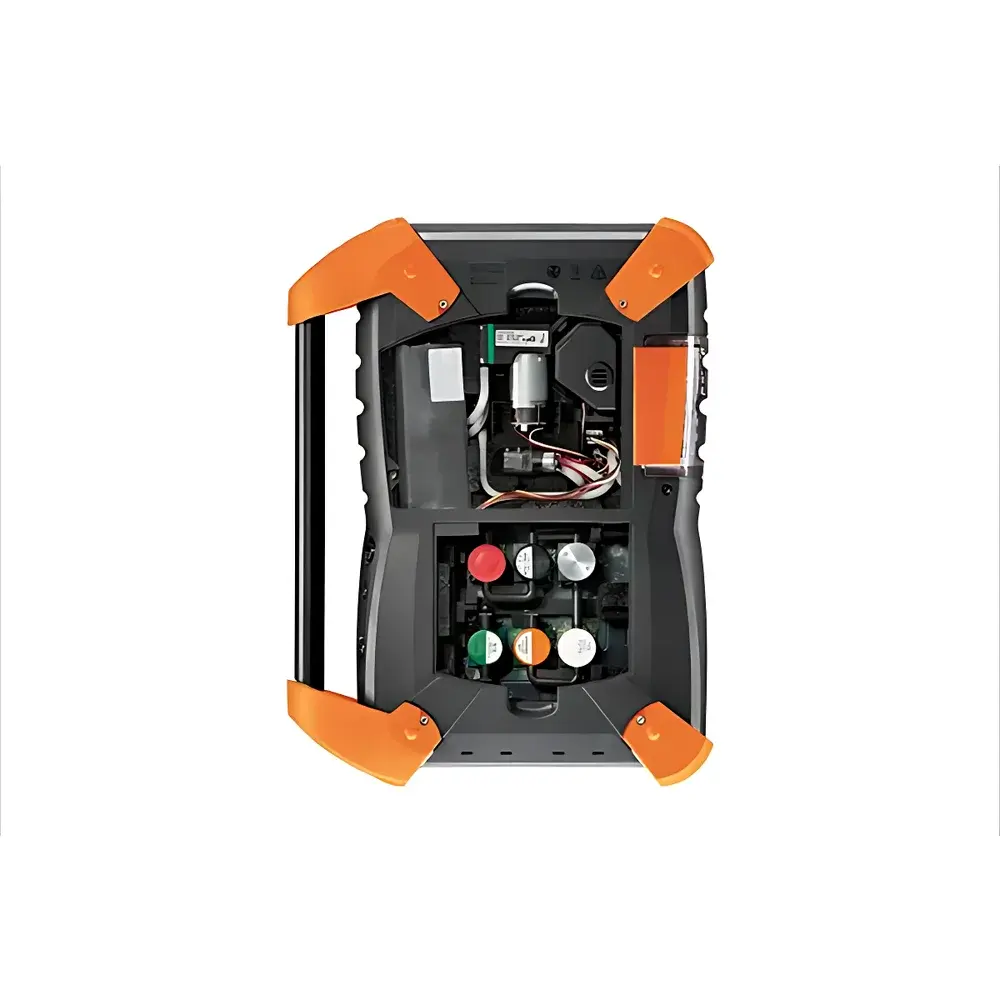
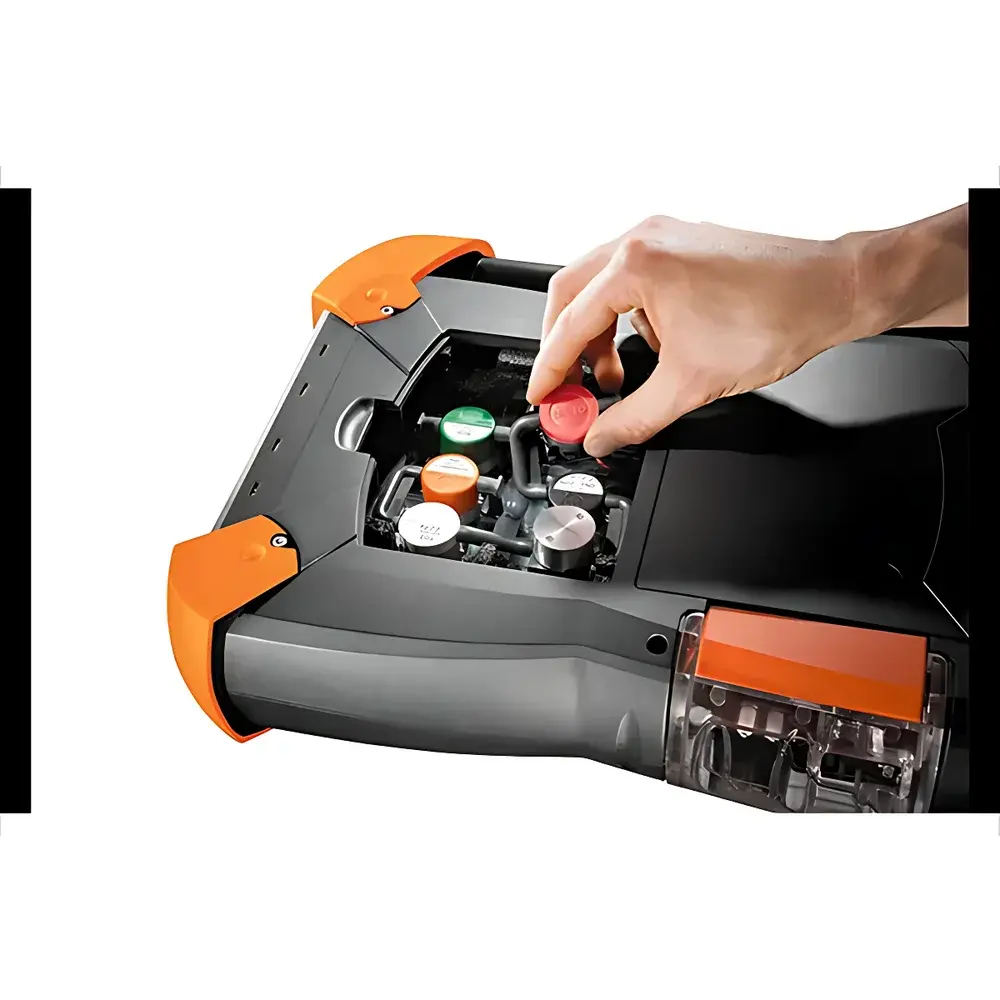
- Multi-sensor modularity: Pre-calibrated, hot-swap EC and NDIR sensors—no field calibration required for routine operation; supports up to 10 configurable gas channels.
- Advanced SO₂ measurement: Dual-range SO₂ and SO₂low sensors with certified CO interference rejection (tested per EN 15267 Annex B), enabling reliable low-ppm sulfur detection even in syngas or biomass-fired boilers.
- Integrated gas conditioning: On-board Peltier-cooled condensate separator, stainless-steel sintered filter (5 µm), and hydrophobic membrane ensure stable sample delivery at dew points up to +70 °C and dust loads up to 20 g/m³.
- Scalable multi-point analysis: testo DataBus interface enables synchronized acquisition from up to 16 testo 350 units—ideal for multi-port stack surveys, duct traverse validation, or parallel CEMS linearity checks.
- Thermal resilience: Compatible with Type K (−200 to +1370 °C) and Type S (0 to +1760 °C) thermocouples; supports direct high-temperature sampling without external cooling.
- Regulatory-ready reporting: Real-time calculation of O₂-corrected concentrations (mg/m³ @ 3%/6%/11% reference O₂), combustion efficiency, flue gas loss, and dew point—all traceable to NIST-traceable standards.
Sample Compatibility & Compliance
The testo 350 Orange Edition is validated for use across fossil-fueled, waste-to-energy, biomass, and industrial process stacks. Its gas conditioning system accommodates wet, corrosive, and particulate-laden flue streams—including those from cement kilns, steel reheating furnaces, and municipal incinerators—without sensor poisoning or drift. The analyzer complies with key international standards for portable emissions monitoring: EN 15267-3 (QAL1 certification framework), ISO 16911-1 (performance criteria for manual reference methods), and ASTM D6522 (standard test method for NOₓ in stationary source emissions). For regulated environments operating under EU IED, US EPA 40 CFR Part 60, or China’s GB 13271, the device supports audit-ready data logging with time-stamped metadata, user authentication, and tamper-evident file structure—fully compatible with GLP/GMP documentation workflows.
Software & Data Management
Data acquisition and reporting are managed via testo’s proprietary software suite (testo EasyHeat, testo Report, and testo Cloud), which supports FDA 21 CFR Part 11–compliant electronic signatures, role-based access control, and full audit trail functionality. Raw measurements are stored in encrypted .tdf format with embedded calibration certificates, sensor serial numbers, and environmental metadata (ambient T, RH, barometric pressure). Export options include CSV, PDF (customizable templates), XML (for LIMS integration), and direct API push to enterprise platforms via HTTPS/REST. Wireless capabilities (Wi-Fi 802.11n and Bluetooth 5.0) enable remote configuration, live dashboard viewing on tablets, and on-site thermal printing without physical cable connection—reducing turnaround time for compliance reports by >40% in field deployments.
Applications
- Stack emissions auditing per EU Directive 2010/75/EU (IED) and US EPA Performance Specification 2 (PS2).
- Combustion optimization for natural gas, oil, coal, and biomass boilers—reducing excess air, minimizing NOₓ formation, and improving thermal efficiency.
- CEMS performance verification and relative accuracy testing (RAT) under EN 14181 and EPA PS-11.
- Industrial furnace and kiln commissioning, including refractory drying and temperature uniformity mapping.
- Waste incineration plant monitoring for dioxin precursor gases (e.g., HCl surrogate tracking via Cl₂-capable sensor options).
- R&D applications requiring multi-parameter flue characterization, such as oxy-fuel combustion studies or carbon capture pilot testing.
FAQ
What gas components can be measured simultaneously?
Up to six gas components may be measured concurrently—including O₂, CO, NO, NO₂, SO₂, CO₂ (NDIR), H₂S, or CxHy—with flexible sensor configuration based on application requirements.
Is the testo 350 Orange Edition suitable for high-dust environments?
Yes—the integrated 5 µm sintered metal filter, cyclonic pre-separator, and heated sample line option (up to +180 °C) enable stable operation in dust loads up to 20 g/m³, meeting VDI 3862 requirements for cement and metallurgical stacks.
How does the analyzer handle CO interference during SO₂ measurement?
The SO₂ and SO₂low sensors feature patented electrochemical cell design with selective membranes and algorithmic compensation, validated for accurate readings in the presence of up to 10,000 ppm CO—critical for syngas and gasifier applications.
Can the instrument calculate O₂-corrected emission concentrations?
Yes—it automatically computes mg/m³ values referenced to standard oxygen levels (3%, 6%, or 11% O₂) per EN 14792 and EPA Method 7E, with user-definable reference O₂ concentration.
What data security and compliance features are included?
The system provides full 21 CFR Part 11 compliance: electronic signatures, audit trails, user access levels, and immutable data archives—validated for pharmaceutical, food processing, and regulated energy sectors.







