
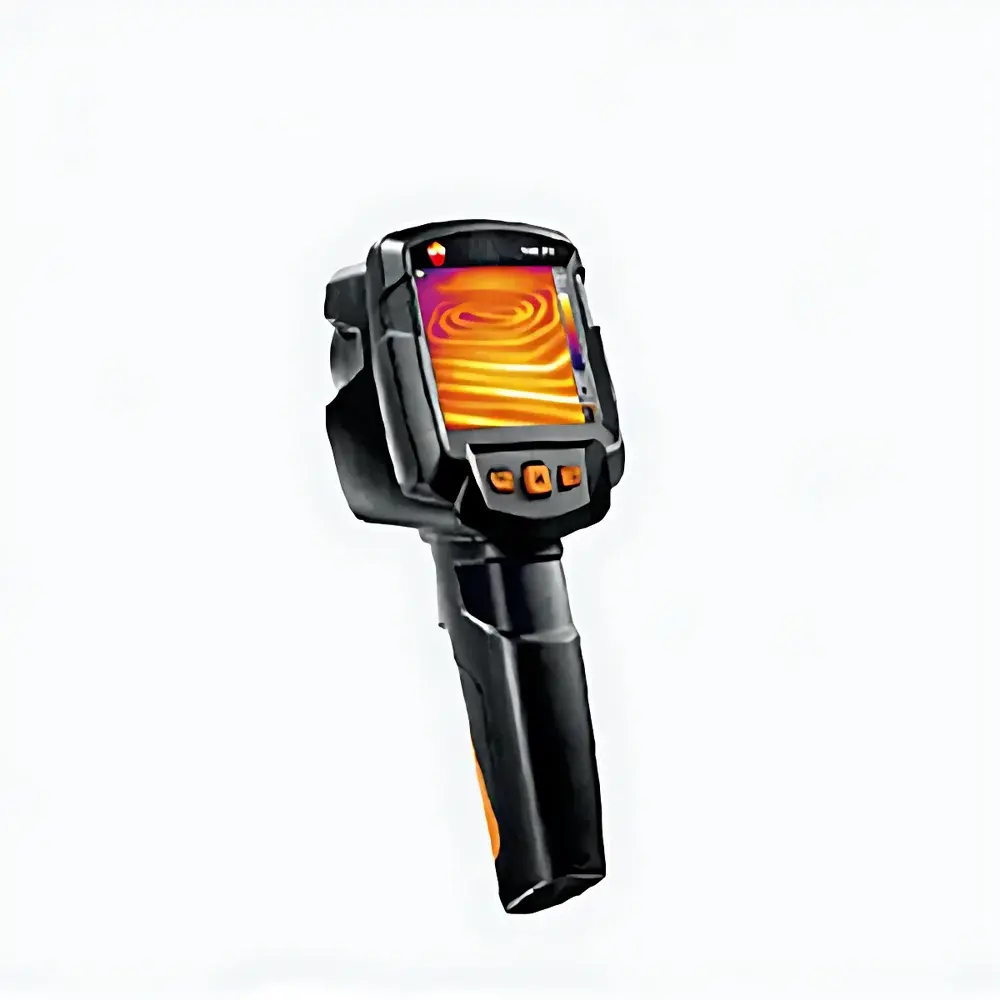
Testo 865 Infrared Thermal Imaging Camera
| Brand | Testo |
|---|---|
| Origin | Germany |
| Manufacturer Type | Authorized Distributor |
| Origin Category | Imported |
| Model | testo 865 |
| Price | Upon Request |
| Spectral Response | Mid-Wave Infrared (MWIR) |
| Detector Type | Scanning Focal Plane Array (FPA) |
| Application | Temperature Measurement |
| Measurement Method | Non-Contact |
| Detector Cooling | Uncooled |
| Frame Rate | 9 Hz @ 160 × 120 |
| Accuracy | ±2 °C or ±2% of reading (whichever is greater) |
| Temperature Range | −20 °C to +280 °C |
| Infrared Resolution | 160 × 120 pixels |
| Spectral Band | 7.5–14 µm |
| Thermal Sensitivity (NETD) | < 0.12 °C |
Overview
The testo 865 Infrared Thermal Imaging Camera is an engineered solution for precision non-contact surface temperature mapping in industrial maintenance, building diagnostics, and energy auditing applications. Operating within the 7.5–14 µm long-wave infrared (LWIR) spectral band—optimized for ambient-temperature emissivity characterization—the instrument employs an uncooled microbolometer focal plane array detector. Its core measurement principle relies on Planck’s law of blackbody radiation, where infrared radiance emitted from a target surface is quantified and converted into calibrated temperature values using real-time emissivity compensation and reflected apparent temperature correction algorithms. Designed for field robustness and laboratory-grade repeatability, the testo 865 delivers thermal data with high spatial fidelity and temporal stability, supporting quantitative thermographic analysis under variable environmental conditions.
Key Features
- 160 × 120 native infrared resolution, enhanced to 320 × 240 effective pixels via testo’s proprietary IR SuperResolution technology—increasing pixel density without compromising frame rate or thermal accuracy
- Thermal sensitivity (NETD) < 0.12 °C at 30 °C, enabling reliable detection of subtle thermal gradients in insulation integrity assessments and electrical junction inspections
- 9 Hz continuous frame capture at full resolution—sufficient for dynamic thermal monitoring of rotating machinery, HVAC airflow patterns, or transient fault conditions
- Integrated ScaleAssist function: intelligently recommends optimal thermal scale settings based on scene temperature distribution, minimizing manual adjustment during building envelope surveys
- Automatic hot/cold spot detection algorithm—identifies and overlays markers on thermal anomalies exceeding user-defined delta-T thresholds directly in live view
- Real-time emissivity and reflected apparent temperature input—supports material-specific calibration for metals, composites, masonry, and low-emissivity surfaces
Sample Compatibility & Compliance
The testo 865 is optimized for non-contact surface temperature measurement across heterogeneous materials common in facility infrastructure—including concrete, plasterboard, aluminum cladding, copper busbars, and PVC-insulated cabling. It complies with international standards governing infrared thermography practice, including ISO 18436-7 (Condition monitoring and diagnostics of machines – Thermography), ASTM E1934-19 (Standard Guide for Examining Electrical Distribution Systems for Thermal Anomalies), and EN 13187 (Thermal performance of buildings – Qualitative detection of thermal irregularities in building envelopes). While not certified for medical or explosive atmospheres, its design meets CE marking requirements per EU Directive 2014/30/EU (EMC) and 2014/35/EU (LVD), and supports traceable calibration documentation aligned with ISO/IEC 17025 principles.
Software & Data Management
Data acquisition and post-processing are enabled through testo IRSoft—a Windows-based desktop application supporting full radiometric image analysis. IRSoft provides emissivity mapping, isotherm contouring, line-profile extraction, delta-T comparison between multiple images, and customizable reporting templates exportable as PDF or Excel. All thermal images retain embedded metadata (emissivity, humidity, distance, ambient temperature) and are saved in standard JPEG format with embedded radiometric data (testo’s proprietary .tiff-compatible binary header). The software supports audit trail functionality compliant with GLP and internal QA protocols; user actions—including scaling adjustments, annotation edits, and report generation—are timestamped and logged. Firmware updates and device configuration are managed via USB interface, ensuring secure, offline-capable deployment in regulated environments where network connectivity is restricted.
Applications
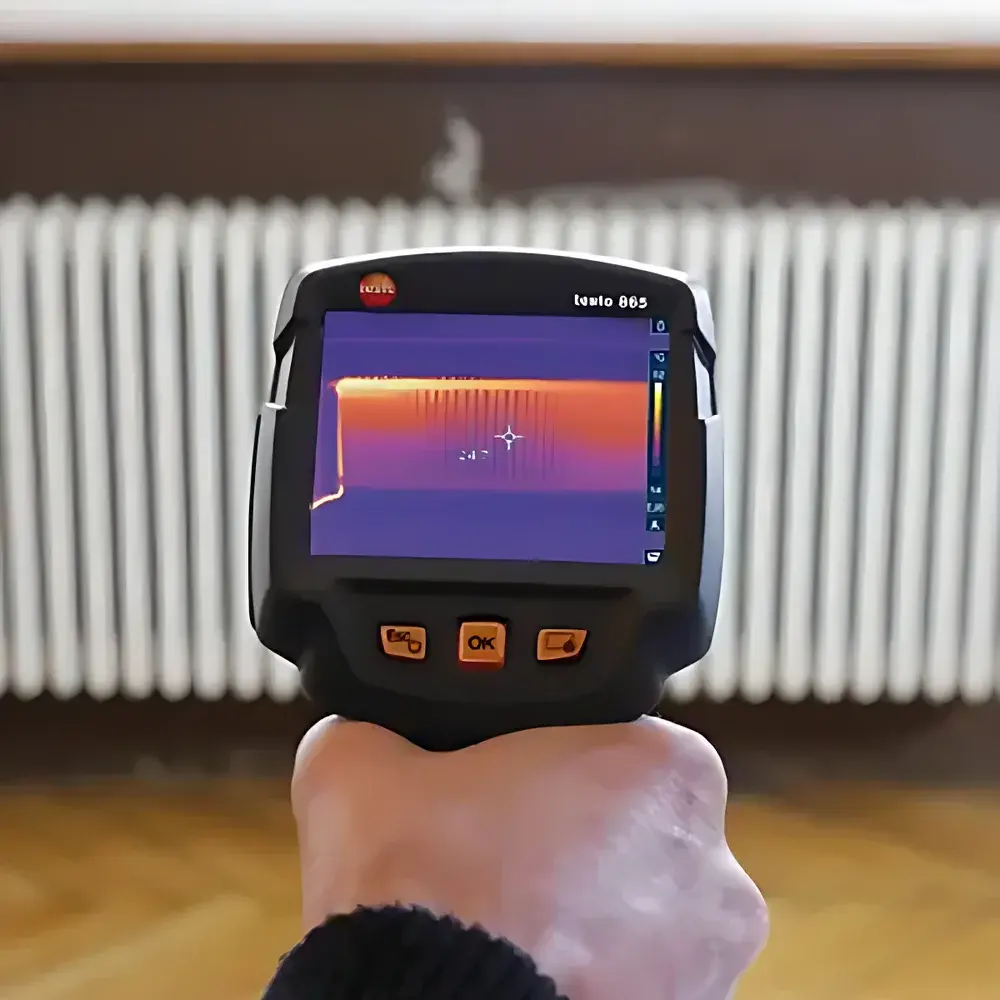
- Building diagnostics: identification of thermal bridges, moisture ingress, missing insulation, and air leakage pathways in façades, roofs, and glazing systems
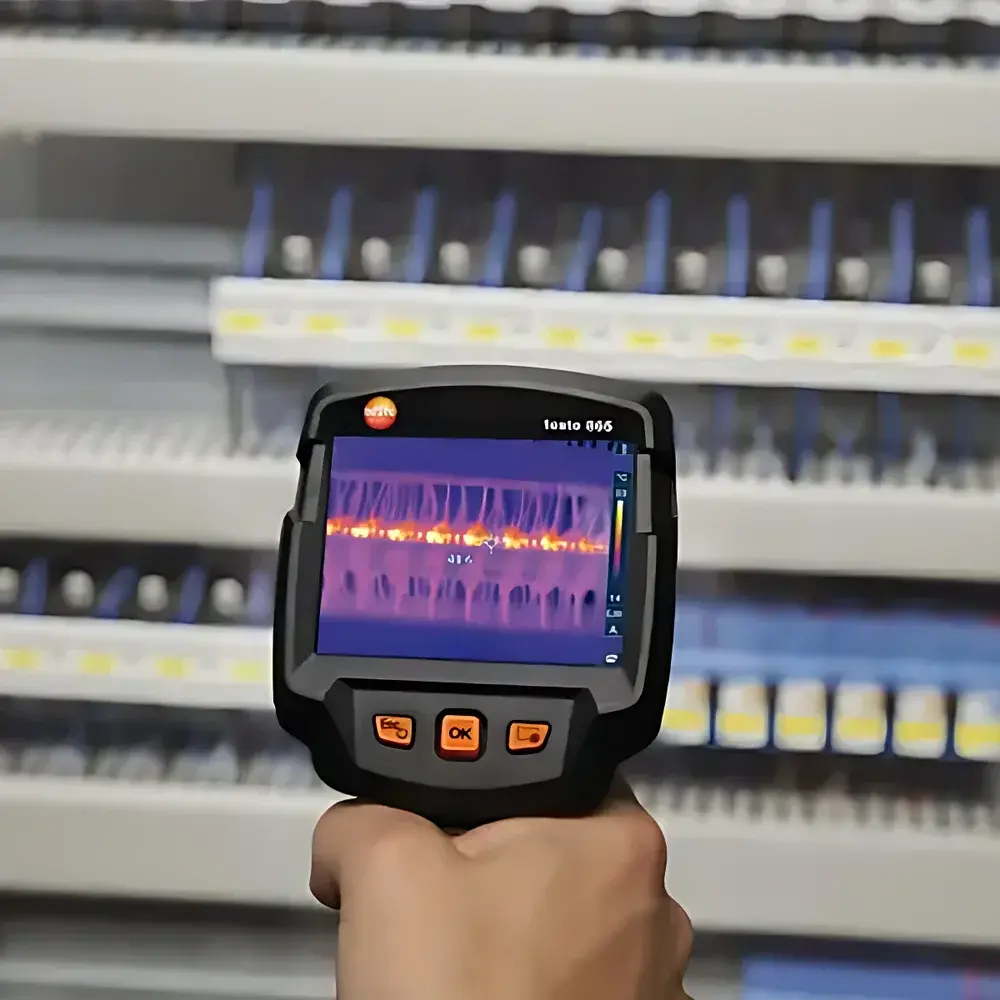
- Electrical infrastructure inspection: detection of loose connections, overloaded circuits, unbalanced loads, and failing breakers in switchgear, transformers, and distribution panels
- Mechanical system assessment: monitoring bearing temperatures, motor winding hotspots, steam trap functionality, and heat exchanger fouling
- Energy efficiency auditing: baseline thermal imaging for ASHRAE Level I and II assessments, supporting retrofit prioritization and ROI modeling
- Preventive maintenance programs: integration into CMMS platforms via exported CSV reports for trend analysis and failure mode prediction
FAQ
What is the recommended calibration interval for the testo 865?
Testo recommends annual calibration against NIST-traceable blackbody sources to maintain measurement confidence; field verification using reference emitters is advised before critical inspections.
Can the testo 865 measure through glass or plastic covers?
No—standard silicate glass and most polymers are opaque in the 7.5–14 µm band; measurements require direct line-of-sight to the target surface.
Does the device support radiometric video recording?
No—video capture is non-radiometric (visual-only AVI); only still-frame images contain full pixel-level temperature data.
Is testo IRSoft compatible with Windows 11 and 64-bit architectures?
Yes—IRSoft v5.2 and later fully support Windows 11 (22H2 and newer) and all modern x64 systems with .NET Framework 4.8 or higher.
How does ScaleAssist improve workflow efficiency in building surveys?
ScaleAssist analyzes histogram distribution of scene temperatures in real time and auto-selects the optimal span and level settings—reducing operator dependency and improving consistency across multi-user teams.




