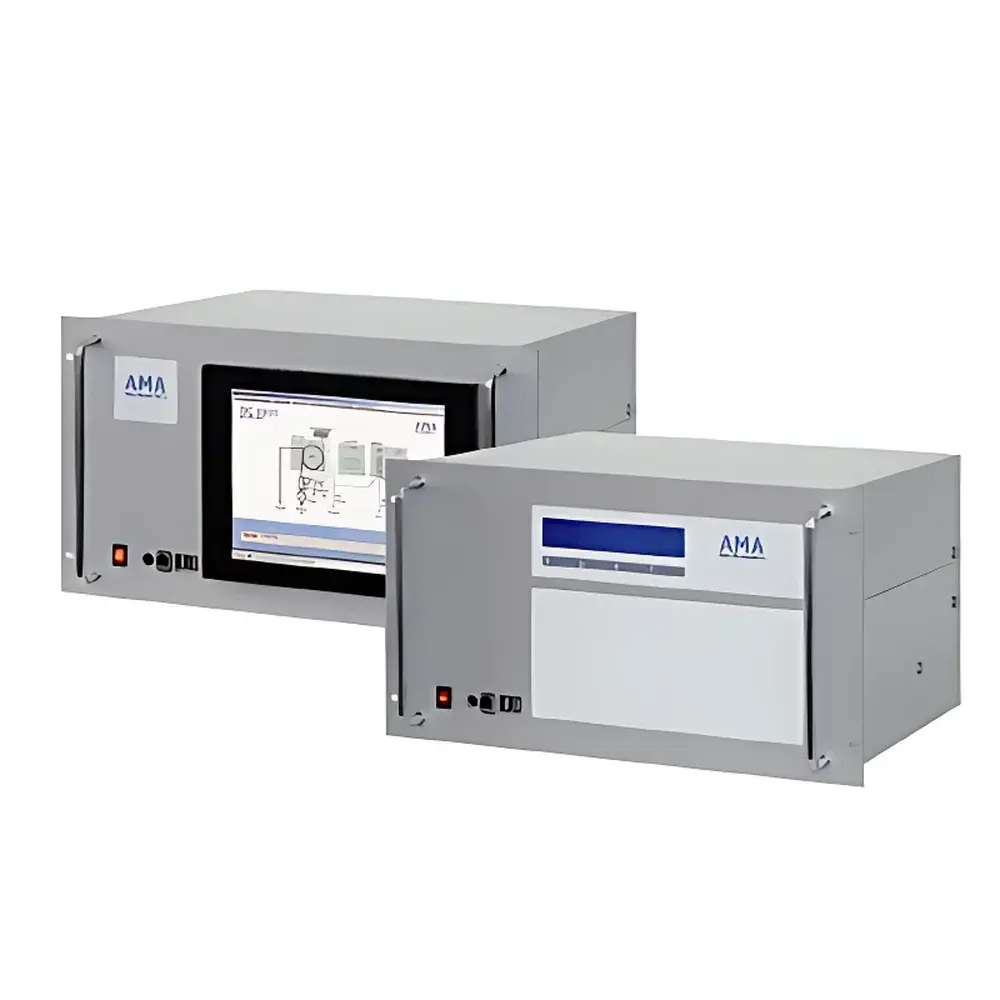
Thermo Fisher GC5000 BTX Online Gas Chromatograph
| Brand | Thermo Fisher |
|---|---|
| Origin | USA |
| Manufacturer Type | Original Equipment Manufacturer (OEM) |
| Origin Category | Imported Instrument |
| Model | GC5000 BTX |
| Pricing | Upon Request |
Overview
The Thermo Fisher GC5000 BTX Online Gas Chromatograph is an industrial-grade, fully automated analytical system engineered for continuous, unattended monitoring of volatile organic compounds (VOCs) in ambient air and stack emissions. It operates on the principle of gas chromatography with flame ionization detection (FID) or photoionization detection (PID), delivering high-resolution separation and quantification of C4–C12 hydrocarbons—including benzene, toluene, ethylbenzene, xylenes (BTX), styrene, alkylbenzenes, aliphatic hydrocarbons (e.g., 1,3-butadiene, methylcyclopentane), and halogenated compounds (e.g., vinyl chloride, trichloroethylene). Designed to meet stringent regulatory requirements—including EU Directive 2000/69/EC (benzene and PAHs), Directive 2002/3/EC (ozone precursors), VDI 2100, and U.S. EPA Technical Assistance Document EPA/600-R-98-161—the instrument provides trace-level detection down to ≤30 ppt for benzene via single-stage thermal desorption preconcentration.
Key Features
- Compact 19-inch, 6U rack-mountable chassis (600 mm depth, ~33 kg) suitable for fixed monitoring stations or mobile laboratories.
- Integrated low-maintenance diaphragm sampling pump with mass flow-controlled sample introduction—ensuring accurate, pressure- and temperature-compensated volumetric sampling under varying ambient conditions.
- Single-stage thermally desorbed enrichment module operating at 30 °C adsorption and up to 350 °C desorption, with heating rates up to 40 °C/s for sharp, reproducible injection.
- Temperature-programmable oven housing fused-silica capillary columns (up to 60 m); column temperature range: 40–210 °C; ramp rate: 1–25 °C/min; three-step temperature programming with four isothermal holds.
- Optional FID or PID detectors: FID offers >107 linear dynamic range, temperature-stabilized detector body, and optional makeup/combustion gases (H2, synthetic air); PID features RF-excited, electrodeless UV lamp with extended lifetime and enhanced photon flux.
- Real-time diagnostics and autonomous recovery: embedded OS continuously monitors hardware modules; automatic system reboot and resumption of analysis cycle upon fault detection.
Sample Compatibility & Compliance
The GC5000 BTX accepts gaseous samples from ambient air, ducted emission streams, or environmental monitoring networks. Its validated method scope covers aromatic hydrocarbons (BTX, ethyltoluenes, trimethylbenzenes), aliphatics (C4–C12), chlorinated VOCs, and ozone precursor species as defined in EU and U.S. regulatory frameworks. The system complies with electromagnetic compatibility standards per CE marking (89/336/EEC), operates within 0–40 °C and 5–95% RH (non-condensing), and supports GLP/GMP-aligned operation through audit-trail-capable firmware logging. All calibration and operational events—including valve actuations, temperature setpoints, and detector response—are timestamped and stored locally for traceability.
Software & Data Management
Control and data acquisition are managed via GESYTEC II software—a modular, Windows-based platform supporting remote Ethernet access (TCP/IP), RS232/RS485 serial interfaces, and USB/VGA/PS2 peripheral connectivity. The software enables full method editing, real-time chromatogram visualization, peak integration, calibration curve generation (multi-point, multi-gas), and automated report export (CSV, PDF). Optional touchscreen HMI panel provides local access to maintenance routines, diagnostic menus, and status dashboards—including live column oven temperature, detector baseline stability, carrier gas pressure, and sample flow verification. Data integrity is preserved through user-access controls, electronic signatures (per FDA 21 CFR Part 11 readiness), and encrypted local storage of raw chromatograms and event logs.
Applications
This instrument is deployed in ambient air quality monitoring networks (AQMNs), industrial fence-line monitoring, landfill and wastewater treatment plant emission tracking, petrochemical facility compliance reporting, and urban ozone precursor profiling. It supports long-term trend analysis of BTX species linked to health risk assessment (e.g., benzene carcinogenicity per IARC Group 1), source apportionment modeling, and validation of dispersion model inputs. When integrated with the GC5000 VOC analyzer, it forms a unified C2–C12 ozone precursor monitoring solution compliant with European Air Quality Directive implementation protocols.
FAQ
What detection limits does the GC5000 BTX achieve for benzene?
Benzene detection limit is ≤30 ppt (v/v) under standard operating conditions using thermal desorption and FID detection.
Can the system operate unattended for extended periods?
Yes—designed for 24/7 operation with automatic fault recovery, internal logging, and remote diagnostics via Ethernet.
Which regulatory guidelines does this instrument support?
EU Directives 2000/69/EC and 2002/3/EC, VDI 2100, EPA/600-R-98-161, and ISO 8518 (for ambient air VOC measurement principles).
Is the GC5000 BTX compatible with existing station infrastructure?
Yes—it supports 19-inch rack mounting, 220–250 VAC power, analog/digital I/O, and industry-standard communication protocols including Modbus TCP and custom ASCII over RS485.
What carrier and auxiliary gases are required?
Carrier gas: Ultra-high-purity nitrogen (≥3 bar); for FID: hydrogen (≥3 bar) and zero-air (≥3 bar); all delivered via 1/8″ Swagelok fittings with electronic pressure monitoring.