
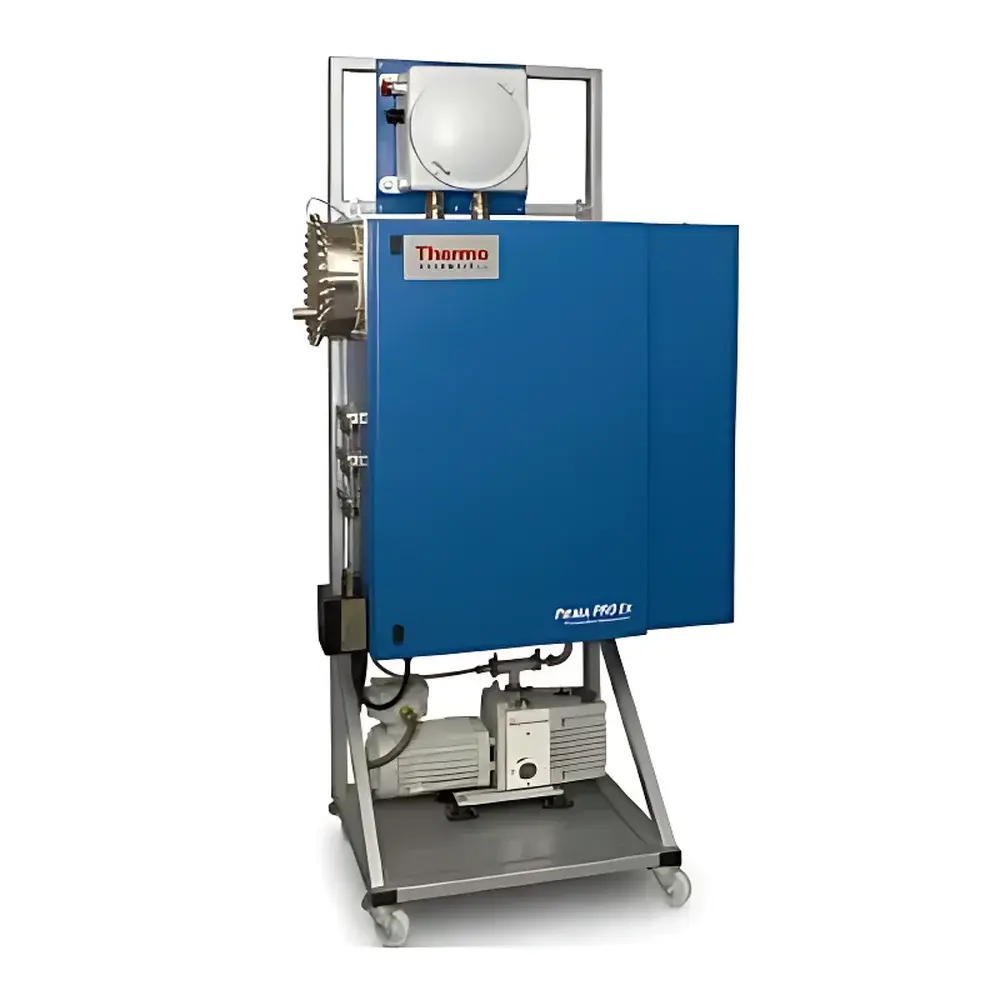
Thermo Fisher Sentinel Pro Environmental Mass Spectrometer
| Brand | Thermo Fisher |
|---|---|
| Origin | USA |
| Manufacturer | Thermo Fisher Scientific |
| Product Type | Imported Instrument |
| Model | Sentinel Pro |
| Detection Principle | Gas Chromatography-Mass Spectrometry (GC-MS) Coupled Online Sampling |
| Instrument Category | Online Real-Time Analyzer |
| Typical Configuration | Multi-Channel VOC Monitoring System |
| Detection Range | 0.01–1 ppm (v/v) |
| Resolution | Dual-Slit Selector — 60 (1 mm slit), 20 (4 mm slit) |
| Accuracy | <0.1% relative precision |
| Response Time | ≤15 min for up to 100 sampling points |
Overview
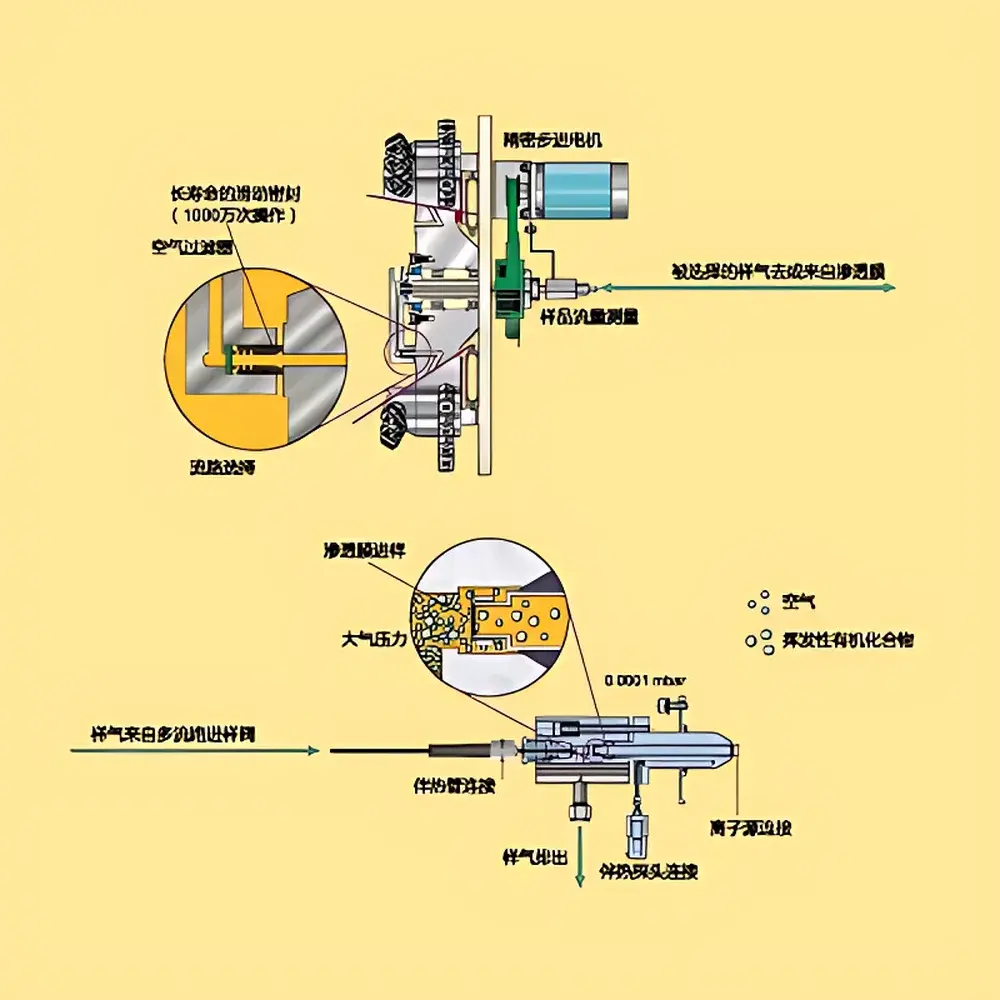
The Thermo Fisher Sentinel Pro Environmental Mass Spectrometer is an online, real-time analytical platform engineered for continuous, high-sensitivity monitoring of volatile organic compounds (VOCs) in ambient air and industrial process environments. Unlike conventional point sensors or offline laboratory GC-MS analysis, the Sentinel Pro integrates a heated permeation membrane inlet with a robust quadrupole mass spectrometer and a rapid multi-stream sampler (RMS), enabling quantitative detection of over 70 priority VOCs at sub-ppb to low-ppm levels without chromatographic separation. Its operational principle relies on selective gas-phase diffusion through a fluoropolymer membrane—preferentially enriching VOCs while rejecting bulk nitrogen and oxygen—followed by electron ionization (EI) and mass-resolved detection under controlled vacuum conditions (~10⁻⁴ mbar). Designed for regulatory compliance, leak detection and repair (LDAR) programs, and occupational exposure assessment, the system delivers time-resolved, spatially distributed concentration data aligned with OSHA PELs, ACGIH TLVs, and EPA Method TO-15/TO-17 performance expectations.
Key Features
- Permeation membrane inlet with integrated heating: Ensures representative, condensation-free sample introduction while achieving 10–100× pre-concentration for target VOCs versus ambient air.
- Rapid Multi-Stream Sampler (RMS): Configurable with 32 or 64 ports; zero-dead-volume architecture enables sequential sampling across up to 100 locations in ≤15 minutes with negligible carryover or cross-contamination.
- Dual-slit resolution selector: Switchable 1 mm (resolving power ~60) and 4 mm (resolving power ~20) slits optimize sensitivity vs. mass accuracy trade-offs depending on analyte complexity and regulatory reporting requirements.
- Heated probe assembly: Maintains consistent thermal profile from sampling point to ion source, minimizing adsorption losses and improving reproducibility for polar and reactive compounds (e.g., epichlorohydrin, acrylonitrile).
- Automated diagnostics & alarm logic: Flow monitoring per channel detects filter clogging or liquid ingress; real-time pressure and signal stability metrics support predictive maintenance planning.
- Modular RMS scalability: Two RMS units may be mounted on a single instrument chassis, consolidating multiple legacy single-analyte monitors into one calibrated, auditable platform.
Sample Compatibility & Compliance
The Sentinel Pro is validated for direct analysis of unmodified ambient air, stack effluents, and fugitive emissions without derivatization or pre-concentration. It meets functional equivalency requirements for EPA Methods TO-14A, TO-15, and ASTM D6196-22 for ambient VOC screening. Its quantitative output supports GLP-compliant data acquisition under 21 CFR Part 11 when deployed with Thermo Fisher’s TraceFinder™ software configured for audit trail, electronic signatures, and user access control. The system conforms to IEC 61000-6-2/6-4 for electromagnetic compatibility and operates within Class 1, Division 2 hazardous area specifications when installed with appropriate purge enclosures.
Software & Data Management
Data acquisition and reporting are managed via Thermo Fisher’s proprietary Sentinel Control Suite, which provides automated method scheduling, real-time spectral deconvolution, and customizable alert thresholds per compound and location. All raw spectra, calibration logs, and maintenance records are timestamped and stored in a relational SQL database with built-in backup and export functions (CSV, PDF, XML). Integration with enterprise SCADA or LIMS systems is supported through OPC UA and RESTful API interfaces. Audit trails capture operator actions, parameter changes, and instrument status transitions—fully traceable for FDA, EMA, or ISO 17025 assessments.
Applications
- Continuous LDAR monitoring across valve stems, flanges, pump seals, and storage tank vents in petrochemical, pharmaceutical, and fine chemical manufacturing.
- Workplace air quality surveillance in confined spaces and control rooms to verify compliance with 8-hour TWA exposure limits (e.g., benzene, styrene, vinyl chloride).
- Environmental fence-line monitoring for community impact assessments and Title V permit reporting.
- Emergency response triage during chemical release incidents—providing compound-specific identification and quantification within minutes.
- Validation of abatement system efficiency (e.g., thermal oxidizers, carbon beds) via simultaneous upstream/downstream sampling.
FAQ
What is the typical detection limit for benzene using the Sentinel Pro?
Benzene detection limits are typically ≤0.008 ppm (8 ppb) under standard operating conditions, leveraging membrane enrichment and optimized ion transmission.
Can the system operate unattended for extended periods?
Yes—the Sentinel Pro supports fully autonomous operation for ≥30 days between routine maintenance cycles, including automatic calibration gas injection and self-diagnostics.
Is method validation required for new compounds not listed in the factory library?
Users may add custom compounds via mass spectral library import or manual fragment assignment; method validation per ISO/IEC 17025 is recommended for regulated reporting.
How does the permeation membrane handle humidity and particulate-laden air?
The heated inlet assembly (maintained at 60–80 °C) prevents water condensation, and optional particulate filters (0.3 µm) upstream of the membrane ensure long-term stability in challenging industrial atmospheres.
Does the system comply with EU REACH or California Air Resources Board (CARB) requirements?
While not certified per se, its measurement performance aligns with CARB Method 420 and REACH Annex XVII monitoring expectations for C1–C12 VOCs, particularly for benzene, toluene, ethylbenzene, and xylenes (BTEX).







