
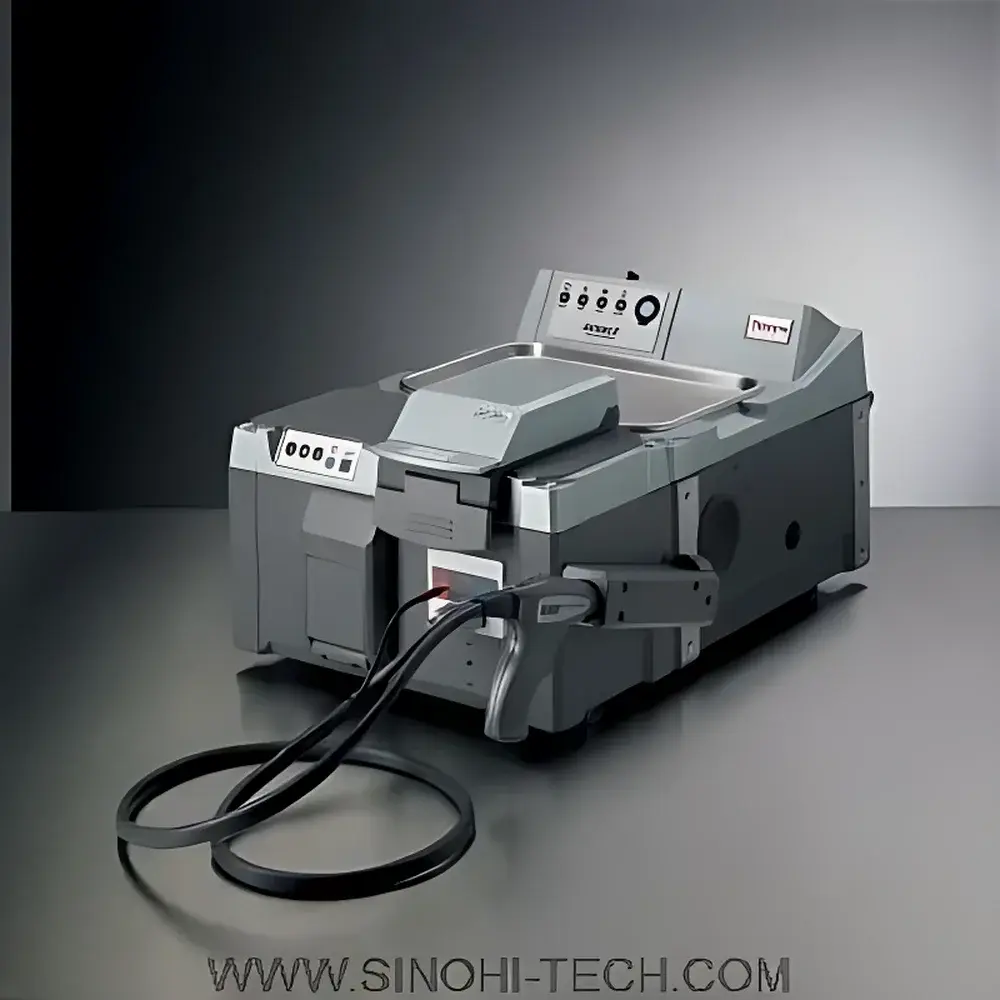
Thermo Scientific Antaris II Fourier Transform Near-Infrared (FT-NIR) Spectrometer
| Origin | USA |
|---|---|
| Manufacturer Type | Authorized Distributor |
| Origin Category | Imported |
| Model | Antaris II |
| Pricing | Available Upon Request |
Overview
The Thermo Scientific Antaris II Fourier Transform Near-Infrared (FT-NIR) Spectrometer is a high-performance, research-grade analytical platform engineered for robust operation in both laboratory and industrial environments. Built upon the foundational principles of interferometric spectroscopy, the Antaris II employs a Michelson-type interferometer with electromagnetic dynamic alignment to generate high-fidelity spectral data across the 10,000–4,000 cm⁻¹ (1,000–2,500 nm) near-infrared region. Its optical architecture is optimized for maximum radiant throughput and signal-to-noise ratio (SNR), enabling quantitative and qualitative analysis of organic molecular vibrations—particularly overtones and combination bands of C–H, N–H, and O–H bonds. Designed for method transferability and long-term stability, the system meets the operational rigor required for regulated quality control (QC), process analytical technology (PAT), and R&D applications in pharmaceuticals, agriculture, food, and polymer industries.
Key Features
- Modular optical design supporting simultaneous integration of transmission, reflectance, diffuse reflectance, and fiber-optic probe accessories—enabling universal sample interface without hardware reconfiguration
- Nicolet-patented high-throughput, electromagnetically driven dynamic alignment interferometer ensuring long-term alignment stability and sub-millisecond scan speed
- CaF₂ beam splitter optimized for broadband energy distribution across the entire NIR range, delivering superior photometric accuracy and reduced water vapor interference
- Cooled InGaAs photodiode array detector with thermoelectric stabilization, providing high quantum efficiency (>85% at 1,550 nm) and low dark current for enhanced reproducibility
- USB 2.0 interface compliant with Windows-based host systems; no external controller or proprietary bus required
- Low total cost of ownership (TCO) through solid-state optics, absence of moving mirrors or consumable components, and field-serviceable modules
Sample Compatibility & Compliance
The Antaris II accommodates solids (powders, tablets, granules), liquids (solutions, suspensions, emulsions), and semi-solids (creams, gels, pastes) via application-specific sampling interfaces—including integrating spheres, temperature-controlled cuvette holders, and immersion probes rated for IP65 environments. All optical paths are sealed against ambient moisture and particulate ingress. The system supports compliance workflows aligned with ISO/IEC 17025, ASTM E1655 (standard practices for NIR quantitative analysis), and USP (Near-Infrared Spectroscopy). When deployed with Thermo Scientific OMNIC software configured for audit trail and electronic signature, it satisfies FDA 21 CFR Part 11 requirements for data integrity in GxP environments.
Software & Data Management
Controlled by Thermo Scientific OMNIC Spectra software, the Antaris II provides intuitive instrument setup, real-time spectral acquisition, multivariate calibration (PLS, PCR, PCA), and predictive modeling tools. Raw interferograms and absorbance/transmittance spectra are stored in vendor-neutral .spa format. Calibration models support version control, cross-instrument transfer, and automated validation per ICH Q2(R2) guidelines. Data export options include CSV, XML, and direct integration with LIMS and MES platforms via OPC UA or RESTful API adapters. Secure user roles, encrypted database logging, and time-stamped audit trails ensure full traceability for GLP/GMP audits.
Applications
- Pharmaceutical: Raw material identification (RMI), blend uniformity monitoring, tablet assay and dissolution prediction, excipient quantification
- Agriculture: Grain protein/oil/moisture content, forage digestibility, seed viability screening
- Food & Beverage: Fat/protein/carbohydrate profiling in dairy, meat, and baked goods; adulterant detection (e.g., melamine, starch substitution)
- Polymers & Chemicals: Catalyst activity tracking, monomer conversion kinetics, additive concentration in thermoplastics
- Fuel & Lubricants: Benzene/toluene/xylene (BTX) ratios in gasoline, oxidation stability indices in engine oils
FAQ
Is the Antaris II suitable for regulatory submissions in pharmaceutical manufacturing?
Yes—when operated with validated OMNIC methods, calibrated reference standards, and documented instrument qualification (IQ/OQ/PQ), the system supports data packages for FDA, EMA, and PMDA submissions.
Can existing PLS calibration models from older Nicolet FT-NIR systems be migrated to the Antaris II?
Yes—OMNIC preserves legacy model structures and enables seamless recalibration using transfer standards and spectral matching algorithms.
What maintenance intervals are recommended for routine operation?
No periodic optical alignment is required. Annual verification of wavelength accuracy (using NIST-traceable polystyrene film) and SNR performance is advised per ASTM E1421.
Does the system support real-time process monitoring in-line or at-line?
Yes—fiber-optic probes with ruggedized stainless-steel housings and temperature-compensated electronics enable continuous measurements in reactors, dryers, and conveyors under Class 1 Div 2 hazardous area conditions.
Is remote diagnostics and firmware updates supported?
Yes—via secure HTTPS-enabled OMNIC Connect, allowing authorized service engineers to perform health checks, log analysis, and controlled firmware deployment without on-site visits.



