
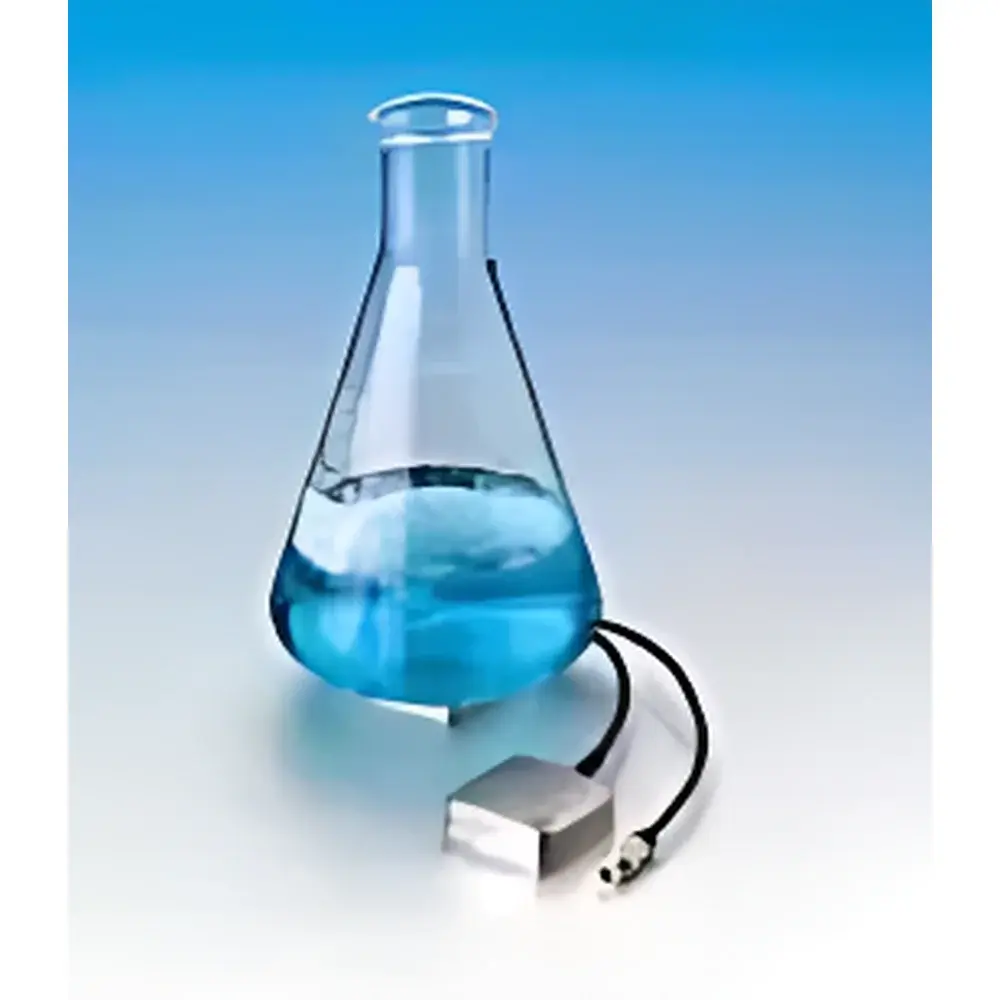
Thermo Scientific Cimarec i Micro Magnetic Stirrer
| Brand | Thermo Fisher Scientific |
|---|---|
| Origin | Germany |
| Manufacturer | Thermo Fisher Scientific |
| Product Type | Magnetic Stirrer |
| Model | Cimarec i Micro w/Telemodul |
| Maximum Stirring Volume | 1 L |
| Speed Range | 130–1400 rpm |
| Temperature Control Range | −10 to 120 °C |
| Construction | Seamless Stainless Steel Housing |
| Environmental Operating Range | −10 to 120 °C, up to 95% RH |
| Optional Multi-Unit Control | Up to 8 units via Telemodul interface |
| Temperature Uniformity | High spatial and temporal homogeneity across plate surface |
Overview
The Thermo Scientific Cimarec i Micro Magnetic Stirrer is an engineered platform for precise, reproducible mixing and temperature-controlled agitation in analytical, quality control, and research laboratories. Based on the proven Cimarec i architecture, this compact stirrer employs a permanent magnet drive system coupled with a high-efficiency brushless DC motor to deliver stable rotational torque across its full speed range. Its measurement principle relies on magnetic coupling between the rotating internal magnet (driven by the motor) and the external stirring bar placed within the sample vessel — eliminating mechanical shaft penetration and ensuring leak-tight, contamination-free operation. Designed for integration into regulated environments, the unit supports continuous operation under ambient conditions ranging from −10 °C to 120 °C at relative humidity up to 95%, making it suitable for cold-room applications, elevated-temperature incubation protocols, and humidified cleanroom workflows.
Key Features
- Seamless stainless steel housing (AISI 316L grade) providing resistance to aggressive solvents, acids, bases, and microbial colonization — validated for repeated autoclave-compatible cleaning and compatible with ISO 14644-1 Class 5 cleanroom wiping protocols.
- Integrated PTC heating element with digital PID temperature regulation, delivering ±0.5 °C accuracy and <±0.3 °C spatial uniformity over the 120 mm × 120 mm ceramic-coated aluminum plate surface.
- Speed control range of 130–1400 rpm with <±2 rpm repeatability, optimized for low-viscosity aqueous solutions through high-viscosity polymer melts (up to ~5000 mPa·s at 25 °C, depending on bar geometry and vessel configuration).
- Two controller variants available: Cimarec i Micro w/Telemodul (standard RS485 interface) and Cimarec i Micro w/Telemodul 20 C (with integrated 20-channel cascade control capability), enabling synchronized operation of up to eight units from a single master controller.
- No external cooling required — passive thermal management ensures stable performance during extended runs at maximum setpoint (120 °C) without derating or fan-induced vibration interference.
Sample Compatibility & Compliance
The Cimarec i Micro accommodates standard laboratory glassware including borosilicate beakers (50–1000 mL), Erlenmeyer flasks, and jacketed reactors with magnetic stir bars (lengths 20–60 mm, diameters 5–10 mm). Its sealed construction meets IP54 ingress protection requirements per IEC 60529, and electrical safety complies with IEC 61010-1:2010 (Edition 3.1) for Laboratory Equipment. The device is CE-marked and conforms to RoHS 2011/65/EU and REACH (EC) No. 1907/2006. For regulated pharmaceutical and biotechnology labs, the Telemodul-enabled models support audit-trail-capable parameter logging when paired with Thermo Fisher’s optional LabLink Pro software — facilitating alignment with FDA 21 CFR Part 11 electronic record requirements and GLP/GMP documentation standards.
Software & Data Management
When connected via RS485 to a host PC running Thermo Fisher LabLink Pro v3.2 or later, the Cimarec i Micro enables remote configuration of speed, temperature, ramp rates, hold times, and multi-step profiles. All setpoints and real-time operational data (actual speed, plate temperature, error codes) are timestamped and stored locally on the controller’s non-volatile memory (retention >10 years). Export formats include CSV and XML, supporting import into LIMS platforms such as LabVantage or SampleManager. Firmware updates are performed via signed binary packages verified using SHA-256 checksums — a requirement for controlled environment validation per ASTM E2500-13.
Applications
- Buffer and reagent preparation in molecular biology workflows requiring strict pH and temperature stability (e.g., Tris-HCl, PBS, SDS-PAGE gels).
- Accelerated dissolution testing of solid dosage forms under USP and conditions, particularly when combined with inline UV-Vis monitoring.
- Homogenization of nanoparticle suspensions prior to DLS or TEM analysis — minimizing shear-induced aggregation due to consistent low-turbulence rotation.
- Controlled crystallization studies in API process development, where precise supersaturation control depends on reproducible mixing intensity and thermal gradient minimization.
- Long-duration enzymatic assays (e.g., kinase or protease activity) conducted at 37 °C or 45 °C with uninterrupted agitation over 24+ hour periods.
FAQ
Can the Cimarec i Micro operate inside a CO₂ incubator?
Yes — its −10 to 120 °C operating range and 95% RH tolerance allow safe use in standard humidified CO₂ incubators (typically maintained at 37 °C / 5% CO₂ / >95% RH), provided ventilation slots remain unobstructed.
Is calibration traceable to NIST standards?
Temperature sensor calibration is performed against PT100 reference probes certified to ISO/IEC 17025-accredited laboratories; full calibration certificates (including uncertainty budgets) are available upon request.
What stir bar sizes are recommended for optimal performance at 1400 rpm?
For maximum stability and minimal vortexing at top speed, use elliptical stir bars 40 mm long × 8 mm diameter or cross-shaped bars with dual-magnet geometry — especially for volumes >500 mL in cylindrical vessels.
Does the Telemodul interface support Modbus RTU protocol?
No — it uses a proprietary ASCII-based command protocol over RS485; however, Thermo Fisher provides documented API specifications and Python SDK examples for custom SCADA integration.
Can the unit be validated for GMP manufacturing environments?
Yes — IQ/OQ protocols compliant with Annex 15 and ASTM E2500-13 are available from Thermo Fisher Technical Services, including installation checks, operational boundary mapping, and performance qualification across the full temperature/speed matrix.



