
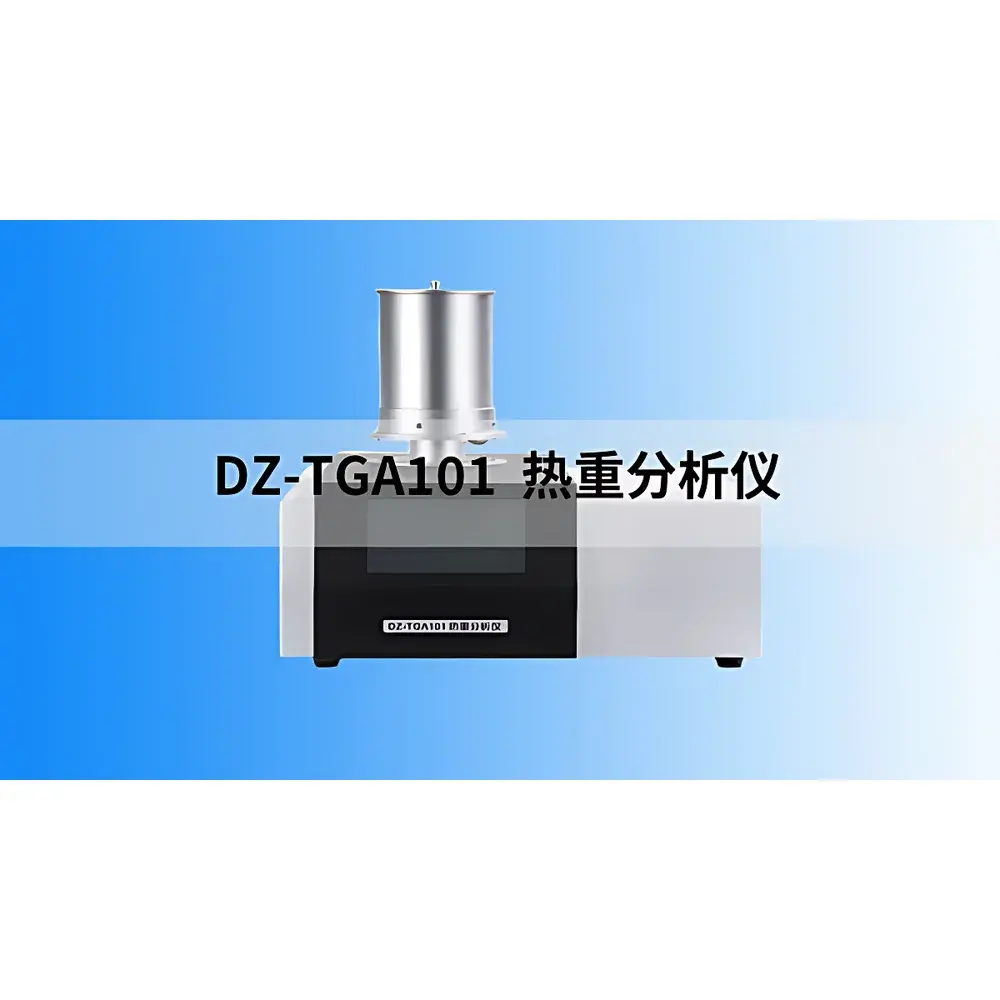
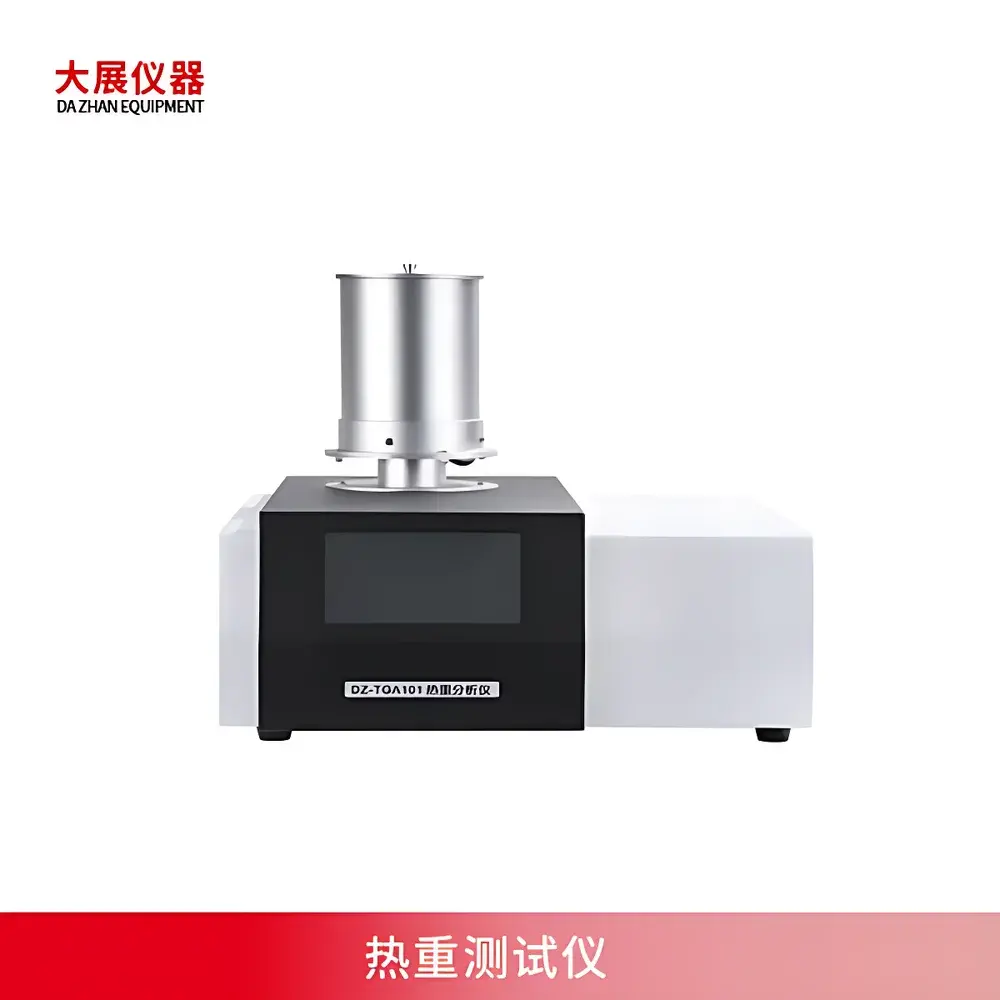
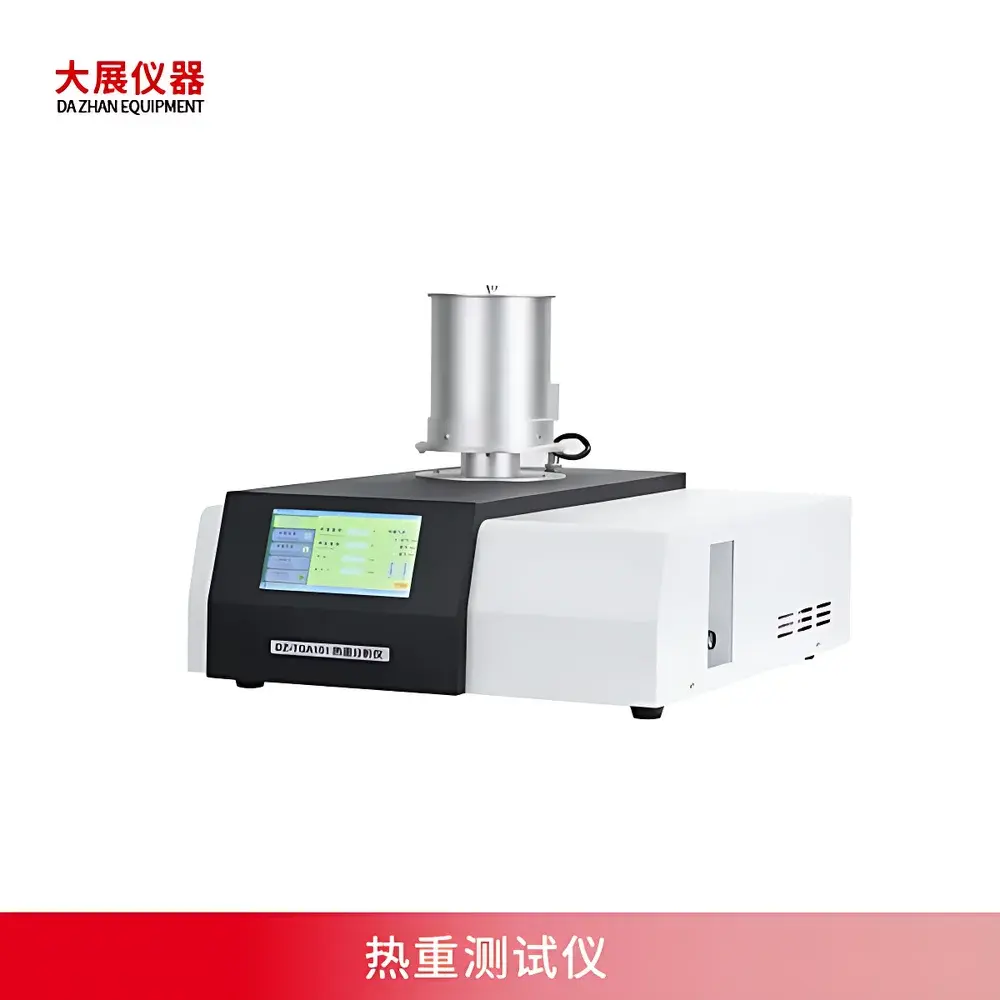
Thermogravimetric Analyzer DZ-TGA101 by NANJING DAZHAN
| Brand | NANJING DAZHAN |
|---|---|
| Model | DZ-TGA101 |
| Temperature Range | Ambient to 1200 °C |
| Heating/Cooling Rate | 0.1–100 °C/min |
| Max Sample Mass | 30 g |
| Atmosphere Control | Dual-gas inlet with mass flow regulation (inert, oxidative, reductive, static/dynamic) |
| Balance Resolution | 0.1 µg |
| Balance Accuracy | ±0.01 mg |
| Temperature Stability | ±0.1 °C |
| Temperature Resolution | 0.01 °C |
| Cooling Time (1000 °C → 100 °C) | ≤15 min |
| Display | 7-inch 24-bit color touchscreen |
| Communication | USB 2.0 bidirectional interface |
| Software | Integrated TGA analysis suite with TG/DTG curve fitting, multi-point temperature calibration, Excel/PDF export, GLP-compliant report generation |
Overview
The DZ-TGA101 Thermogravimetric Analyzer is a precision benchtop instrument engineered for quantitative measurement of mass change in solid or liquid samples as a function of temperature or time under controlled atmospheric conditions. Based on the fundamental principle of thermogravimetry—where sample mass is continuously monitored using a high-sensitivity microbalance while subjected to programmable thermal profiles—the DZ-TGA101 delivers reproducible data essential for characterizing thermal decomposition kinetics, oxidative stability, moisture/volatile content, filler loading, and compositional evolution. Its design adheres to core ISO 11358 and ASTM E1131 standards for thermogravimetric analysis, supporting both research-grade method development and routine QC testing in regulated environments.
Key Features
- High-temperature furnace with dual-row wound Ni-Cr alloy heating elements, enabling stable operation up to 1200 °C and minimizing thermal gradient-induced drift;
- Integrated platinum-rhodium alloy sample holder and sensor assembly, offering exceptional resistance to oxidation, corrosion, and thermal creep at elevated temperatures;
- Top-opening furnace architecture—designed to eliminate mechanical stress on the sample rod during loading/unloading, significantly reducing risk of sensor misalignment or damage;
- 7-inch full-color capacitive touchscreen interface with native Chinese/English language support, enabling standalone operation including real-time curve visualization, multi-point temperature calibration, and parameter configuration;
- Bidirectional USB 2.0 communication protocol for seamless integration with PC-based analysis software, supporting remote start/stop, parameter upload/download, and firmware updates;
- Dual-channel gas control system with integrated digital mass flow meters, allowing precise switching and independent regulation of inert (e.g., N₂, Ar), oxidative (e.g., air, O₂), or reductive (e.g., H₂/N₂ mix) atmospheres;
- Modular balance platform with selectable sensitivity ranges (0.1 mg–3 g standard; extendable to 30 g), calibrated traceably to NIST-traceable reference masses.
Sample Compatibility & Compliance
The DZ-TGA101 accommodates standard ceramic, alumina, and aluminum crucibles (including hermetic variants), supporting samples ranging from powders and granules to thin films and small metallic specimens (≤30 g max). Its sealed reaction chamber and configurable purge gas flow ensure compatibility with reactive, hygroscopic, or volatile materials. The system supports compliance workflows per ISO/IEC 17025, USP , and FDA 21 CFR Part 11 through audit-trail-enabled software logging, electronic signature capability, and secure user-level access control. All thermal protocols—including ramp, hold, and multi-step sequences—are fully programmable with resolution down to 0.1 °C and time steps of 0.1 s, meeting GLP/GMP documentation requirements for pharmaceutical excipient qualification and polymer degradation studies.
Software & Data Management
The bundled TGA Analysis Suite provides comprehensive post-run processing tools for derivative thermogravimetry (DTG), peak deconvolution, residual mass quantification, and kinetic modeling (e.g., Flynn-Wall-Ozawa, Kissinger). Raw data are stored in vendor-neutral .csv format; processed curves can be exported directly to Microsoft Excel for statistical validation or compiled into publication-ready PDF reports with embedded metadata (operator ID, instrument serial number, calibration date, atmospheric conditions). Software updates are delivered free-of-charge via secure HTTPS portal, with version history and change logs maintained for regulatory review. Calibration routines—including temperature point verification at 100 °C, 500 °C, and 900 °C—can be executed entirely on-device without external hardware.
Applications
- Quantitative determination of filler content (e.g., CaCO₃, SiO₂) in polymer composites and rubber formulations;
- Thermal stability assessment of active pharmaceutical ingredients (APIs) and excipients under ICH Q1A(R2) guidelines;
- Oxidation onset temperature (OOT) and char yield evaluation for flame-retardant coatings and carbon fiber precursors;
- Decomposition pathway mapping of metal-organic frameworks (MOFs) and battery cathode materials (e.g., LiCoO₂, NMC);
- Moisture, solvent residue, and volatiles analysis per ASTM D7369 and ISO 21048;
- Catalyst deactivation profiling via coke deposition quantification under simulated regeneration cycles.
FAQ
What types of crucibles are supported?
Standard configurations include high-purity α-alumina, quartz, and Pt-Rh crucibles; custom geometries (e.g., pressed powder pans, wire baskets) are available upon request.
Is the instrument compliant with 21 CFR Part 11?
Yes—the software includes role-based authentication, electronic signatures, immutable audit trails, and data integrity safeguards required for FDA-regulated laboratories.
Can cooling rate be independently programmed?
Yes: both heating and cooling rates are fully user-definable from 0.1 to 100 °C/min, with forced-air cooling achieving ≤15 min cooldown from 1000 °C to 100 °C.
How is temperature accuracy verified across the full range?
The system incorporates multi-point temperature calibration using certified reference materials (e.g., Ni, Cu, Al, Zn melting points), accessible and executable via the touchscreen interface.
Does the software support kinetic analysis models?
Yes: built-in algorithms implement ASTM E698 (Kissinger), ASTM E1641 (Ozawa-Flynn-Wall), and model-free isoconversional methods for activation energy estimation.



