
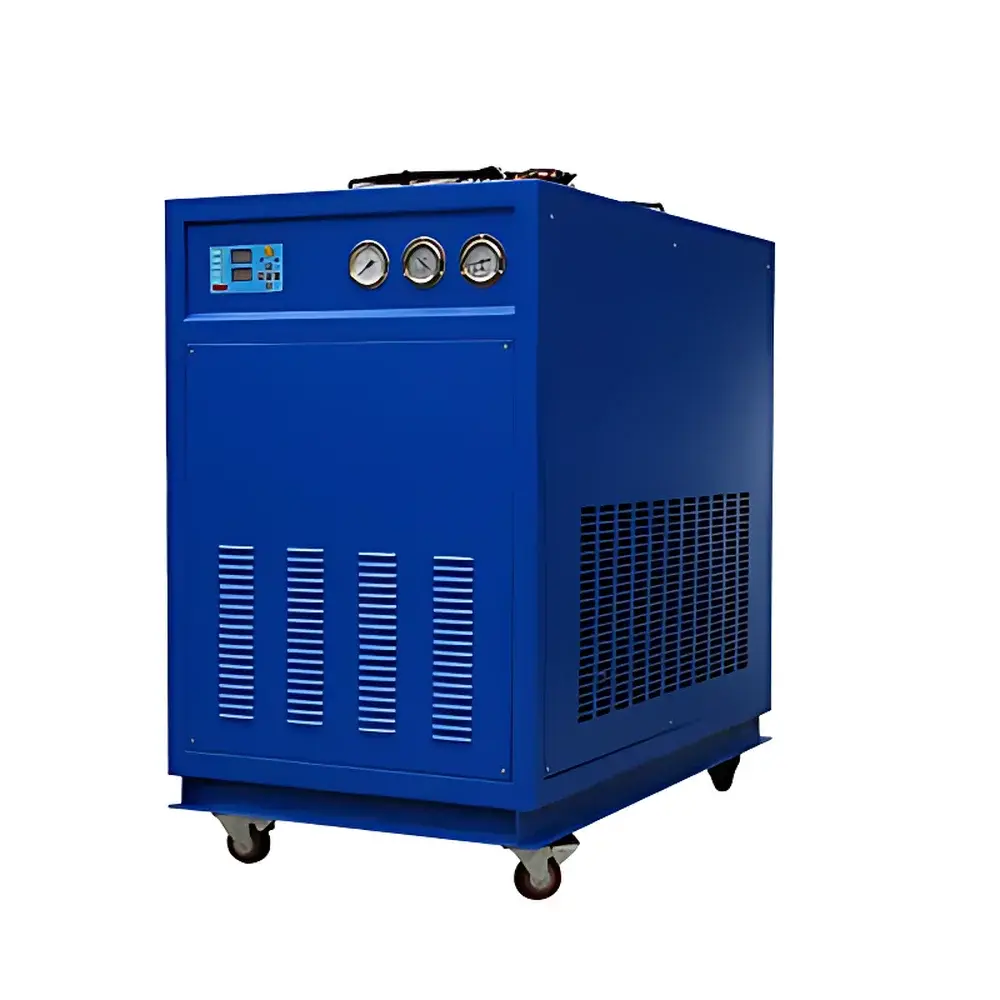
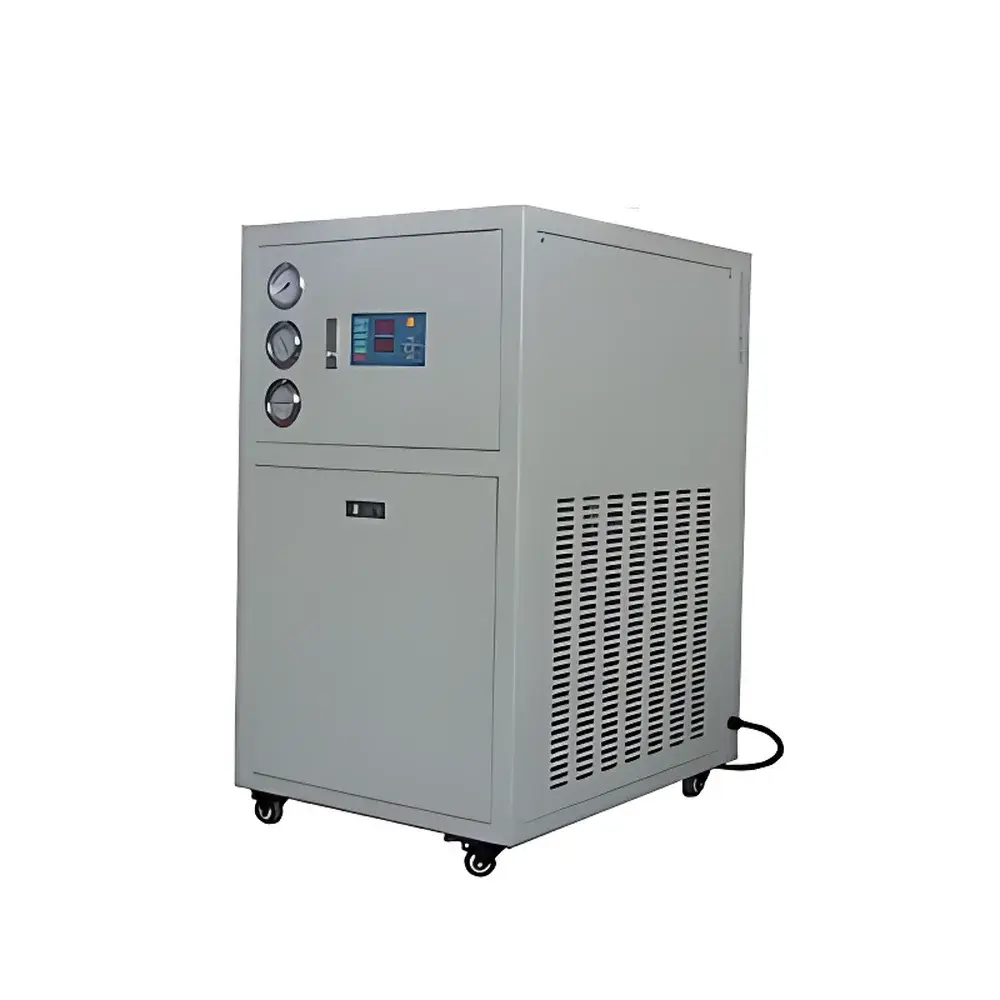
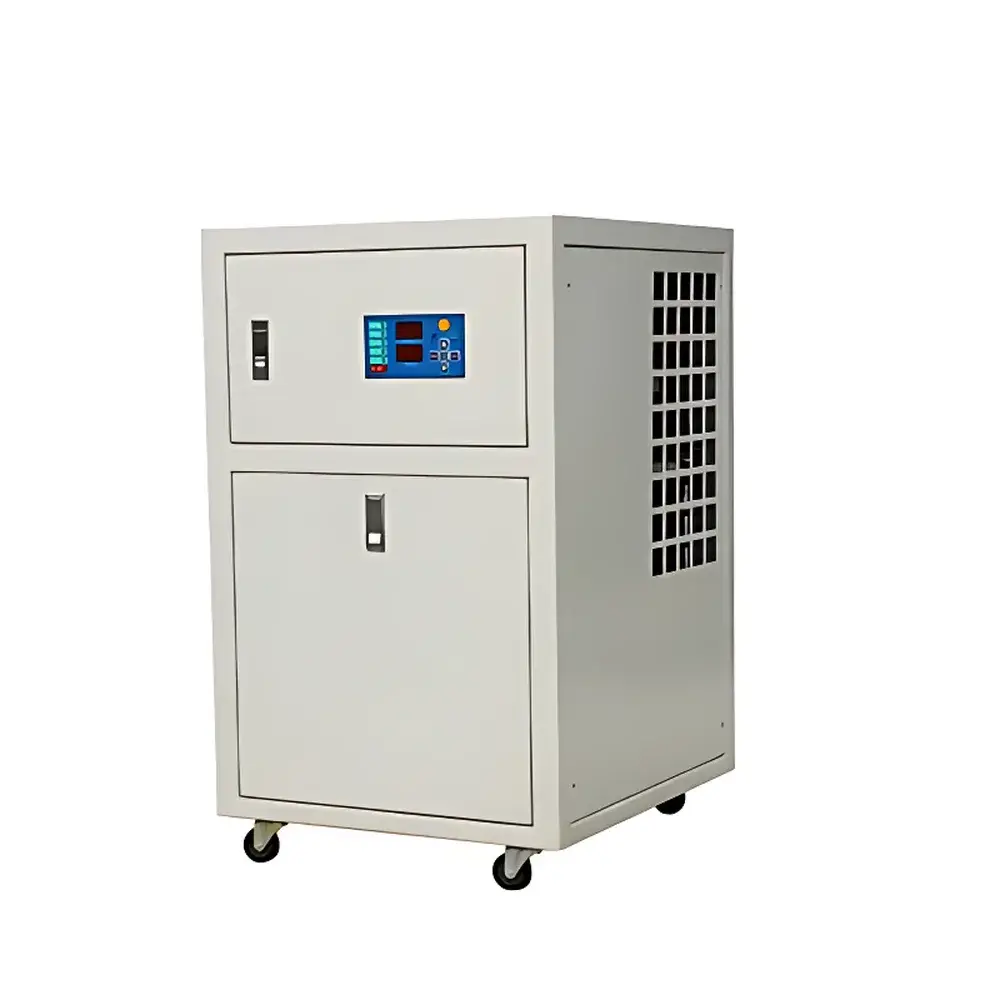
Tianfeng LS-30KW Integrated Circulating Chiller
| Brand | Tianfeng |
|---|---|
| Origin | Shanghai, China |
| Manufacturer Type | Direct Manufacturer |
| Instrument Type | Integrated Unit |
| Cooling Method | Water-Cooled |
| Temperature Control Range | 0–10 °C |
| Cooling Capacity | 30 kW |
| Temperature Stability | ±0.1 °C |
| Circulating Pump Pressure | 2.0 bar |
| Circulating Flow Rate | 2 L/min |
| Reservoir Volume | 260 L |
| Operating Mode | Continuous Duty |
| Power Supply | 220 V, 50 Hz |
| Compressor | Scroll Type |
| Safety Protections | High/Low Pressure Switch, Overcurrent Protection, Compressor Overheat Protection, Overtemperature Alarm |
| Construction | Stainless Steel Reservoir & Pump |
| Controller | Domestic PID Temperature Controller (Optional RKC Japan) |
| Electrical Components | Siemens / Schneider / Omron |
| Refrigeration Components | Italian/German Expansion Valves & Solenoid Valves |
| Noise Level | Low |
| Dimensions (L×W×H) | 1610 × 900 × 1850 mm |
| Weight | Approx. 420 kg |
| Compliance | GB/T 18430.1–2022, ISO 5149, CE-marked per Machinery Directive 2006/42/EC and EMC Directive 2014/30/EU |
Overview
The Tianfeng LS-30KW Integrated Circulating Chiller is an engineered thermal management solution designed for precision cooling of high-heat-load laboratory and industrial equipment. It operates on a closed-loop refrigeration cycle utilizing R407C or R410A refrigerant (configurable), with a scroll compressor delivering stable, low-vibration performance under continuous-duty operation. The chiller maintains fluid temperature within a tightly controlled range of 0–10 °C, with stability of ±0.1 °C — critical for applications requiring thermal consistency in analytical instrumentation, vacuum systems, and laser-based tools. Its water-cooled condenser design ensures efficient heat rejection in environments where ambient air cooling is impractical or insufficient, while the integrated architecture eliminates external piping complexity and minimizes footprint. Built to meet international safety and electromagnetic compatibility standards, including ISO 5149 (refrigerating systems), GB/T 18430.1–2022 (Chinese national standard for liquid chillers), and CE compliance per EU Machinery and EMC Directives, this unit supports GLP- and GMP-aligned lab infrastructure where traceable, repeatable thermal control is mandatory.
Key Features
- High-precision temperature regulation via dual-stage PID algorithm, enabling ±0.1 °C stability over extended operation
- Stainless steel reservoir (260 L capacity) and corrosion-resistant pump housing ensure long-term fluid integrity and resistance to deionized water or glycol-water mixtures
- Scroll-type compressor with integrated high/low pressure cutouts, overcurrent protection, and real-time discharge temperature monitoring
- Digital LED interface with programmable setpoint, actual temperature readout, and fault-code diagnostics
- Adjustable flow rate (0–2 L/min) and pressure output (up to 2.0 bar) to match varying thermal load profiles across connected instruments
- Full-spectrum electrical safety architecture using certified components from Siemens, Schneider Electric, and Omron
- Low-noise operation (<65 dB(A) at 1 m), suitable for shared laboratory environments adjacent to sensitive measurement zones
- Modular refrigeration circuit with imported expansion valves and solenoid valves from Italy and Germany for consistent throttling response and service longevity
Sample Compatibility & Compliance
The LS-30KW is compatible with a broad class of heat-generating analytical and process equipment requiring stable coolant supply, including graphite furnace atomic absorption spectrometers (GFAAS), inductively coupled plasma optical emission spectrometers (ICP-OES), ICP-mass spectrometers (ICP-MS), X-ray fluorescence (XRF) and X-ray diffraction (XRD) systems, scanning electron microscopes (SEM), and transmission electron microscopes (TEM). It meets mechanical and refrigerant safety requirements per ISO 5149 and GB/T 18430.1–2022, and carries CE marking for conformity with EU directives governing machinery safety (2006/42/EC) and electromagnetic compatibility (2014/30/EU). While not inherently FDA 21 CFR Part 11 compliant as a standalone device, its digital controller supports optional audit-trail logging modules when integrated into validated laboratory networks operating under 21 CFR Part 11 or Annex 11 frameworks.
Software & Data Management
This chiller operates as a stand-alone thermal control unit with no embedded software stack; all control logic resides in its hardware-based PID controller. However, it features a 4–20 mA analog output and RS485 Modbus RTU interface (optional configuration) for integration into centralized building management systems (BMS) or laboratory information management systems (LIMS). These interfaces enable remote monitoring of coolant temperature, pump status, alarm conditions, and compressor runtime — supporting preventive maintenance scheduling and environmental monitoring documentation required under ISO/IEC 17025 or CAP-accredited lab quality systems. Optional RKC temperature controllers provide enhanced data logging capability (up to 10,000 records) with timestamping and exportable CSV output.
Applications
- Laboratory instrumentation: Stabilizing detector temperatures in XRD, SEM, TEM, and mass spectrometry platforms to minimize thermal drift and signal noise
- Laser systems: Providing consistent coolant supply to CO₂, fiber, and diode-pumped solid-state lasers used in marking, cutting, welding, and ablation
- Plastics processing: Controlling mold temperature in injection molding to reduce internal stress, improve surface finish, and accelerate cycle times
- Metalworking: Regulating hydraulic oil and spindle bearing temperatures in CNC machining centers and coordinate measuring machines (CMMs) to maintain dimensional accuracy
- Electronics manufacturing: Managing thermal loads during ultrasonic cleaning, solder reflow profiling, and semiconductor wafer processing
- Vacuum and thin-film deposition: Maintaining stable thermal conditions for diffusion pumps, ion sources, and sputtering targets in PVD/CVD systems
- Pharmaceutical R&D: Supporting controlled-temperature fermentation, lyophilization support systems, and stability chamber auxiliary cooling
FAQ
What is the recommended coolant composition for this chiller?
Deionized water is standard for most laboratory applications. For sub-zero operation or extended outdoor use, a 20–30% propylene glycol/water mixture is advised — verify compatibility with connected equipment seals and heat exchangers.
Can this unit be integrated into a facility-wide SCADA system?
Yes — via optional RS485 Modbus RTU or 4–20 mA analog output, enabling real-time telemetry and alarm forwarding to central control platforms.
Is the chiller suitable for cleanroom environments?
Its stainless steel wetted parts, low particulate shedding design, and absence of volatile organic coatings make it appropriate for ISO Class 7–8 cleanrooms when installed with HEPA-filtered intake air and vibration-isolated mounting.
What maintenance intervals are recommended?
Compressor oil and refrigerant levels should be verified annually; condenser water-side strainers require quarterly inspection; electronic controller calibration is recommended every 24 months per ISO/IEC 17025 Clause 6.5.
Does the unit include validation documentation for GxP environments?
Factory-supplied IQ/OQ documentation templates are available upon request. Full qualification support (including PQ execution) can be provided by Tianfeng’s certified field engineers under contractual service agreement.



