
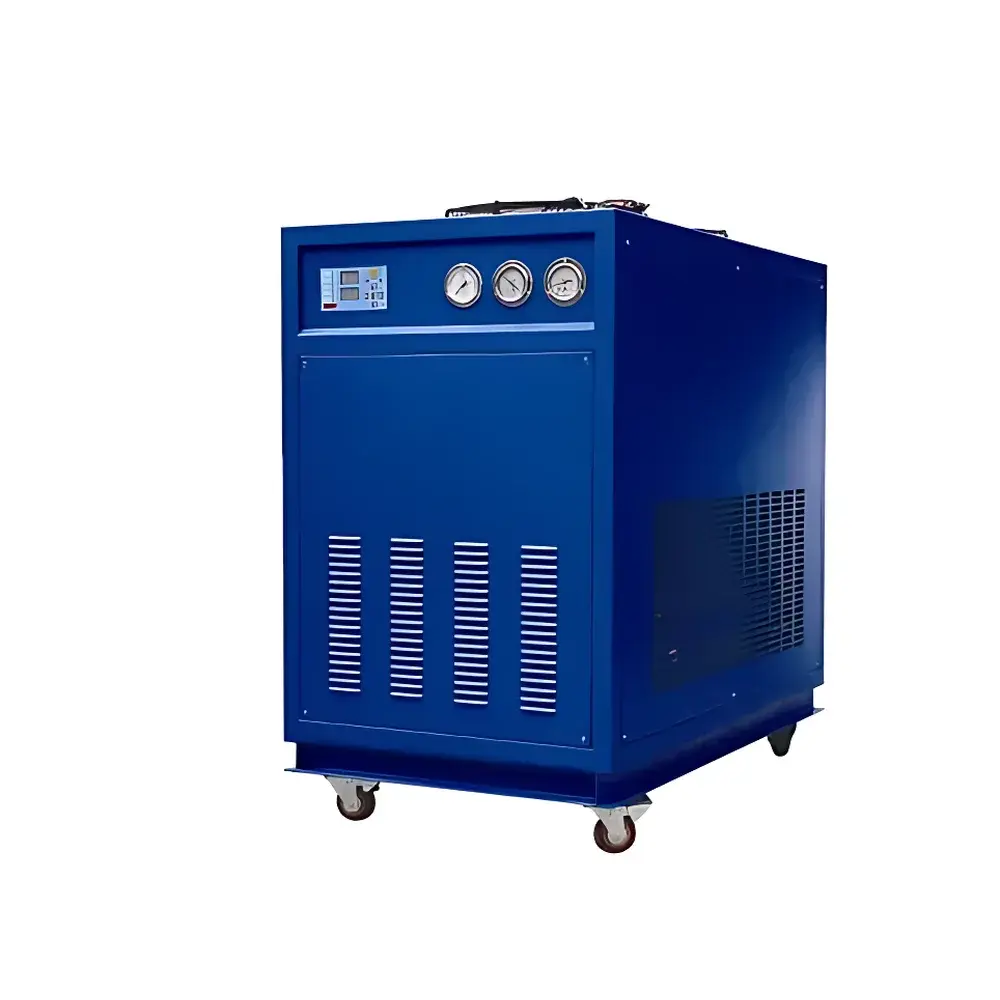
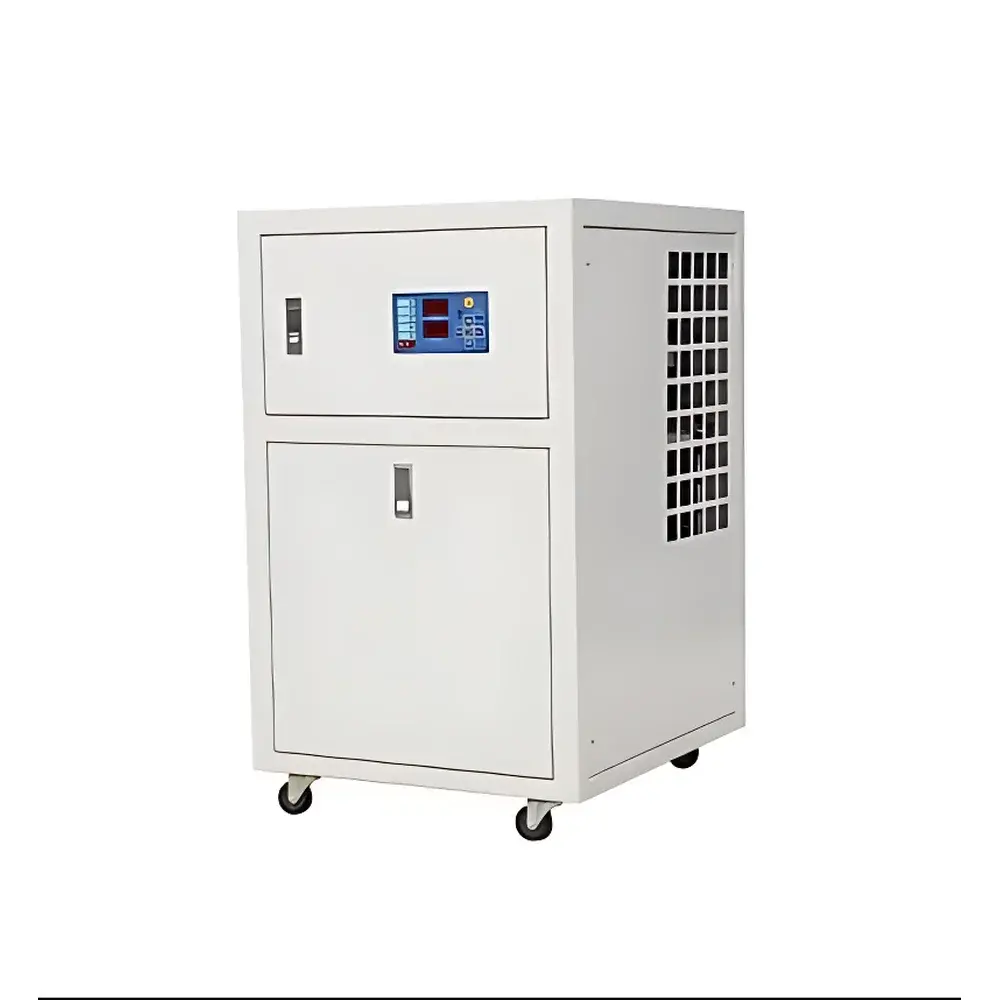
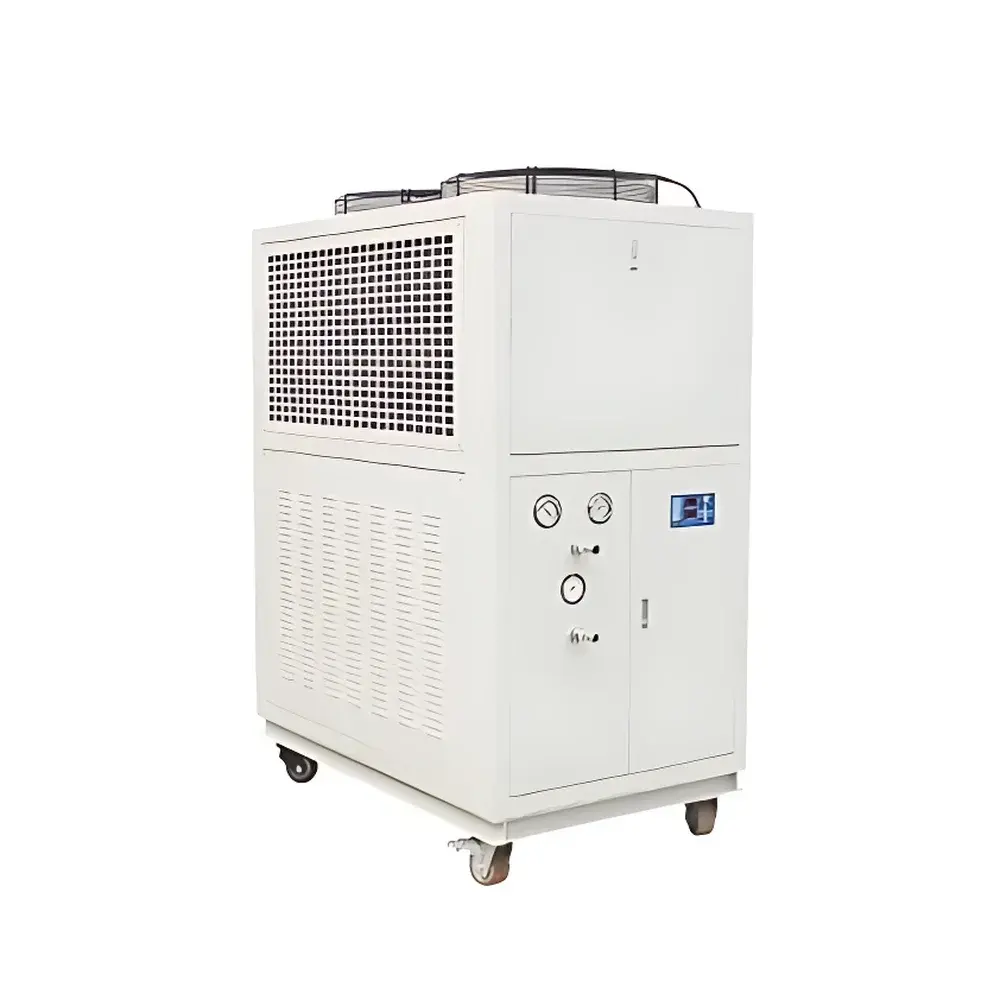
Tianfeng LS-50HP Energy-Efficient Industrial Circulating Chiller
| Brand | Tianfeng |
|---|---|
| Origin | Shanghai, China |
| Manufacturer Type | Direct Manufacturer |
| Product Category | Domestic |
| Model | Tianfeng LS-50HP |
| Instrument Type | Integrated Unit |
| Cooling Method | Water-Cooled |
| Temperature Stability Range | 5–30 °C (Freezing Water Outlet) |
| Refrigeration Capacity | 79 kW × 2 / 67,940 kcal/h × 2 |
| Temperature Fluctuation | ±0.3 °C (Typical at Steady State) |
| Circulating Pump Pressure | 2.0 bar (Max. Head: 20 m) |
| Circulating Pump Flow Rate | 42.3 m³/h |
| Reservoir Volume | 500 L |
| Operating Mode | Constant-Temperature or Intelligent Adaptive Control |
| Compressor Type | Hermetic Scroll |
| Refrigerant | R22 |
| Power Supply | 380 V / 50 Hz (3P+N+PE) |
| Safety Protections | High/Low Pressure Switch, Compressor Overheat & Overcurrent, Phase Sequence & Phase Loss Detection, Exhaust Overheat Protection, Temperature Overshoot Alarm |
Overview
The Tianfeng LS-50HP Energy-Efficient Industrial Circulating Chiller is an integrated, water-cooled refrigeration system engineered for precision thermal management of high-heat-load laboratory and industrial equipment. It operates on the vapor-compression refrigeration cycle, utilizing a hermetic scroll compressor and R22 refrigerant in conjunction with a plate-type evaporator and high-efficiency copper-tube/aluminum-fin condenser. Designed for continuous-duty operation under demanding ambient conditions (up to 35 °C ambient, 8–10 °C condenser ΔT), the unit delivers stable chilled water at adjustable setpoints between 5 °C and 30 °C, with typical temperature stability of ±0.3 °C at steady state. Its dual-circuit configuration (79 kW × 2) supports simultaneous cooling of multiple instruments or high-capacity single loads—such as plasma spectrometers, X-ray diffractometers, SEM/TEM systems, and laser processing platforms—where consistent coolant temperature directly impacts measurement repeatability, detector sensitivity, and optical alignment integrity.
Key Features
- Integrated architecture with stainless-steel reservoir (500 L capacity), corrosion-resistant internal piping, and fully enclosed circulation loop minimizing contamination risk.
- Hermetic scroll compressor (40 kW per circuit) delivering high volumetric efficiency, low mechanical wear, and extended service life under 24/7 operation.
- Dual independent refrigeration circuits enable redundancy, load balancing, and maintenance continuity without system shutdown.
- Intelligent adaptive temperature control algorithm dynamically adjusts chiller output based on real-time return-water temperature and thermal load profile—reducing energy consumption by up to 22% versus fixed-setpoint operation.
- Digital PID controller with 0.1 °C resolution display; optional RKC temperature controller available for enhanced traceability and GLP-compliant logging.
- Comprehensive safety suite: high/low pressure cutouts, phase sequence monitoring, exhaust gas overtemperature detection, and automatic fault-lockout with relay-based alarm outputs.
- Low-noise external-rotor fan assembly (50,000 m³/h airflow) and vibration-damped mounting ensure acoustic emissions ≤72 dB(A) at 1 m—suitable for shared lab environments.
- Modular electrical cabinet featuring Siemens, Schneider, and Omron components certified to IEC 60204-1 and UL 508A standards.
Sample Compatibility & Compliance
The LS-50HP is compatible with a broad spectrum of heat-generating analytical and production instruments requiring precise coolant temperature regulation—including graphite furnace atomic absorption spectrometers (GFAAS), inductively coupled plasma optical emission spectrometers (ICP-OES), inductively coupled plasma mass spectrometers (ICP-MS), X-ray fluorescence (XRF) analyzers, X-ray diffractometers (XRD), scanning/transmission electron microscopes (SEM/TEM), and high-power CO₂/fiber lasers. Its design conforms to ISO 9001:2000 quality management requirements and incorporates safety interlocks aligned with EN 61000-6-2 (EMC immunity) and EN 61000-6-4 (EMC emissions). While not inherently 21 CFR Part 11 compliant, the optional RKC controller supports audit-trail-enabled parameter logging, electronic signature capability, and user-access-level management—facilitating integration into GxP-regulated laboratories operating under FDA, EMA, or MHRA oversight.
Software & Data Management
The standard control interface provides local setpoint adjustment, real-time temperature/pressure readouts, and status LED indicators for compressor, pump, and alarm states. For centralized monitoring, optional RS485 Modbus RTU communication enables integration with building management systems (BMS) or LIMS platforms. When equipped with the RKC RP930 series controller, the chiller supports configurable data logging intervals (1 s to 24 h), CSV export via USB, password-protected configuration changes, and event-triggered notifications (e.g., high return-water temperature >40 °C, which may accelerate compressor oil degradation per AHRI Standard 550/590 guidelines). All logged data includes timestamp, operator ID, and parameter change history—meeting minimum requirements for GLP audit documentation.
Applications
- Laboratory Instrument Cooling: Maintains optimal detector and source temperatures in ICP-MS, XRD, and SEM systems to minimize thermal drift and improve signal-to-noise ratio.
- Laser System Thermal Management: Stabilizes resonator cavity and diode junction temperatures in multi-kilowatt fiber and CO₂ lasers—critical for beam pointing stability and wavelength consistency.
- Plasma Source Regulation: Controls RF generator and torch coolant temperatures in ICP-OES/MS to prevent plasma instability and matrix-induced spectral interference.
- Electron Microscopy Support: Supplies temperature-stabilized coolant to TEM column chillers and SEM vacuum pumps, reducing thermal expansion artifacts in high-resolution imaging.
- Industrial Process Integration: Used in precision machining (CNC spindles, coordinate grinders), plastic injection molding (mold temperature control), and vacuum coating systems where thermal uniformity dictates dimensional accuracy and surface finish.
FAQ
What is the maximum allowable return-water temperature for continuous operation?
The unit is rated for return-water temperatures ≤40 °C. Sustained inlet temperatures above this threshold increase discharge pressure and oil temperature, accelerating refrigerant breakdown and bearing wear per AHRI Guideline 100-2020.
Can the LS-50HP operate in ambient temperatures exceeding 35 °C?
No. The condenser is designed for maximum ambient of 35 °C with a 8–10 °C temperature lift. Operation above this limit requires supplemental air handling or relocation to climate-controlled space.
Is remote monitoring supported out of the box?
Standard configuration includes local HMI only. RS485 Modbus RTU interface is available as a factory-installed option for SCADA/BMS integration.
Does the chiller meet CE marking requirements?
The LS-50HP complies with applicable EMC and Low Voltage Directive harmonized standards (EN 61000-6-2, EN 61000-6-4, EN 61000-3-2, EN 60204-1); CE marking is applied upon completion of full EU conformity assessment including technical file review.
What maintenance intervals are recommended for laboratory-grade reliability?
Compressor oil and filter replacement every 8,000 operating hours; refrigerant circuit leak inspection annually; condenser coil cleaning quarterly in dusty environments; calibration verification of temperature sensors biannually per ISO/IEC 17025 Clause 6.5.



