
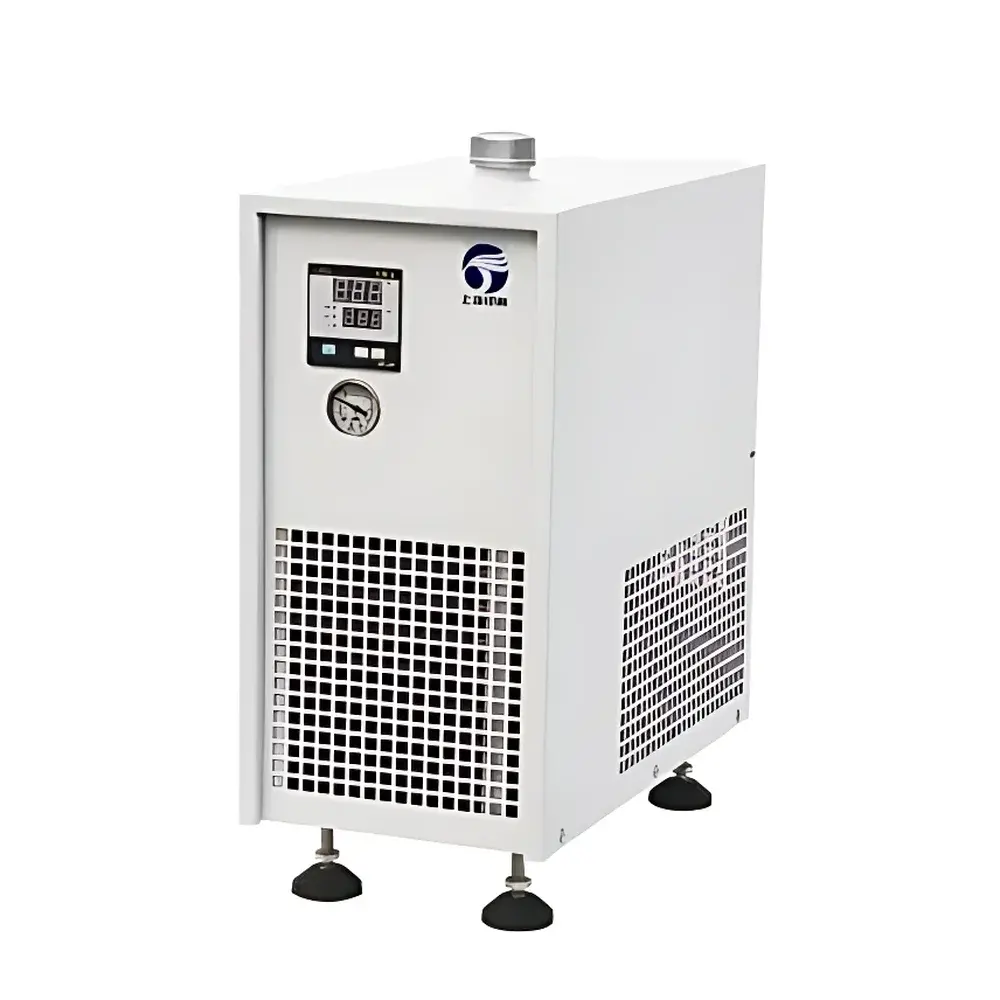
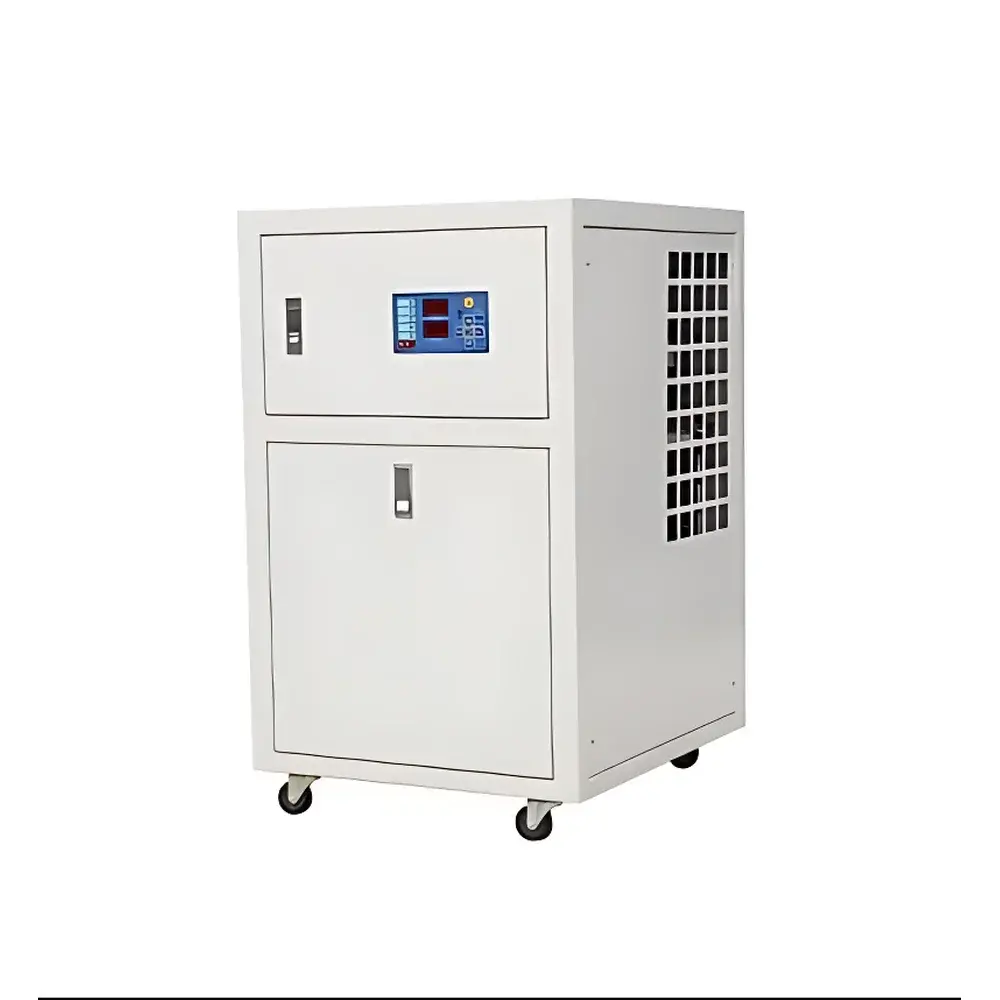
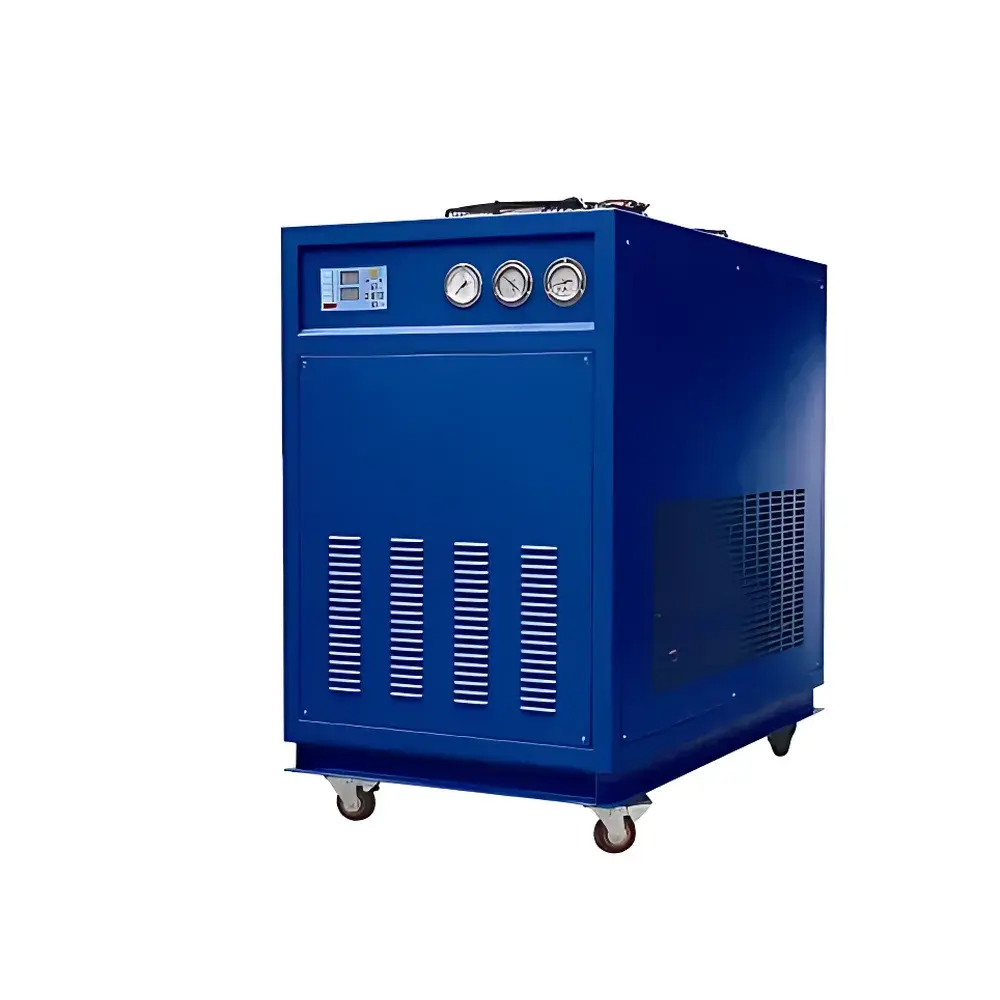
Tianfeng LS-5HP Low-to-Medium Temperature Circulating Chiller
| Brand | Tianfeng |
|---|---|
| Origin | Shanghai, China |
| Manufacturer Type | Direct Manufacturer |
| Instrument Type | Integrated Unit |
| Cooling Method | Water-Cooled |
| Temperature Range | 0–10 °C |
| Cooling Capacity | 15.9 kW |
| Temperature Stability | ±0.1 °C |
| Circulation Pressure | 2.0 bar |
| Flow Rate | 2 L/min |
| Reservoir Volume | 85 L |
| Operation Mode | Continuous Duty |
Overview
The Tianfeng LS-5HP Low-to-Medium Temperature Circulating Chiller is an engineered thermal management system designed for precision temperature control in laboratory and industrial instrumentation requiring stable cooling between 0 °C and 10 °C. It operates on a closed-loop refrigeration cycle utilizing a scroll compressor, R404A or R507 refrigerant (depending on configuration), and a high-efficiency brazed plate heat exchanger. The unit maintains thermal equilibrium by continuously circulating chilled water through external equipment—such as analytical instruments, laser sources, vacuum systems, and electron microscopy platforms—thereby dissipating heat from critical components and preventing thermal drift, mechanical deformation, or sensor instability. Its design conforms to fundamental thermodynamic principles of vapor-compression refrigeration, with PID-based feedback control ensuring minimal deviation from setpoint under dynamic load conditions.
Key Features
- Integrated compact architecture with stainless steel reservoir (85 L) and corrosion-resistant circulation pump
- High-precision digital temperature display with ±0.1 °C stability over full operating range (0–10 °C)
- Scroll-type hermetic compressor delivering consistent 15.9 kW cooling capacity at standard conditions (inlet water 12 °C, outlet 7 °C; ambient cooling water 30 °C → 40 °C)
- Dual-mode operation: fixed-setpoint constant-temperature mode and adaptive intelligent temperature modulation based on real-time thermal load
- Comprehensive safety system including high/low pressure cut-offs, flow loss detection, overtemperature alarm, and compressor overheating protection
- Industrial-grade electrical components from Siemens, Schneider, and Omron; expansion valves and solenoid valves sourced from Italy and Germany
- Optional upgrade to RKC (Japan) temperature controller for enhanced repeatability and GLP-compliant logging capability
- Noise-optimized enclosure meeting ISO 3744 acoustic standards for laboratory environments
Sample Compatibility & Compliance
The LS-5HP chiller interfaces seamlessly with a broad spectrum of laboratory instrumentation requiring regulated coolant delivery—including graphite furnace atomic absorption spectrometers (GFAAS), inductively coupled plasma optical emission spectrometers (ICP-OES), ICP-mass spectrometers (ICP-MS), X-ray fluorescence (XRF) and X-ray diffraction (XRD) systems, scanning electron microscopes (SEM), and transmission electron microscopes (TEM). Its 2.0 bar maximum head pressure and 2 L/min flow rate accommodate standard 1/2″–3/4″ instrument coolant ports. The system complies with CE electromagnetic compatibility (EMC) directives, meets RoHS material restrictions, and supports traceable calibration per ISO/IEC 17025 requirements when paired with certified temperature probes. For regulated environments, optional audit-trail-enabled firmware aligns with FDA 21 CFR Part 11 data integrity expectations.
Software & Data Management
While the base LS-5HP operates via front-panel keypad and LED interface, optional RS485 Modbus RTU or Ethernet TCP/IP communication modules enable integration into centralized facility monitoring systems (e.g., LabVantage, Thermo Fisher SampleManager). Logged parameters—including setpoint, actual temperature, flow status, compressor run time, and fault codes—are timestamped and exportable as CSV files. When equipped with RKC controllers, the unit supports configurable alarm thresholds, event-driven email/SMS notifications, and encrypted local storage of ≥12 months’ operational history—facilitating preventive maintenance scheduling and GLP/GMP documentation workflows.
Applications
- Laboratory analytics: Stabilizing detector temperatures in XRF/XRD systems to minimize spectral baseline drift; maintaining cryo-stage integrity in SEM/TEM sample chambers
- Laser systems: Thermal regulation of CO₂, fiber, and ultrafast lasers to preserve beam quality and diode longevity
- Plastics processing: Mold temperature control in injection molding to reduce internal stress, improve surface finish, and accelerate cycle times
- Metalworking: Oil temperature stabilization in CNC machine tool hydraulic and spindle lubrication circuits to mitigate thermal growth-induced dimensional error
- Pharmaceutical manufacturing: Precise jacket temperature control during fermentation bioreactor runs and lyophilization pre-freezing stages
- Electroplating & vacuum deposition: Consistent bath and chamber temperature maintenance to enhance deposit uniformity and adhesion
FAQ
What is the recommended maximum return water temperature for continuous operation?
For optimal compressor lifespan and sustained cooling efficiency, inlet water temperature should not exceed 40 °C. Elevated return temperatures increase condensing pressure and reduce volumetric efficiency.
Can this chiller be integrated into a building management system (BMS)?
Yes—via optional Modbus RTU or BACnet/IP communication modules, enabling remote start/stop, setpoint adjustment, and real-time fault diagnostics.
Is the unit suitable for cleanroom or ISO Class 5 environments?
The LS-5HP meets ISO 14644-1 airborne particulate limits when installed with HEPA-filtered intake air and vibration-isolated mounting; stainless steel wetted parts prevent contamination.
Does it support dual-temperature zone operation?
No—the LS-5HP is a single-loop system. Dual-zone capability requires separate units or a custom manifold configuration with independent flow control valves.
What maintenance intervals are recommended for laboratory-grade reliability?
Compressor oil and refrigerant filter driers should be replaced every 24 months; heat exchanger surfaces inspected quarterly for biofilm or scale accumulation; calibration verified annually against NIST-traceable reference thermometers.



