
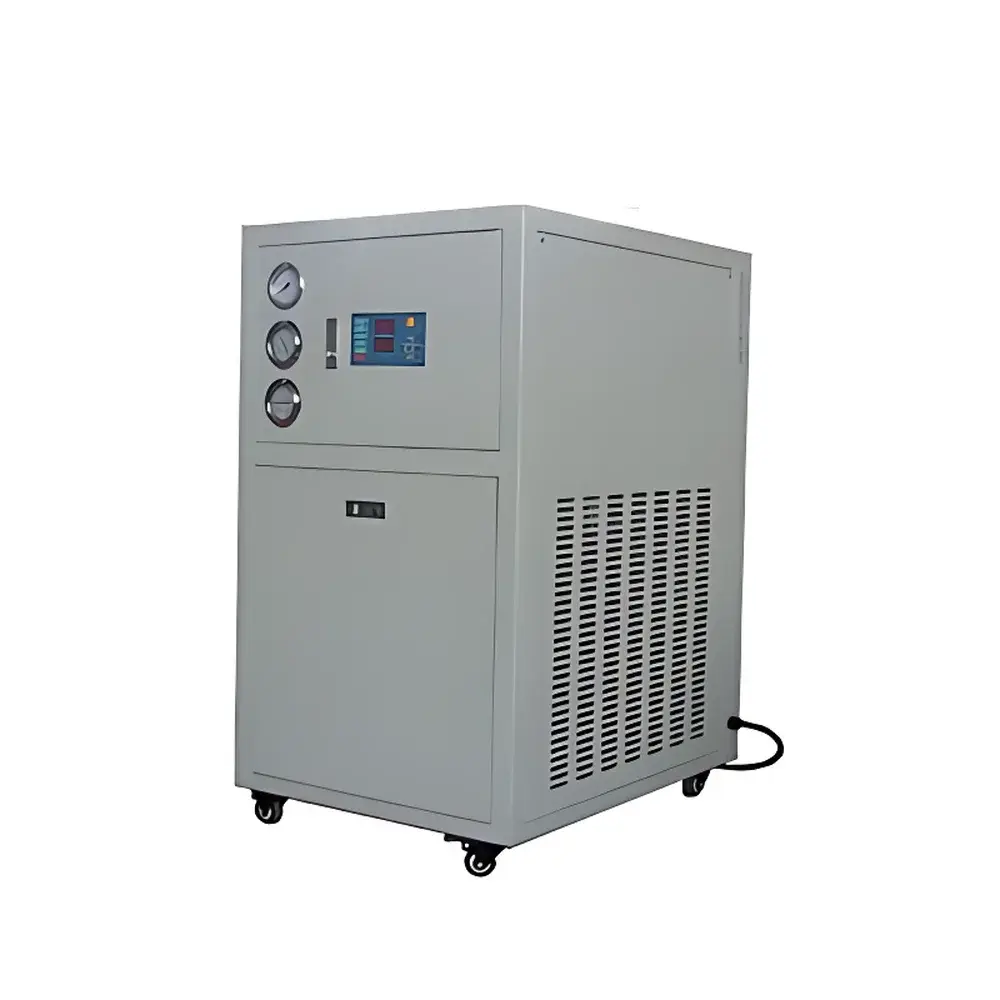
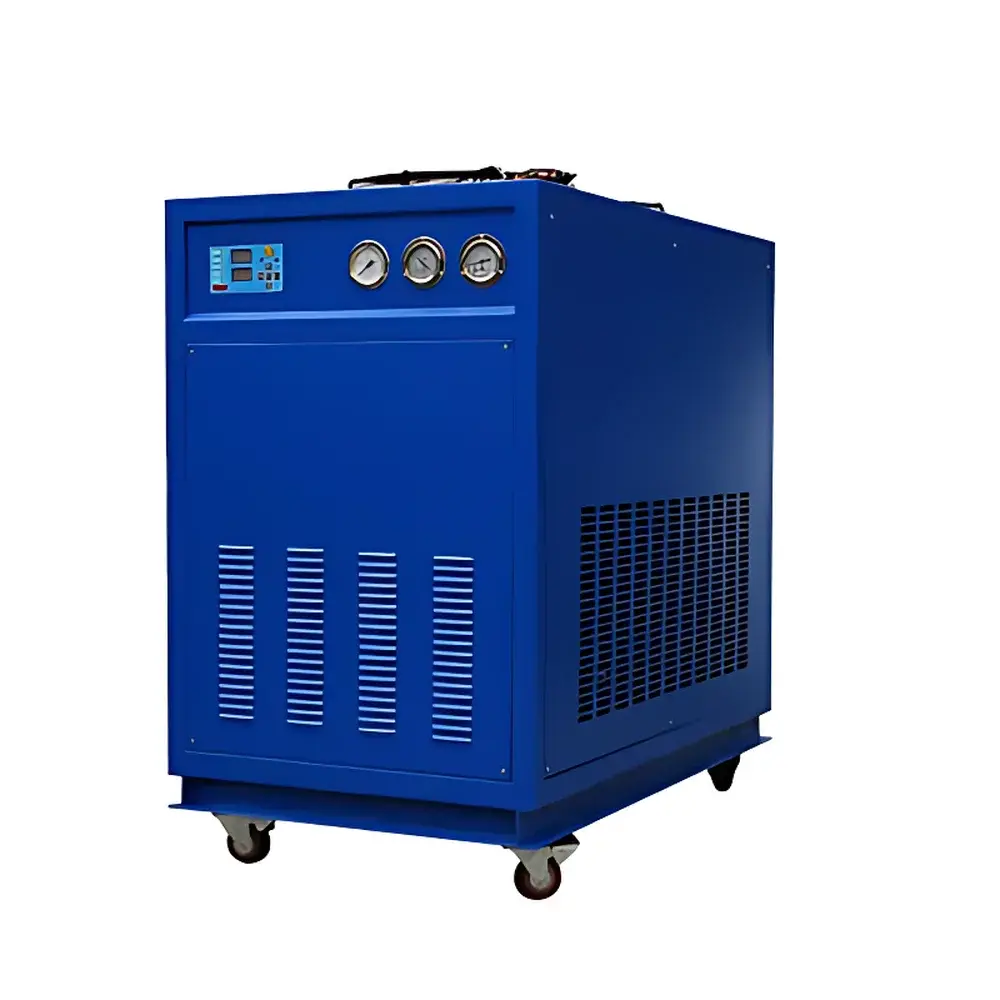
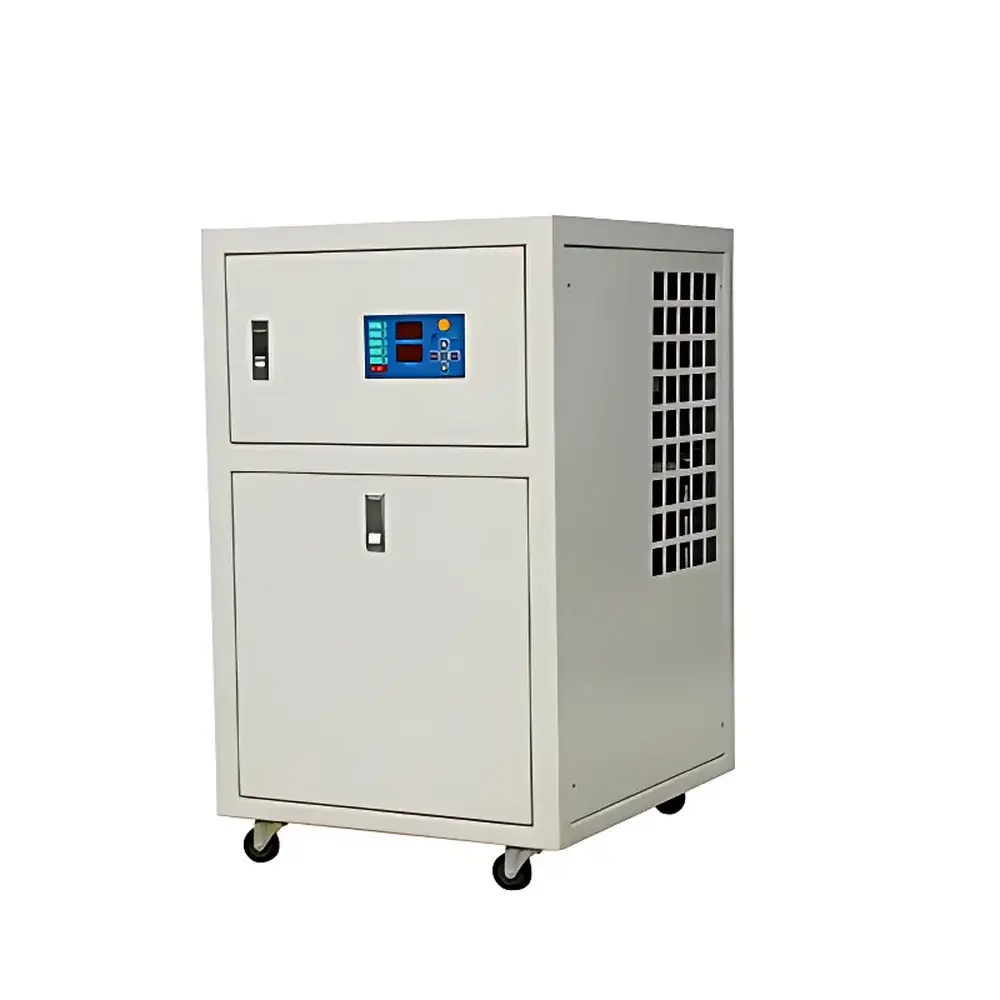
Tianfeng LS-6.5 kW Integrated Circulating Chiller
| Brand | Tianfeng |
|---|---|
| Origin | Shanghai, China |
| Manufacturer Type | OEM Manufacturer |
| Product Category | Domestic |
| Model | Tianfeng-LS-6.5KW |
| Instrument Type | Integrated Unit |
| Cooling Method | Water-Cooled |
| Temperature Control Range | 0–40 °C |
| Refrigeration Capacity | 300–9000 W |
| Temperature Stability | ±0.1 °C |
| Circulating Pump Pressure | 2.0 bar |
| Circulating Pump Flow Rate | 38 L/min |
| Reservoir Volume | 5–550 L |
| Operating Mode | Continuous |
| Rated Refrigeration Output | 6.5 kW |
| Water Outlet Pressure | 0–2 kgf/cm² |
| Power Consumption | 2.76 kW |
| Reservoir Capacity | 45 L |
| Dimensions (L×W×H) | 800×600×1065 mm |
| Power Supply | 220 V, 50 Hz |
| Safety Protections | Compressor Overheat Protection, Overcurrent Protection, High/Low Pressure Switches, Overtemperature Cut-off |
Overview
The Tianfeng LS-6.5 kW Integrated Circulating Chiller is an engineered thermal management solution designed for precision temperature control in laboratory and industrial instrumentation environments. Based on vapor-compression refrigeration cycle architecture, it utilizes a high-efficiency scroll compressor, thermostatic expansion valve, and copper-aluminum finned condenser to deliver stable cooling performance under continuous duty. Its core function is to maintain constant coolant temperature and flow rate—critical for stabilizing heat-sensitive components in analytical instruments such as graphite furnace atomic absorption spectrometers (GFAAS), inductively coupled plasma optical emission spectrometers (ICP-OES), ICP-mass spectrometers (ICP-MS), X-ray fluorescence (XRF) analyzers, X-ray diffractometers (XRD), scanning electron microscopes (SEM), and transmission electron microscopes (TEM). Unlike ambient-air-cooled units, this water-cooled chiller minimizes thermal drift by decoupling heat rejection from lab ambient fluctuations—ensuring reproducible instrument calibration and extended detector lifetime.
Key Features
- Integrated compact design with stainless-steel reservoir and circulation pump—optimized for benchtop or floor-mounted deployment in constrained laboratory spaces
- Dual-mode operation: precise constant-temperature mode (±0.1 °C stability) and adaptive intelligent temperature regulation responsive to real-time load changes
- Industrial-grade scroll compressor (European or Japanese origin) delivering low-noise, high-reliability refrigeration with minimal vibration transfer
- Digital PID temperature controller (standard Chinese OEM unit; optional RKC Japan controller available) with intuitive LED interface and programmable setpoint memory
- Comprehensive safety suite: high/low refrigerant pressure monitoring, compressor winding overtemperature cutoff, phase-loss protection, and overcurrent circuit interruption
- Corrosion-resistant wetted parts—including 304 stainless steel tank, pump housing, and tubing—compatible with deionized water, glycol-water mixtures (up to 30%), and common laboratory coolants
- Modular electrical architecture using Siemens, Schneider, or Omron contactors, relays, and power distribution components compliant with IEC 60204-1
Sample Compatibility & Compliance
The LS-6.5 kW chiller is compatible with all standard laboratory equipment requiring closed-loop coolant circulation at flow rates between 0–60 L/min and inlet/outlet temperature differentials up to 5 °C. It meets mechanical and electrical safety requirements per GB 4706.1 (China National Standard equivalent to IEC 60335-1) and conforms to ISO 9001:2015 quality management system certification for design, manufacturing, and service delivery. While not intrinsically rated for hazardous locations, its construction supports integration into GLP-compliant laboratories when deployed with documented SOPs for preventive maintenance, calibration traceability (NIST-traceable thermistor verification), and operational logging. The unit operates within ambient temperature limits of 5–35 °C and relative humidity ≤80% non-condensing—conditions aligned with ASTM E1510 and ISO/IEC 17025 environmental specifications for analytical instrument support systems.
Software & Data Management
This chiller operates as a standalone hardware-controlled system without embedded firmware-based data logging or network connectivity. However, analog output signals (0–10 V or 4–20 mA) are available for external temperature and flow monitoring via SCADA or LIMS interfaces. For regulated environments—including pharmaceutical QC labs operating under FDA 21 CFR Part 11—users may integrate the chiller into validated workflows using third-party data acquisition modules that provide electronic audit trails, user access controls, and change management logs. Optional RS485 Modbus RTU communication enables remote parameter readout (setpoint, actual temperature, pump status, fault codes) when paired with compatible building management or laboratory infrastructure systems.
Applications
- Atomic Spectroscopy: Stabilizes graphite furnace temperatures in GFAAS and maintains plasma torch coolant temperature in ICP-OES/ICP-MS—reducing spectral noise and improving detection limits
- Materials Characterization: Controls sample stage and detector cooling in XRD, XRF, SEM, and TEM systems to mitigate thermal expansion artifacts and electron beam drift
- Medical & Biotech Instrumentation: Supports laser-based surgical devices, MRI cryocooler precooling stages, and high-throughput DNA sequencers requiring sub-ambient thermal regulation
- Industrial Process Support: Cools laser cutting/welding heads, CNC spindle bearings, vacuum chamber jackets, and semiconductor wafer probers—extending component service life and dimensional accuracy
- Chemical Synthesis & Analysis: Regulates jacketed reactor temperature during exothermic reactions and maintains consistent column oven conditions in HPLC and GC systems
FAQ
What is the recommended maximum return water temperature for continuous operation?
For optimal compressor longevity and refrigeration efficiency, return water temperature should not exceed 40 °C. Sustained inlet temperatures above this threshold increase discharge pressure and oil degradation risk.
Can this chiller be used with ethylene glycol solutions?
Yes—compatible with aqueous glycol mixtures up to 30% concentration. Ensure pump and heat exchanger materials remain compatible with long-term exposure; consult technical documentation for corrosion compatibility charts.
Is the unit suitable for cleanroom environments?
The chiller itself is not ISO Class 5 certified, but its sealed refrigeration circuit and stainless-steel fluid path minimize particulate shedding. When installed outside the cleanroom with only coolant lines penetrating the barrier, it satisfies ISO 14644-1 Class 7–8 supporting infrastructure requirements.
Does it support external temperature feedback control?
Yes—equipped with analog input terminals enabling connection to external process temperature sensors for cascade control configurations.
What maintenance intervals are recommended for GLP compliance?
Perform quarterly visual inspection of refrigerant lines and electrical connections; semi-annual cleaning of condenser coils and reservoir; annual thermistor calibration verification and compressor oil analysis per manufacturer guidelines.



