
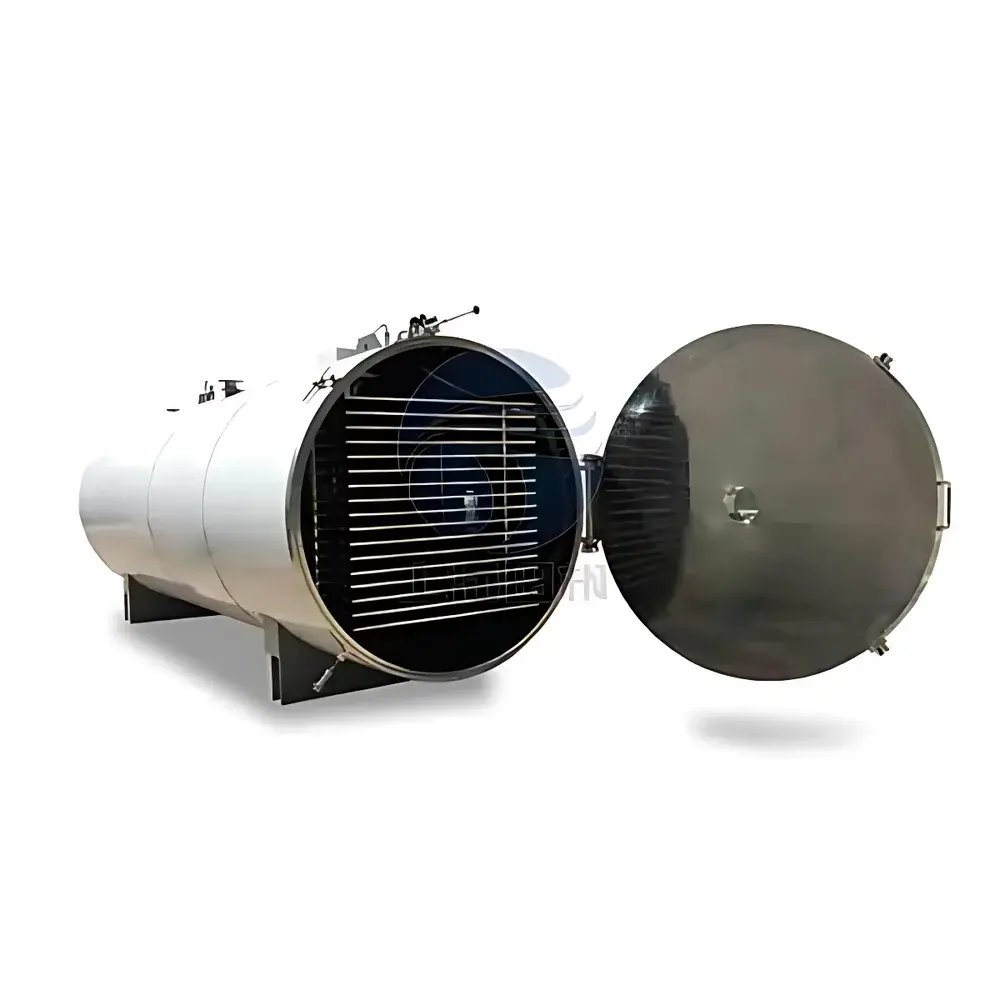
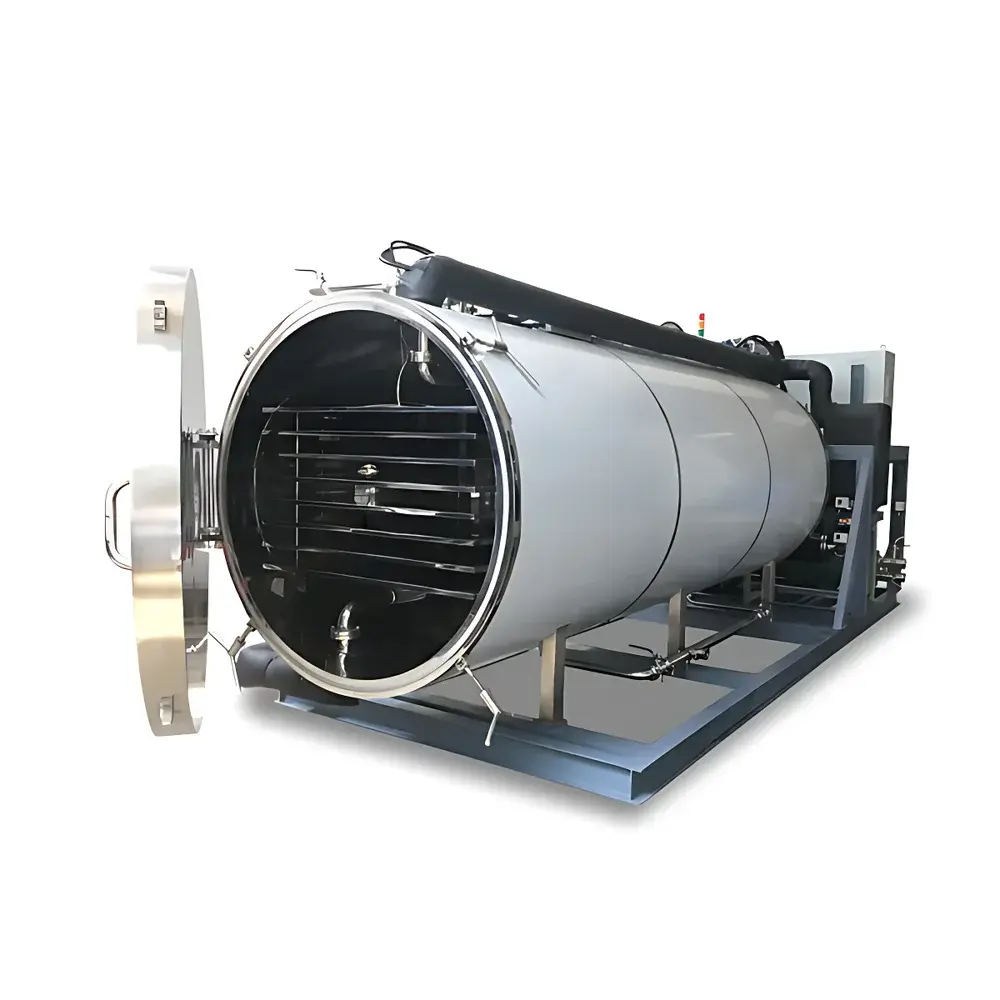
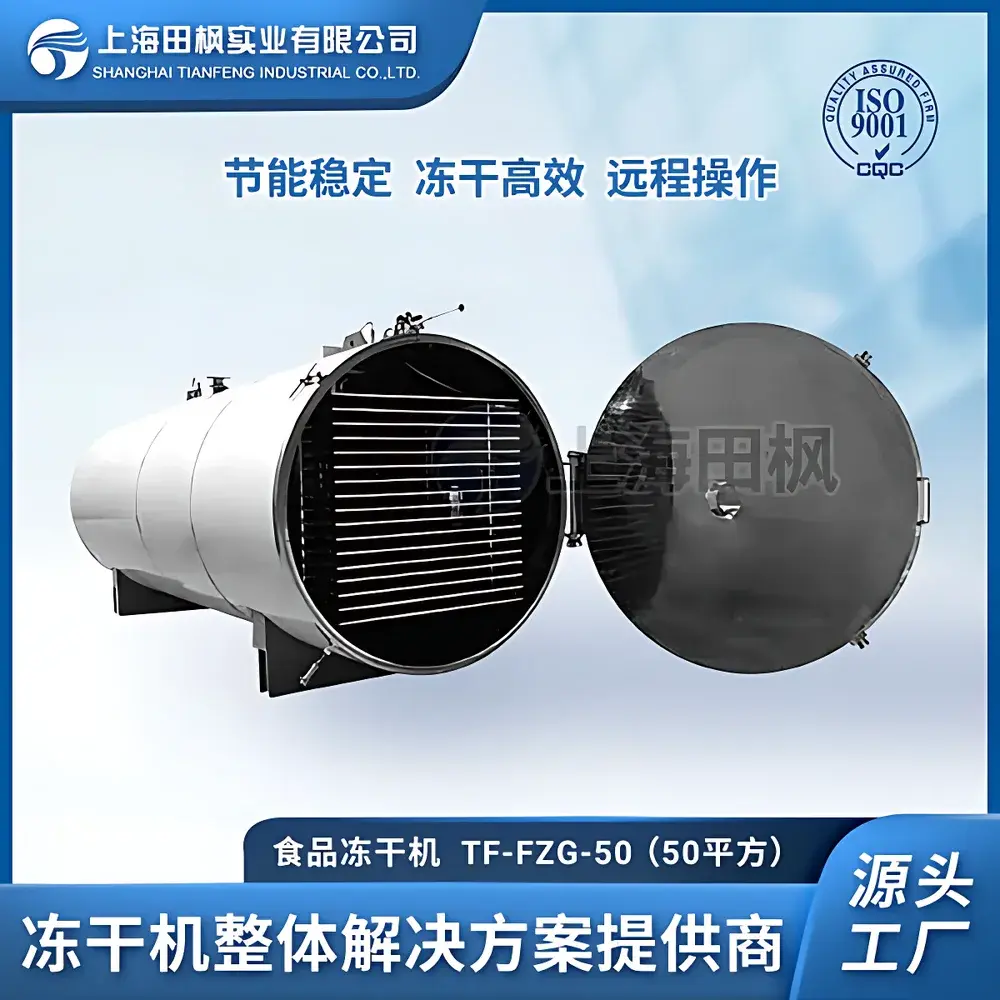
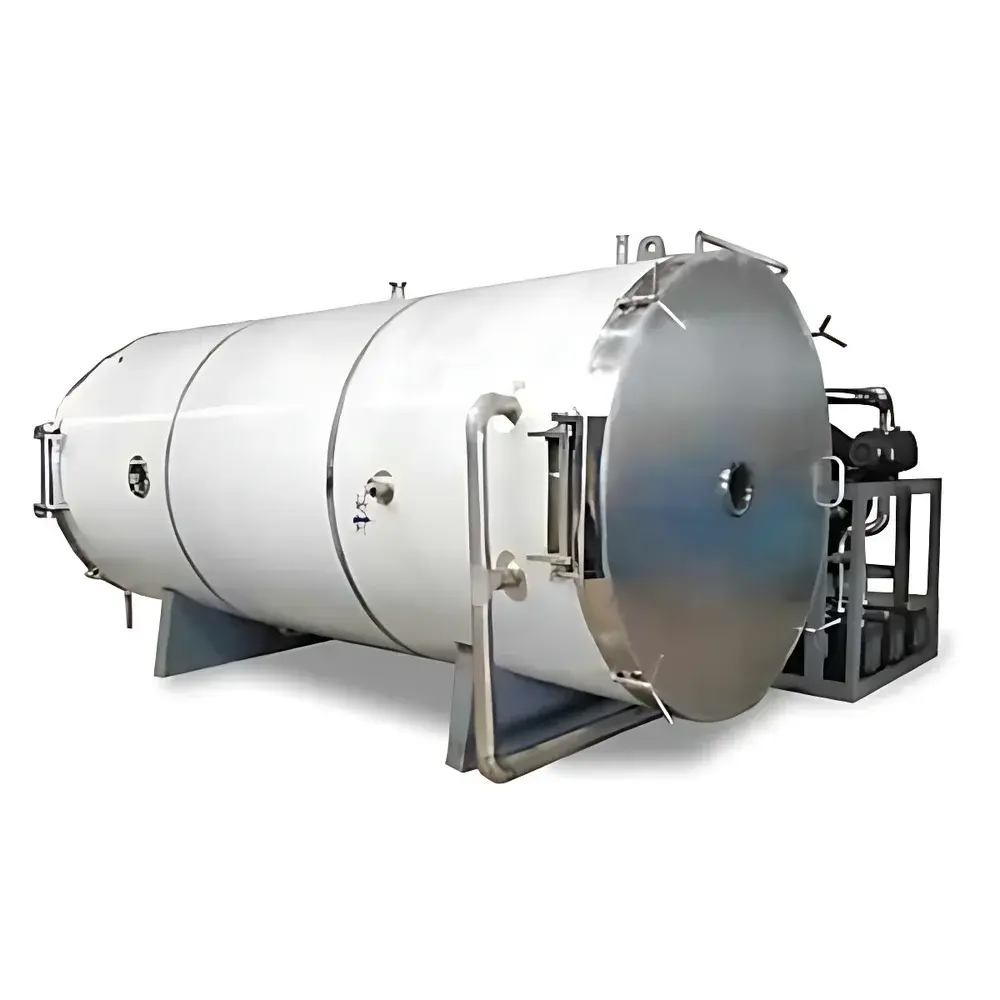
Tianfeng TF-FZG-50 Industrial-Scale Freeze Dryer
| Brand | Tianfeng |
|---|---|
| Model | TF-FZG-50 |
| Type | Shelf-Type Freeze Dryer |
| Lyophilization Area | 50.22 m² |
| Max Ice Capacity | 750 kg/24h |
| Ultimate Condenser Temperature | ≤−60 °C |
| Chamber Material | SUS 304 Stainless Steel (Mirror-Polished) |
| Shelf Temp Range | −45 °C to +80 °C |
| Vacuum System | BAOSI Vacuum Pump |
| Refrigeration Compressor | BITZER (Germany) |
| Control System | Omron PLC |
| Total Power Load | 141 kW (380 V, 50 Hz, 3-Phase, 5-Wire) |
| Overall Dimensions (L×W×H) | Approx. 9400 × 2500 × 3600 mm |
| Weight | ~14,000 kg |
| Compliance | Designed per GMP principles for food & nutraceutical manufacturing |
| Customization | Yes — shelf configuration, condenser type (integral or split), defrost method (steam or immersion) |
Overview
The Tianfeng TF-FZG-50 is an industrial-scale, shelf-type freeze dryer engineered for continuous batch processing of heat-sensitive food, herbal, and nutritional products under controlled low-temperature vacuum conditions. It operates on the fundamental principle of lyophilization—sublimation of ice from frozen material under deep vacuum while maintaining product integrity, structural porosity, and bioactive compound stability. Unlike laboratory-scale units, the TF-FZG-50 integrates process scalability with GMP-aligned mechanical design, supporting validated production workflows in food ingredient manufacturing, functional food R&D, pet food preservation, and botanical extract stabilization. Its cylindrical chamber constructed from mirror-polished SUS 304 stainless steel ensures cleanability, corrosion resistance, and compliance with hygienic design standards for non-pharmaceutical but regulated food-grade applications.
Key Features
- Integrated front-chamber/rear-condenser architecture minimizes footprint while optimizing vapor path efficiency and reducing thermal bridging.
- Shelf temperature control range of −45 °C to +80 °C enables precise freezing, primary drying, and secondary drying cycles—including annealing and ramped desorption protocols.
- High-capacity condenser with ≤−60 °C ultimate temperature and 750 kg/24h ice capture capacity supports extended drying runs without intermediate defrost interruptions.
- Dual trolley system (304 stainless steel) facilitates rapid loading/unloading of trays; trolleys compatible with standard ISO pallet dimensions and configurable for aluminum or 304 stainless steel shelves.
- BITZER semi-hermetic compressors deliver stable refrigeration performance across ambient temperatures up to 40 °C, ensuring reproducible cooling rates and thermal uniformity across all shelf zones.
- Omron PLC-based control system provides dual-mode operation (automatic/manual), multi-step recipe storage (≥99 programs), real-time parameter logging, and on-the-fly step modification—including jump-to-step and hold functions during active cycles.
- Steam-assisted or immersion defrost options allow rapid, residue-free condenser regeneration—critical for minimizing downtime between batches in high-throughput environments.
Sample Compatibility & Compliance
The TF-FZG-50 accommodates diverse sample formats including bulk trays (up to 600 kg per cycle), stacked pouches, pre-filled vials (non-sterile), and irregularly shaped items such as whole berries, sliced root vegetables, or pet treat kibbles. Its chamber geometry and shelf layout support uniform heat transfer and consistent sublimation front progression across heterogeneous loads. While not certified for sterile pharmaceutical use, the unit adheres to core hygienic design principles outlined in EHEDG Doc. Type A and ISO 14644-1 Class 8 (cleanroom-adjacent) environments. Surface finishes meet FDA-recommended roughness thresholds (Ra ≤ 0.8 µm), and welds are fully traceable and passivated per ASTM A967. Documentation packages include FAT/SAT reports, IQ/OQ templates, and material traceability records upon request.
Software & Data Management
Data acquisition and process supervision are handled via a touchscreen HMI interface linked to the embedded Omron CJ2M PLC. All critical parameters—including shelf temperature, chamber pressure (capacitance manometer), condenser temperature, and vacuum pump status—are sampled at 1-second intervals and archived locally on an industrial SSD. Export formats include CSV and PDF for offline analysis. Audit trail functionality complies with FDA 21 CFR Part 11 requirements when paired with optional user authentication modules and electronic signature validation. Historical data can be retrieved by batch ID, date range, or recipe name; trend plots support comparative analysis across multiple cycles. Remote monitoring via Ethernet/IP or Modbus TCP is available for integration into MES or SCADA platforms.
Applications
- Freeze-drying of fruit purees, vegetable powders, and instant soup bases while preserving volatile aromatics and enzymatic activity.
- Stabilization of probiotic cultures, enzyme blends, and botanical extracts intended for dietary supplement tablets or sachets.
- Production of lightweight, shelf-stable pet food ingredients with retained palatability and nutrient bioavailability.
- Preparation of rehydratable emergency rations and military field meals meeting MIL-STD-810G environmental resilience criteria.
- R&D-scale process development for novel food matrices—e.g., plant-based meat analogues or cultured protein scaffolds—prior to commercial-scale transfer.
FAQ
Is the TF-FZG-50 suitable for pharmaceutical-grade lyophilization?
No—it is designed and validated for food, nutraceutical, and cosmetic applications. It does not meet ISO 13485 or EU Annex 1 requirements for sterile drug manufacturing.
Can shelf configurations be customized for specific tray sizes or loading patterns?
Yes. Aluminum extruded shelves (optimized for thermal conductivity) and 304 stainless steel shelves (optimized for cleanability) are both available; spacing, depth, and load-bearing capacity are adjustable per customer specification.
What vacuum level accuracy is maintained during primary drying?
Chamber pressure is controlled within ±0.1 Pa using a calibrated capacitance manometer and proportional throttle valve; typical operating range is 1–10 Pa during sublimation.
Does the system support automated cycle validation per ISO 22042?
While not pre-certified, the control architecture supports full validation documentation—including sensor calibration logs, alarm history, and deviation reporting—enabling customers to execute their own IQ/OQ/PQ protocols.
What maintenance intervals are recommended for the BITZER compressor and BAOSI vacuum pump?
Compressor oil and filter replacement every 4,000 operating hours; vacuum pump oil change every 500 hours or after 30 consecutive drying cycles—whichever occurs first. Preventive maintenance schedules are provided in the technical manual.



