
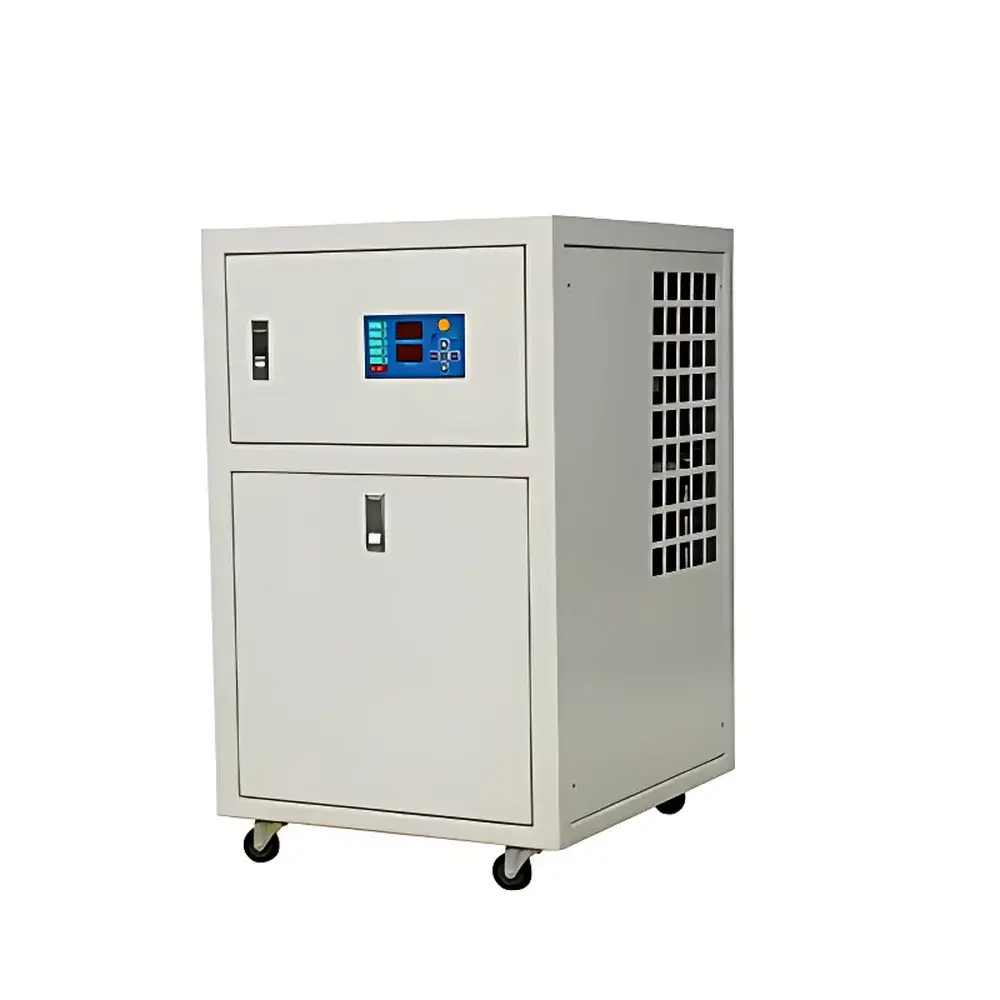
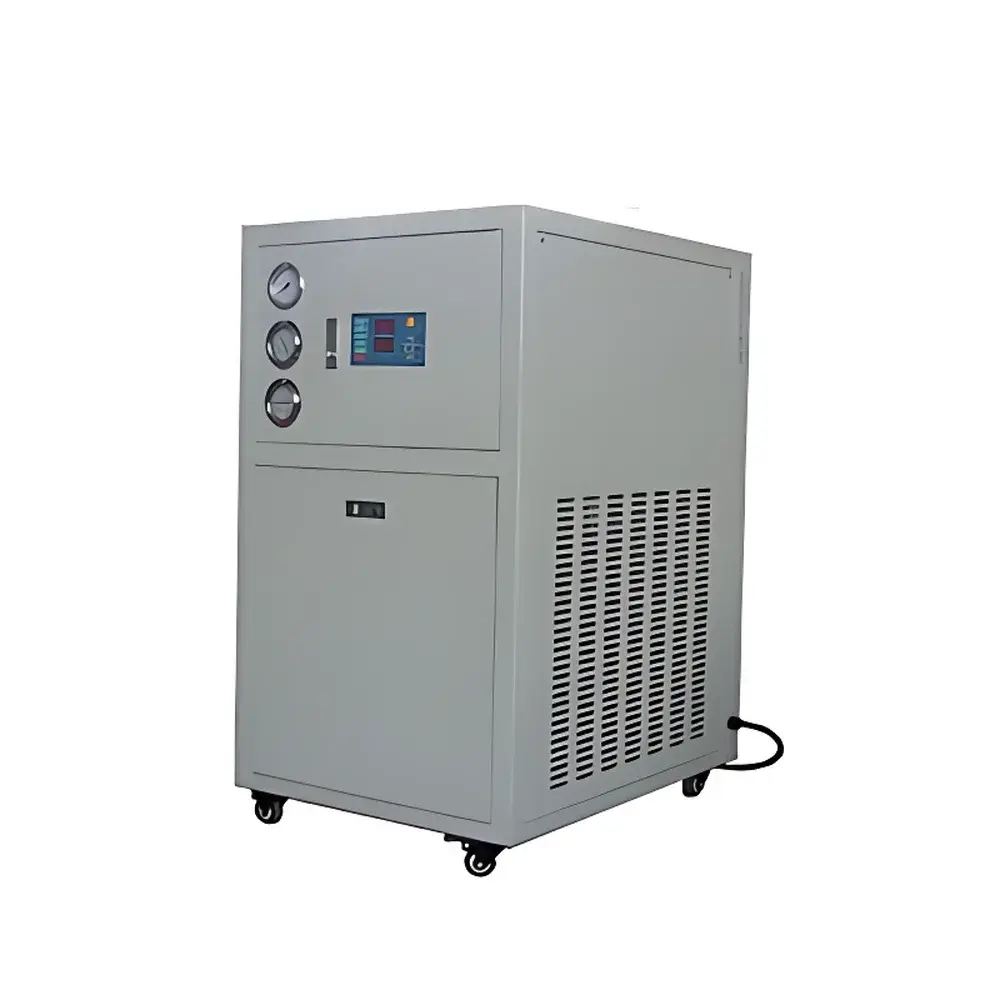
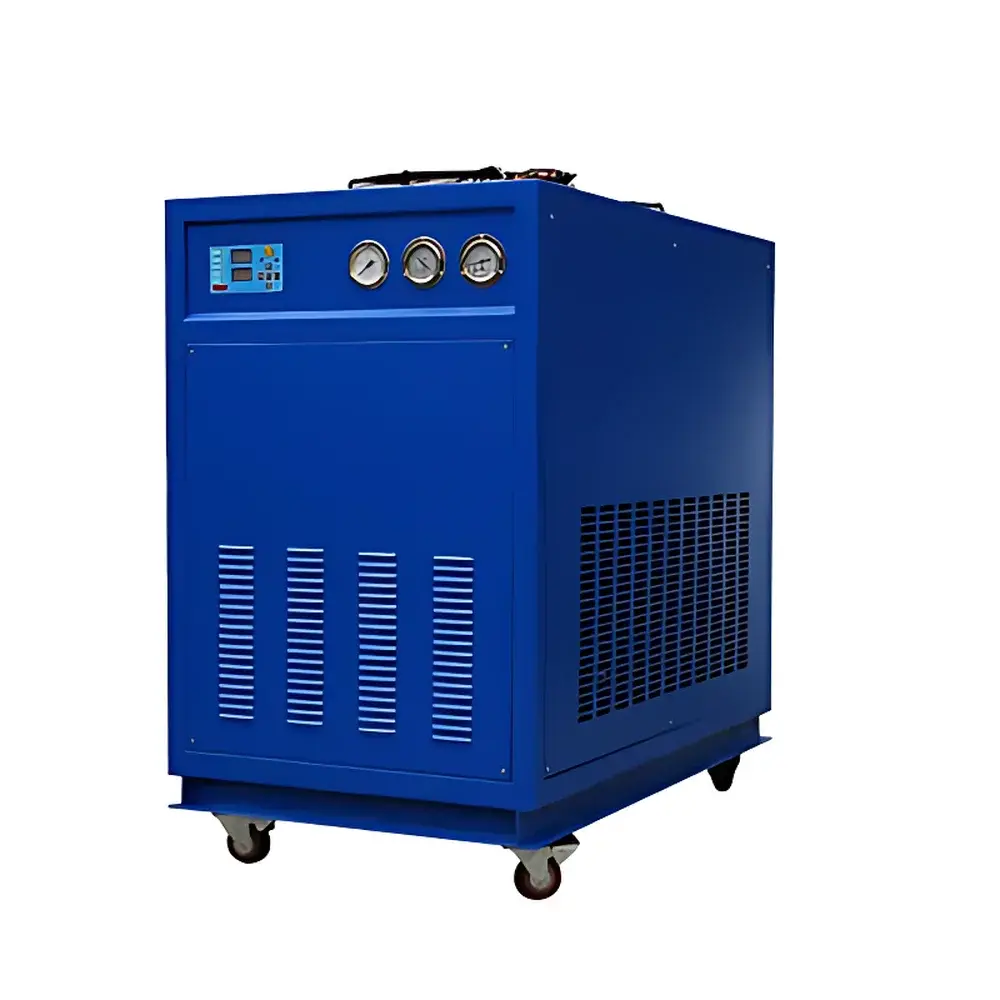
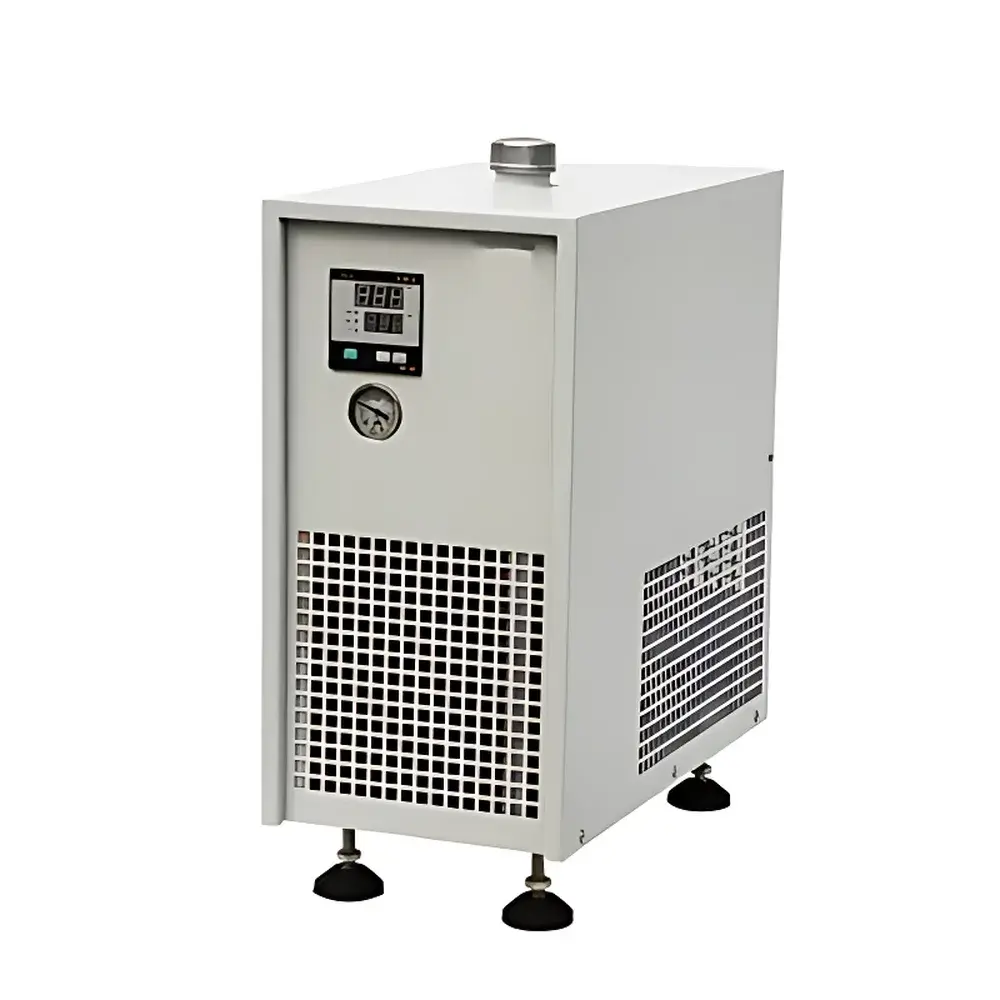
Tianfeng TF-LS-1HP Compact Circulating Chiller
| Brand | Tianfeng |
|---|---|
| Origin | Shanghai, China |
| Manufacturer Type | Direct Manufacturer |
| Instrument Type | Integrated Circulating Chiller |
| Cooling Method | Air-Cooled |
| Temperature Control Range | 0–50 °C |
| Temperature Stability | ±0.1 °C |
| Refrigeration Capacity | 2.5 kW |
| Circulating Pump Pressure | 0–2 bar |
| Circulating Flow Rate | 2 m³/h (33.3 L/min) |
| Reservoir Volume | 27 L |
| Power Supply | 220 V, 50 Hz |
| Compressor | Scroll-type |
| Safety Protections | High/Low Pressure Switch, Overcurrent Protection, Compressor Overheat Protection, Overtemperature Alarm |
| Construction | Stainless Steel Reservoir & Pump |
| Noise Level | Low |
| Operating Mode | Continuous Duty |
| Certifications | ISO 9001:2000 Certified |
Overview
The Tianfeng TF-LS-1HP Compact Circulating Chiller is an integrated, air-cooled refrigeration system engineered for precise thermal management of laboratory and industrial equipment requiring stable, continuous coolant delivery. Designed using principles of vapor-compression refrigeration with scroll compressor technology, it maintains a tightly controlled fluid temperature between 0 °C and 50 °C with a stability of ±0.1 °C—critical for applications demanding minimal thermal drift. Its compact footprint (650 × 550 × 915 mm) and integrated architecture enable seamless integration into analytical instrument racks, laser workstations, and benchtop instrumentation suites without requiring external condenser units or dedicated mechanical rooms. The chiller circulates deionized or distilled water—or compatible water-glycol mixtures—through closed-loop systems to absorb and dissipate heat from high-power components such as plasma sources, X-ray tubes, electron optical columns, and high-speed spindles.
Key Features
- High-precision digital temperature controller with real-time display and adjustable setpoint resolution of 0.1 °C
- Stainless steel reservoir (27 L capacity) and corrosion-resistant circulation pump ensure long-term fluid integrity and compatibility with analytical-grade coolants
- Scroll-type compressor delivering stable refrigeration output (2.5 kW at standard conditions: 12 °C inlet / 7 °C outlet water; ambient 30 °C)
- Adjustable flow rate (0–2 m³/h) and pressure (0–2 bar) via calibrated bypass and control valve assembly
- Comprehensive safety suite: high/low refrigerant pressure monitoring, compressor overheat cutoff, overcurrent protection, and overtemperature alarm with relay output
- Low-noise operation (<65 dB(A) at 1 m), suitable for shared laboratory environments
- Continuous-duty rated motor and sealed refrigerant circuit designed for 24/7 operation under nominal load
- Modular electrical architecture featuring CE-compliant components from Siemens, Schneider Electric, and Omron
- Optional RKC temperature controller upgrade available for enhanced PID tuning and data logging capability
Sample Compatibility & Compliance
The TF-LS-1HP is compatible with a broad range of laboratory instruments requiring active cooling, including graphite furnace atomic absorption spectrometers (GFAAS), inductively coupled plasma optical emission spectrometers (ICP-OES), inductively coupled plasma mass spectrometers (ICP-MS), X-ray fluorescence (XRF) analyzers, X-ray diffractometers (XRD), scanning electron microscopes (SEM), and transmission electron microscopes (TEM). It meets ISO 9001:2000 quality management requirements for design, manufacturing, and service delivery. While not intrinsically certified to UL/CSA or CE for standalone medical device use, its electrical architecture complies with IEC 61000-6-3 (EMC emissions) and IEC 61000-6-2 (immunity) standards. For regulated environments—including GLP and GMP laboratories—the unit supports audit-ready operation when paired with optional data-logging controllers compliant with FDA 21 CFR Part 11 requirements for electronic records and signatures.
Software & Data Management
The base model operates via front-panel keypad and LED display, supporting manual setpoint adjustment and status monitoring. For advanced integration, the optional RKC controller provides RS-485 Modbus RTU communication, enabling remote parameter setting, real-time temperature/flow telemetry, and event-triggered alarm logging. All controller variants support configurable alarm thresholds, hysteresis settings, and automatic restart delay after fault clearance. Audit trails—including timestamped setpoint changes, alarm events, and maintenance alerts—are exportable via USB or serial interface. When deployed in networked lab infrastructure, the chiller can be incorporated into centralized facility monitoring systems (e.g., LabVantage, Thermo Fisher SampleManager) through OPC UA or MQTT gateways.
Applications
- Analytical Instrument Cooling: Stabilizes detector temperatures in XRF and XRD systems to minimize thermal noise and spectral drift; maintains consistent plasma torch operating conditions in ICP instruments
- Electron Microscopy: Regulates cold traps and specimen stage cooling in SEM/TEM systems to reduce thermal vibration and improve imaging resolution
- Laser Systems: Provides thermal load management for CO₂, fiber, and diode-pumped solid-state lasers used in marking, cutting, and ablation applications
- Materials Testing: Controls mold temperature in polymer characterization rigs and maintains thermal equilibrium during dynamic mechanical analysis (DMA)
- Pharmaceutical R&D: Supports temperature-critical processes in lyophilization precooling stages and fermentation monitoring systems
- Industrial Metrology: Mitigates thermal expansion in coordinate measuring machines (CMMs) and high-precision machining centers by stabilizing hydraulic oil and spindle coolant loops
FAQ
What is the recommended maximum return water temperature for continuous operation?
For optimal compressor longevity and system efficiency, the return water temperature should not exceed 40 °C. Sustained inlet temperatures above this threshold increase discharge pressure and accelerate refrigerant oil degradation.
Can the chiller operate with ethylene glycol solutions?
Yes—up to 30% (v/v) aqueous ethylene glycol is compatible with the stainless steel wetted parts and pump seals. Viscosity effects must be accounted for when configuring flow rate and pressure settings.
Is remote monitoring supported out of the box?
Standard configuration includes local HMI only. Remote monitoring requires the optional RKC controller with Modbus RTU interface and external gateway integration.
What maintenance intervals are recommended for laboratory use?
Filter replacement every 6 months; refrigerant charge verification and leak inspection annually; full system performance validation (temperature stability, flow calibration) per ISO/IEC 17025 internal audit schedule.
Does the unit comply with electromagnetic compatibility (EMC) directives for EU laboratories?
Yes—the electrical subsystem conforms to IEC 61000-6-2 and IEC 61000-6-3. Full CE marking requires end-user integration verification per EN 61326-1 for laboratory equipment.



