
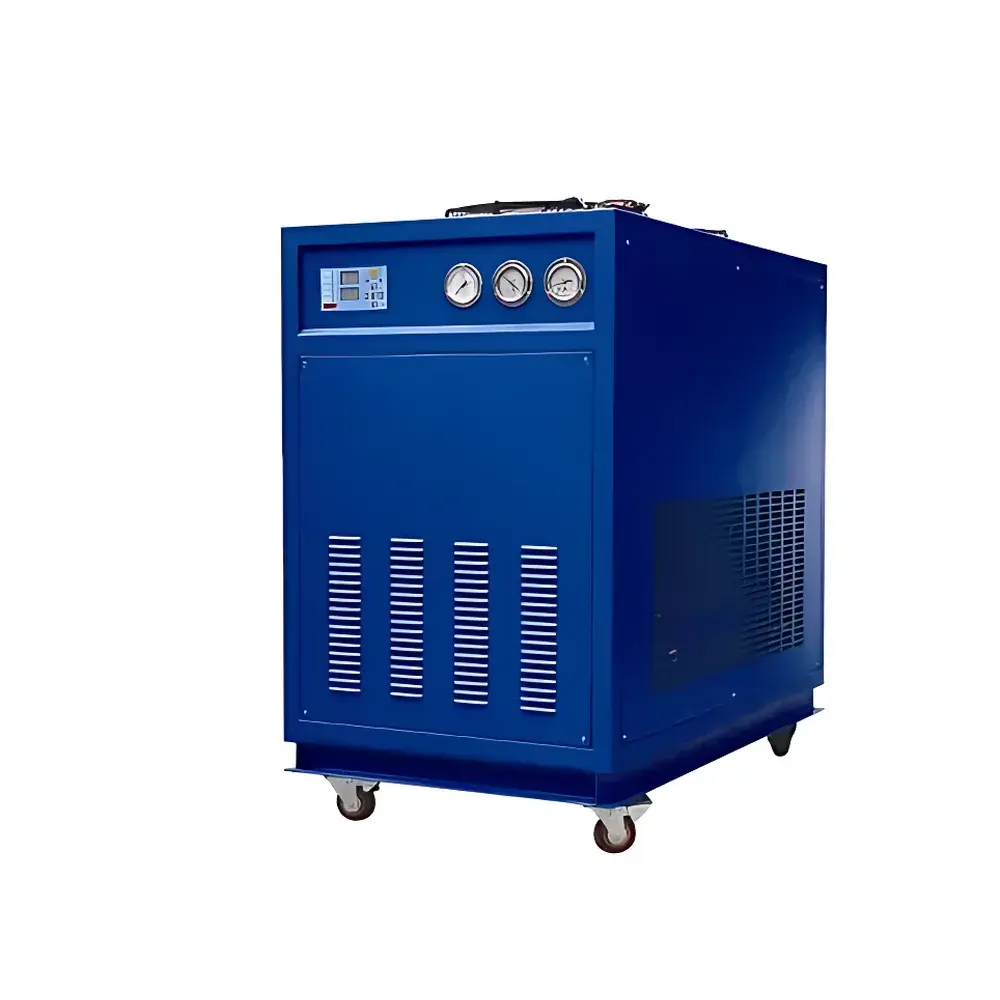
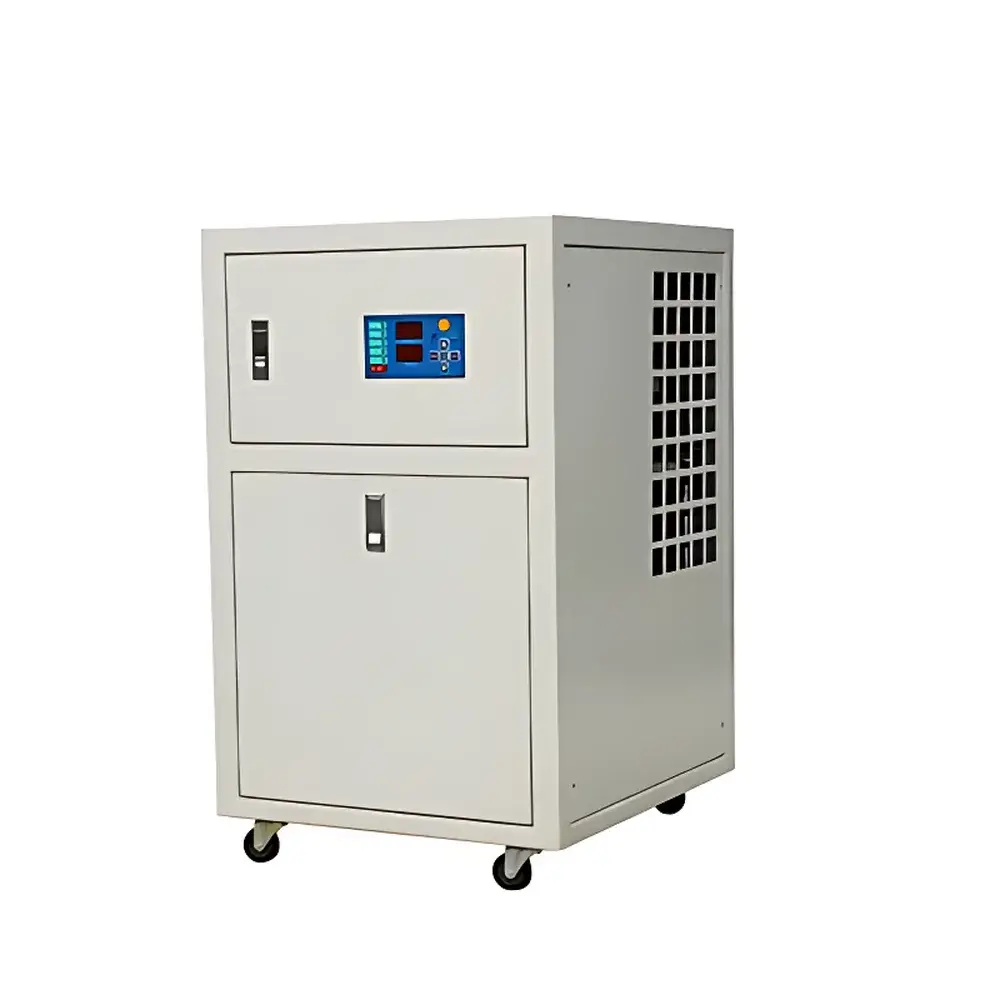
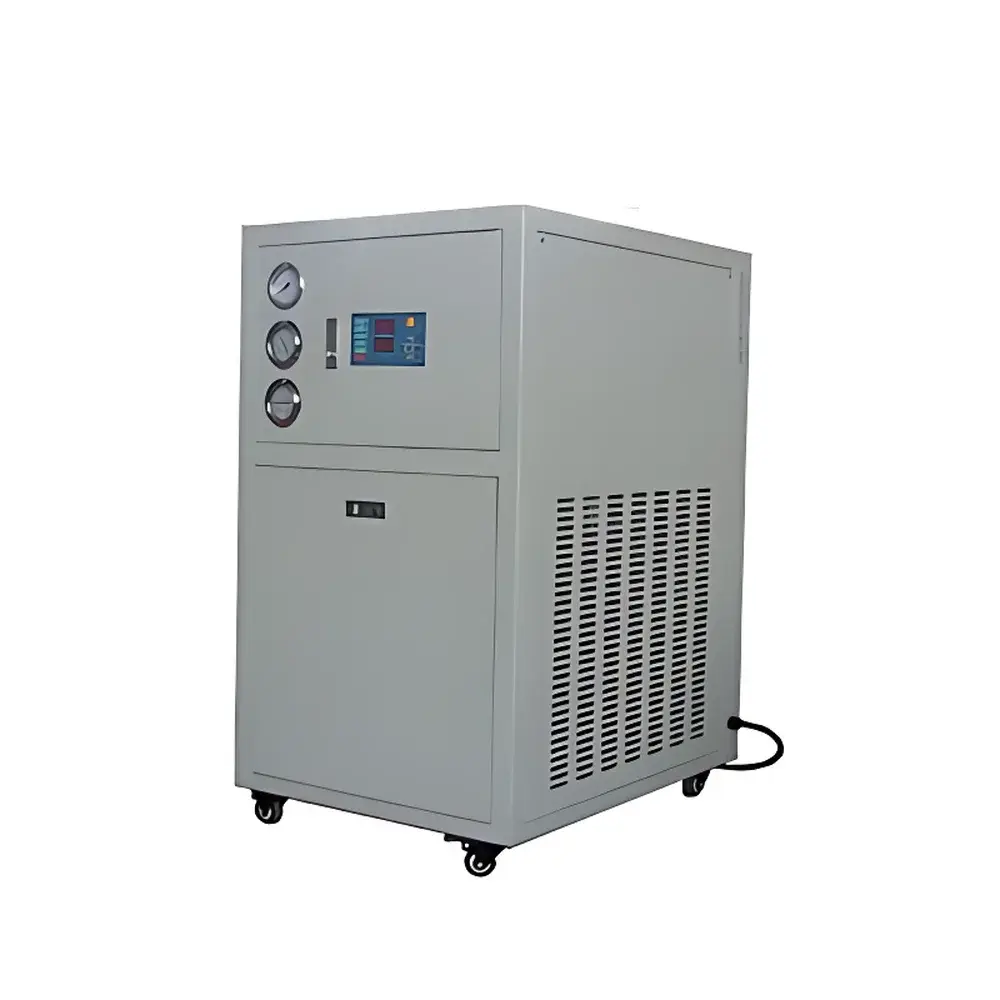
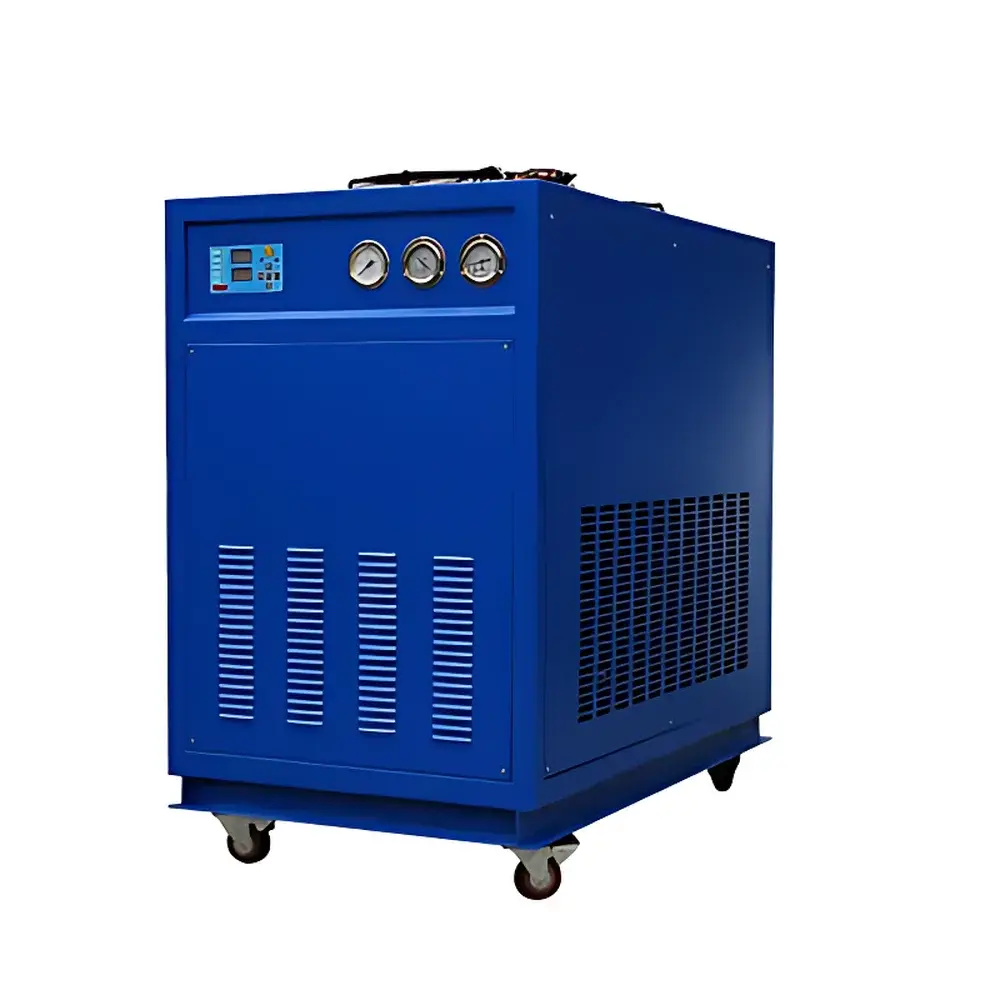
Tianfeng TF-LS-30HP Circulating Chiller
| Brand | Tianfeng |
|---|---|
| Origin | Shanghai, China |
| Manufacturer Type | Direct Manufacturer |
| Equipment Type | Integrated Circulating Chiller |
| Cooling Method | Air-Cooled |
| Temperature Control Range | 0–50 °C |
| Refrigeration Capacity | 0.3–97.5 kW |
| Temperature Stability | ±0.1 °C |
| Circulating Pump Pressure | 0–2 bar |
| Circulating Pump Flow Rate | 0–60 m³/h |
| Reservoir Volume | 5.5–500 L |
| Operating Mode | Continuous Duty |
Overview
The Tianfeng TF-LS-30HP Circulating Chiller is an industrial-grade, air-cooled refrigeration system engineered for precise thermal management of laboratory and production equipment requiring stable, continuous coolant supply. It operates on the vapor-compression refrigeration cycle, utilizing a hermetic scroll compressor, high-efficiency plate heat exchanger, and optimized refrigerant circuit (R22) to deliver consistent cooling performance across demanding operational loads. Designed for integration with analytical instruments—including graphite furnace atomic absorption spectrometers (GFAAS), inductively coupled plasma optical emission spectrometers (ICP-OES), ICP-mass spectrometers (ICP-MS), X-ray fluorescence (XRF) and X-ray diffraction (XRD) systems—as well as electron microscopy platforms (SEM/TEM), this chiller maintains critical thermal stability in heat-sensitive components such as RF generators, detectors, and high-power laser sources. Its compact footprint (2300 × 1350 × 2000 mm), stainless-steel reservoir, and dual-mode temperature control (fixed setpoint + adaptive PID regulation) support flexible deployment in constrained laboratory environments while meeting long-duration, unattended operation requirements.
Key Features
- Hermetic scroll compressor (22.05 kW) delivering high volumetric efficiency, low vibration, and extended service life under continuous duty cycles
- PID-based digital temperature controller with ±0.1 °C stability over 0–50 °C operating range; optional RKC controller available for enhanced repeatability
- Stainless-steel water reservoir (400 L capacity) and corrosion-resistant circulation pump (16 m³/h flow, 10 m head) ensure fluid integrity and longevity
- Integrated safety architecture: high/low pressure switches, compressor overheating protection, phase sequence & phase loss detection, exhaust temperature monitoring, and overcurrent cutoff
- Air-cooled condenser with copper-tube/aluminum-fin construction and low-noise external rotor fan (30,000 m³/h airflow) enabling ambient operation without external cooling water infrastructure
- Modular electrical cabinet featuring Siemens, Schneider, or Omron contactors, relays, and circuit protection—compliant with IEC 60204-1 industrial safety standards
- Front-panel digital display showing real-time outlet temperature, flow status, and fault codes; configurable analog/digital signal outputs for PLC or SCADA integration
Sample Compatibility & Compliance
The TF-LS-30HP is compatible with deionized water, glycol-water mixtures (up to 30% concentration), and other non-corrosive heat-transfer fluids suitable for laboratory instrumentation. It meets ISO 9001:2000 quality management system certification requirements and conforms to CE-marked electromagnetic compatibility (EMC) and low-voltage directive (LVD) criteria. For regulated laboratory environments, its programmable temperature logging, alarm event timestamping, and configurable password-protected parameter access support GLP/GMP-aligned workflows. While not inherently 21 CFR Part 11 compliant, optional data export (CSV via USB or RS485) and external audit trail integration enable alignment with FDA-regulated analytical method validation protocols when deployed with validated instrument interfaces.
Software & Data Management
This chiller operates as a standalone hardware-controlled system with no embedded operating system or cloud connectivity. Temperature setpoints, pump speed, and alarm thresholds are configured locally via membrane keypad and LCD interface. Event logs—including compressor run time, fault type, and duration—are retained in non-volatile memory for up to 1,000 entries and can be exported manually via USB or transmitted in real time via isolated 4–20 mA or 0–10 V analog outputs. Optional Modbus RTU (RS485) communication enables centralized monitoring within existing lab infrastructure (e.g., LabVIEW, Ignition SCADA). No proprietary software installation is required; configuration remains fully accessible through physical interface or industry-standard protocol integration.
Applications
- Laboratory instrumentation: Thermal stabilization of plasma torches (ICP), X-ray tube anodes (XRF/XRD), electron gun assemblies (SEM/TEM), and laser diode stacks (LIBS, Raman)
- Materials testing: Cooling of hot-stage accessories in thermomechanical analyzers (TMA) and dynamic mechanical analyzers (DMA)
- Pharmaceutical QC: Maintaining constant bath temperature during dissolution testing (USP ) and HPLC column ovens
- Electronics manufacturing: Heat extraction from vacuum deposition sources, etch chamber chill plates, and wafer prober thermal stages
- Plastics processing: Mold temperature control in injection molding validation rigs used for polymer characterization labs
- Medical device R&D: Thermal conditioning of ultrasonic transducers and MRI gradient coil test benches
FAQ
What is the maximum allowable return water temperature for continuous operation?
The chiller is rated for inlet water temperatures up to 40 °C. Sustained return temperatures above this threshold reduce compressor efficiency and accelerate refrigerant oil degradation; operation above 45 °C is not recommended.
Can the unit operate with ethylene glycol solutions?
Yes—up to 30% (v/v) ethylene glycol/water mixtures are supported; however, viscosity increase must be compensated by adjusting pump speed or verifying minimum flow rate (≥12 m³/h) at target temperature.
Is remote monitoring possible without third-party hardware?
Basic remote status indication (run/fault) is achievable via dry-contact relay outputs; full parameter readout and control require Modbus RTU interface and compatible master station.
Does the chiller meet noise emission limits for ISO Class 5 cleanroom-adjacent labs?
At 1 m distance, sound pressure level is ≤72 dB(A); acoustic enclosures or dedicated mechanical rooms are advised for ultra-low-noise environments.
What maintenance intervals are recommended for laboratory-grade reliability?
Compressor oil analysis every 2,000 operating hours; condenser coil cleaning quarterly; refrigerant leak check annually; full system performance verification per ISO 5149 every 24 months.



