
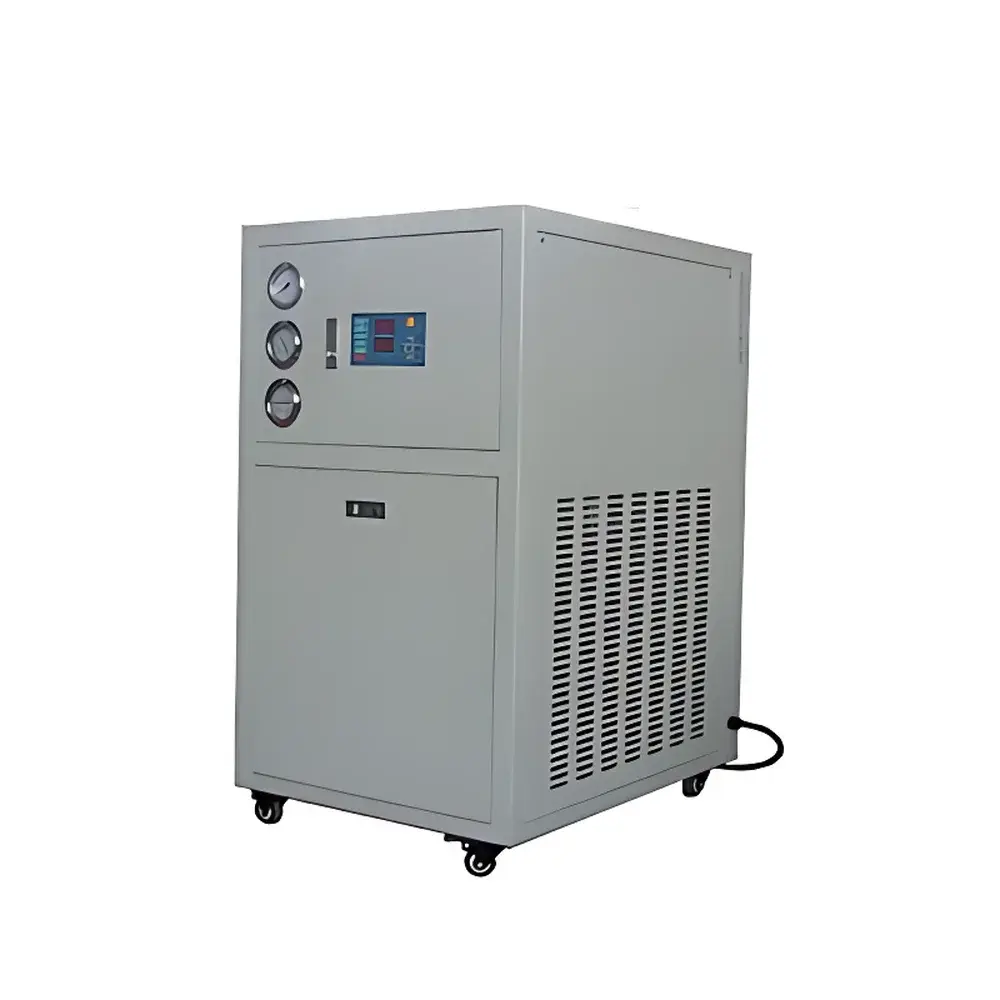
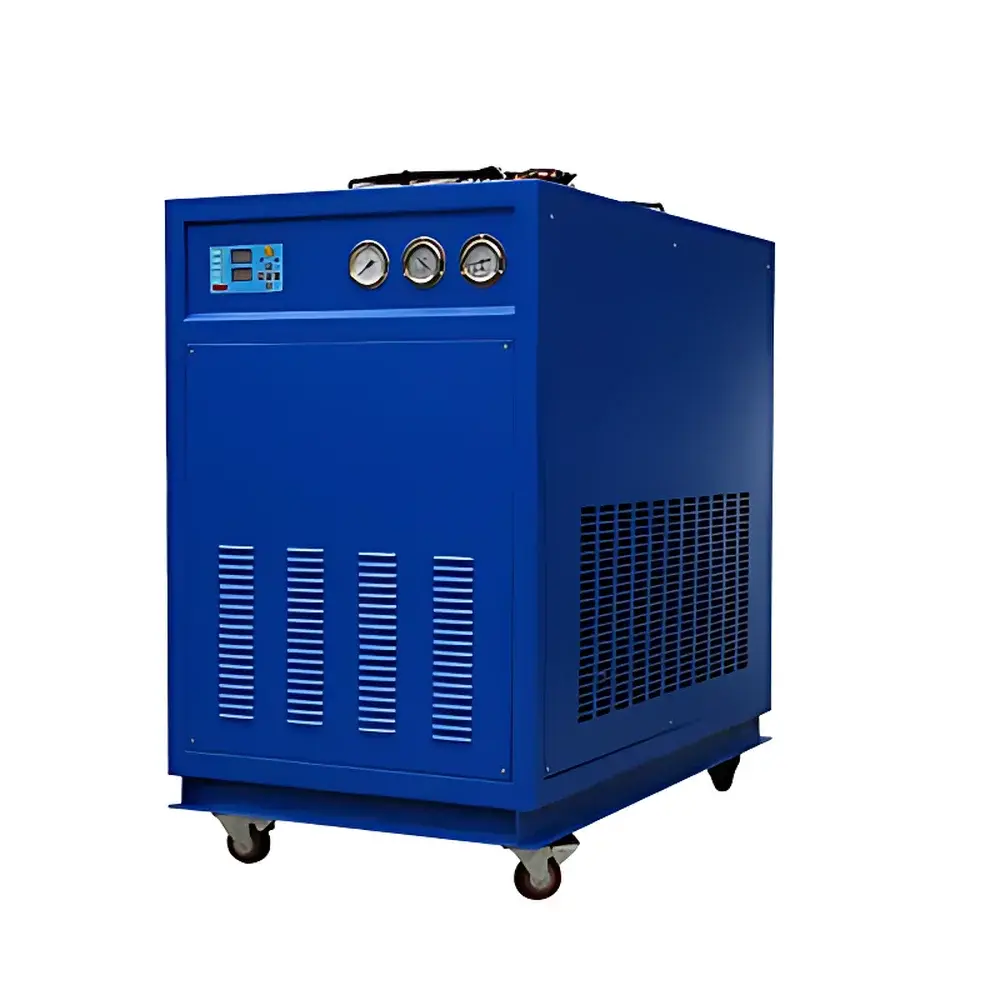
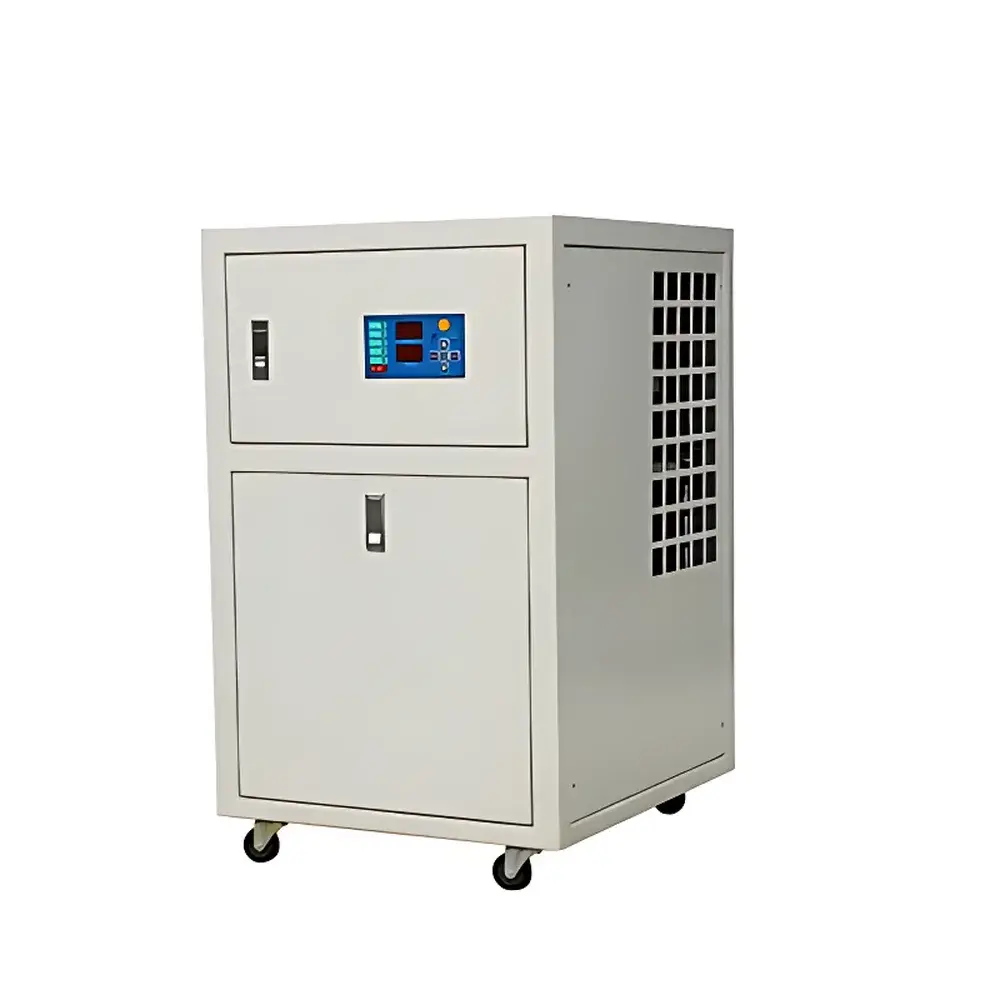
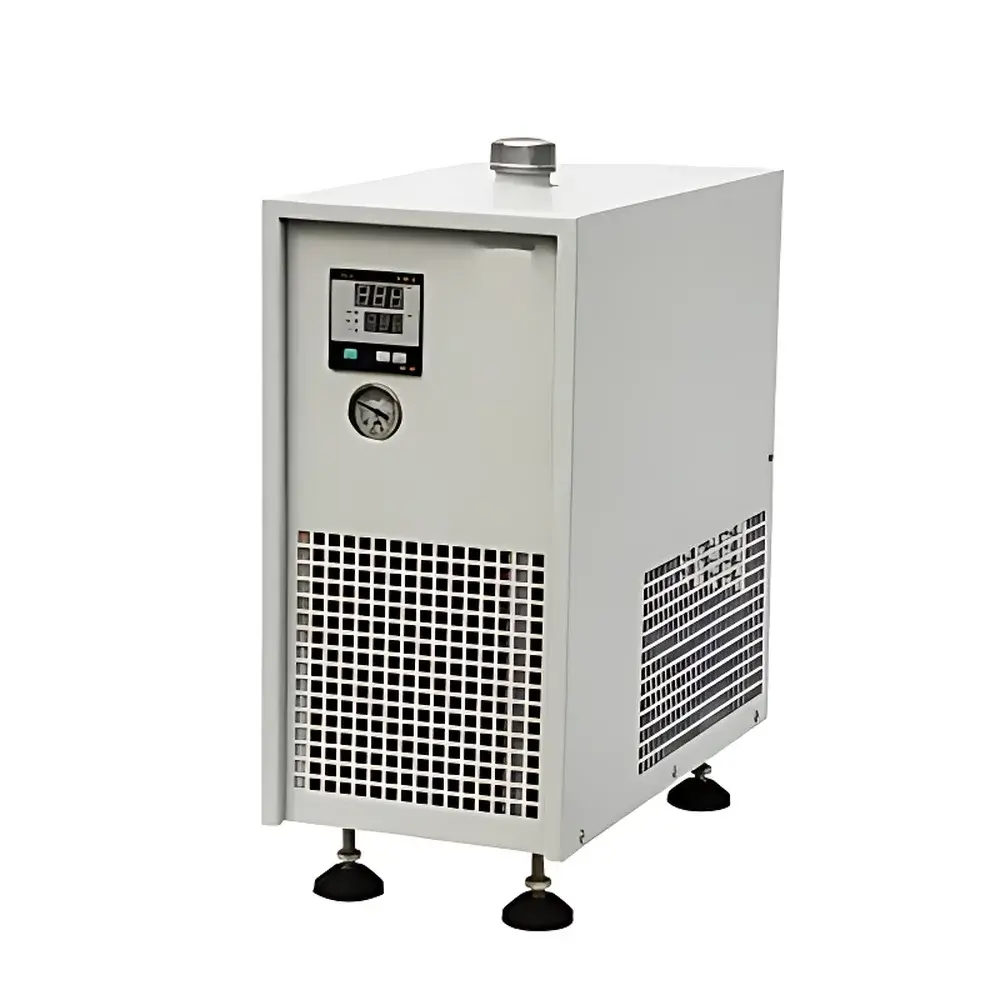
Tianfeng TF-LS-6.5KW Integrated Circulating Chiller
| Brand | Tianfeng |
|---|---|
| Origin | Shanghai, China |
| Manufacturer Type | Direct Manufacturer |
| Instrument Type | Integrated Circulating Chiller |
| Cooling Method | Water-Cooled |
| Refrigeration Capacity | 6.5 kW (at 7°C/12°C water inlet/outlet, 30°C/40°C ambient) |
| Temperature Stability | ±0.3°C (typical, 5–30°C setpoint range) |
| Pump Pressure | 0–2 kgf/cm² |
| Pump Flow Rate | 0–60 L/min |
| Reservoir Volume | 45 L |
| Power Supply | 220 V, 50 Hz |
| Compressor | Scroll-type |
| Safety Protections | High/Low Pressure Switch, Overcurrent Protection, Compressor Overheat Protection, Overtemperature Alarm |
| Dimensions (L×W×H) | 800 × 600 × 1065 mm |
| Net Weight | ~125 kg |
| Noise Level | ≤65 dB(A) |
| Certifications | ISO 9001:2000 compliant design and manufacturing |
Overview
The Tianfeng TF-LS-6.5KW Integrated Circulating Chiller is an engineered thermal management solution designed for precision temperature control of heat-generating components in analytical instrumentation, industrial machinery, and laboratory systems. It operates on a closed-loop vapor-compression refrigeration cycle, utilizing a high-efficiency scroll compressor, thermostatic expansion valve, and copper-aluminum finned condenser optimized for stable heat rejection under variable ambient conditions. The chiller delivers consistent coolant supply at user-selectable setpoints between 5°C and 30°C, with typical temperature stability of ±0.3°C under steady-state load — critical for maintaining optical alignment in spectrometers, detector thermal equilibrium in X-ray fluorescence (XRF) and electron microscopy (SEM/TEM), and plasma source stability in ICP-OES and ICP-MS systems. Its integrated architecture eliminates external piping complexity while ensuring minimal footprint and rapid deployment in constrained lab environments.
Key Features
- Industrial-grade scroll compressor with low-vibration operation and extended service life — engineered for continuous 24/7 duty cycles in mission-critical applications.
- Stainless steel reservoir and circulation pump housing — corrosion-resistant, non-reactive, and compatible with deionized water or inhibited glycol-water mixtures (up to 30% concentration).
- Digital PID temperature controller with real-time display of outlet water temperature, adjustable setpoint resolution of 0.1°C, and programmable ramp/soak profiles (optional RKC controller available).
- Multi-stage safety architecture: dual-pressure monitoring (HP/LP switches), motor overcurrent protection, compressor discharge temperature cutoff, and high-limit thermal cutout — all with relay-based fault signal output for integration into facility SCADA or instrument interlock systems.
- Variable-speed centrifugal circulation pump (0–60 L/min, 0–2 kgf/cm² head) with flow monitoring capability — supports pressure-sensitive applications such as laser cavity cooling or vacuum chamber jacketing.
- Low-noise acoustic enclosure (<65 dB[A] at 1 m) and vibration-damped mounting — suitable for placement adjacent to sensitive instruments without inducing mechanical coupling or microphonic interference.
- Compliance-ready design: electrical components meet IEC 61000-6-3 (EMC emission) and IEC 61000-6-2 (immunity); mechanical construction adheres to ISO 13849-1 PLc functional safety principles for auxiliary cooling circuits.
Sample Compatibility & Compliance
The TF-LS-6.5KW is validated for use with a broad spectrum of laboratory and industrial equipment requiring precise fluid thermal regulation. It is routinely deployed with graphite furnace atomic absorption spectrometers (GFAAS), inductively coupled plasma optical emission spectrometers (ICP-OES), X-ray diffractometers (XRD), scanning and transmission electron microscopes (SEM/TEM), and laser-based material processing tools (e.g., fiber laser marking, ultrafast ablation systems). Its coolant delivery meets ASTM D1193 Type IV water specifications when used with appropriate filtration and conductivity monitoring. For regulated environments (e.g., pharmaceutical QC labs), optional audit-trail-enabled controllers support 21 CFR Part 11 compliance when paired with validated data acquisition software. All units undergo factory calibration traceable to NIST-certified temperature standards; calibration certificates are provided upon request.
Software & Data Management
While the base unit features standalone analog/digital I/O (4–20 mA temperature feedback, dry-contact alarm outputs), optional RS485 Modbus RTU interface enables integration with LabVIEW, MATLAB, or enterprise-level building management systems (BMS). Field-upgradable firmware supports remote parameter configuration, event logging (start/stop cycles, fault codes, temperature deviations), and time-stamped operational history (retained for ≥30 days onboard). When connected to a central server, logged data may be exported in CSV or XML format for trend analysis, preventive maintenance scheduling, and GLP/GMP documentation. No proprietary cloud platform is required — all communication remains within the user’s local network perimeter unless explicitly configured otherwise.
Applications
- Analytical Instrument Cooling: Maintains thermal equilibrium in high-power X-ray sources (XRF/XRD), plasma torches (ICP), and detector housings (CCD, SDD), minimizing spectral drift and improving long-term measurement reproducibility.
- Electron Microscopy Support: Stabilizes specimen stage and column lens temperatures in SEM/TEM systems, reducing thermal lensing effects and enabling sub-nanometer imaging resolution.
- Laser System Thermal Management: Provides stable coolant flow to diode-pumped solid-state (DPSS) and fiber lasers, preventing wavelength shift and power fluctuation during extended operation.
- Process Instrumentation: Cools circulating baths for viscometers, rheometers, and calorimeters where bath temperature directly impacts viscosity, modulus, or enthalpy measurements.
- Industrial Integration: Supports CNC spindle chillers, vacuum deposition chamber jackets, and semiconductor wafer prober thermal stages — all requiring tight ΔT control between inlet and outlet coolant streams.
FAQ
What is the recommended maximum return water temperature for sustained compressor longevity?
For optimal reliability, return water temperature should not exceed 40°C. Elevated inlet temperatures increase condensing pressure and reduce volumetric efficiency — accelerating oil degradation and wear in scroll compressors.
Can this chiller operate with ethylene glycol solutions?
Yes — up to 30% by volume glycol/water mixture is supported. Note that thermal capacity decreases ~10% at 20% glycol concentration; pump head and flow rate must be verified against system pressure drop requirements.
Is the unit suitable for cleanroom environments?
The stainless steel wetted parts and sealed electronics meet ISO Class 5 particulate limits when installed with HEPA-filtered intake air. Optional IP54-rated enclosures are available for higher environmental protection.
Does it support external temperature feedback control?
Yes — the standard analog input accepts 0–10 V or 4–20 mA signals from user-installed process sensors, enabling cascade control of instrument-specific thermal zones.
What maintenance intervals are recommended?
Compressor oil and refrigerant charge require verification every 24 months under continuous operation; condenser coil cleaning is advised quarterly in dusty environments; water filter replacement every 6 months if using non-deionized supply.



