
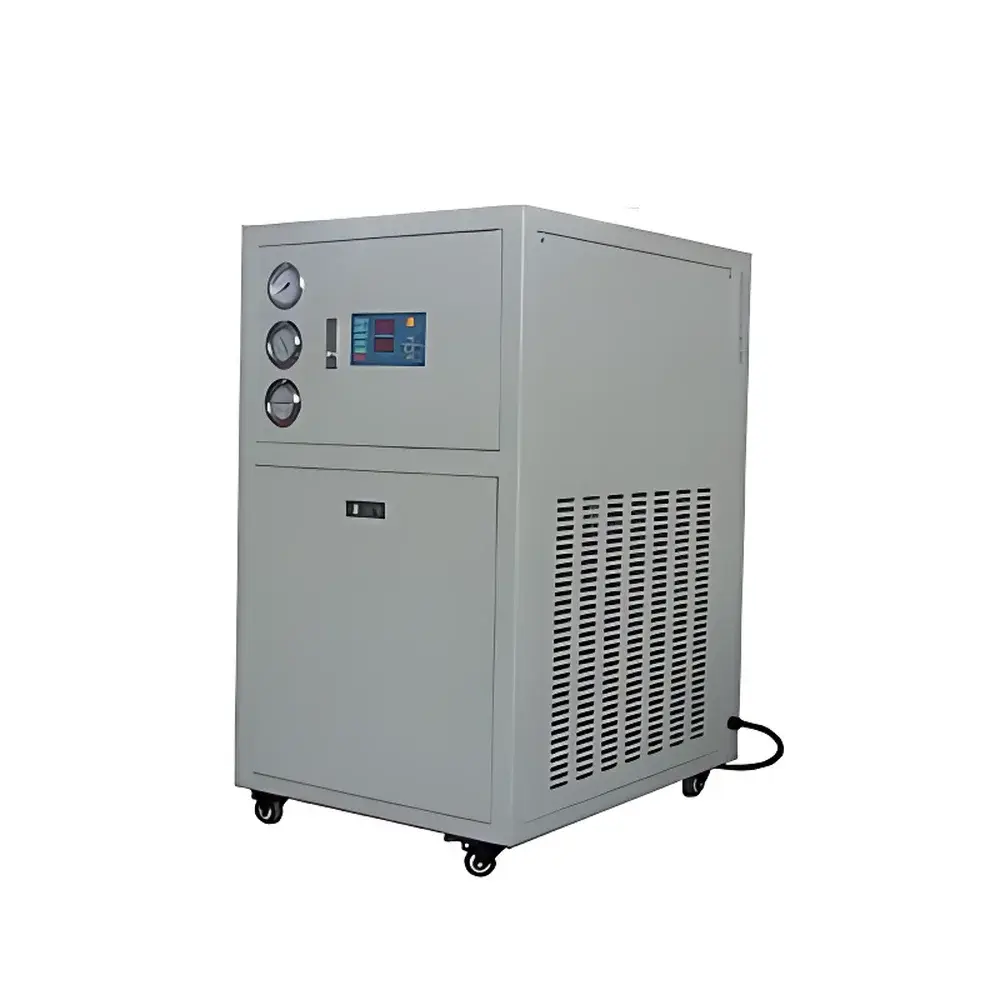
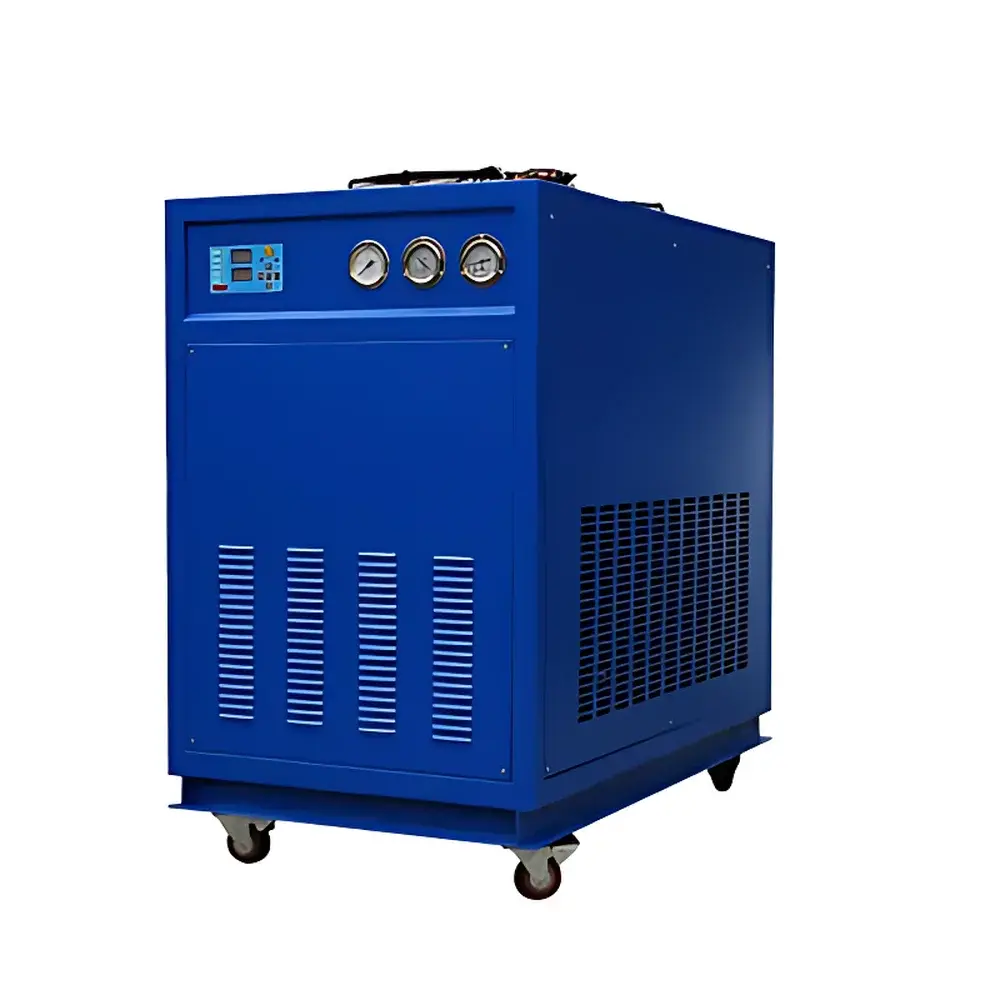
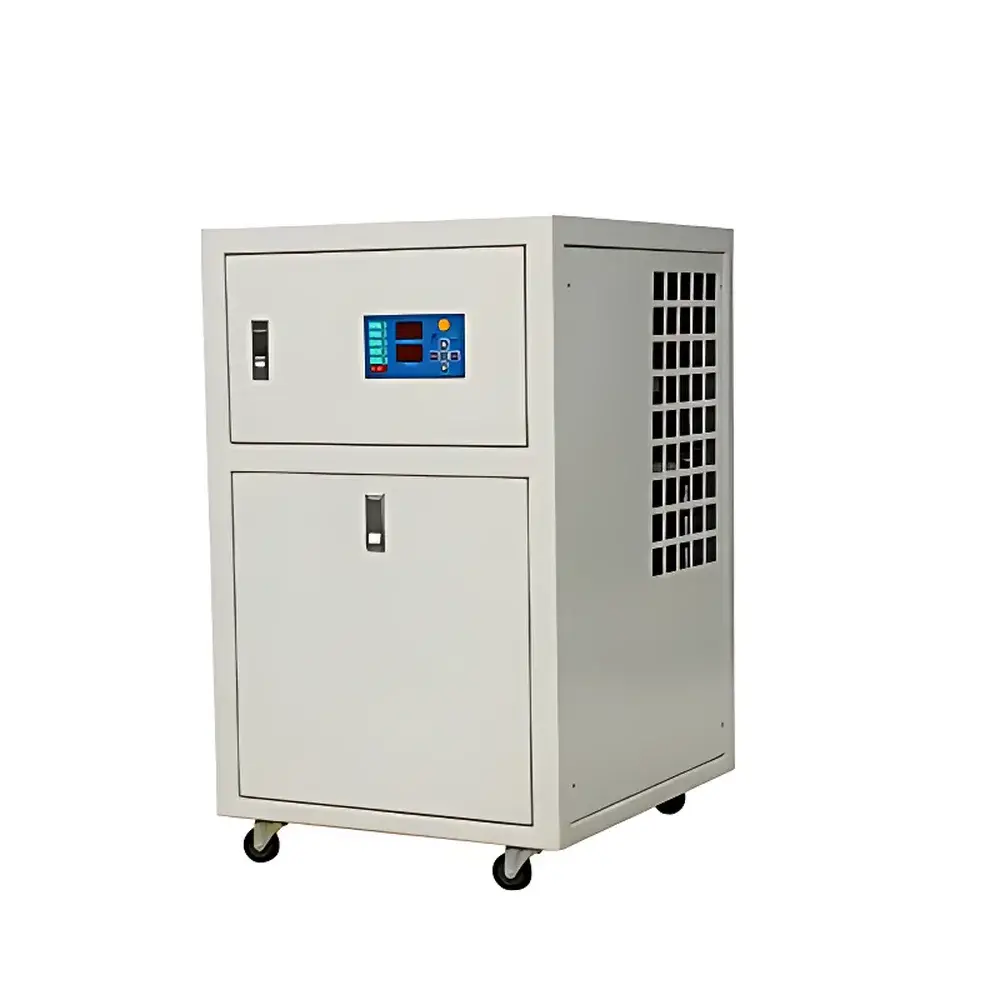
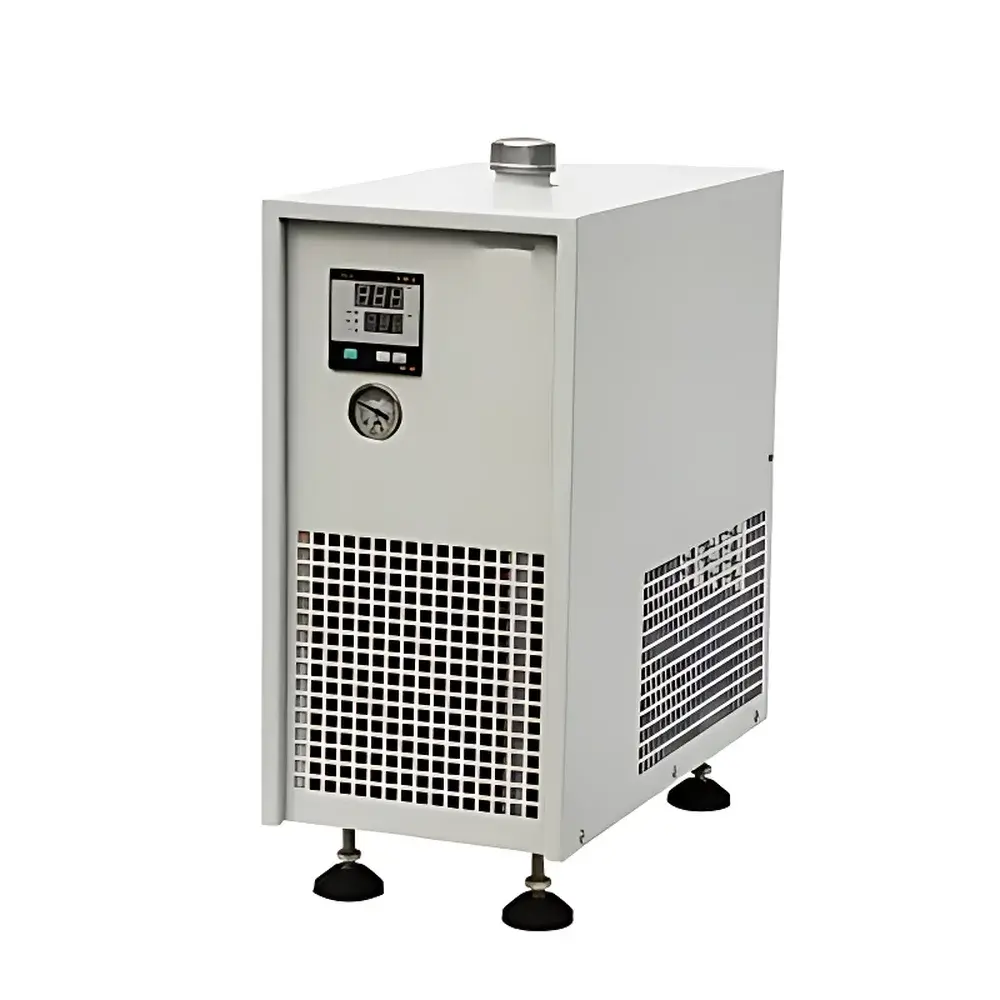
Tianfeng TF-LS-8KW Screw Chiller
| Brand | Tianfeng |
|---|---|
| Origin | Shanghai, China |
| Manufacturer Type | Direct Manufacturer |
| Equipment Type | Integrated Circulating Chiller |
| Cooling Method | Water-Cooled |
| Rated Refrigeration Capacity | 8 kW (at 7°C/12°C water inlet/outlet, 30°C/40°C ambient) |
| Temperature Stability | ±0.3°C |
| Circulating Pump Pressure | 0–2 kgf/cm² |
| Flow Rate | 0–60 L/min |
| Reservoir Volume | 60 L |
| Input Power | 3.3 kW |
| Power Supply | 220 V, 50 Hz |
| Dimensions (L×W×H) | 550 × 880 × 1160 mm |
| Compressor | Scroll-type, High-Efficiency |
| Safety Protections | Compressor overheat, overcurrent, high/low pressure, and overtemperature safeguards |
| Construction | Stainless steel reservoir and pump |
| Control System | Digital temperature display with PID algorithm |
| Certifications | ISO 9001:2000 compliant |
Overview
The Tianfeng TF-LS-8KW Screw Chiller is an integrated, water-cooled circulating chiller engineered for precision thermal management in demanding laboratory and industrial environments. It employs a scroll compressor-based refrigeration cycle operating on R22 or R407C (configurable), delivering stable cooling capacity of 8 kW under standard conditions (7°C chilled water outlet, 12°C inlet; 30°C ambient air inlet, 40°C outlet). Designed to maintain setpoint temperatures within ±0.3°C under dynamic load conditions, the unit supports continuous operation across a chilled water temperature range of 5–30°C—optimized for applications requiring tight thermal control, including analytical instrumentation, vacuum systems, laser sources, and high-precision machining platforms. Its compact footprint (550 × 880 × 1160 mm), stainless-steel fluid path, and integrated pump/reservoir architecture eliminate external plumbing complexity while ensuring corrosion resistance and long-term reliability in chemically diverse lab settings.
Key Features
- High-efficiency scroll compressor with low-noise operation (<65 dB(A) at 1 m) and extended service life under continuous duty cycles
- Digital PID temperature controller with real-time display, adjustable setpoint resolution of 0.1°C, and programmable ramp-soak profiles
- Stainless steel 60 L reservoir and centrifugal circulation pump rated for 0–60 L/min flow and 0–2 kgf/cm² head pressure
- Comprehensive safety architecture: dual-stage high/low pressure switches, compressor winding overtemperature sensors, phase-loss detection, and electronic overcurrent protection
- Modular electrical cabinet featuring CE-certified components from Siemens, Schneider Electric, and Omron—including contactors, relays, and power distribution modules
- Configurable control interface supporting analog 0–10 V or 4–20 mA external setpoint input and alarm relay dry-contact outputs for integration into centralized facility monitoring systems
- Thermally insulated refrigerant lines and vibration-dampened mounting to minimize transmission of mechanical noise to sensitive instruments
Sample Compatibility & Compliance
The TF-LS-8KW is compatible with a broad spectrum of laboratory instrumentation requiring stable coolant delivery, including graphite furnace atomic absorption spectrometers (GFAAS), inductively coupled plasma optical emission spectrometers (ICP-OES), ICP-mass spectrometers (ICP-MS), X-ray fluorescence (XRF) and X-ray diffraction (XRD) systems, scanning electron microscopes (SEM), and transmission electron microscopes (TEM). Its fluid circuit meets ASTM D1193 Type IV purity requirements when used with deionized water or inhibited glycol-water mixtures. The unit complies with ISO 9001:2000 quality management standards and incorporates design elements aligned with GLP and GMP infrastructure expectations—including auditable operational logs (when paired with optional data logging module), traceable calibration procedures for temperature sensors, and fail-safe shutdown protocols. Electrical safety conforms to IEC 61000-6-2 (immunity) and IEC 61000-6-4 (emissions) standards.
Software & Data Management
While the base model features a standalone digital controller, optional RS485 Modbus RTU or Ethernet TCP/IP communication interfaces enable seamless integration with laboratory information management systems (LIMS) and building automation platforms. When configured with the optional data acquisition module, the chiller records timestamped values for outlet temperature, flow rate (via inline turbine sensor), compressor discharge temperature, and system pressure differentials at user-defined intervals (1 s to 60 min). All logged data is exportable in CSV format and supports audit trail generation per FDA 21 CFR Part 11 requirements when deployed with validated third-party software. Firmware updates are performed via secure USB interface with version rollback capability and cryptographic signature verification.
Applications
This chiller serves critical thermal regulation functions across multiple domains: In analytical laboratories, it stabilizes detector housings and plasma torches in ICP systems, suppresses thermal drift in XRD goniometers, and maintains optimal operating temperature for SEM/TEM cold stages and cryo-transfer systems. In materials science labs, it controls mold temperature during polymer characterization experiments, enabling reproducible DSC and TMA measurements. For laser-based instrumentation—including ultrafast Ti:sapphire oscillators and CO₂ cutting lasers—it provides consistent heat extraction from gain media and optical mounts, directly influencing beam pointing stability and pulse-to-pulse energy consistency. In pharmaceutical QC labs, it cools HPLC column ovens and dissolution apparatus baths, ensuring compliance with USP and environmental control guidelines. Its robust construction also supports deployment in pilot-scale bioreactor cooling loops and cleanroom HVAC precooling circuits.
FAQ
What is the recommended maximum return water temperature for continuous operation?
For optimal compressor longevity and system efficiency, the return water temperature should not exceed 40°C. Sustained inlet temperatures above this threshold accelerate refrigerant oil degradation and increase discharge pressure, triggering high-pressure cutout protection.
Can the chiller operate with ethylene glycol solutions?
Yes—the stainless steel reservoir, pump, and heat exchanger are compatible with aqueous solutions containing up to 30% (v/v) inhibited ethylene glycol. Viscosity effects must be accounted for when sizing flow paths for downstream equipment.
Is remote monitoring supported out of the box?
Standard configuration includes local digital display only. Remote monitoring requires optional communication module installation and configuration via Modbus register mapping or Ethernet-based SCADA integration.
What maintenance intervals are recommended for laboratory-grade operation?
Compressor oil analysis every 4,000 operating hours; condenser coil cleaning quarterly in dust-prone environments; annual verification of temperature sensor calibration against NIST-traceable reference; filter drier replacement every 2 years or after any refrigerant circuit breach.
Does the unit meet electromagnetic compatibility requirements for use near MRI or mass spectrometry facilities?
Yes—tested to IEC 61326-1 Class A emission limits and IEC 61326-2-1 immunity requirements for laboratory equipment, ensuring non-interference with adjacent high-sensitivity magnetic or ion-detection systems.



