
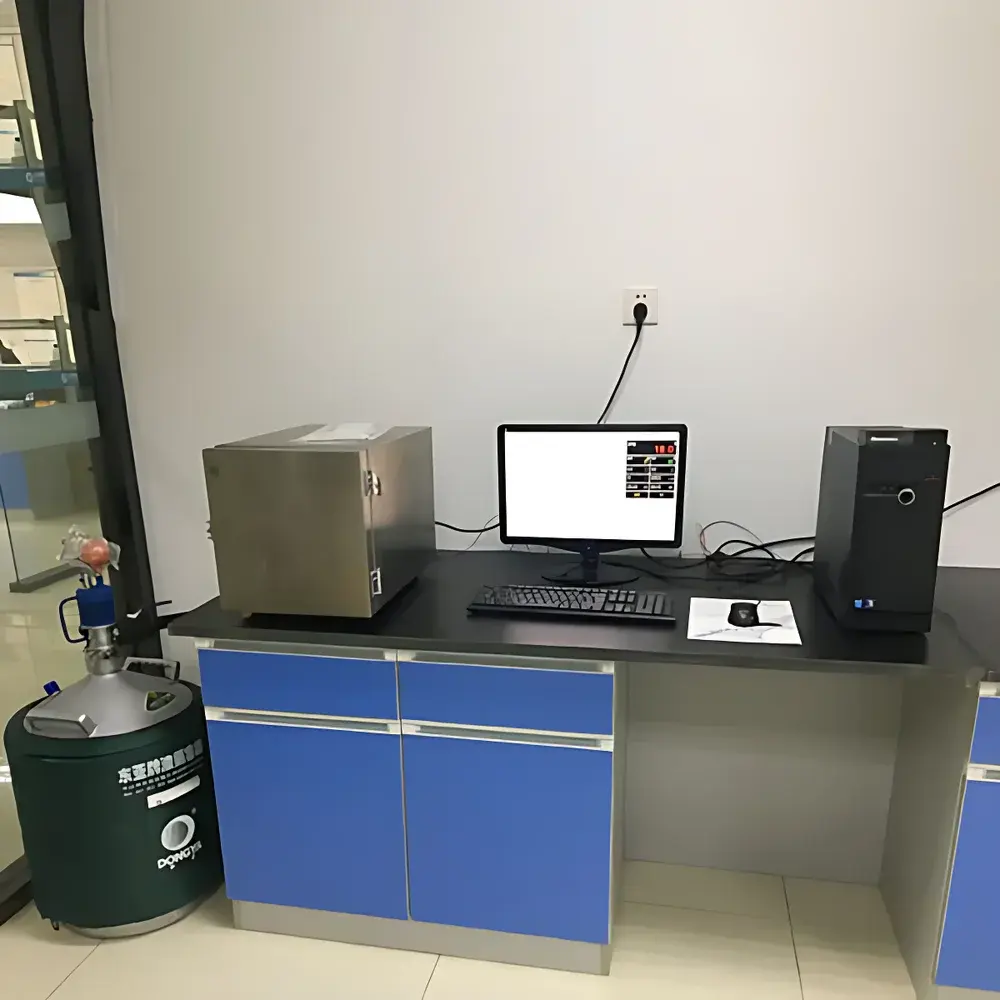
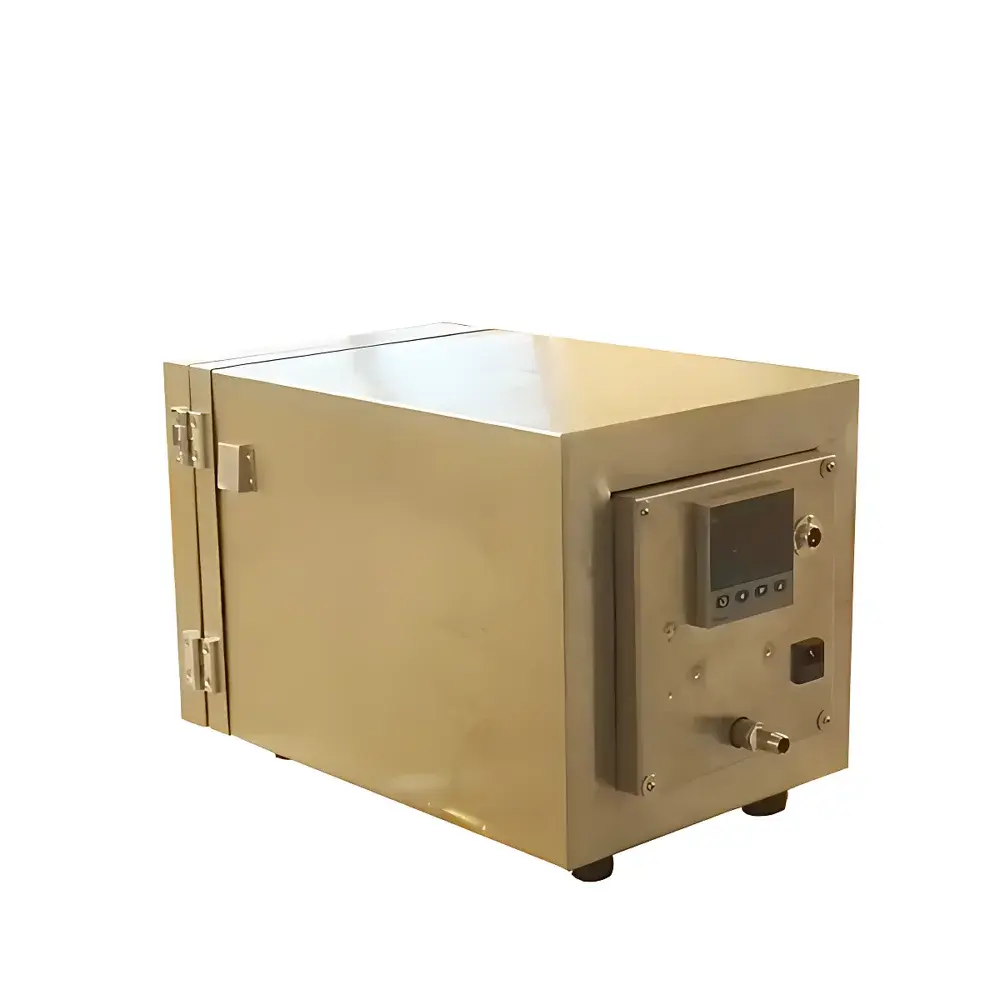
Tianfeng TF-PRL Series Programmable Controlled-Rate Freezer
| Key | Brand: Tianfeng |
|---|---|
| Origin | Shanghai, China |
| Manufacturer Type | OEM Manufacturer |
| Country of Origin | China |
| Model | TF-PRL-PA-III |
| Temperature Range | 40 °C to –180 °C |
| Temperature Accuracy | ±0.5 °C |
| Cooling Rate | 0.1–50 °C/min (adjustable) |
| Heating Rate | 0.1–30 °C/min (adjustable) |
| Chamber Dimensions | ≥200 × 200 × 200 mm |
| Sample Capacity | 160 cryovials or 8 blood bags |
| Control System | Embedded PC with dedicated cryo-control card and proprietary software |
| LN₂ Delivery | Pressurized 30-L dewar with auto-regulating pressure valve |
| Compliance | Designed for GLP-compliant biobanking and clinical cell therapy workflows |
Overview
The Tianfeng TF-PRL Series Programmable Controlled-Rate Freezer is an engineered solution for precise, reproducible cryopreservation of temperature-sensitive biological materials—including hematopoietic stem cells (HSCs), peripheral blood mononuclear cells (PBMCs), cord blood units, corneal tissues, skin grafts, pancreatic islets, and vascular allografts. Based on the fundamental principles of controlled-rate freezing (CRF), the system mitigates intracellular ice formation and osmotic shock by dynamically modulating liquid nitrogen (LN₂) delivery in response to real-time thermal feedback during the critical phase transition zone (typically –5 °C to –15 °C). Unlike passive slow-freezing methods, this active CRF architecture enables user-defined cooling profiles that account for sample-specific latent heat release, ensuring optimal vitrification kinetics and post-thaw viability recovery. The TF-PRL-PA-III variant supports ultra-low operational temperatures down to –180 °C—compatible with long-term archival storage requirements per ISO 20387:2018 (Biobanking) and ASTM F1986-21 (Standard Guide for Cryopreservation of Hematopoietic Progenitor Cells).
Key Features
- Microprocessor-based closed-loop temperature control with three independent thermocouple inputs (sample, chamber air, LN₂ inlet) for adaptive rate modulation during phase transition.
- Adjustable cooling rates from 0.1 to 50 °C/min and heating rates from 0.1 to 30 °C/min—programmable in up to 20 discrete segments per protocol.
- Stainless steel cryochamber (≥200 × 200 × 200 mm) with uniform thermal distribution; validated capacity for 160 standard 2-mL cryovials or eight 250-mL blood bags.
- Integrated 30-L liquid nitrogen dewar equipped with self-pressurizing regulator, eliminating external gas supply dependency and ensuring stable LN₂ flow across extended freeze cycles.
- Dedicated Windows-compatible software featuring real-time multi-channel temperature curve visualization, programmable alarm thresholds (±0.5 °C deviation), automatic data logging with timestamped metadata (operator ID, protocol version, ambient conditions), and audit-trail-enabled file export (CSV, PDF, PNG).
- Full manual override capability—including keyboard-initiated rate adjustment, on-the-fly segment skipping, and instant hold-to-constant-temperature mode—for emergency intervention or protocol optimization studies.
Sample Compatibility & Compliance
The TF-PRL platform accommodates diverse biospecimen formats including cryovials (1.2–5.0 mL), blood bags (100–500 mL), tissue cassettes, and multi-well plates. Its thermal performance has been validated against ISO/IEC 17025-accredited reference standards for cryogenic instrumentation. The system supports compliance with FDA 21 CFR Part 11 (electronic records/signatures) when deployed with password-protected user roles, electronic signature capture, and immutable data archiving. It meets essential design criteria outlined in AABB Standards for Cellular Therapy (Section 5.10), FACT-JACIE Standards (Section 3.2.2), and EU Directive 2004/23/EC for human tissue and cell establishments. All firmware and software updates undergo regression testing and are distributed under formal change control documentation.
Software & Data Management
The proprietary CryoControl™ software provides a validated, intuitive interface for protocol development, execution, and retrospective analysis. Each freeze cycle generates a self-contained data package containing raw thermocouple readings (sample, ambient, LN₂ line), setpoint trajectory, actual cooling rate history, operator annotations, and system event logs (e.g., door open/close, LN₂ low-level alert, power interruption). Data files are stored in a hierarchical directory structure with SHA-256 checksum integrity verification. Export functions support CSV for statistical analysis in JMP or R, PDF for regulatory submission packages, and high-resolution PNG for publication-ready figures. Version-controlled software updates are delivered via secure HTTPS portal with release notes detailing validation status per ICH GCP E6(R3) Annex 11 requirements.
Applications
- Clinical-grade cryopreservation of autologous and allogeneic hematopoietic stem/progenitor cells prior to transplantation.
- Standardized freezing of mesenchymal stromal cells (MSCs) and induced pluripotent stem cell (iPSC)-derived lineages for regenerative medicine trials.
- Long-term banking of primary human tissues (cornea, skin, cartilage) under ISO 20387-certified biobank conditions.
- Process development and scale-up studies for cryoprotectant formulation optimization using controlled ramp-and-hold protocols.
- Quality control testing of cryopreservation media and thawing reagents under GMP-aligned environmental monitoring.
- Academic research into cryoinjury mechanisms, ice nucleation kinetics, and glass transition behavior in complex biological matrices.
FAQ
What is the minimum required LN₂ purity for stable operation?
Liquid nitrogen must meet ISO 8573-1:2010 Class 2 specifications (≤0.1 ppm O₂, ≤0.1 ppm H₂O, ≤0.01 ppm hydrocarbons) to prevent frost buildup in the delivery manifold.
Can the system be integrated into a LIMS or hospital EMR environment?
Yes—via configurable RESTful API endpoints supporting HL7 v2.x and FHIR R4 payloads for bidirectional specimen tracking and freeze-log synchronization.
Is remote monitoring supported without compromising data security?
The system includes optional TLS 1.3-encrypted web dashboard access with two-factor authentication and role-based view permissions aligned with NIST SP 800-53 Rev. 5 controls.
How is temperature accuracy verified during routine maintenance?
Calibration is performed using NIST-traceable dry-block calibrators (–80 °C to 50 °C) at three points per decade, with as-found/as-left reports generated per ISO/IEC 17025 clause 6.5.
Does the software support 21 CFR Part 11 compliance out-of-the-box?
Yes—when configured with electronic signature policies, audit trail activation, and secure user authentication (LDAP/Active Directory integration), full Part 11 readiness is achieved without third-party middleware.



