
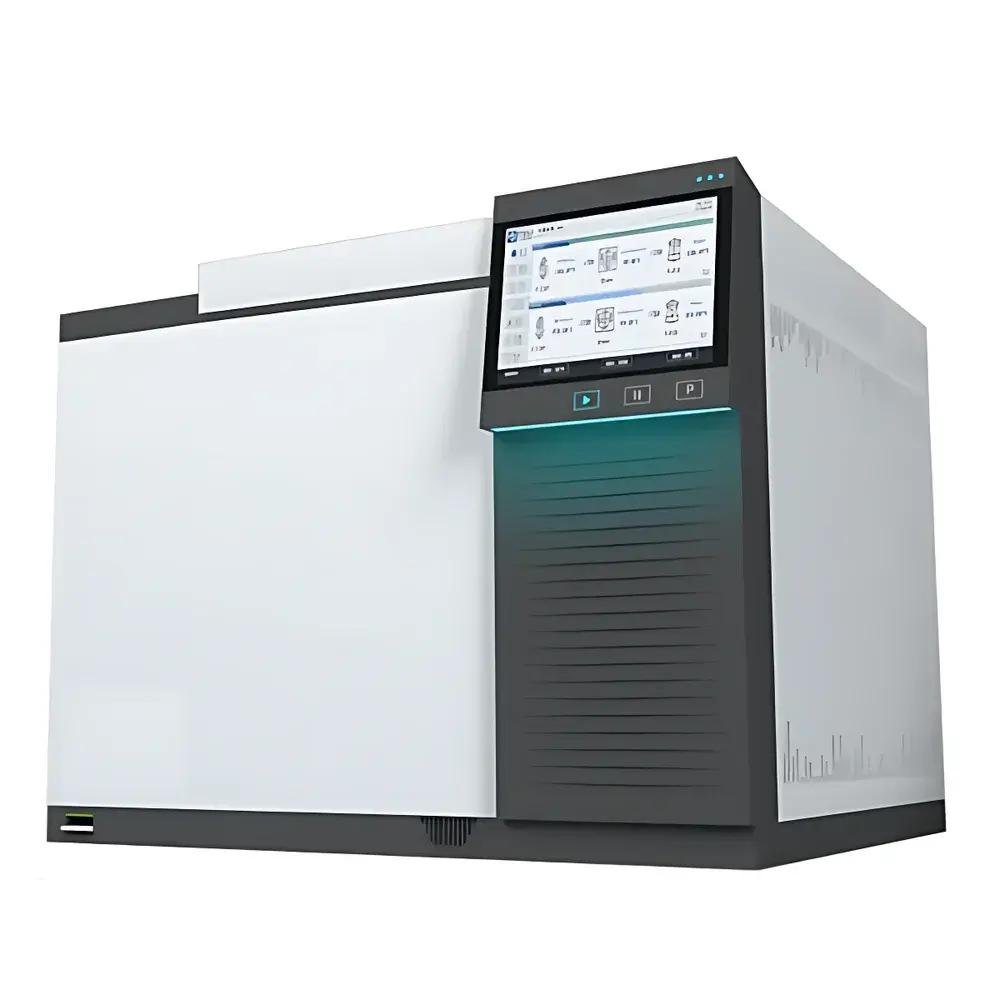
Tianhong TH-300W Online Ambient Air Greenhouse Gas Monitoring System (Gas Chromatography with FID/ECD Detection)
| Brand | Tianhong |
|---|---|
| Origin | Hubei, China |
| Manufacturer Type | Authorized Distributor |
| Regional Classification | Domestic (China-made) |
| Model | TH-300W |
| Pricing | Upon Request |
| Detection Principle | Flame Ionization Detector (FID) and Electron Capture Detector (ECD) |
| Instrument Type | Online Continuous Analyzer |
| Typical Configuration | Multi-component VOC & Greenhouse Gas Analyzer |
| Sampling Method | Pressurized Loop Injection with Automated Valving |
Overview
The Tianhong TH-300W Online Ambient Air Greenhouse Gas Monitoring System is a dedicated, laboratory-grade continuous emission monitoring solution engineered for the simultaneous quantification of carbon dioxide (CO₂), methane (CH₄), and nitrous oxide (N₂O) in ambient air. It employs dual-detector gas chromatography (GC) as its core analytical principle—leveraging separation on a proprietary packed or capillary column optimized for polar and non-polar greenhouse gas species, followed by selective detection using flame ionization (FID) and electron capture (ECD) technologies. CO₂ is not directly detectable by FID; therefore, the system integrates a high-efficiency nickel-catalyzed methanizer operating at >360 °C to quantitatively convert CO₂ to CH₄ prior to FID analysis. CH₄ elutes directly and is measured in real time, while N₂O—retained and resolved separately—is detected with high specificity and low detection limits via ECD. This architecture ensures trace-level sensitivity (sub-ppb for CH₄ and N₂O, low-ppm for CO₂ after conversion), robust baseline stability, and minimal cross-interference under variable humidity and matrix conditions typical of unfiltered ambient air.
Key Features
- Dual-detector GC architecture: Integrated FID and ECD modules enable concurrent, independent measurement of CH₄/N₂O (ECD) and CH₄/CO₂ (via methanizer+FID) without hardware reconfiguration.
- High-efficiency catalytic methanizer: Nickel-based reactor with precise temperature control (>360 °C) achieves >98% CO₂-to-CH₄ conversion efficiency, validated per ISO 14644-8 Annex B protocols for catalytic converter performance.
- Automated loop injection: 1–5 mL quantitative sampling loop with pneumatically actuated multi-port valves ensures reproducible sample introduction and eliminates manual syringe handling errors.
- Thermostatically controlled GC oven: Maintains ±0.1 °C stability across 40–200 °C range, critical for retention time repeatability and long-term calibration integrity.
- Modular detector design: FID and ECD detectors are field-replaceable and support routine maintenance (jet cleaning, electrode polishing, gas flow calibration) without system downtime.
- Robust environmental housing: IP54-rated enclosure with internal temperature stabilization enables deployment in outdoor shelters or mobile monitoring trailers without climate-controlled rooms.
Sample Compatibility & Compliance
The TH-300W is designed for direct analysis of unfiltered, humid ambient air (dew point ≤ 10 °C) without pre-concentration or cryogenic trapping. Sample inlet includes a heated particulate filter (60 °C) and moisture management module to prevent condensation in the sampling line and GC column. The system complies with the technical requirements of GB/T 31705–2015 (“Online Observation Method for Background Atmospheric CO₂ and CH₄ Concentrations by Gas Chromatography”) and aligns with the measurement principles referenced in WMO GAW Report No. 255 for atmospheric greenhouse gas monitoring. While not certified to EPA Method TO-15 or EN 13649, its analytical approach satisfies data quality objectives outlined in ISO 5725 (accuracy, precision) and supports GLP-compliant operation when paired with audit-trail-enabled software (see Software section). Calibration traceability is maintained to NIST-traceable gas standards (e.g., NOAA-certified CH₄/CO₂/N₂O primary standards in synthetic air).
Software & Data Management
The embedded control software provides full GC sequence automation—including valve timing, oven ramping, detector biasing, and data acquisition—at 1 Hz resolution. Raw chromatograms and integrated peak areas are stored locally in HDF5 format with embedded metadata (timestamp, pressure, temperature, detector gain). Remote access is enabled via secure HTTPS interface supporting TLS 1.2+ encryption. Data export supports CSV, NetCDF, and XML formats compliant with ICOS (Integrated Carbon Observation System) metadata schemas. Audit trail functionality records all user actions (method edits, calibration events, detector parameter changes) with timestamps and operator IDs, satisfying FDA 21 CFR Part 11 requirements when deployed in regulated environmental QA/QC laboratories. Optional integration with SCADA platforms (Modbus TCP, OPC UA) allows real-time streaming to central environmental data hubs.
Applications
- Urban and rural background air quality monitoring networks tracking diurnal and seasonal GHG trends.
- Validation of satellite-based GHG retrieval algorithms (e.g., OCO-2, TROPOMI) through ground-truth reference measurements.
- Emission source attribution studies near landfills, wastewater treatment plants, agricultural zones, and natural gas infrastructure.
- Long-term atmospheric composition research at WMO GAW stations requiring stable, low-maintenance instrumentation.
- Compliance monitoring for national inventories under UNFCCC reporting frameworks (e.g., Tier 2/Tier 3 methodologies).
- Calibration and verification of lower-cost sensor networks (e.g., metal-oxide, NDIR) deployed for hyperlocal mapping.
FAQ
What is the minimum detection limit (MDL) for each target gas?
Typical MDLs are: CH₄ — 0.2 ppb (1σ, 1-hour average); CO₂ — 0.05 ppm (post-methanization, 1σ, 1-hour); N₂O — 0.03 ppb (1σ, 1-hour). Actual values depend on integration time, column aging, and carrier gas purity.
Can the system operate unattended for extended periods?
Yes. With scheduled auto-calibration (every 6–24 hours using dual standard gases), remote diagnostics, and redundant power supply options, the TH-300W supports >30-day unattended operation in sheltered outdoor environments.
Is the methanizer lifetime specified, and how is catalyst deactivation monitored?
The Ni catalyst has a nominal service life of ≥12 months under continuous operation. Deactivation is tracked via periodic CO₂ recovery tests; a <5% drop in CH₄ signal from certified CO₂ standards triggers catalyst replacement.
Does the system support compliance with ISO/IEC 17025 accreditation requirements?
Yes—when operated with documented SOPs, traceable calibration gases, and full audit logs, the TH-300W meets the technical competence criteria for testing laboratories under ISO/IEC 17025:2017 Clause 7.2–7.8.
What maintenance intervals are recommended for FID and ECD detectors?
FID jet cleaning and electrode inspection every 3 months; ECD cell bake-out and radioactive source activity verification annually. Full GC column conditioning recommended every 6 months.
Related Products







